EPISODE 155
Crucial Issues and Future Directions in Autism and Neurodiversity:
A Discussion with Autistic Parent-Professional Sara Bradford (aka SJ Childs)
Play the Episode…
Show Notes
Sara Bradford (aka SJ Childs) is a parent professional, who has a wide range of contact with the autistic and neurodivergent community through her more than 600 interviews in her podcast and annual summits. Barry and Dave discuss a range of issues with her to tap into her knowledge-base and the ability she has to have a thumb on the pulse of areas of need, as well as future directions in supporting the community she is immersed in as a parent and professional.
Featuring
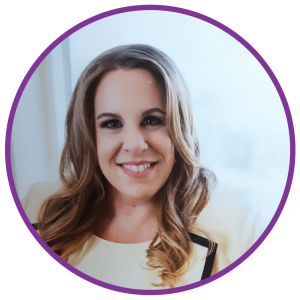
Sara Bradford (aka SJ Childs)
Sara Bradford is an autistic woman and mother of an autistic son, brings a unique perspective to her role as the CEO of SJ Childs LLC, an autism consulting business. Her personal experiences as well as her role as a member of the Autism Council of Utah have deeply influenced her mission to support families with autistic members. Sara’s also is an administrator for the Autism Advocates Support Group on Facebook, engages audiences as a global autism speaker, and hosts a podcast, The SJ Childs Show. Her commitment to her community is evident in her involvement in local university and police training programs, corporate autism training programs, international summits, and more. Sara also is a children’s book author published under the pen name SJ Childs, who has written books on subjects such as autism, dyslexia, physical differences, anxiety, and more. Her books help children understand themselves, support their peers, and encourage love and inclusion in every situation.
Learn more about SJ Childs here
Follow on Instagram
On Facebook
Episode 155 – April 10th, 2026
CRUCIAL ISSUES AND FUTURE DIRECTIONS IN AUTISM AND NEURODIVERSITY:
A DISCUSSION WITH AUTISTIC PARENT-PROFESSIONAL SARA BRADFORD (AKA SJ CHILDS)
🎤 Transcript and Audio Usage Disclaimer
© Uniquely Human: The Podcast. All Rights Reserved.
The contents of this podcast, including all audio recordings, transcripts, and related materials, are the intellectual
property of Uniquely Human: The Podcast and its fiscal sponsor, Community Autism Resources, a registered
501(c)(3) nonprofit organization.
These materials are provided solely for personal, educational, and non-commercial use.
No portion of the podcast audio, transcript, or any derivative materials may be reproduced, redistributed,
modified, or publicly displayed without prior written consent from Uniquely Human: The Podcast or its
authorized representatives.
Transcripts are provided for accessibility and reference purposes. They may contain minor transcription or
formatting errors. When quoting or referencing the podcast, please credit Uniquely Human: The Podcast and
provide a link to the original episode page.
By accessing or downloading transcripts, you agree to comply with this usage policy and acknowledge that all
copyrights, trademarks, and intellectual property rights remain the exclusive property of Uniquely Human:
The Podcast and its creators.
For permissions or inquiries, please contact:
📧 uniquelyhumanpodcast@gmail.com
Show Disclaimer
[00:00:00] UHP: The primary purpose of Uniquely Human: The Podcast is to educate and inform. The views expressed during all episodes are solely those of the individuals involved and do not constitute educational or medical advice. Listeners should consult with professionals familiar with each individual or family for specific guidance.
[00:00:00] UHP: Uniquely Human: The Podcast is produced by Elevated Studio. Music is graciously provided by Matt Savage of Savage Records.
Meet the Hosts
[00:00:39] Barry: Hi, I’m Dr. Barry Prizant, clinical scholar, researcher, and consultant on autism and neurodiversity, and a Brooklyn boy raised in the big city.
[00:00:49] Dave: And I’m Dave. I’m none of those things, and I grew up on a farm in Illinois. But being on the spectrum myself, I have plenty of personal insight to lend.
[00:00:59] Barry: And this is Uniquely Human: The Podcast, a show that illuminates and celebrates autism and neurodiversity.
Introducing Sara Bradford
[00:01:14] Barry: Today on Uniquely Human: The Podcast, I’m actually having a little bit of a reunion with a wonderful person with varied experiences who really has her thumb on the pulse of what’s going on in the autism and neurodiversity world. And that is Sara Bradford. So Sara, welcome.
[00:01:35] SJ Childs: Thank you so much for having me, Barry. It’s an honor. Like I said, I’m fangirling over here a little bit with you and Dave. I’ve, of course, been following for so long. I read your book many years ago and reached out to you and interviewed you on my show. And like you said, it’s a wonderful reunion and I’m just so happy to be here and share what’s happened for both of us. Like you said, it’s been a journey of so many things.
[00:02:03] Barry: Yes. And just to share a bit with our listeners — as our listeners know, we usually focus on specific topics or specific experiences that are unique to our guests. But in this case, Sara has such a broad range of contacts and knowledge and, as she shared just a few moments ago, she’s done 600 interviews between her summits and her podcast. So we figured, let’s paint the picture with a broader brush and get an idea of what’s going on in the field. Dave, does that sound like a good idea?
[00:02:40] Dave: I think it’s a fantastic idea. I was just saying, the only — I don’t do 600 of anything, except I’ve probably eaten 600 boxes of Thin Mint cookies in the last two years, but that’s between me and the Girl Scouts.
[00:02:55] Barry: Thank goodness. What a supporter.
[00:02:57] Dave: That’s right. I try to do it for the kids.
[00:03:01] Barry: That explains why you’re so thin.
[00:03:04] Dave: And I love that minty — yeah.
[00:03:06] Barry: Keep away from those fat mints. That’s the thin man. Oh, funny.
[00:03:10] Dave: That’s right. I want the thin ones. It keeps me lean.
[00:03:13] Barry: So let’s tell our listeners a little bit more about Sara. Sara is an autistic woman, a mother, and brings a unique perspective to her role as the CEO of SJ Giles, LLC, which is an autism consulting business. Her personal experiences as well as her role as a member of the Autism Council of Utah have deeply influenced her mission to support families with autistic members.
[00:03:13] Barry: Sara is also an administrator for the Autism Advocates Support Group on Facebook, engages audiences as a global autism speaker, and hosts a podcast — the SJ Childs Show. Her commitment to her community is evident in her involvement in local university and police training programs, corporate autism training programs, international summits, and more.
[00:03:13] Barry: Sara also is a children’s book author, published under the pen name SJ Giles, and she has written books on subjects as diverse as autism, dyslexia, physical differences, anxiety, and more. Her books help children understand themselves, support their peers, and encourage love and inclusion in every situation. Boy, that’s so important — reaching out to the kids, in your words.
Sara’s Autism Journey
[00:04:35] Barry: Now, let’s share a little bit, if you would, about your personal and professional journey that’s taken you to the place you are at right now.
[00:04:45] SJ Childs: Oh, thank you so much, both of you. And it has been such a special journey that I’ve been able to share now with the world in so many ways. And it’s building every day. It’s building into something new. Our son was diagnosed at 16 months old, very early. And at that time I knew nothing. I had never heard the word “autism.” It was 2010. It was pretty unknown in media, and especially trying to get information.
[00:04:45] SJ Childs: So I soon realized that a lot of the support that I needed was going to have to be created in ways that I saw it might’ve been missing from the community. I started early on as a parent liaison for our children’s elementary school. The principal asked me to help the other parents connect, because they saw that I was always out there chatting with the moms and trying to make all these friends. She saw something that really sparked what now is who I am today. It’s incredible. And we had just driven past that same elementary school just the other day and remembered that we had bought a camcorder back in 2012 or something. And my husband had the idea: “Hey, I want you to start interviewing these parents.”
[00:04:45] SJ Childs: I didn’t do that. Then it would take another 10 years for me to get a podcast going. But the intention, the initiative, was always there — and the importance of just banding this community together has never been more important than it is now. And we’re seeing, luckily, that it is.
[00:04:45] SJ Childs: I like to say we’re in the perfect era of autism, where now it’s heard and known and in the mind of pretty much every human. And it’s been spoken about so much. And I’m not going to say that it’s good or bad, I’m just saying that the word “autism” is now so much more prevalent in the world than it ever has been. And so we have to take the opportunity to really form the understanding now for people. Yeah, that’s where it all started — with this darling child.
Beyond Awareness to Action
[00:07:16] Dave: In corporate lingo, they would refer to that as owning the narrative, which is — okay, now we’ve got people’s attention. And unfortunately, the first thing people hear is often the thing that gets crystallized. And so you want to be the loudest voice in the room when you’re actually talking factually.
[00:07:36] Barry: And what you described, Sara, is a perfect description of the sense of — okay, we’ve done pretty okay when it comes to awareness. And now people are saying awareness is not enough. We have to go beyond awareness, and especially our friend Dr. Stephen Shore has said it’s time for action, not just awareness.
[00:07:58] SJ Childs: Yeah. Oh, action — a hundred percent, action. I couldn’t agree more. And I’ve had several wonderful conversations with Stephen, and I just love his advocacy and all that he stands for as well.
[00:07:58] SJ Childs: I couldn’t agree more that we really have the opportunity to share what it all means for us as individuals, and how much more impactful that is for families when they can anecdotally learn from experiences — and not just from a textbook shared from a college course. Not that those aren’t important, but the real experiences, the raw, vulnerable share from those who live every day — that is of so much value to teachers, to parents, to providers. And I think there’s a real opportunity for us today, just as we’re doing, to share and shape that understanding that autism looks different for every single person. There’s just no amount of comparisons you can make — it’s just so different. And if we don’t embrace all of the different ideas, we can’t see that cohesive picture. We just see this tunnel, this kind of blinders view of what one person’s experience may be. And that can be harmful for a lot of families that try to overlap those things.
[00:09:50] Dave: Exactly. And what you’re describing here is — yes, Stephen Shore’s right, action, it’s time for action. I would also put a qualifier on that: neuro-affirming action. Because I think there’s a lot of bad folks out there with terrible ideas who also are trying to mobilize and take action while denying the lived experience of nonspeakers, for instance. It’s neuro-affirming action that needs to be taken, and that’s really what you’re all about.
[00:10:18] Barry: Yeah. And once again, Dave, you’re reading my mind. Perfect.
Lived Experience and Nonspeakers
[00:10:23] Barry: I wanted to put in bright neon lights what Sara said about lived experience, because some of the greatest areas of misinformation that are out there about autism come from people who think they’re experts but do not immerse themselves in the community of lived experience. We’re running into that with the nonspeakers. It happens so many times. And that’s probably the greatest force in changing perceptions and giving us a more accurate picture of the autistic experience — especially for those of us who are neurotypical. How can we deny the lived experience of people?
[00:11:11] SJ Childs: The amount of neurocognizance that’s happening — that we can’t possibly see in someone who is nonspeaking — and just the power of the stories that have come out. I don’t know if you’ve interviewed or had a conversation with Betsy Hicks Russ. She has the show or the channel, Betsy on the Go. And her son Joey, who is in his thirties, just barely became a speller, and for many years there was a different story that she told, a different way that she shared her experiences. And now that he has been communicating, she’s just basically shed all of herself. What she used to know, her lived experience — was — is now shifting into this new perspective. Once was a person who no one thought — there was no communication occurring, no individual thought, if you will — to then find out and hear poetic sentences that are so moving and so inspiring. Oh my gosh. It’s incredible.
[00:11:11] SJ Childs: And so I think that these kinds of experiences and opportunities to see what we’ve been missing for so long — we’re really going to have the chance to step back and say: okay, what kind of accommodations do we make now? We have to change these systems. I think when we start to see how much damage the systems that are in place are doing, there’s nothing that can be done but take them down and reconstruct.
[00:13:11] Barry: I just had the opportunity to hear a piece of Hari Srinivasan’s talk at the United Nations on World Autism Awareness Day, and he talks about having to reconstruct the architecture of systems — now that we know so much more about what autistic people benefit from and what they’re asking for. But it’s right on the point that you just made. Yeah, absolutely.
[00:13:38] Dave: Tricky thing about systems is that once they’re in place, it’s almost like old software. It’s almost easier to burn it down and start from scratch than it is to make systemic repairs and refinements and enhancements. But the reality is that’s where we’re at. You can’t just terminate every old system that isn’t serving us. It’s a lot of work.
[00:14:00] Barry: And a lot of unlearning for people. And that’s —
[00:14:03] Dave: Important. Yeah.
Families’ Biggest Concerns: Schools
[00:14:04] Barry: Sara, what do you see — given all the people you speak to, and so many with lived experiences, including yourself — what do you see as some of the major themes, especially that families are concerned about? First, we’ll talk about what families bring up and what families talk about.
[00:14:25] SJ Childs: I think a really big thing families are concerned with is definitely schools. We have to — that’s a big, huge, all-in-red-letters issue: IEPs, understanding the support that you rely on a school to give you. And these parents don’t understand that most of the people haven’t been trained in any of these areas, and they don’t have proper training in place. And there’s not enough people, there’s not enough aides, there’s not enough trained people to be effective in helping so many millions of children. And it’s so hard when you see families — even my neighbors. I’m just going to say: they have little ones under six, and thank goodness I’m their neighbor, because they have someone so insightful to bring any kind of issues or problems to. She’s got four kids and now three out of the four have a diagnosis. She’s struggling and she’s not understanding how to take the next step. And I think that’s a problem that every parent runs into at one point or another — not knowing how to find resources.
Building Provider Networks
[00:15:59] SJ Childs: I’m doing something so incredible — I think you’re going to be so excited to hear about this. I’ve been bringing together all of the providers. I posted about a networking event for autism providers in Utah, and I said: if you’re an autism provider in Utah, I’d love to bring you all together. Let’s have a get-together, get to know one another. Not go to a fair where everybody’s at their own tables and you never talk to each other. Let’s get in the same room. Let’s meet each other. Let’s have relationships with one another. Let’s be able to say to Family A: I know this amazing SLP that can help you — I just met them at this thing — and now I have these great resources to share. I think it’s going to bring the community closer than it ever has been before, in kind of a chamber-of-commerce feel. We’ve just set up our very first meetup for next month, and I just feel overwhelmed with how many resources and connections these people will be able to make with one another. Because that is so important.
[00:15:59] SJ Childs: We don’t need to compete. These companies don’t need to compete. They need to band together. There are more and more families and children being diagnosed — as we all know, every what, two years the numbers are changing. Here we are at one in 31. We know that threshold is probably very imprecise, as far as there are a lot of undiagnosed individuals still out there — adults, children, women, for example. It’s really tricky. How do parents know where to go when there isn’t a clear — like a one-stop website I can go to? Not that there should be. But there just isn’t. And there’s so much information — isn’t that something that’s hard? Sometimes there’s too much and then —
[00:18:12] Dave: And what to trust.
[00:18:15] Barry: Yes. Yeah. And what you’re describing, Sara, sounds more like a retreat where people can get together, because at conferences everybody puts their expert hat on, gets up there, and tosses out the truth for everybody to believe. I can tell you from my experience — and this isn’t so much with professionals — we’re about to approach our 28th annual parent retreat in May, where people are open to saying: I’m having problems with this, or I don’t understand this. Everybody can learn together from the resources that are available there. But it’s rare for that to happen with professionals at a conference.
[00:18:15] Barry: I attended a medical conference in the Netherlands on emergency care in emergency departments and children’s hospitals, and all of these professionals — all these healthcare professionals — were there to say: we’re not doing a good job. What else can we do? What else can we learn about to better serve kids in situations that are anxiety-arousing? And it was so refreshing to hear these very high-level, mostly medical professionals saying: we have a lot to learn. We don’t know this. We don’t know this. We don’t know this. Very different from what I find in this country, where everybody gets up and says: I’m telling you what you should know.
[00:19:42] SJ Childs: Yeah. Yep. Isn’t that the truth?
Kids’ Books and Inclusion
[00:19:45] SJ Childs: And one of my favorite quotes that I made myself: “A little bit of knowledge turns fear into understanding.”
[00:19:53] Barry: Yes.
[00:19:53] SJ Childs: And that’s — with the children’s books, we had mentioned those. I wrote children’s books in the very beginning because I really had this understanding that the children in my own children’s classrooms clearly did not understand who they were and how they operated. And I thought: what a better way to help them understand how to support my kiddos than to get these books into their little faces in school? They’re bright and colorful, and — let me find one. Oops, here we go. This one is about Down syndrome, actually. And this one talks about how the chromosomes are actually different. It really gives not just an understanding of how a person is different, but why it happened in the body that way, so that they could be more supportive of those individuals that they might come across in the world.
[00:21:00] Dave: No, that’s great. Because it always feels empty to me when the best sort of guidance that we’re giving to — especially to young people — is: “Well, just be accepting of everybody and everybody’s different.” That breaks down immediately as soon as you leave the classroom and it’s not enforced and you’re on the playground or in the hallway. So just actually educating is fantastic.
[00:21:26] SJ Childs: And I think it’s great to offer — I’ve done a few seminars for the Utah Afterschool Program, where I introduced skill training for the teachers to provide their classrooms. Things like ways to understand sensory overloads, or sensory-specific speaking, learning, or hearing. You can do different types of activities that show the children: this is what this person experiences — how they speak, how they hear, how they might see, how they might write or even walk and feel. And the amount of understanding and compassion that these children can then have for their peers around them — it’s just life-changing. They take that with them at such an early age, and you’ve implored them with the tools they need to keep fighting the good fight throughout their time. So we hope we do our best.
[00:22:39] Barry: And I think with you writing children’s books, you’re also putting your finger right on another issue that so many families are concerned about. That is: how do we help all children have a greater understanding so that they’re more compassionate and more willing to develop friendships with kids who sometimes might behave differently or might be a little bit more difficult to understand because of communication issues.
[00:23:09] SJ Childs: Yeah.
[00:23:10] Barry: Just — so many parents say: I just want my child to have friends.
Empowering Kids with Differences
[00:23:15] Dave: You know what’s great too? This isn’t just for the kids who — for instance, Jack the Dog, the book —
[00:23:21] Barry: Sara’s book —
[00:23:22] Dave: Sara’s book. Yes. This wouldn’t just be for the children who weren’t born with Down syndrome. It can be for the child himself or herself, too. To say: oh, that’s how my cells are different. Got it. That’s very empowering.
A Reader with Down Syndrome
[00:23:39] SJ Childs: You want to know something so exciting just about this book in general? There is a gentleman here who works at my local grocery store who was actually a cousin to another boy in my son’s class. So we had a connection with their family. And when I saw that he had been working at Smith’s, he and I started talking a lot, and I said: would you like me to get you copies of this book? And he said: oh, I’d love to. He himself has Down syndrome, and he goes to the elementary school with Jack the Dog, and he reads it to the students.
[00:24:17] Dave: Awesome.
[00:24:18] SJ Childs: I couldn’t be more — it’s just — that’s exactly the kind of message that I would hope I could bring as a gift into the world. It’s so special. Yeah.
Why She Started Podcasting
[00:24:30] SJ Childs: And of course, doing the books, I started going onto podcasts and then someone — I think maybe even Shannon Penrod from Autism Live — said: “Sara, you need to start your own podcast.” And I said: okay! It’s done. And then that was born. And of course, here we are 350 episodes later. I can’t believe it.
[00:24:56] Barry: Similar story on this end. Somebody said to me: “Barry, you do a lot of presentations, you need to have a podcast.” And I said — Dave Finch! Dave Finch, where are you?
[00:25:09] Dave: And here we are.
[00:25:11] Barry: And here we are.
Autism Conversations Shift
[00:25:14] Barry: What do you see — when we say we’re in a different place now than we were when you started your podcast, and even when we started our podcast around the same time, four or five years ago — what do you see as the most significant changes that have happened that we have to continue to build upon?
[00:25:38] SJ Childs: Ooh. I would say ABA is a really big conversation that’s happening in the autism community — and support therapies in general — and making sure that they are neuro-affirming, and maybe resetting boundaries around those services that aren’t, and redefining what that means.
[00:25:38] SJ Childs: I think — oh, that’s a tricky one, isn’t it? So many things. Just the simple things like the puzzle piece and the infinity symbol. Those things were like a big, huge conversation and division almost, and it’s so hard to see those things happen. But at the same time, it’s so important to understand and be a part of that, so when it does evolve and grow, you’ve understood the process and can share with people. I don’t think that necessarily a symbol hurts or helps anyone, but I do give understanding, grace, and complete dignity to those who feel that the companies that represented those didn’t do them service, and I understand that.
[00:25:38] SJ Childs: So I think that has been an interesting thing to see. Obviously we all know about how autism became so prevalent in news and in our political scope and scheme — and those things. I absolutely don’t want to be in any way political about anything. But I think that just understanding that was really where the word “autism” was introduced to more of society than ever before. And I’m thankful, and I wish I could have been the spokesperson so that maybe things could have been gentler, and more dignified, and more human-based and human-centered, and really cared for the whole society and the whole community.
[00:28:03] Barry: Yeah. Rather than: “Autism is this evil being who’s kidnapping your children and —”
[00:28:09] SJ Childs: And —
[00:28:10] Barry: Destroying their lives. And — yeah. And I think in general, whether it comes to symbols or whether it comes to ABA, people are really looking with good intentions, with a critical eye, as to what many people thought were the truths. And I wish a lot of our discussions would be a little bit more civil. But it’s wonderful that in many cases it’s come from the community of people with lived experience too, raising their finger and saying: oh, we used to think this was the gold standard of therapy, or we used to think this — and now there are so many discussions going on. Absolutely. And of course what’s going on online has really added fuel to those discussions.
Global Summits and Access Gaps
[00:29:05] SJ Childs: I think this is the perfect segue, because having the virtual summits has opened my eyes. Some of them have been international, where I’ve invited international advocates to come, and I’ve had advocates from — I want to say 27 countries. That’s a lot of different stories to hear. And there is still yet so much to be taught in the world, because there’s still a lot of misunderstanding, still a lot of horrible ideas about what autism is. And I think that by inviting these guests and these people from around the world to share these stories, it opens our eyes and gives us just that little bit more of a glimpse of: okay, what else needs to be done? Where do we need to go? How do we create programs to help these third-world countries or these outlier rural communities that don’t have access?
[00:29:05] SJ Childs: And I think that is my biggest kind of change in my own self, in my own sight, if you will. This is so strange to say, but it was from a blind guest who came on and was able to express to me the lack of access that she had throughout her life. And she wasn’t autistic — it wasn’t about that. It was just about being vision impaired. But it really, for some reason, opened my mind up to this lack of access and how far-reaching it is. And I am building something so incredible right now. Do you want me to share it now?
[00:31:08] Dave: Yeah!
[00:31:08] SJ Childs: Whatever is best.
[00:31:09] Dave: We have the exclusive scoop!
[00:31:10] SJ Childs: Exactly! Because it is still in development, but I have shared it publicly, so it’s great.
Streamable: Built for Access
[00:31:18] SJ Childs: It’s called Streamable, and it is a for-disability streaming site. Everything is built after the fact — ramps are put in after the fact, bars are put in after the fact, screen readers and captions are all put in after the fact. And there’s not a streaming service or system that is in place before — made for — and I just had this amazing summer that I spent in my garden. Call it meditation, whatever — the flowers were talking to me — and I just had this beautiful idea to build this site for all-access. It will offer an ASL portion, all captions, an audio portion. It has dyslexia-friendly fonts. It has access to remove pictures for those with face blindness or those that have image density issues. I’ve just done so much research on: what kind of access does everyone need? So it’s in the works — it’s called Streamable.live. And I’m just putting my heart and soul into this, and all my husband’s money.
[00:32:43] Dave: That’s all right. What else is he going to do with it? That’s amazing.
[00:32:45] SJ Childs: Exactly! Buy more flowers for me.
[00:32:48] Dave: Yeah. That’s really — to start with it built right in, and not as a retrofit — good for you. And that’s something Barry and I discuss all the time: how can we make our content as accessible as possible to all? I won’t speak for Barry, but I will definitely say I am not an expert in it. I know what makes it easier for me to read something, to listen to something, to access information. But I don’t look much farther than my own nose. And so to have a platform that’s already put that thought in from the start is fantastic.
[00:33:44] Barry: And as they say, knowledge is power — but you have to have access to that knowledge.
[00:33:49] Dave: Exactly.
[00:33:50] SJ Childs: Exactly.
[00:33:51] Dave: Equitable access.
[00:33:53] SJ Childs: I want it to be for everyone. I literally want medical people to use it for training — because I’ll think of just all of the communities that are missing any kind of educational training because they have that portion of neurodiversity that keeps them from getting it. Yeah, it’s just horrible to think about. So — that’s my next mission somehow. Plus I have teenagers. That’s really what my life revolves around right now.
[00:34:30] Barry: You’re so forward-thinking. As a matter of fact, you anticipated something else I wanted to toss on the table for you to chat about, and that is the changes that you hope for in the future. You’re already thinking about that. I could just see you out in the garden having these flashes of insight as to what really needs to be done — that really impacts the broadest community in the most powerful way.
[00:34:57] SJ Childs: Oh, I’m so excited. I just — I know it’s so much larger than me, than the world, than all of us. And it has the possibility and capability to help millions, billions of people. So let’s just — fingers crossed — put it out there so our intentions will be heard.
[00:35:17] Barry: Yes. Yeah. And so let me sum up a little bit by going back to what you began to talk about at the beginning of our discussion — that a big part of what you do in your work is creating community, is helping people first of all to be seen and heard, but then bringing many people together to be seen and heard, which is the next step up. And so congratulations. It’s wonderful how many people you reach, and it’s so important.
[00:35:52] SJ Childs: Oh, and it’s really amazing.
Free Streaming Reaches 90K
[00:35:55] SJ Childs: Dave, you had mentioned: how can we make our content more accessible? And the last couple of events that I held — summits — I had that same thought. How can I make this more accessible? What do I need to do to bring in the people who don’t know, who haven’t seen what the summit can bring to them? And I streamed for free on all of my channels — YouTube, Facebook, LinkedIn — the last two summits. And on the weekend of the last summit, there were nearly 90,000 views over one Saturday. And I was used to getting 250 or something. Oh man — my mind was just so blown that day. I thought: are you kidding me? This is what bringing access really means. There wasn’t a ticket price gatekeeping them out. And I’m not saying that model isn’t important, because that’s how companies make a business and stay stable, but I am just so blessed and honored that I had the opportunity to provide such an impactful educational day.
[00:35:55] SJ Childs: And it was a wonderful event. I did panels — a panel discussion each day — and my favorite ones of the day were a research panel and AI and innovation. Oh my goodness. Those are the things that are really going to change the future — the way that we work and the way that we help people understand the power of AI. And I always like to make a joke with my husband because I’m the only one in the house with ChatGPT. I always say: you shouldn’t be afraid of AI. You should be afraid of the people who know how to use it.
[00:38:06] Dave: That’s very funny. I like that. I was told a couple years ago: “AI won’t replace your job — it’s the person who uses AI who will replace it.” And I’m like, that’s cold comfort. Thanks for that. But no — the equitable access piece — and you’re right, there does need to be at times, or in many cases, this sort of monetization in order to pay the people who pulled this together. You want to work with people who are making it happen. But on the rare occasion when you can say: hey, free access — it’s wonderful to see that you’ll get 90,000 people taking advantage. It just shows that there’s this appetite. And maybe what’s happening is people are placing a bet against the paid thing, saying: I’ve put down $4.99 before and I didn’t get $4.99 worth of information out of that quote-unquote summit. And so I think these sorts of opportunities, when they come — I think it’s great when people can take advantage of them.
[00:39:13] Barry: At the same time, when you talk about those 90,000 people, you’re both demonstrating the need — by so many people coming in — but you’re also meeting the need. Yeah. And it opens your eyes wide to how much people are hungry for information and diverse opinions and diverse perspectives.
Authenticity Over Quackery
[00:39:36] SJ Childs: And authenticity. Authenticity is something that I think is — just in the last few weeks, I’ve been seeing a lot of messages in my inbox, in my email, saying: social media is dead, authenticity content is what is going to be alive. That’s what people want. They don’t want the fake TikTok dance. They want someone saying: I have this condition, and this is what I do to fix it, or this is how I grow my vegetables. They really want real, actionable steps. They want to know: okay, this was a great conversation, but what do I take from it? How does it fit into my life? What resonates with me? That’s what they want. They want to find something that resonates and makes them feel like it’s right for them too.
[00:40:31] Dave: Yeah. And on any social media platform — I don’t even need to say this, but — the more that type of content is out there for people to engage with, the more the algorithm rewards that engagement, and the more of it you get — and the less of the: “Oh, I ate June bugs and that cured my autism, and you should too, and everybody should, and let’s legislate this, and I’m going to be the second Surgeon General of the United States now because of it.” Like — that authenticity gets rewarded, if it’s available.
[00:41:02] Barry: Yeah.
[00:41:03] Dave: Hopefully.
[00:41:04] Barry: And being able to have enough knowledge to say: what’s the takeaway for me? Or — no, this is not real, I’m going to just kind of delete it or not go there at all. Yeah.
[00:41:17] Dave: Social media platforms make sure that they do not label something as: “Hey, you’re about to consume quackery.” In fact, often that’s what they serve up first — the nonsense.
[00:41:29] Barry: Have a little quackery meter! I love that.
Wrap Up and Next Steps
[00:41:33] Barry: Sara, thank you so much. It’s been great. Make sure you send us all the links so we can put them up on the webpage.
[00:41:43] SJ Childs: Thank you so much. And like I said, this has been such a long time coming, and an honor. I am just — it’s wonderful. I’d love to have another conversation with you guys in the future when more things have changed, and we can come back and say: oh my goodness, now look where we’re at.
[00:42:01] Barry: That’s right. Absolutely.
[00:42:02] SJ Childs: This system is gone and now we’re rebuilding.
[00:42:05] Barry: So true. And you can share more of your innovative thoughts to action. Yeah.
[00:42:11] SJ Childs: Love that. Great. Thank you guys so much. Hopefully this was good — action for autism action month.
[00:42:17] Barry: That’s right!
[00:42:17] Dave: I like it.
[00:42:18] Barry: Take care.
[00:42:21] SJ Childs: Thank you.
[00:42:21] Dave: Thank you, Sara. Bye-bye.
…and Continue the Discussion
Do you have a book or podcast club? If so, you may use this discussion guide to facilitate a conversation about this episode.
1) How have Sara’s experiences inspired her to develop her own podcast and consulting business, and to reach out to others through her educational activities?
2) What does Sara see as the major issues that families are concerned about? Do you agree, and any others you wish to add?
3) What does Sara believe are areas of significant progress as well as changes that she is working towards that she believes are needed to move forward as a community? Do you agree, and any others you wish to add?
HOSTED BY
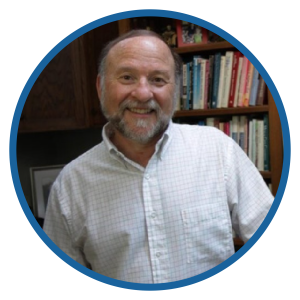
Barry Prizant, Ph.D., CCC-SLP
Dr. Barry Prizant is a speech-language pathologist with more than 50 years experience as a researcher and international consultant for autistic and neurodivergent individuals and their families. He is an Adjunct Professor of Communicative Disorders at the University of Rhode Island and Director, Childhood Communication Services (a private practice). Previously, he served as Associate Professor in the Department of Psychiatry in the Brown University School of Medicine, and held a tenured professor appointment at Emerson College. Publications include 5 books, most notably Uniquely Human: A Different Way of Seeing Autism (2015; 2022) and The SCERTS Model manuals, an educational approach implemented in more than a dozen countries. He has published 150 scholarly chapters and articles and serves on numerous professional advisory boards for journals and professional organizations. Barry has presented more than 1000 seminars and keynote addresses internationally, including two invited presentations at the United Nations for World Autism Awareness Day. His career contributions have been recognized with honors from Brown and Princeton Universities, the Autism Society of America and the American Speech-Language-Hearing Association.
Visit Barry’s website here
Uniquely Human, the book (Updated and Expanded edition!)
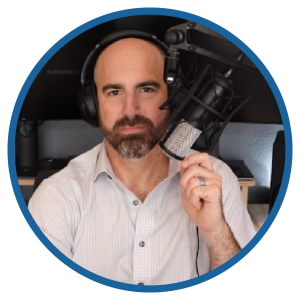
Dave Finch
Dave Finch is the author of the New York Times bestselling memoir, The Journal of Best Practices: A Memoir of Marriage, Asperger Syndrome, and One Man’s Quest to Be a Better Husband. As a writer and creative consultant, his work has appeared on ABC, CBS, NBC, CNN, NPR, SiriusXM, The New York Times, Rolling Stone, The Howard Stern Show, and the award-winning Netflix series, Atypical. Based in Denver, Dave’s company, Elevated Studio, produces this podcast and other recognized series.
Visit Dave’s website here
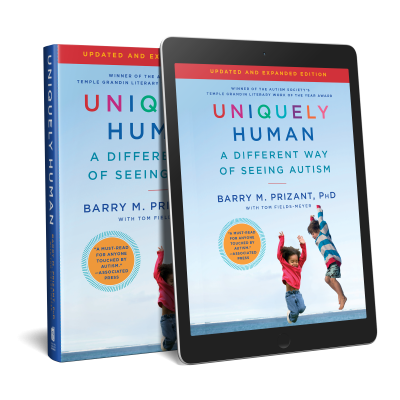
“I have read a million and one books on Autism. Uniquely Human is the best book I have ever read, hands down. Thank you Barry for this incredible gift!!!!”
– Navah Paskovitz, Mother of three boys with Autism, Co-Founder, the Ed Asner Family Center
“Compassion, learning and supportive strategies–the three essentials for working with folks with ASD–are an integral part of this must-read book.”
– Michelle Garcia Winner, Speech Language Pathologist and Founder of Social Thinking
“Thanks be to Barry for the first-ever must read written for parents, educators, and clinicians.”
– Michael John Carley, Founder, GRASP; Author of Asperger’s From the Inside-Out
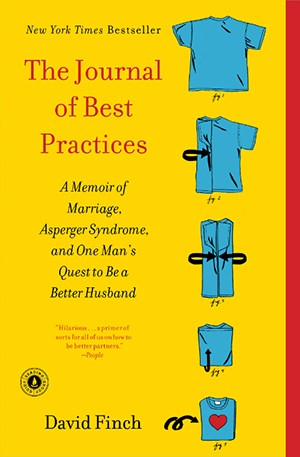
“What makes the book compelling is how funny Mr. Finch is about himself. He’s great company.”
– Susannah Meadows, The New York Times
“In this hilarious memoir (which also gives some of the finest explications of Asperger’s out there), Finch approaches trying to be a better husband and father with the determination of Sherman marching on Atlanta.”
– Judith Newman, People (4/4 stars)
“Talk about being on a roll. This dude wrote a book, he has Asperger’s syndrome. He cured himself by listening to me on the radio!”
– Howard Stern