EPISODE 170
An Autistic Educator on the “New ABA”, Masking, Compliance and Belonging: A Discussion with Rebecca Engle
Play the Episode…
Show Notes
Rebecca Engle brings a wealth of knowledge to understanding and supporting autistic and other neurodivergent children. She has the lived experience of being an autistic and ADHD non-speaking child until five years old when speech began to develop, and although her family was very supportive, she was often misunderstood in school. She went on to get advance degrees in education and now specializes in supporting neurodivergent students. Her insights about ABA, and compliance-based approaches, as well as inclusion will be of great value to parents and professionals.
Featuring
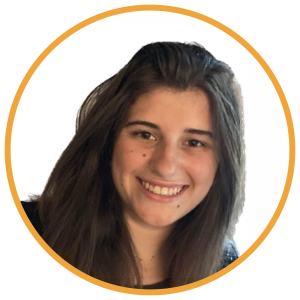
Rebecca Engle
Rebecca Engle is an ADHD and early diagnosed autistic educator, special education advocate, author, and nationally recognized public speaker passionate about creating more inclusive, accessible, and humane educational systems. She holds a master’s degree in Educational Policy and Leadership from Texas Tech University and works in special education and dyslexia instruction. Her advocacy focuses on neurodiversity, trauma-informed education, regulation before rigor, student rights, and ending harmful practices such as seclusion and restraint in schools. Through teaching, speaking, writing, and advocacy, Rebecca works to ensure that students are understood for their strengths and supported as whole human beings.
Transcripts will be available soon. In the meantime, you can access the automatically generated transcripts on your streaming platform of preference.
👉 Download the Transcripts 💾 (Coming soon)
…and Continue the Discussion
Do you have a book or podcast club? If so, you may use this discussion guide to facilitate a conversation about this episode.
1. Rebecca’s work challenges the idea that behavior should be the primary lens through which we understand autistic students. What does she say we miss when we focus on changing a child’s behavior rather than understanding that what you are observing? Do you agree, and can you provide any examples from your own experience?
2. Rebecca has written very directly that she doesn’t believe ABA can be trauma-informed, among other concerns about ABA, such as “planned ignoring” especially give about claims about the “newer”, kinder ABA? What is it about the underlying principles or goals of behaviorism that, in her view, conflicts with a genuinely trauma-informed approach? Once again, do you agree, and if so, why, and if not, why not?
3. How has Rebecca’s lived experience as an autistic person and an educator changed the way she interprets the behavior of her students? How has being an educator changed the way she understands her own childhood experiences specific to inclusion and masking? What about this discussion was most striking to you, and what have you learned from listening to Rebecca?
HOSTED BY
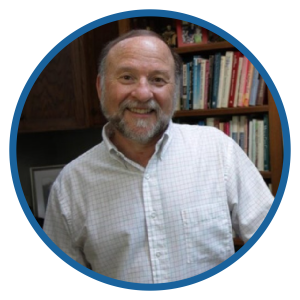
Barry Prizant, Ph.D., CCC-SLP
Dr. Barry Prizant is a speech-language pathologist with more than 50 years experience as a researcher and international consultant for autistic and neurodivergent individuals and their families. He is an Adjunct Professor of Communicative Disorders at the University of Rhode Island and Director, Childhood Communication Services (a private practice). Previously, he served as Associate Professor in the Department of Psychiatry in the Brown University School of Medicine, and held a tenured professor appointment at Emerson College. Publications include 5 books, most notably Uniquely Human: A Different Way of Seeing Autism (2015; 2022) and The SCERTS Model manuals, an educational approach implemented in more than a dozen countries. He has published 150 scholarly chapters and articles and serves on numerous professional advisory boards for journals and professional organizations. Barry has presented more than 1000 seminars and keynote addresses internationally, including two invited presentations at the United Nations for World Autism Awareness Day. His career contributions have been recognized with honors from Brown and Princeton Universities, the Autism Society of America and the American Speech-Language-Hearing Association.
Visit Barry’s website here
Uniquely Human, the book (Updated and Expanded edition!)
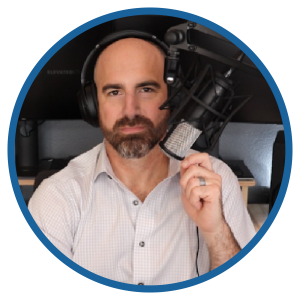
Dave Finch
Dave Finch is the author of the New York Times bestselling memoir, The Journal of Best Practices: A Memoir of Marriage, Asperger Syndrome, and One Man’s Quest to Be a Better Husband. As a writer and creative consultant, his work has appeared on ABC, CBS, NBC, CNN, NPR, SiriusXM, The New York Times, Rolling Stone, The Howard Stern Show, and the award-winning Netflix series, Atypical. Based in Denver, Dave’s company, Elevated Studio, produces this podcast and other recognized series.
Visit Dave’s website here
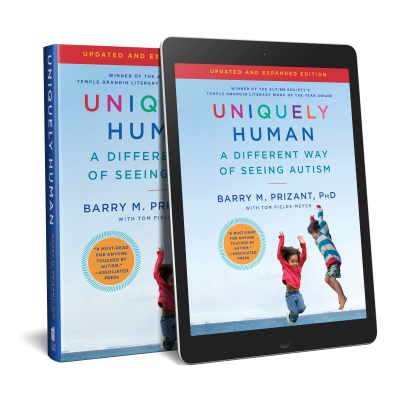
“I have read a million and one books on Autism. Uniquely Human is the best book I have ever read, hands down. Thank you Barry for this incredible gift!!!!”
– Navah Paskovitz, Mother of three boys with Autism, Co-Founder, the Ed Asner Family Center
“Compassion, learning and supportive strategies–the three essentials for working with folks with ASD–are an integral part of this must-read book.”
– Michelle Garcia Winner, Speech Language Pathologist and Founder of Social Thinking
“Thanks be to Barry for the first-ever must read written for parents, educators, and clinicians.”
– Michael John Carley, Founder, GRASP; Author of Asperger’s From the Inside-Out
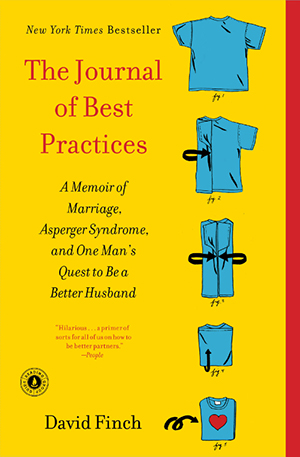
“What makes the book compelling is how funny Mr. Finch is about himself. He’s great company.”
– Susannah Meadows, The New York Times
“In this hilarious memoir (which also gives some of the finest explications of Asperger’s out there), Finch approaches trying to be a better husband and father with the determination of Sherman marching on Atlanta.”
– Judith Newman, People (4/4 stars)
“Talk about being on a roll. This dude wrote a book, he has Asperger’s syndrome. He cured himself by listening to me on the radio!”
– Howard Stern