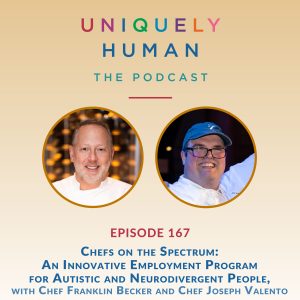
EPISODE 167
Chefs on the Spectrum: An Innovative Employment Program
for Autistic and Neurodivergent People,
with Chef Franklin Becker and Chef Joseph Valentino
for Autistic and Neurodivergent People,
with Chef Franklin Becker and Chef Joseph Valentino
Play the Episode…
Show Notes
This episode features Chef Franklin Becker and Chef Joseph Valentino discussing their work with the Chefs on the Spectrum program at Chef Franklin’s restaurant Point Seven in New York City. Chef Franklin explains how his personal experience as a father of an autistic son inspired him to create the program, which connects autistic adults with meaningful careers in professional kitchens while helping restaurants become more inclusive workplaces. Chef Joe shared his journey from facing job rejections and difficult work environments to thriving as a chef at Point Seven, where he has developed important skills like managing ticket orders and preparing mise en place properly. The discussion highlighted how Joe’s presence has positively impacted the entire kitchen team by teaching tolerance, acceptance, and compassion, while also breaking down stigma about autism in the culinary industry.
Learn more about Chefs on the Spectrum
Featuring
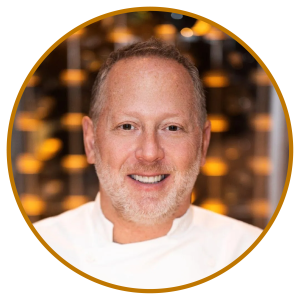
Chef Franklin Becker
Chef Franklin Becker is the Chef and owner of Point Seven, a fine dining restaurant in New York City. Chef Becker has more than three decades of culinary leadership spanning some of the city’s most acclaimed kitchens and restaurant concepts. He is a graduate of the Culinary Institute of America, a National Board Member of Autism Speaks and the founder and Culinary Chair of the organization’s Celebrity Chef Gala, a role he has held since 2007. Franklin’s connection to autism is deeply personal: he is the father of an autistic son. That experience has shaped his longstanding commitment to advancing awareness, opportunity, and inclusion for autistic individuals and their families. Through his experience in the hospitality industry, Chef Franklin helped launch Chefs on the Spectrum, a national workforce initiative designed to connect autistic adults with meaningful careers in professional kitchens while helping restaurants create more inclusive workplaces. He is the author of three books on cooking and the culinary arts.
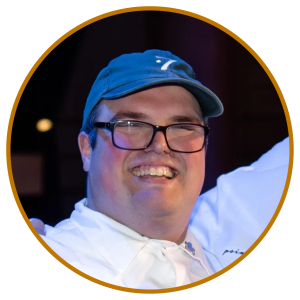
Chef Joseph Valentino
Joseph is Chefs Council Member, Chefs on the Spectrum, and a Chef at Point Seven. He serves as an integral member of the kitchen team at Point Seven, working alongside the culinary team in the execution of service and daily kitchen operations, contributing his expertise across food preparation, cooking, plating and pastry while maintaining the high standards of quality, consistency and food safety expected in a professional kitchen. Joseph holds a Bachelor of Arts in Hospitality and Tourism Management from Fairleigh Dickinson University, as well as associate degrees in Culinary Arts and Baking & Pastry from Hudson County Community College. His culinary career spans more than a decade in fine dining, restaurants, banquet and catering operations, in high-volume institutional kitchens. Joe was diagnosed with autism as a toddler, and developed a passion for cooking from an early age, dressing as Emeril Lagasse for Halloween three years in a row. He continues to pursue his culinary career, building on his education, technical skills and professional experience that ultimately led him to Point Seven.
Uniquely Human: The Podcast
EPISODE 167
CHEFS ON THE SPECTRUM:
A DISCUSSION WITH CHEF FRANKLIN BECKER AND CHEF JOE VALENTINO
🎤 Transcript and Audio Usage Disclaimer
© Uniquely Human: The Podcast. All Rights Reserved.
The contents of this podcast, including all audio recordings, transcripts, and related materials, are the intellectual property of Uniquely Human: The Podcast and its fiscal sponsor, Community Autism Resources, a registered 501(c)(3) nonprofit organization.
These materials are provided solely for personal, educational, and non-commercial use.
No portion of the podcast audio, transcript, or any derivative materials may be reproduced, redistributed, modified, or publicly displayed without prior written consent from Uniquely Human: The Podcast or its authorized representatives.
Transcripts are provided for accessibility and reference purposes. They may contain minor transcription or formatting errors. When quoting or referencing the podcast, please credit Uniquely Human: The Podcast and provide a link to the original episode page.
By accessing or downloading transcripts, you agree to comply with this usage policy and acknowledge that all copyrights, trademarks, and intellectual property rights remain the exclusive property of Uniquely Human: The Podcast and its creators.
For permissions or inquiries, please contact:
📧 uniquelyhumanpodcast@gmail.com
Podcast Disclaimer
[00:00:00] UHP: The primary purpose of Uniquely Human: The Podcast is to educate and inform. The views expressed during all episodes are solely those of the individuals involved and do not constitute educational or medical advice. Listeners should consult with professionals familiar with each individual or family for specific guidance. Uniquely Human: The Podcast is produced by Elevated Studio. Music is graciously provided by Matt Savage of Savage Records.
Meet The Hosts
[00:00:39] Barry: Hi, I’m Dr. Barry Prizant, clinical scholar, researcher, and consultant on autism and neurodiversity, and a Brooklyn boy raised in the big city.
[00:00:49] Dave: And I’m Dave. I’m none of those things, and I grew up on a farm in Illinois. But being on the spectrum myself, I have plenty of personal insight to lend.
[00:00:59] Barry: And this is Uniquely Human: The Podcast, a show that illuminates and celebrates autism and neurodiversity.
Introducing The Chefs
[00:01:14] Barry: Today on Uniquely Human: The Podcast, Dave and I are really thrilled to welcome two very special people: Chef Franklin Becker and Chef Joe Valentino. Welcome to our show.
[00:01:28] Dave: Hey, welcome!
[00:01:31] Barry: I love the New York tie here, because as many of our listeners know, I am a New York kid as well.
[00:01:44] Chef Franklin: It’s not New York — it’s Brooklyn. There’s a difference.
[00:01:46] Barry: The old Brooklyn, not the new Brooklyn.
[00:01:50] Chef Franklin: That’s it, exactly. Not the new Brooklyn.
[00:01:52] Barry: Chef Franklin Becker is the chef and owner of Point Seven, a fine dining restaurant in New York City. Chef Becker has more than three decades of culinary leadership, spanning some of the city’s most acclaimed kitchens and restaurant concepts. He is a national board member of Autism Speaks and the founder and culinary chair of the organization’s Celebrity Chef Gala — a role he has held since 2007. Franklin’s connection to autism is deeply personal: he is the father of an autistic son, and that experience has shaped his long-standing commitment to advancing awareness, opportunity, and inclusion for autistic individuals and their families. Through his experience in the hospitality industry, Chef Franklin helped launch Chefs on the Spectrum — a national workforce initiative designed to connect autistic adults with meaningful careers in professional kitchens while helping restaurants create more inclusive workplaces. Do we know how important that is? Essential.
[00:03:05] Barry: Chef Joe — or Joseph — Valentino: do you prefer Joe or Joseph?
[00:03:13] Chef Joe: It doesn’t matter.
[00:03:15] Barry: I’ll go with Joe. Save a couple of syllables. Chef Joe is a Chefs’ Council member for Chefs on the Spectrum and a chef at Point Seven. He serves as an integral member of the kitchen team, contributing his expertise across food preparation, cooking, plating, and pastry, while maintaining the highest standards of quality and consistency in a professional kitchen. Joe holds a Bachelor of Arts in Hospitality and Tourism Management from Fairleigh Dickinson University, and associate’s degrees in Culinary Arts and Baking and Pastry from Hudson County Community College. His culinary career spans more than a decade and includes experience in fine dining, restaurants, banquet, and catering operations. Joe was diagnosed with autism as a toddler and developed a passion for cooking from an early age — dressing as Emeril Lagasse for Halloween three years in a row. His path was not always easy: Joe experienced job rejections and worked in environments where he did not always feel welcomed, but continued to pursue his culinary career, building on the education, technical skills, and professional experience that ultimately led him to Point Seven.
Chefs On The Spectrum Origins
[00:04:49] Barry: Chef Franklin, you were quite motivated to develop Chefs on the Spectrum. What drove that motivation, and what are your goals?
[00:05:07] Chef Franklin: My eldest son, Sean, is 26 years old. He’s a little bit more severely autistic than this program typically invites individuals to participate in, but he still has a love for the kitchen. When we bring him in, he does whatever task it is — he just does it to completion. That sparked me. Joe was really the catalyst. He was introduced to me by a friend, Chris Sabeda, a chef who works for Daniel Boulud in Florida. Joe had worked for Chris at a restaurant in New Jersey, and Chris called me and said, “I’ve got this guy, Joe, who’s really interested in moving into the city and becoming a chef one day.” I said, “That’s great.” He said, “He has autism — would you take him?” I said, “Of course, absolutely.”
[00:07:00] Chef Franklin: I’d been thinking about this program for years, but it had been on the back burner. I kept asking myself: “How am I going to convince other chefs? How am I going to get people to realize there’s an entire talent pool out there — wired exactly the way ours are — detail-oriented, meticulous, task-driven — which is everything you need to succeed in the kitchen?” We have a shortage of employees in the kitchen. One plus one is definitely going to equal two. So I met Joe, and at first he was a bit tepid — he wanted to dip his toes in and see if the water was cold. And the more he came, the more we saw Joe blossom. It was an incredible experience to watch, and in many ways I lived vicariously through him, because I wish my own son could do what Joe does.
[00:08:12] Chef Franklin: I’m on the national board of Autism Speaks, so I understand the number of individuals and the career opportunities they’re turned away from. The unemployment rate is 80%. I said to myself, “There’s something here.” Let’s create a program where we bring some of the best chefs in the country onto a culinary council, and have them help write the script for how we’re going to train these individuals. And in the grand scheme of things, we don’t have to change a thing — we just have to be a little more patient. That’s standard. That’s what you do with any new culinary talent.
[00:09:30] Chef Franklin: I’ve got to be honest. I looked at my own son as disabled for a long time — until he was 20, and he shared a letter that he typed to me. I was in the room when it happened, and it was at that moment that I realized: this kid is brilliant. He knows what’s going on. He’s present — even though he can’t necessarily express himself in words or do things in the same time fashion. I’ve got to stop treating him like a little kid and start treating him like the man that he is. This had been brewing for years. And then Joe was just that last spark that made me say, “You know what? This is going to happen.”
Patience And Trust Onboarding
[00:10:31] Dave: What’s so great about this is your instinct — fatherly instinct, or maybe just natural instinct as a human. The onboarding: when Joe came into your kitchen, you let it be at Joe’s pace. It wasn’t “Day one, here’s your manual. Day two, you’re chopping this. Day three, we need you to —” — like somebody shooting you in the face with a fire hose. You let it be: “Hey, it’s cool. Test the waters. How did today go? How did you like it? Will we see you tomorrow? Awesome.” When the participant has the comfort level and the support from leadership to operate at their own pace, you’ll see that the curve really starts to accelerate. They get onboarded faster when their boss lets them be themselves first, and then the employee.
[00:11:38] Barry: What underlies this is developing trust. Franklin, there’s so much I want to unpack, but I can’t go down all these rabbit holes. We’ve had many minimally speaking and non-speaking guests on the podcast who’ve discovered through writing and typing and spelling that they communicate much more effectively and show their true abilities. And what you’re describing is what we’ve talked about on the podcast as universal design for learning — what you’re doing isn’t so different from what you’d do with any new cook. A little tweak here, a little tweak there. So let me ask Joe: what was it like when you first came to Point Seven, especially given some of the difficult experiences you’d had before? What was different?
[00:12:55] Chef Joe: Structure — I would say structure, and the leadership from the top to the bottom. Every other place I’d been at, that structure and leadership wasn’t there. I came into Point Seven feeling confident that it was there, and that’s what made me feel comfortable.
[00:13:16] Barry: That’s trust. It sounds like trust was established very early on, which makes you feel a lot more comfortable.
[00:13:24] Chef Franklin: It goes both ways, Barry. We trust Joe to run stations.
Kitchen Growth And Curveballs
[00:13:33] Chef Franklin: Nobody’s infallible. Joe has great days, good days, and a handful of rough days — depending on whether there’s a menu change, or the volume of business, or what have you. But that’s the same as any individual. What Joe has done for our kitchen is immeasurable. He’s taught compassion. He’s taught tolerance. He’s taught acceptance. He’s made my sous chefs better communicators and better leaders. He’s made them more empathetic and more compassionate. He’s almost — I hate to say it — the lifeblood of the kitchen, because everybody looks forward to “When is Joe coming?” There’s not a person on staff that doesn’t love Joe. And Joe mutually exchanges that love back. He’s a caring, respectful young man who dots his i’s and crosses his t’s.
[00:14:30] Chef Franklin: I remember one moment when things were a little out of sorts, and I walked over and said, “Joe, everything all right? Is your station…” He said, “My station’s not set up the way I normally set it up.” I said, “I understand, and sometimes that’s going to happen. Let’s regroup, set it up the way you’re familiar, and let’s attack.” And that’s what we did. The kitchen is a very disciplined, organized place when it’s done right. And if there’s a curveball — which happens on the line more often than in garde manger or pastry or the raw bar, all the stations Joe works — those curveballs come fast and furious. This person wants no garlic. This person wants no onions. This person wants medium rare. This person wants medium well. Joe is eager to get on the line, and I keep holding him back a little bit — throwing those curveballs at him while he’s in his station, in his comfort zone, in his element.
[00:16:55] Chef Franklin: I throw those little curveballs at him now and watch him hit them — because I’m preparing him for that next evolution, that step onto the line, where the curveballs will come constantly. He’ll first step into a station we call the entremetier — basically a cook who does all the side dishes for the main course. He’ll learn to speed his pace, to keep up with everything going on. And through osmosis — standing next to the person cooking the fish or the meat — he’s going to pick up moves, pick up intricacies, learn timing. Then it’ll be a much easier shift from that station into meat or fish. It’s baptism by fire, right? And thankfully everybody on my team is patient and accepting. We don’t treat Joe any different — Joe is Joe, he’s an employee. If anything, we treat him better. Not because of autism, but because we like him. He’s doing a tremendous job. This is his first full year now, and he’s rocking. He’s gone on stages with chef friends of mine: Stefano Secchi’s kitchen at Rezdora, Mark Forgione’s kitchen, and now he’s stepping into Daniel Boulud’s kitchen. I gotta watch out before they steal him from me.
[00:19:09] Dave: Forget about poached eggs — you’re gonna have poached Joe.
[00:19:13] Chef Franklin: Exactly.
Controlled Challenges In Life
[00:19:19] Dave: It’s so interesting, Franklin, what you’re describing — the baptism by fire, the calculated curveballs. This is the approach my wife and I took together. I was diagnosed — at the time it was Asperger’s — after I was married and we had kids. My wife is a speech and language pathologist who was working with kids with autism, so she knew some great techniques and strategies. If we had a family party to attend, she would tell me it would wrap up at 3:00 PM, knowing it was going to be 4:00. Then around 2:00 I’d say, “All right, well, we’re leaving at 3:00, right?” And she’d say, “Actually, why don’t we stay until 4:00?” — pushing me just to the edge of where I’d normally say, “No, we agreed on 3:00. I’m out. You can take an Uber.” And it really is awesome when somebody believes in you and has faith in you — when they can guide you toward what the rest of the world needs you to step up and do. In a controlled way.
[00:20:59] Chef Franklin: With my son, he has extreme OCD on top of the autism. That 3:00, 4:00 situation could be debilitating for someone. And I think those are some of the patterns I see Joe breaking — because he has some of those patterns too. Those kinds of changes can interfere with the way Joe does things from time to time. The more we break them, the more he sees: “Hey, I’m not gonna die. The place isn’t gonna burn down. Nothing terrible is coming from this change.” The more he’s able to pivot and accept those changes, the better — because that next step, the line, those changes are going to be there constantly.
[00:22:14] Dave: Yep. And they can drive an atypical person over the edge, let alone someone who has OCD tendencies. Into the next spot in your kitchen — but also in life. Because we live in a world where cars backfire and dogs bark unexpectedly. What you can handle at work, I find you can handle in life, and vice versa.
[00:23:01] Barry: What you’re really talking about is emotional regulation. You’re providing the supports and the information for Joe not to get tripped up by a change — and you’re doing it by raising the bar just enough that you have confidence Joe is going to take that step.
Joe Prep And Ticket Flow
[00:23:29] Barry: Joe, when something difficult comes up that might have been upsetting to you in the past — a change in routine, something unexpected — how do you handle it now? How does that make you feel?
[00:24:08] Chef Joe: Having my mise en place ready before dinner service makes me feel very comfortable going into service. Before, I didn’t always have everything ready, and it would backfire on me. Now I understand that having my mise ready before service helps me go through dinner service a lot easier and a lot smoother. And I’ve learned to control the ticket board a lot better than when I first started. I always ask the general manager how many reservations we have that night too, so I know the number ahead of time — I’m not going into service blind about how many covers are on the books.
[00:25:12] Barry: You’re making things more predictable. You know what’s going to happen and how to pace yourself. I give a lot of talks to audiences, and I always want to know — is it going to be 15 people or 150? You’re getting your ducks in order. That’s a great strategy.
[00:25:33] Dave: Joe, can you describe what the ticket system is actually like? I’ll admit I’m basically a moron when it comes to professional kitchens — the only thing I know is from The Bear, which I’ve watched about six times.
[00:25:47] Chef Joe: I can’t stand that show.
[00:25:49] Dave: I suspected. So — the tickets, the flow — can you describe what that’s actually like?
[00:26:02] Chef Joe: A ticket comes through a machine and has the first course, second course, and third course. I’m on appetizers, so I have to go out before the hot line goes — my food has to go out quicker. Every ticket has a timestamp on it. Say there’s a ticket that comes in at 6:55 and another at 7:05 — the 6:55 ticket has to go out before the 7:05 ticket. It has to be in chronological order. If I see the tickets get moved around, I get thrown off pace and I have to reset — which wastes my time and means things can’t go out in an orderly fashion.
[00:26:55] Dave: That sounds incredibly stressful for me — because I had a plan, and then my plan changed, and it was out of my control. It sounds like you’ve learned to manage these things very well.
[00:27:08] Chef Joe: Mm-hmm.
How Inclusion Changes Teams
[00:27:12] Barry: I want to go back to something you said, Chef Franklin — about how Joe’s presence and who he is as a human being has changed other people in the kitchen. There’s the first step, which is fighting the longstanding stigma against autism and people with disabilities. But then there’s the next step: how much can we all grow as human beings by having a person like Joe in our presence?
[00:27:53] Chef Franklin: I want to go back and think about when I was a young chef. I wasn’t tolerant. I was, honestly, borderline a Nazi about it. “It’s gotta be this way,” boom, boom, boom — and I would go through person after person who couldn’t fill my bill. The real problem wasn’t them — it was that I wasn’t teaching. I wasn’t giving them the skills and lessons they needed, because I didn’t know how to do that. I wasn’t exposed to differences in individuals. I was just taught: “You wanna be the best? Surround yourself with the best, and if somebody can’t keep up, get them out. They’re slowing you down.”
[00:28:55] Chef Franklin: When my son was born — 26 years ago now — and then when he was diagnosed two years later, that was the light bulb. At that moment I realized: people have differences, and it’s okay. People are going to learn at different paces, and it’s okay. Take individuals who have the ability to learn — they might not learn at the pace you do, but place them in the jobs they’re capable of succeeding in. It’s kind of like a puzzle — which is ironic, because the puzzle piece is the logo of Autism Speaks. Take these pieces and put them in their places. Once that puzzle piece is in the right place, leave it there and finish the picture. Once the picture’s right, you can slowly start giving puzzle piece A the tasks of puzzle piece B, and begin training them.
Cross Training Culture
[00:30:30] Chef Franklin: I always believe in cross-training a kitchen so that somebody can jump in and assist in a difficult moment. It’s a team sport, at the end of the day. If people can’t jump in and help, it hamstrings everyone. The kitchen slows down, the guests are affected, they don’t come back next time, and we don’t have jobs. We rely on coordination and pace. Joe is always willing to jump in — sometimes I have to slow him down. Leads me to a Billy Joel song: “Slow down, you crazy child, you’re so ambitious for a juvenile.” But everybody’s willing to help Joe, and Joe’s willing to help everyone. That only comes from having a family there. And that family was brought together, in many ways — by Joe.
[00:32:01] Barry: Joe helped create a community. Just by your presence, Joe, you helped build that community.
Joe Steps In
[00:32:11] Barry: I noticed you were giving a thumbs up when Chef Franklin was talking about the importance of teamwork and stepping in for each other. Why the thumbs up?
[00:32:20] Chef Joe: Because I remember one day someone was out on Raw Bar and they needed someone to fill in. So I had to step in. And the job got done. The cross-training is very important — cross-training on Raw Bar and Garde Manger helps everyone, and I learned a lot from it.
[00:32:46] Barry: Kind of expands your repertoire of what you can do. Great stuff. Wonderful.
Scaling Chefs On The Spectrum
[00:32:54] Barry: Let’s talk about what you’re doing to bring in other chefs and expand the program. Here you’ve set up what people would call a pilot program — proved the concept — and by all accounts it’s working beautifully. What’s next?
[00:33:22] Chef Franklin: I created the Celebrity Chef Gala 20 years ago — it’ll actually be the 20th anniversary on April 5th. Through that camaraderie and exchange, I was able to bring people onto the Chefs’ Council: Brian and Michael Voltaggio, Daniel Boulud, Andrew Zimmern, Chris Bianco, Marc Vetri, and so many more. And they’re learning about autism — learning that we don’t have to alter our programs very much. We just have to shadow a person a little bit longer, provide clearer definitions and guiding principles, show things a little more — and offer a little more patience.
Strengths Not Deficits
[00:34:44] Chef Franklin: By doing that, we’re going to get a skilled person who is not only capable of handling the station, but who is loyal. Never late. Always on time — because they know what regimented structure is. They actually benefit from it. That’s where the OCD becomes a special ability instead of a disability. I know that if Joe’s on, Joe’s going to be there. And if, God forbid, there’s a train problem, we’re going to receive a call from Joe letting us know what’s going on. Reliability. Honesty. Integrity. Sincerity. And just a genuine, good-natured person — because they haven’t been tainted by everything out there. All the hatred and all the noise — they’ve actually managed to filter that out.
[00:35:35] Barry: The reliability, the honesty — absolutely.
Keeping It Light
[00:36:12] Chef Franklin: I hope I’m allowed to say “shit” on your podcast.
[00:36:15] Barry: Oh, yes — I guess it’s allowed.
[00:36:21] Chef Joe: Oh my God. Good morning. Happy Friday, everybody.
[00:36:38] Dave: Though Joe brings out the best in people — as you can see, I clearly bring out the worst. I’ll go on mute before I get us into more trouble.
[00:36:50] Dave: Hey — you can’t get canceled among engineers. Your restaurant is Point Seven, right? 0.7 is the forward voltage drop at which a diode begins to conduct electricity through its PN silicon junction. It’s an extremely important number to engineers, so you will be very well-supported by tech heads. Anyway — I’ll go on mute because I’m completely screwing up this interview for Barry.
[00:37:26] Barry: No, Dave, that was just a very autistic thing to say — everybody is sharing their unique strengths. I’ve got nothing to share there, so…
[00:37:35] Dave: You are the strength. You’re the central nervous system. We’re just the limbs.
Creating Safe Kitchens
[00:37:44] Barry: Let me reel us back in for a second. There’s a young man I’ve known since he was three — he’s in his 30s now. He always loved cartoon characters and baking, so he got jobs in bakeries in New Jersey. He made incredible cookies and birthday cakes with cartoon characters — God-given talent, a real artist. But when he first got a job in a bakery, he just couldn’t tolerate working there because of what was in the air — a lot of stress from the owner that permeated everything. He decided that wasn’t the place for him. His mother helped him find another bakery when he was in his early 20s, and he’s been doing beautifully there ever since. There could be a feeling of being valued, being trusted, belonging to a community — as opposed to having the skills but just not being able to endure what goes on in the air. How can we create places that are safe, secure, welcoming, belonging places?
[00:39:40] Chef Franklin: A kitchen — the kitchen in general — is the island of misfit toys. Everybody is accepted in the kitchen. Everybody has a place. Some of the most quirky people you’ll ever meet find success in the kitchen. As far as the air is concerned, if you have the right environment, it makes all the difference.
[00:40:00] Chef Franklin: I’m very strict and very detail-oriented, and I hate when things slip out of whack. I hold my team accountable, every step of the way — whether it’s Joe or anyone else. My standards are my standards. But the way I enforce discipline is through teaching self-discipline. I almost teach cooks to catch their mistakes before those mistakes make it to the pass, because if something gets out to a guest, we lose that guest. I create an environment where my cooks and managers can self-regulate and feel safe. I’m not going to rip anyone’s head off. I’m going to explain: “Hey, this isn’t right. Please do it over. I can’t accept this. Let’s fix it.” Or I’ll fix it in the moment and deal with the problem afterwards — depending on the individual, because I can derail the entire team if I don’t handle it the right way. Yelling and screaming makes my team slowly collapse. That was the old-school method — anybody over 45, frankly, has it ingrained in their head. But you can push with respect. You can create an environment where a person knows they can make a mistake — they just have to own it and fix it.
[00:43:35] Chef Joe: You nailed it. Yeah, you nailed it.
Calm Discipline Respect
[00:43:42] Barry: It sounds like even when you have to correct, you’re correcting with underlying compassion, not anger — so the person says, “This is a growth opportunity,” not “I’m getting hit over the head with a sledgehammer.” That trust piece just underlies all of it.
[00:44:04] Chef Franklin: Discipline is better delivered calmly. When you deliver discipline with great emotion, you evoke a reaction — and that reaction is not going to solve the problem. You don’t want to instill fear. You want to instill respect, confidence, value. And you want to understand what caused the problem so you can help that person get past it next time.
[00:44:46] Barry: You said you’re modeling and teaching self-regulation — which is a big focus of our work. What you’re doing helps people with their own personal growth that carries well beyond their jobs at Point Seven.
[00:45:13] Chef Franklin: I’m great at doing that for others. I’m not so great at doing it for myself.
[00:45:20] Barry: There’s that honesty right there.
Changing Industry Stigma
[00:45:31] Barry: One thing I want to emphasize: through Chefs on the Spectrum, and through the success of careers like Joe’s, you’re breaking so many of the stigmas about autism. You’re shattering them and showing the world the possibilities.
[00:45:56] Chef Franklin: I hope so, because I want the world to think of people with autism as having special abilities instead of disabilities. Just because somebody doesn’t think the way you think, or at the speed you do, doesn’t mean they’re any less than. It doesn’t mean they’re incapable. It just means they need to process things differently — and there’s nothing wrong with that. I love Joe, and I look at him with great respect — almost as another son. My executive chef Chris feels the same way. My chef de cuisine Cesar feels the same way. He could do anything he sets his mind to. We might need to help him regulate his pace and his eagerness to get ahead, because I don’t want him to rush so fast that he faces his own self-humiliation or self-deprecation. I don’t want him to feel that. So I’m teaching the other chefs that level of tolerance — and they’re great.
Special Abilities Hiring
[00:47:54] Chef Franklin: Daniel Boulud has become one of my closest friends in the industry, and he is a mentor to all — a mentor to the entire industry. It’s wonderful to see how enthusiastic he is about helping this community. He just hired someone through his catering company, and Joe is going to be trailing at Le Pavillon, one of his restaurants. We also have Paul Bartolotta in Wisconsin going to employ people, Alon Shaya in Denver and New Orleans — incredible chefs who are all enthusiastic about hiring these individuals and can’t wait to start. Because we have a shortage in our industry. And I think this approach can help other industries too — it just happens to be that our industry is the one breaking this cycle first. A little patience, and you’ll get your rewards — often exponentially greater than you initially thought.
[00:49:23] Barry: Think of what you’re doing to open up the lives of these famous chefs to new possibilities and a new way of thinking about employees and the world. Incredible.
Menu Favorites Wrap Up
[00:49:33] Barry: This was absolutely wonderful. I really want to thank you both so much for being on — and I’ll mention, exactly one week from today, I’m going to be in your restaurant with my cousin. It’s her 90th birthday, a Brooklyn girl.
[00:49:50] Chef Franklin: Hey, now.
[00:50:46] Dave: Before we wrap up — Joe, is there a favorite dish on the menu at Point Seven that you love to prepare? And is there one where you’re thinking, “Please stop ordering this”?
[00:51:02] Chef Joe: The one I love to prepare is the tomato and burrata. And my least favorite is the butter lettuce. But the tomato and burrata — that’s my favorite, and it’s a non-stop seller right now. It’s selling like crazy.
[00:51:30] Chef Franklin: I’ll remember that. It’s about to change next week, Joe.
[00:51:37] Dave: If I ever have the privilege of coming to the restaurant — I’m in Denver, so it’s a bit of a flight — tomato and burrata, beets and burrata, anything with burrata, I’m in.
[00:51:52] Chef Franklin: Joe, tell them quickly — before we run out of time.
[00:51:58] Chef Joe: Who I look like?
[00:52:00] Chef Franklin: That’s up to you, Joe. Roll it out.
[00:52:07] Chef Franklin: Okay — Vincent D’Onofrio in Full Metal Jacket.
[00:52:13] Chef Joe: That’s right.
[00:52:17] Dave: “Get off my obstacle, Pyle!” He’s the best character in the whole movie.
[00:52:29] Chef Franklin: Jersey Joe right there.
[00:52:37] Barry: Jersey Joe Valentino. And a little touch of Danny DeVito in there too.
Final Goodbyes
[00:49:51] Barry: One other thing I want to mention — October is National Disability Employment Awareness Month. And what you’re doing is right along those lines and helping to address that issue in a meaningful way.
[00:50:25] Chef Franklin: Dr. Prizant, I just want to correct you on one thing going forward — let’s take disabilities out of the equation and call it special abilities.
[00:50:35] Barry: Absolutely. And that’s the perfect theme of this podcast — which is called Uniquely Human: A Different Way of Seeing Autism.
[00:52:47] Barry: Okay, guys. Wonderful. Thank you so much. We are so grateful. Take care.
[00:52:50] Chef Joe: Thank you.
[00:52:51] Barry: Thanks, Joe. Thanks, guys. Cheers. Bye bye.
[00:52:53] Dave: Cheers. Later.
…and Continue the Discussion
Do you have a book or podcast club? If so, you may use this discussion guide to facilitate a conversation about this episode.
1. In addition to having an autistic son, what were Chef Franklin’s motivations for starting the Chefs on the Spectrum program? Do you know of other parents or family members who have started successful employment initiatives, or other activities with similar motivations?
2. What special qualities does Chef Franklin describe that make the work of a chef particularly well suited for some autistic individuals? What are some of the barriers and challenges that such work may pose for some individuals and how have these challenges been met by Chef Joe at Point Seven?
3. Chef Franklin talks about Chef Joe bringing “love and joy” into the kitchen and even teaching other members of the staff empathy. How has Joe changed the culture of Point Seven? Do you know of other circumstances where the participation of an autistic person has helped to shape the culture of a setting in a positive manner?

HOSTED BY

Barry Prizant, Ph.D., CCC-SLP
Dr. Barry Prizant is a speech-language pathologist with more than 50 years experience as a researcher and international consultant for autistic and neurodivergent individuals and their families. He is an Adjunct Professor of Communicative Disorders at the University of Rhode Island and Director, Childhood Communication Services (a private practice). Previously, he served as Associate Professor in the Department of Psychiatry in the Brown University School of Medicine, and held a tenured professor appointment at Emerson College. Publications include 5 books, most notably Uniquely Human: A Different Way of Seeing Autism (2015; 2022) and The SCERTS Model manuals, an educational approach implemented in more than a dozen countries. He has published 150 scholarly chapters and articles and serves on numerous professional advisory boards for journals and professional organizations. Barry has presented more than 1000 seminars and keynote addresses internationally, including two invited presentations at the United Nations for World Autism Awareness Day. His career contributions have been recognized with honors from Brown and Princeton Universities, the Autism Society of America and the American Speech-Language-Hearing Association.
Visit Barry’s website here
Uniquely Human, the book (Updated and Expanded edition!)

Dave Finch
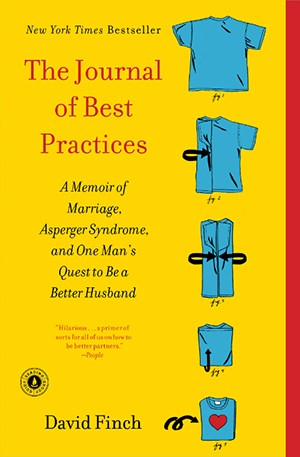
Dave Finch is the author of the New York Times bestselling memoir, The Journal of Best Practices: A Memoir of Marriage, Asperger Syndrome, and One Man’s Quest to Be a Better Husband. As a writer and creative consultant, his work has appeared on ABC, CBS, NBC, CNN, NPR, SiriusXM, The New York Times, Rolling Stone, The Howard Stern Show, and the award-winning Netflix series, Atypical. Based in Denver, Dave’s company, Elevated Studio, produces this podcast and other recognized series.
Visit Dave’s website here
“I have read a million and one books on Autism. Uniquely Human is the best book I have ever read, hands down. Thank you Barry for this incredible gift!!!!”
– Navah Paskovitz, Mother of three boys with Autism, Co-Founder, the Ed Asner Family Center
“Compassion, learning and supportive strategies–the three essentials for working with folks with ASD–are an integral part of this must-read book.”
– Michelle Garcia Winner, Speech Language Pathologist and Founder of Social Thinking
“Thanks be to Barry for the first-ever must read written for parents, educators, and clinicians.”
– Michael John Carley, Founder, GRASP; Author of Asperger’s From the Inside-Out
“What makes the book compelling is how funny Mr. Finch is about himself. He’s great company.”
– Susannah Meadows, The New York Times
“In this hilarious memoir (which also gives some of the finest explications of Asperger’s out there), Finch approaches trying to be a better husband and father with the determination of Sherman marching on Atlanta.”
– Judith Newman, People (4/4 stars)
“Talk about being on a roll. This dude wrote a book, he has Asperger’s syndrome. He cured himself by listening to me on the radio!”
– Howard Stern