
EPISODE 166
How to Make Health Care Neurodiversity-Affirming:
A Discussion with Dr. Mel Houser
A Discussion with Dr. Mel Houser
Play the Episode…
Show Notes
Dr. Mel Houser, MD, physician and founder of the All Brains Belong health care community, explains how current healthcare systems fail neurodivergent people. Dr. Mel explains how traditional healthcare settings create barriers that don’t accommodate neurodivergent needs, and how practices in All Brains Belong, guided by universal design principles, emphasize the importance of elevating lived expertise by telling patients “you are the expert in your body.” The discussion also covered how neurodivergent people often present with intertwined neuroimmune conditions that traditional 10-15 minute medical visits cannot properly address. Dr. Mel concluded by outlining three concrete changes needed in American healthcare systems.
Learn more about All Brains Belong
Featuring

Dr. Mel Houser, M.D
Dr. Mel Houser, M.D. is an Autistic/PDA/ADHD/dyslexic/dyspraxic/dyscalculic Board Certified Family Physician. Except for the doctor part, she didn’t know any of these things about herself until age 37. “Dr. Mel” is the Founder and Executive Director of All Brains Belong, a health care practice and educational practice in Vermont. Dr. Mel is passionate about helping patients of all ages learn about their brains and build connections to overcome society’s broken systems and discover the truth that “there is no one right way to be a person,” (to quote her child at age 5). In addition to providing medical care to neurodivergent patients through the lifespan, Dr. Mel also provides neurodiversity training to healthcare practices and workplaces around the country about how to create environments where people with all types of brains can get their needs met and thrive. She is the author of the forthcoming book, A Failure of Imagination: How the Healthcare System Fails Neurodivergent People–And What We’re Doing Instead
Uniquely Human: The Podcast
EPISODE 166
HOW TO MAKE HEALTH CARE NEURODIVERSITY-AFFIRMING:
A DISCUSSION WITH DR. MEL HOUSER
🎤 Transcript and Audio Usage Disclaimer
© Uniquely Human: The Podcast. All Rights Reserved.
The contents of this podcast, including all audio recordings, transcripts, and related materials, are the intellectual property of Uniquely Human: The Podcast and its fiscal sponsor, Community Autism Resources, a registered 501(c)(3) nonprofit organization.
These materials are provided solely for personal, educational, and non-commercial use.
No portion of the podcast audio, transcript, or any derivative materials may be reproduced, redistributed, modified, or publicly displayed without prior written consent from Uniquely Human: The Podcast or its authorized representatives.
Transcripts are provided for accessibility and reference purposes. They may contain minor transcription or formatting errors. When quoting or referencing the podcast, please credit Uniquely Human: The Podcast and provide a link to the original episode page.
By accessing or downloading transcripts, you agree to comply with this usage policy and acknowledge that all copyrights, trademarks, and intellectual property rights remain the exclusive property of Uniquely Human: The Podcast and its creators.
For permissions or inquiries, please contact:
📧 uniquelyhumanpodcast@gmail.com
Podcast Disclaimer
[00:00:00] UHP: The primary purpose of Uniquely Human: The Podcast is to educate and inform. The views expressed during all episodes are solely those of the individuals involved and do not constitute educational or medical advice. Listeners should consult with professionals familiar with each individual or family for specific guidance. Uniquely Human: The Podcast is produced by Elevated Studio. Music is graciously provided by Matt Savage of Savage Records.
Meet The Hosts
[00:00:39] Barry: Hi, I’m Dr. Barry Prizant, clinical scholar, researcher, and consultant on autism and neurodiversity, and a Brooklyn boy raised in the big city.
[00:00:49] Dave: And I’m Dave. I’m none of those things, and I grew up on a farm in Illinois. But being on the spectrum myself, I have plenty of personal insight to lend.
[00:00:59] Barry: And this is Uniquely Human: The Podcast, a show that illuminates and celebrates autism and neurodiversity.
Welcome Back Dr. Mel
[00:01:14] Barry: Today on Uniquely Human: The Podcast, we are so excited to welcome back one of our favorite guests, Dr. Mel Houser. Mel, welcome back.
[00:01:24] Mel: Thank you so much for having me. It’s great to be here.
[00:01:27] Barry: And it blows my mind a little bit — I actually have the date written down. Last time we had you on the podcast was four years ago, August 5th, 2022.
[00:01:38] Dave: What? We’ve been doing this podcast for longer than four years?
[00:01:47] Dave: When you’re having fun, it does. I would’ve guessed maybe 18 months, not 48.
[00:01:55] Barry: Yeah. Well, we have so much to get caught up on with everything you’ve been doing, Mel, including your new forthcoming book.
Who Is Dr. Mel Houser
[00:02:04] Barry: But for those who haven’t had the opportunity to know of you or listen to our previous podcast together, just a little bit of background. Dr. Mel Houser is an MD — and is an autistic, PDA, ADHD, dyslexic, dyspraxic, dyscalculic, board-certified family physician.
[00:02:33] Mel: Putting that into acronyms would exceed working memory.
[00:02:36] Barry: That’s right. Except for the doctor part, she didn’t know any of these things about herself until she was 37. Dr. Mel is the founder and executive director of All Brains Belong, a healthcare practice and educational practice in Vermont. Dr. Mel is passionate about helping patients of all ages learn about their brains and build connections to overcome society’s broken systems and discover the truth that, quote, “There is no one right way to be a person” — a line you’re quoting from your five-year-old child.
[00:03:13] Mel: That’s right. My sweet little love.
[00:03:15] Barry: In addition to providing medical care to neurodivergent patients through the lifespan, Dr. Mel also provides neurodiversity training to healthcare practices and workplaces around the country. She is the author of the forthcoming book — and what a great title — A Failure of Imagination: How the Healthcare System Fails Neurodivergent People and What We Are Doing Instead. So let’s go back four years. What have you learned since then? What has changed or deepened your thinking? You were challenging the healthcare establishment back then already. What has surprised you most?
All Brains Belong Vision
[00:04:17] Mel: When we think about it — we started All Brains Belong five years ago, and it was really this radical undertaking of partnering with patients and with the community to think about what we want healthcare to look like, what it could look like. And thinking about how healthcare is more than medical care. Yes, we have a medical practice, but it’s also about supporting people in making friends, finding and keeping jobs, accessing their education, and training the surrounding community to not only appreciate but really intentionally design environments where everybody can show up authentically and get their needs met.
Belonging Through Design
[00:04:58] Mel: What has really stuck with me over this time is how — in many ways — it’s not that hard to help people feel like they belong. It’s really about just offering everything in multiple different ways using universal design. Flexible, multiple paths to participation. And everything else follows from that. If you can fully and meaningfully participate, that sends a message: you are safe here. We wanted you to be here. We cared about you being able to be here. Whether that’s in a healthcare setting or in community programs, it just makes all the difference.
[00:05:42] Barry: Hmm. That sense of belonging is incredible. Not only did you educate the community — you created the community, and then had the community educate the community.
[00:05:59] Mel: Yes, it’s very meta. And I think that’s what has made this whole past five years be so successful. It’s really the community coming together to reimagine what healthcare and community can look like. The community has co-created everything that has happened. All our programs have been informed and driven by what community members have asked for. We’re always doing focus groups, interviews, and surveys — constantly iterating to be responsive to community need, as opposed to “this is the way we do the thing,” like happens in so many institutions.
[00:06:34] Dave: When something takes on a life of its own like this, you know you made the right thing. It shouldn’t require constantly pushing a rope up a hill. It just sparks and takes off.
[00:06:48] Mel: Totally. And because that has happened — and I’m very grateful — I’m also, honestly, losing my skills in terms of the oblique angle of making other people understand why this is important. As time goes by, I have the privilege of spending most of my day around people who get it. And I am losing interest in interacting with people who don’t.
[00:07:16] Dave: Good for you. As we all are.
Why Access Breaks Down
[00:07:29] Mel: Some people — particularly clinicians — really don’t realize how excluded neurodivergent people feel moving through daily life. They’re often surprised when they hear that patients don’t feel safe, can’t go, can’t access care, can’t pick up the phone to make an appointment, can’t log into the patient portal because of all the steps involved.
[00:07:55] Mel: And it’s not just about mentality — it’s about bandwidth. Bandwidth is in really limited supply in healthcare because the system thwarts not only patients but clinicians too. You’re seeing patients every 10 to 15 minutes. You don’t get to drink water or go to the bathroom or have lunch or make it home for dinner with your family. So the idea of “hey, can you stop and zoom out and think about how your patient feels when the fluorescent lights are on?” — people just don’t have the cognitive resources to perspective-take in that way.
[00:08:41] Barry: Being a so-called neurotypical person, you’re helping me reflect on the fact that even when I go for regular checkups, I feel, “Do I really wanna go to that?” And I should be excited to be learning more about myself.
[00:09:09] Mel: Right. It’s triage. Everybody’s triaging how they spend their energy and cognitive resources — their bandwidth budget. And no, there’s not a lot of extra.
[00:09:20] Barry: And that’s the power of your work and of All Brains Belong. You’re simultaneously looking at individual people and trying to change systems. And the message for our listeners is that so many healthcare problems are not autism problems. They are not ADHD problems. They are system problems.
Failure of Imagination
[00:09:55] Barry: And in your new book, A Failure of Imagination — what is it that’s not being imagined?
[00:10:04] Mel: First off, I love that you said you liked the title. My nine-year-old has been giving me flack for about a year about how much he hates it. But yes — the idea is that broken systems are failing not just neurodivergent people, but a lot of people, with disproportionate impact on neurodivergent people when it comes to accessing healthcare, work, school, and social relationships. But to feel that this is a foregone conclusion — that this is the only way it’s ever going to be — that’s a failure of imagination. You ask people about the system and they go, “Oh yeah, healthcare — it’s broken.” Same shrug for workplaces. Nobody thinks it could be built differently, so nobody tries.
[00:10:55] Mel: The idea of universal design takes some intention upfront, but when you make that shift in mindset, everything else follows. And it’s not that hard. What the book is trying to do is model some of the concrete, practical things you can either offer in healthcare or ask for in healthcare — offer in workplaces or ask for in workplaces — offer in community spaces or ask for in community spaces.
[00:11:24] Dave: Yes. And when the offering isn’t happening, knowing how to ask for it is so important — especially for anyone navigating a career, or anyone who’s transitioning from “my parents always took me to my doctor appointments, but now I’m on my own.” The imagination piece is so interesting because imagining anything takes time and a willingness to make the time. But in the medical system, with the amount of patients they have to see and the administrative follow-up per patient, that’s a huge challenge — asking anyone in that system, at the leadership level or just the doctors going from patient to patient, to sit there and say, “Imagine a different way.”
[00:12:40] Mel: People feel like they’re drowning. And when you think about neurodivergent burnout — you just don’t have the executive functioning skills. You lose them. So for me, I really needed to break free of the constraints of the traditional healthcare system to recover the bandwidth to do anything differently. But folks in traditional systems can still make changes — they don’t need to completely revolutionize their lives.
Small Changes That Matter
[00:13:16] Mel: It can be little things — like just asking, “Do you prefer the lights on or off?”
[00:13:22] Dave: Exactly. “How are we feeling today? Do you need a minute? What do you need?” Instead of just, “Hi, I’m Dr. So-and-so, what’s going on today?”
[00:13:31] Mel: Right. And that script — that question — is actually not accessible to a lot of people. Open-ended questions like that get asked in healthcare, and I even remember as a college student interviewing for my first real job, and they said, “So tell me about yourself.” I had no idea what people were asking me.
[00:13:59] Dave: Same. “Oh, why don’t you go around the room and introduce yourselves?” It’s like, “I don’t know. I’m made of carbon. I’ve got some hydrogen in there, oxygen.”
[00:14:12] Barry: I have five fingers and…
Hidden Barriers in Clinics
[00:14:19] Barry: So if you would give some examples — because we have a very diverse listenership — of what even “good and more compassionate” healthcare providers may do that seems completely normal to most people, but really creates barriers. And maybe how you’ve changed that within All Brains Belong.
[00:14:56] Mel: So even before you arrive — you have to pick up the phone or log into the portal. But then you arrive and the waiting room is chaotic. It might be loud. You might walk in and someone’s coughing, and all of a sudden you have this nervous system response: this is not good for me. Or there are clocks that tick. I had healthcare today, and in the exam room, there’s a clock ticking. Why do we need clocks that tick? Or the fluorescent lights are left on, and you’re waiting 45 minutes in the exam room for the clinician to come in. It would’ve been nice for someone to say, “Do you want the lights on or off?”
[00:15:51] Mel: You know, this is not that hard. I have the privilege of feeling like I can ask for some things — “Do you mind hitting the lights on the way out?” But a lot of people don’t know they can ask for things like this.
[00:16:10] Dave: Right. And you’ve practiced saying it, too.
[00:16:13] Mel: I’ve practiced saying it a lot — actually as a parent, even before I knew anything about my own brain. I had many layers of privilege: I’m a doctor, I have experience navigating the healthcare system, I’m white and educated. My child got primary care at the practice where I used to work, so I knew the people and had comfortable relationships. It wasn’t a big deal for me to say, “Hey, can we do the 18-month well-child visit in the parking lot because my child can’t come into buildings?” They’d never been asked that before, but they were happy to do it.
Menus and Universal Options
[00:16:53] Mel: So now at All Brains Belong, we don’t wait for people to ask for things — we offer them. “Hey, do you want your appointment indoor, outdoor, in your car, or telehealth?” “When you wait, do you want to wait in the waiting room or in your car and we’ll text you when we’re ready?” “Do you want the lights dim or bright?” We tend not to use the overhead lights because people don’t want them — and neither do we — but they’re there if someone needs a bright space. And everybody’s offered a menu.
[00:17:30] Mel: And in the book we go into a lot of detail about this. We can link in the show notes — at the beginning of September we’re launching a free universal design toolkit. One for healthcare, one for workplace onboarding, and one for community gatherings. It’s a menu you can use on its own or adapt into your own systems. And if you’re a participant in one of those three settings, you’ll have ideas for what you might be able to ask for.
[00:18:12] Dave: That’s a roadmap — and that’s all we need. And I think something that helps one person helps everyone.
[00:18:29] Mel: Exactly. Much like curb cuts help people who are pushing strollers and shopping carts, not only people who are using wheelchairs.
[00:18:37] Barry: Yes. And it does demand a mindset change. What comes to mind is one of our previous guests, Becca Lory Hector, talking about, “I didn’t even know there was this concept of asking for help, and that it’s okay to ask for help.” Just this sense of self-determination and knowing what you need and that you’re allowed to name it.
Shame and Power Dynamics
[00:19:09] Barry: Even when I go to a medical setting now, for a regular checkup, I feel like a kid going to the principal’s office. Okay, what did my body do wrong?
[00:19:23] Mel: Yeah. I went to the dentist yesterday, and that’s all it was — you go in and shame is just flung at you. You’re not doing it right, you’re not brushing and flossing well enough, you’ve got buildup. Why would I come back to this? I come back because I can cortically override it — it’s good for my health — but everything about it is terrible. And that’s how a lot of people feel about a variety of healthcare settings.
[00:19:52] Barry: I actually changed dentists two years ago for that very reason — a dental hygienist one-third my age telling me all the things I’m doing wrong. Now I go to a dentist who says, “You know, you’re doing a good job. You might try this a little bit, but you’re still doing a good job.”
[00:20:13] Mel: Yes. And I think what we hear from patients is that there are so many levels of that. You go in and get the offhanded comment, “Oh, well, you know, if you lost ten pounds…” These things are so baked into medical culture that they seem like everyday things to say. But heads up: people don’t like that. They feel unsafe when you shame them. They do not want to interact with people who shame them. Surprise. But yet it is a surprise.
[00:20:48] Barry: Yes. And what’s unfortunate is that a few times in the last year I’ve walked out of a specialist’s office saying, “Wow, what a cool person. I felt good about that.” And then thinking — why should I be surprised about that? The bar is pretty low. This person was genuinely interested in me and really listened. Why should that be such a surprise?
[00:21:17] Barry: So in a sense we’re talking about this equanimity, this co-creation between a clinician and a patient — working together as partners. Give us a few more examples of how you do things differently. You spoke about the sensory environment, the lights, universal design — but beyond trusting someone simply because they have degrees after their name.
Elevating Lived Expertise
[00:22:01] Mel: It’s really important to elevate lived expertise. We are striving to flatten the hierarchy. We explicitly tell patients, “You are the expert in your body.” We’re here as a guide, but really you know yourself. And a lot of people have never been taught that — they’ve actually been taught the opposite.
[00:22:30] Mel: Among the people who come to us for medical care — who often have long-standing medical problems and feel they haven’t been able to get their needs met in traditional healthcare — they often have patterns of intertwined medical conditions. And I think when we last spoke in August 2022, we may have been just starting to see this, because it was early.
Intertwined Neuroimmune Conditions
[00:23:02] Mel: Now, 87% of our practice has a constellation of intertwined neuroimmune conditions. Things like hypermobility, dysautonomia — or a subtype called POTS — mast cell issues, irritable bowel syndrome, migraine, or post-infectious chronic illness like long COVID. These things are really common. And each of them is known to be more common in autistic and ADHD people. These conditions are all known to be related to each other.
[00:23:30] Mel: But the problem with the traditional healthcare system — with your 10-to-15-minute visit — is that clinicians don’t have enough time to zoom out. You come in, you get one problem at a time. But these medical problems are actually intertwined, so sometimes the standard management of some parts of the cluster actually makes the other parts worse. You have to think about the whole body as a whole intertwined system. The gastroenterologist is not reading the cardiology literature. The immunologist is not reading the neurology literature. And this cluster is largely absent from medical education entirely. So even a clinician with great instincts hits a wall in 10 minutes. And the stakes of that are real.
Everything Is Connected Toolkit
[00:24:33] Mel: A few years ago we partnered with our community — a multidisciplinary task force of clinicians and patients working together, going through the literature, talking about what real-life experience has been like — and we put it all together into a free tool called Everything’s Connected to Everything: Improving the Healthcare of Autistic and ADHD Patients. It’s free on our website, and it’s a toolkit for both patients and clinicians to work through these problems together.
[00:25:04] Barry: I recall that when you were a guest previously, you raised this issue almost at an awareness level. And now you’re doing a much deeper dive based on so much experience. And this group coming together is just a concrete representation of how we need to speak across disciplines and across patient-doctor relationships.
Medical Mystery Frustration
[00:25:35] Dave: We are more technologically advanced every year, and shouldn’t there be some capacity for these systems to talk to each other? Because I have a child still dealing with real, serious stuff — you go in and everybody shrugs and says, “Well, that’s weird. I don’t know. I don’t know why you’re dizzy for two weeks and then can’t get out of bed for another two because you’re exhausted.” What do you mean? Draw the blood. Look at the numbers.
Doctor Friendly Intro Letter
[00:26:17] Mel: So part of the toolkit is a letter written in language that primary care clinicians are used to speaking. It was vetted by traditional primary care physicians — “Yeah, if somebody brought me this letter, I would read it.” It introduces the project and supports clinician autonomy in exploring the resources on their own. Because what happens is somebody is the expert in their own health, and if they bring information to you as a clinician, you should be grateful. But when you’re drowning, unsolicited information is very hard. This letter is half a page — it plants the seed. There’s this project. It works best when the patient hands it over without printing out the rest of the project. “Hey, can we look at this letter together during my appointment today?” We’ve gotten feedback that that lands well and has resulted in some very helpful therapeutic partnerships between doctors and patients.
[00:27:31] Dave: That’s amazing. Because I’ve gotten to the point where I was ready to chain the hospital door shut and say, “All right, nobody’s leaving this building until this is figured out. You’re all very smart. Everybody get in here and figure out what this problem is.”
Translating Patient Language
[00:27:56] Mel: We know these patterns, and the toolkit has a whole section on the actual words — because these were all focus-grouped. This was co-created with more than 100 autistic and ADHD patients telling us what words they used to describe their symptoms, which were different from the words clinicians were used to hearing. It’s Dr. Damian Milton’s double empathy problem — that mismatch of communication. We end up in 10 minutes having arrived at nothing because we’re not speaking the same language. So the toolkit says: here are the words that people use, here are the diagnoses that belong to this cluster, and there’s a 16-page evidence-based clinician guide written in the language clinicians are used to receiving — all the literature on how these things connect, how you make these diagnoses, and how you manage these conditions with regard to the whole intertwined cluster.
Universal Design Health Literacy
[00:29:03] Barry: When you talk about universal design — it’s almost like a Google Translate. Let’s make sure we’re understanding the words and the concepts, and if necessary, translate into the language that person actually uses. How many of our listeners, regardless of who they are, walk out of a healthcare visit saying, “I wish I understood half of what I was just told”?
[00:29:35] Dave: Yep. Not only do you not speak medical jargon — do you speak the healthcare system?
[00:29:43] Mel: Or it’s not even in a format that’s meaningful. “Hey, we just had a conversation about blood pressure, so I’m going to print out this 20-page packet from the electronic health record about your sodium and diet and 150 minutes of exercise.” That is not how I receive information.
[00:30:03] Dave: I know. My most recent cholesterol workup from my annual checkup — I’m looking at “20 microliters per MB” and thinking, that’s gotta be a hell of a number. I don’t know what this means. None of it means anything.
[00:30:21] Mel: Right. Health literacy is just not considered a lot of the time. I remember in residency talking with a patient about red meat and how often they eat it, and the patient — without missing a beat — said, “No way, I cook my hamburger all the way through.” Red meat. And that was really humbling. I don’t think I’m using jargon, but I’m actually not bridging the gap to the language that this person uses in their world.
Beyond Autism Labeling
[00:31:06] Barry: I want to return to something we discussed the first time — the issue of any symptoms being reported getting automatically attached to the autism label or the ADHD label. The highest level of ignorance from a healthcare professional: “Well, you’re autistic — of course that’s why.” Can you speak to that, and to this idea of feeling permission to say “it’s not that simple”?
[00:31:47] Mel: So two different things about that. One is this arbitrary distinction between the brain and the body, the brain and the mind — it’s not helpful. It’s all just health. Your nervous system runs through your whole body. What I see a lot is autistic people who have received a whole bunch of mental health diagnoses, often without autism even being on the list — they get ADHD, social anxiety, social communication issues, OCD, dyspraxia — but we’re not zooming out to recognize these patterns all as part of one thing.
[00:32:55] Mel: And then two — some of those diagnoses may themselves be misattributed. For example, I’ve had patients told they’re having panic attacks. But when I say, “Tell me more about that,” the person actually has dysautonomia — a dysregulated autonomic nervous system — which is treated entirely differently than panic disorder. A lot of things get ascribed to “mental health” without recognizing that the nervous system is part of the rest of the body, and that the nervous system crosstalk to the immune system. When a patient shows up with a whole cluster of mental health diagnoses, often there’s no zooming out to think about what else might be going on.
[00:33:40] Mel: But the flip side is also positive: when you have an autism or ADHD diagnosis and you walk in with that Everything’s Connected letter — especially for adults, where a lot of doctors know they didn’t get any training in what to do for autistic and ADHD adults — they’re really open. “Here’s a toolkit that shows you what to do for autistic and ADHD health.” And then they’ll start seeing those patterns: “Oh, that’s exactly what you’ve been telling me. How interesting.”
Neuroimmune Stress Response
[00:34:33] Mel: A second layer of this is recognizing that autistic people moving through the world are having constant threat responses — whether from the sensory environment, communication challenges, executive functioning demands, or all of it. And when the nervous system gets dysregulated, that impacts everything: blood sugar stability, immune function, digestion, all of it. It’s not random that autistic people have “more medical problems.” It’s that their neuroimmune systems are sounding the alarm to things that are not safe.
[00:35:19] Dave: Yes. And the assumption from the healthcare professional might be that it’s all or mostly behavioral — not the fully integrated nervous system feeding the rest of the body and vice versa. Like, this autistic brain may be so hyper-responsive to the smallest things that it then creates physical changes. Inflammation is a real physical thing. And maybe that inflammation comes from the way the brain responded to whatever stimulus. Am I getting that roughly right?
[00:36:11] Mel: Yeah, definitely. What we hear from a lot of people is they’ll go see their clinician and be told, “Well, are you stressed?” And I’ve never met an autistic person who’s not stressed — because the world is not designed for us. And that shows up in complex chronic medical conditions.
[00:36:40] Mel: And it’s not about reducing stress. It’s about holistic support for the neuroimmune system — which is going to be a combination of things. Yes, there may be medications and supplements that support the neuroimmune system. But also, if there are unsafe factors in the environment, those need to be addressed. Whether it’s something you’re eating, something you’re breathing, or something like long COVID — or another cause for myalgic encephalomyelitis where your mitochondria aren’t making enough energy and you’re crashing. You actually need to learn about what is draining your energy and pacing things. And not just physical or cognitive effort — for me, I’m reclined right now as I’m talking to you because talking with mouth words drains my battery more than almost anything else I do. I have long COVID, so I have to balance the orthostatic load with the actual demand of talking.
Workplace Universal Design
[00:38:15] Dave: Just thinking outside of healthcare for a moment — if we swap out Mel as a medical professional and make her a marketing executive, she might need to attend the Teams meeting reclined. And how do you adequately express that to everyone without sounding even weirder? That’s where playbooks, roadmaps, and resources are helpful. These principles extend far beyond healthcare.
[00:38:49] Mel: Definitely. And the book has two chapters on workplaces, because if you have these workplace conditions, they’re going to impact your health. What we start in healthcare we can apply in all these other settings. And whether it’s healthcare or workplaces, power dynamics are really important. This has to come from leadership modeling: “I care about your having your access needs met.” Access needs being what anyone needs for full and meaningful participation. “I’m not going to make you wait until you hit a wall and disclose a disability and go down the formal request-for-reasonable-accommodations pathway under the ADA.”
[00:39:30] Mel: That pathway exists, but maybe we can prevent people from needing to go there by just using universal design. “I don’t need you to disclose a disability to me. I just want to know what you need, and here are some options.” Not as a special deal — as a team conversation. I hear sometimes from organizations, “Well, people get special treatment.” But universal design is not about special treatment. It’s about offering multiple paths of participation. Disability accommodations aren’t about special treatment either — they’re about leveling the playing field so that people can access what they’re trying to access.
Humility In Healthcare Change
[00:40:17] Barry: In terms of systems change — doesn’t it demand a certain level of humility to accept the fact that we’re doing a lousy job here? I want to share that I was invited to speak at a conference in the Netherlands organized by Dr. Felix Kreier, an autistic physician. The attendees were healthcare professionals — mostly physicians from 22 countries — focused on emergency department and painful procedures for neurodivergent people. And the humility in that room — the acknowledgment that “we are not getting it right with neurodivergent people” — was extraordinary. A dentist from Dublin, Dr. Rosemary Daly, with a very creative practice supporting neurodivergent people. People saying openly, whether it’s inoculations or emergency admissions: we’re getting it all wrong. We are here to admit that, and to figure out how to do it better. Compare that to so many American conferences where people say, “Oh, we’re doing it so well.” Such a huge difference in knowing what you don’t know and saying, “We need help.” And there were neurodivergent people on the program sharing their experiences — it was just so refreshing.
[00:42:13] Mel: It’s such a cultural difference. That humility piece is so important. And when I look back on things I’ve gotten wrong over the course of my career, there’s often a lot of regret and shame. But we all just keep learning.
[00:42:35] Dave: That’s what I wear to medical conferences in the United States: a proud buckaroo, not changing my opinion for no one.
[00:43:01] Barry: For those just listening, Dave is wearing an oversized cowboy hat that an oil baron would probably wear. Dave wears it for yard work so he doesn’t get a sunburn on his neck.
Three Fixes For US Care
[00:43:06] Barry: What would be three things that could make the American healthcare system genuinely neurodiversity-affirming? This is our wish list — but also a list of things we have to move toward.
[00:43:31] Mel: Three concrete things. One: universal design. Designing around offering multiple paths to participation. Think through the whole flow of a patient through the system — becoming a patient, making an appointment, arriving, the waiting room, the exam room, post-care follow-up. Can we offer at least two paths to participation at each of those stages? More would be better, but at least two.
[00:44:05] Mel: Two: train clinicians to see connected patterns — not isolated symptoms. Particularly the neuroimmune cluster that’s missing from most medical education. We have free resources for clinicians who want to learn: both the toolkit and free recorded webinars. There’s lots of information on our website.
[00:44:20] Mel: And three: make believing patients the baseline standard of care. Not something a patient has to earn by presenting in the “right” way. Just take people at their word. If I don’t understand your word, I’m going to partner with you to get more information in a way that works for you to communicate it. We’re not going to evaluate whether this is happening, yes or no. It’s happening because you said it’s happening.
[00:44:54] Dave: Thank you. I mean — is there a scourge of millions of people walking into doctor’s offices every day making things up because they didn’t have something better to do? I don’t think so.
[00:45:05] Mel: No. Medical education is often top-down: here’s the diagnosis, here’s how people present, here are the supportive tests. That’s not how humans come in. They come in bottom-up. They have their unique ways of describing what’s going on in their body. And if your brain can zoom in and zoom out and do the interconnected systems thing, great. If it can’t — maybe you’re stuck on what you were taught and over-rehearsed in your neural pathways. It’s really just bridging the double empathy problem again.
[00:45:46] Barry: Mm-hmm. Brilliant.
Resources And Closing
[00:45:49] Barry: And in your new book, A Failure of Imagination, you do a much deeper dive into these issues than we’re capable of getting into here. There will be links on the webpage connected to this episode — not only a link to pre-order the book, but also the All Brains Belong website, and so many of the resources you’ve mentioned.
[00:46:15] Mel: We’d love for folks to connect. Our free community programs are open to everyone. For adults, we have Brain Club — a weekly virtual community education program about neuro-inclusive culture. It’s recorded, so you can catch up on five years of archives. And for kids and teens, we have Kid Connections, where a kid or their caregiver fills out a profile about what they love and what makes them feel comfortable in relationships, and we make a customized friend match. Open to anyone, all over the world.
[00:46:52] Barry: Wow. And if you have the chance to watch any of the webinars that All Brains Belong presents — I’ve done a number of them already — it’s just amazing information. And as you already know, Dr. Mel is an amazing communicator. Terrific.
[00:47:12] Mel: I should also mention — we’re doing a webinar in October about universal design in healthcare, workplaces, and community gatherings, walking people through the new toolkit.
[00:47:24] Barry: Perfect timing. This episode will be out before then, so that’s terrific. What can I say but thank you so much again. We’re so grateful for your time.
[00:47:44] Mel: We’re all moving forward together. Thank you so much for having me.
[00:47:52] Dave: Please keep writing books.
[00:47:56] Mel: I don’t know about that. It took a lot of energy.
[00:47:57] Dave: Let me help. You can dictate — it’ll be like the end scene in Amadeus. You’ll dictate to me, and I’ll be writing furiously with a quill.
[00:48:06] Mel: Teamwork. Interdependence. I love it.
[00:48:09] Dave: I’ll be your Salieri.
[00:48:10] Barry: That’s right. Take care, be well, and we will stay in close touch.
[00:48:19] Mel: Sounds amazing. Thank you so much.
…and Continue the Discussion
Do you have a book or podcast club? If so, you may use this discussion guide to facilitate a conversation about this episode.
1. What does Dr. Mel share that she has learned over the past five years since founding All Brains Belong that has changed or deepened her thinking and practices? What in particular resonates with you and your experiences with health care?
2. Dr. Mel argues that many healthcare problems aren’t really “autism problems” or “ADHD problems” but problems created by the way the healthcare system itself is designed. She provides examples of health care practices that may seem completely normal (i.e., business as usual) to most clinicians but is actually creating barriers for neurodivergent people. What kinds of barriers have you or someone you know experienced directly in accessing health care? How do those experiences make you feel, and do they discourage your interest in accessing healthcare?
3. Dr. Mel suggests three things that need to change about the American healthcare system to make it genuinely neurodiversity-affirming, and that not only would better support neurodivergent people, but all people. Do you agree, and are there any other changes you would make?
HOSTED BY
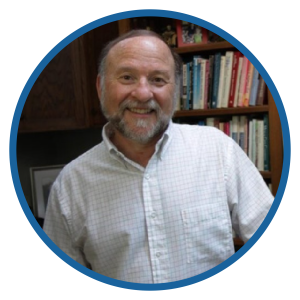
Barry Prizant, Ph.D., CCC-SLP
Dr. Barry Prizant is a speech-language pathologist with more than 50 years experience as a researcher and international consultant for autistic and neurodivergent individuals and their families. He is an Adjunct Professor of Communicative Disorders at the University of Rhode Island and Director, Childhood Communication Services (a private practice). Previously, he served as Associate Professor in the Department of Psychiatry in the Brown University School of Medicine, and held a tenured professor appointment at Emerson College. Publications include 5 books, most notably Uniquely Human: A Different Way of Seeing Autism (2015; 2022) and The SCERTS Model manuals, an educational approach implemented in more than a dozen countries. He has published 150 scholarly chapters and articles and serves on numerous professional advisory boards for journals and professional organizations. Barry has presented more than 1000 seminars and keynote addresses internationally, including two invited presentations at the United Nations for World Autism Awareness Day. His career contributions have been recognized with honors from Brown and Princeton Universities, the Autism Society of America and the American Speech-Language-Hearing Association.
Visit Barry’s website here
Uniquely Human, the book (Updated and Expanded edition!)
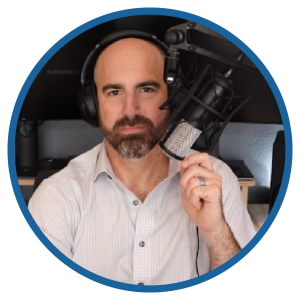
Dave Finch
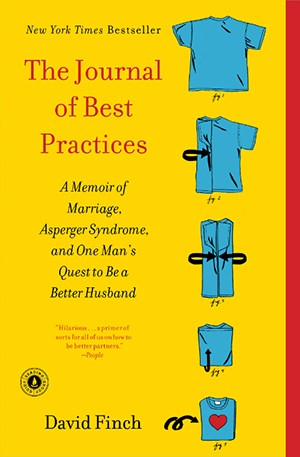
Dave Finch is the author of the New York Times bestselling memoir, The Journal of Best Practices: A Memoir of Marriage, Asperger Syndrome, and One Man’s Quest to Be a Better Husband. As a writer and creative consultant, his work has appeared on ABC, CBS, NBC, CNN, NPR, SiriusXM, The New York Times, Rolling Stone, The Howard Stern Show, and the award-winning Netflix series, Atypical. Based in Denver, Dave’s company, Elevated Studio, produces this podcast and other recognized series.
Visit Dave’s website here
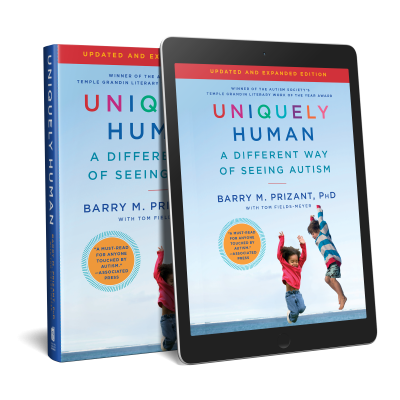
“I have read a million and one books on Autism. Uniquely Human is the best book I have ever read, hands down. Thank you Barry for this incredible gift!!!!”
– Navah Paskovitz, Mother of three boys with Autism, Co-Founder, the Ed Asner Family Center
“Compassion, learning and supportive strategies–the three essentials for working with folks with ASD–are an integral part of this must-read book.”
– Michelle Garcia Winner, Speech Language Pathologist and Founder of Social Thinking
“Thanks be to Barry for the first-ever must read written for parents, educators, and clinicians.”
– Michael John Carley, Founder, GRASP; Author of Asperger’s From the Inside-Out
“What makes the book compelling is how funny Mr. Finch is about himself. He’s great company.”
– Susannah Meadows, The New York Times
“In this hilarious memoir (which also gives some of the finest explications of Asperger’s out there), Finch approaches trying to be a better husband and father with the determination of Sherman marching on Atlanta.”
– Judith Newman, People (4/4 stars)
“Talk about being on a roll. This dude wrote a book, he has Asperger’s syndrome. He cured himself by listening to me on the radio!”
– Howard Stern