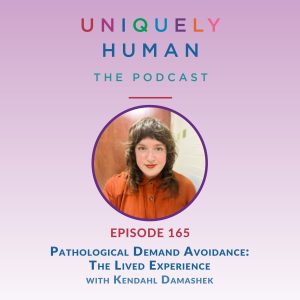
EPISODE 165
Pathological Demand Avoidance: The Lived Experience, with Kendahl Damashek
Play the Episode…
Show Notes
Barry and Dave speak with Kendall Damashek, a parent coach and expert on the topic of PDA. Kendall shared her personal and professional insights into PDA, explaining it as a survival drive for autonomy and equality rather than a pathology. She discussed the physiological and nervous system responses that individuals with PDA experience, emphasizing that these are not conscious choices but reactions to perceived threats to autonomy. Kendall addressed common misconceptions, such as labeling PDA behaviors as oppositional or defiant, and highlighted the importance of understanding the internal experience of those with PDA, and she provided practical strategies for parents and caregivers, including giving more autonomy, fostering equality, providing nervous system safety, and lowering demands.
Featuring

Kendahl Damashek
Kendahl Damashek is the Director of Content and Curriculum and a Parent Coach at At Peace Parents, a neurodiversity-affirming organization training parents, grandparents, therapists, teachers, and others to understand and support PDA children and teens around the world. She brings a unique perspective as a PDA Autistic mother raising four PDA children ages 10 and under, extensive coursework in psychology and neuroscience with a B.A. from Amherst College, and has directly supported hundreds of families through her coaching work at At Peace Parents. Kendahl specializes in supporting families of “2E” (gifted and PDA) children and has spoken on PDA at the Neurodiversity Ireland conference at Trinity College Dublin, AANE, and Jowonio Preschool. She has authored writing on PDA for AANE and been interviewed on the I Have ADHD podcast.
Learn more about At Peace Parents
Uniquely Human: The Podcast
EPISODE 165
PATHOLOGICAL DEMAND AVOIDANCE:
A DISCUSSION WITH KENDAHL DAMASHEK
🎤 Transcript and Audio Usage Disclaimer
© Uniquely Human: The Podcast. All Rights Reserved.
The contents of this podcast, including all audio recordings, transcripts, and related materials, are the intellectual property of Uniquely Human: The Podcast and its fiscal sponsor, Community Autism Resources, a registered 501(c)(3) nonprofit organization.
These materials are provided solely for personal, educational, and non-commercial use.
No portion of the podcast audio, transcript, or any derivative materials may be reproduced, redistributed, modified, or publicly displayed without prior written consent from Uniquely Human: The Podcast or its authorized representatives.
Transcripts are provided for accessibility and reference purposes. They may contain minor transcription or formatting errors. When quoting or referencing the podcast, please credit Uniquely Human: The Podcast and provide a link to the original episode page.
By accessing or downloading transcripts, you agree to comply with this usage policy and acknowledge that all copyrights, trademarks, and intellectual property rights remain the exclusive property of Uniquely Human: The Podcast and its creators.
For permissions or inquiries, please contact:
📧 uniquelyhumanpodcast@gmail.com
Podcast Disclaimer
[00:00:00] UHP: The primary purpose of Uniquely Human: The Podcast is to educate and inform. The views expressed during all episodes are solely those of the individuals involved and do not constitute educational or medical advice. Listeners should consult with professionals familiar with each individual or family for specific guidance. Uniquely Human: The Podcast is produced by Elevated Studio. Music is graciously provided by Matt Savage of Savage Records.
Meet The Hosts
[00:00:39] Barry: Hi, I’m Dr. Barry Prizant, clinical scholar, researcher, and consultant on autism and neurodiversity, and a Brooklyn boy raised in the big city.
[00:00:49] Dave: And I’m Dave. I’m none of those things, and I grew up on a farm in Illinois. But being on the spectrum myself, I have plenty of personal insight to lend.
[00:00:59] Barry: And this is Uniquely Human: The Podcast, a show that illuminates and celebrates autism and neurodiversity.
Introducing Kendahl
[00:01:14] Barry: Today on Uniquely Human: The Podcast, we are going to focus on a very, very important issue, and that is PDA — and we’ll be talking about the various ways to interpret that acronym. But we are thrilled to have Kendahl Damashek with us. Welcome, Kendahl.
[00:01:43] Kendahl: Thank you so much for having me. It’s an honor to be here.
[00:01:46] Barry: And it’s a pleasure to have you. I think you’re the perfect person for us to have discussing this topic. Kendahl Damashek is a parent coach and Director of Content and Curriculum for At Peace Parents. She brings her unique experience as a PDA autistic mother raising four PDA children under the age of ten. She has an educational background in psychology and neuroscience with a B.A. from Amherst College — just a little bit north of where I am here in Rhode Island.
[00:02:25] Kendahl: Yeah, exactly.
[00:02:27] Barry: Kendahl was the lead research assistant on a project studying therapeutic alliance at UMass Amherst, and worked with middle school children in San Francisco before focusing her energy and creativity on parenting and caregiving. So you have both the lived experience as well as the content expertise.
What PDA Feels Like
[00:02:46] Barry: So let’s start with square one. So many people have heard the term “pathological demand avoidance” — one interpretation of PDA — but not everyone understands what it actually feels like. How is it typically defined, and what goes on inside your mind and body since you live PDA?
[00:03:07] Kendahl: Yeah. So typically nowadays, the definition you’ll hear is that it’s an anxiety-based need for control. But I don’t find that to be consistent with my experience or with the experiences of the families I work with. At At Peace Parents, we define it as a survival drive for autonomy and equality that consistently overrides other survival instincts — such as eating, sleeping, toileting, hygiene, and/or safety — and this can be in the moment or over time as nervous system activation accumulates.
Autonomy Versus Demands
[00:03:46] Kendahl: And I think it’s important to distinguish that it’s not just about demands. When something feels externally imposed, yes, we can look at it as a demand or a loss of autonomy. But there are also things that are demanding that aren’t avoided. For instance, when I’m regulated and focusing on my special interest, I could be working until one or two in the morning responding to families in our programs — and that doesn’t feel like a demand. If I’m going thrift shopping, that’s a special interest of mine, so that doesn’t feel like a demand either. But when there is a loss of autonomy around whether or not we get to do the activity, that’s when those demand-avoidant behaviors crop up.
[00:04:30] Kendahl: And what that feels like can vary. For example, I worked as a grant writer for a while. My boss was a very pleasant human, and I remember her coming over to sit at the corner of my desk just to have a nice chat — “How is your day going? What are you working on?” But my whole body started shaking. My cheeks got flushed. My arms felt like they were vibrating. When she left, I started crying, processing: “Wait, what just happened? This is a normal interaction.” But it felt terrible in my body.
[00:05:30] Kendahl: The reason is that I didn’t have a choice in whether or not I had that conversation — so there was a loss of autonomy. And there was also a loss of equality, where this person who has authority over me was sitting above me on my desk while I was in my chair below. I couldn’t even have labeled it with an emotion at the time. I didn’t feel scared even though I was shaking. I wasn’t feeling anything in terms of an emotion word. It was really a physiological response to a perceived threat to my safety.
Nervous System Not Defiance
[00:06:41] Kendahl: That’s an important thing to distinguish — a lot of times, especially with externalized PDA kids, we’ll try to label what it feels like for them. “Oh, you must be feeling frustrated. You must be really sad. You must be really angry.” And a lot of times PDA kids will get very upset when people try to label emotions, which can work well in other contexts but isn’t accurate here. Because this is a nervous system response — not an emotional one. Some people feel tightness in the chest, some feel heart palpitations. There are all these physiological ways it can come through in the body.
[00:07:35] Barry: Hmm. And it speaks against labels that may be put on kids — that the child is oppositional, or manipulative, or defiant. But as you stated so beautifully, this is a neurologically based physiological reaction. It’s not, “Oh, I don’t like what you’re doing, therefore I’m consciously making a decision to push back against you.”
[00:08:09] Kendahl: Yeah, exactly. This is one of the biggest misconceptions around trying to figure out what is happening with kids who happen to be PDA — whether or not they have the label yet. When we try to remediate unpleasurable or unhealthy behaviors, we assume it might be oppositional, defiant, motivated. But to be motivated or have intent to do something, you have to be operating from your prefrontal cortex. And when you’re having a nervous system reaction, you’re not operating from there — you’re operating from your amygdala, your fear center. That is faster than your prefrontal cortex. Your thinking brain doesn’t even have a chance to respond before your survival brain is already reacting. So when we try to use frontal-lobe strategies, we’re not even speaking to the part of the brain that’s currently employed.
[00:09:39] Barry: That’s a real challenge for people brought up in traditional disciplinarian, consequential ways to “manage behavior.” Because that doesn’t address what you’re talking about — which, before our conversation is over, we’ll be addressing in terms of ways to support people.
Rethinking PDA Language
[00:10:04] Barry: Just to get back to terminology and definitions — if you could review the meanings of PDA. When I first heard about pathological demand avoidance, my first reaction was, “Oh God, we’re saying the kid is damaged and wrong, we’re pathologizing the kid.” And then the shift happened where no, that’s just the term we initially began with. So could you speak to those issues about terminology — what you think is more accurate and respectful rather than blaming the child?
[00:10:47] Kendahl: Yes, absolutely. I want to address this in two ways. First, I want to say that consistent with this philosophy of showing respect for another individual by respecting their autonomy, I don’t like to police language. People come into this with different understandings of what is going on with themselves or their child, and there’s also research that uses the term “pathological.” So for pragmatic reasons, if you refer to it as something entirely different, people may not know what you’re talking about or be able to find the research. And families will come to me using the term “pathological demand avoidance” because that’s what it’s historically been called — the last thing I’m going to do is correct them. That would itself be a loss of their autonomy.
[00:12:10] Kendahl: Now, the word “pathological” refers to being part of a disease or illness. And PDA can be, and often is, disabling — especially for the families who end up coming to me. But I don’t think it’s pathological. I conceptualize PDA as a neurotype. Under different conditions, it’s not disabling at all — and can actually be a strength and an asset. A lot of parents I work with who come because of their kids will recognize that this profile fits their own neurotype. And many of them are extremely creative. They’re innovators, thought leaders in their fields, inventors. These are people who’ve accomplished really extraordinary things in their lives, and their need for autonomy has allowed them to think differently and be creative.
[00:14:20] Kendahl: So I do think “pathological” isn’t necessarily fitting to describe this neurotype. But I understand where it comes from — when we’re first categorizing a different style of being in the world, we’re coming from a point of observation. If you’re looking at a population that isn’t being compliant, and compliance is a value in that society, then it’s going to look pathological. But if the society isn’t focused on compliance, or if parents are naturally more partnership-based and give their children more autonomy and respect, then it’s not going to look pathological. A lot of the “pathology” is a function of where the child is in society and in a family system.
[00:15:30] Kendahl: A lot of people now prefer to use the term “persistent drive for autonomy,” which I like. I also remember reading Mona Delahooke refer to it as a “protective drive for autonomy,” which I liked as well. What’s more reflective in those newer terms is that they describe the experience of the individual — that they have a persistent or protective drive for autonomy — rather than the experience of the person who is frustrated with the individual, which is where the term “pathology” comes in.
[00:16:19] Dave: And I think, also, you get to choose — if you feel like you want to — to become someone who can be more flexible with their autonomy. And it’s also important for the people around you, too. Topics like this always come back to what you described: the experience of the person versus what the rest of us are observing as the so-called problem.
[00:17:18] Barry: And that aligns beautifully with a big focus of both the Uniquely Human book and this podcast — exploring the deep why. What is this person’s experience here?
Culture And Compliance
[00:17:32] Barry: And I just have to say, I’m excited to hear you talk about the cultural perspective. A simplistic analogy comes to mind: in some cultures, it’s considered not only undesirable but possibly pathological to look at people when you’re talking to them if they are of higher authority. You’re supposed to avert gaze — and that’s so culturally determined, from one culture to the next.
[00:18:09] Kendahl: Yes, 100%. And one of the questions I get asked a lot is, “Why now?” “Why is my child having such difficulty?” Especially with parents who then identify as PDA themselves: “How come I made it through without my parents needing parent coaching? How come I didn’t drop out of school or have trouble showering? Why can my kid not do what I did?” There’s surely a number of answers, but part of it is the societal impact — which leads into the water bottle model.
Water Bottle Tolerance Model
[00:18:56] Kendahl: I like to use a water bottle as an analogy for the nervous system. The water in the bottle is the nervous system activation. Once you get to the top of the water bottle, we call that our threshold of tolerance. Below that, wherever the water level is, the space between that and the top is our window of tolerance. If our water gets above that threshold, we’re spilling over.
[00:19:14] Dave: For our listeners, this is a gloriously green water bottle that — it’s a shade I love. Keep going.
[00:19:22] Kendahl: Thanks. So every loss of autonomy and every loss of equality perceived by the nervous system of a PDA individual is registered as a threat and activates the nervous system — it’s another drop of water filling the bottle. If we have a society that is compliance-based where children have to go to school, have to perform at a certain level, where grades get more academic younger and younger — all of these add losses of autonomy and losses of equality. The water bottle fills up quicker than it would have, say, 70 years ago.
[00:20:30] Kendahl: If you’re in the 1950s and your mom says, “Here’s a dollar, go grab a loaf of bread for dinner,” even if you’re six years old, that’s probably okay. But if you’re six years old today and your mom asks you to do the same thing, she might get CPS called on her. So the kid doesn’t have the freedom to go do the things they did 70 years ago — and all of those losses of autonomy add up.
[00:21:41] Dave: Yeah. Everything puts a drop into the water bottle, and you’re not even aware of the accumulation. We have so much structure now — if a family is wondering “why now, why my kid, why can’t we do this the way we perceive other families doing it” — I grew up in elementary school in the 1980s, and even then it wasn’t: do your homework before school, then go to school, then soccer camp, then travel baseball, then your sister has this and that. What are we doing here? But I’m also aware that I’m minimizing the nervous system response. Especially when there’s also some interoception difficulty — how do you convey to someone that their water bottle is getting full when they may not be able to access that internal signal themselves?
[00:23:13] Kendahl: Yeah, absolutely. And not only the interoception piece — but even the act of teaching someone who is PDA directly can be counterproductive. Because if we’re labeling for somebody else what’s going on — even if we’re right — it’s still a loss of equality. There’s somebody above them telling them what their experience is. And that, in and of itself, adds more water to the water bottle, which means less and less access to the prefrontal cortex and more drive from the amygdala.
Modeling Interoception Skills
[00:23:59] Kendahl: So the way I work with families to convey these concepts around self-awareness and interoception is through modeling — modeling without attachment to the outcome. Because the attachment-to-outcome piece again adds autonomy water droplets to the bucket.
[00:24:30] Kendahl: When I was starting to introduce interoceptive awareness with my own kids, I started with myself — with real, authentic self-reflection. What is going on in my body when I get dysregulated? Like when I’m talking to a customer service person on the phone and I’m being gatekept from the information I need. I would have said nothing was happening in my body. But when I started paying attention, I realized that I have vibration all through my arms when I’m getting dysregulated. My cheeks get flushed. So I just started sharing that — not so that my kids would immediately run with it. It was authentic sharing of an experience. “Man, I just got off the phone with that customer service person, and I realized my arms felt like they were vibrating.”
[00:26:05] Kendahl: There was one time when something technology-wise wasn’t working, and I was getting really activated — and so was my oldest son. I just said, “Oh my God, that was really activating for me. I felt this vibration in my arms, and this tightness in my chest.” And my son said, “Well, I felt like I wanted to throw up.” And that was the connection — he was able to authentically share his experience because I was modeling that I was sharing mine. Just this open, introspective moment, with no agenda.
[00:26:56] Dave: You know, the word “activating” is a game changer. Because my terrible way of expressing things when I’m activated is, “I don’t know why people are pissing me off right now.” I go straight to pissed off — not activated, not anxious.
Energy Levels Over Emotions
[00:27:11] Barry: What you’re saying, Kendahl, seems to align beautifully with two of my close colleagues’ work — Jacqueline Faidley and Dr. Amy Laurent, whose energy manual comes in large part from Jacqueline’s experience as an autistic person. She says emotion words that people tried to label on her or teach her years ago do not work for her. “It’s about energy levels I feel in my body — more of a physiological energy-level experience. So if you say you look anxious, or upset, or happy, those socially constructed emotion words have no meaning for me.” And it aligns beautifully with what you’re describing.
[00:28:10] Kendahl: I love that. And the nervous system piece she’s touching on is very much in line with what I’m talking about. When somebody tries to label a nervous system activation as an emotion word, it’s inaccurate — it’s not addressing what’s actually happening. It’s not that emotions never exist in people who have nervous system activation frequently. But they might be processed later. The actual activation is the body trying to be protective. And so emotion words just won’t apply.
[00:29:20] Kendahl: I’ll also say: nervous system activation isn’t attributable only to losses of autonomy or equality. There are other reasons that neurodivergent or neurotypical humans will have nervous system responses. Trauma, for instance. So it’s not the nervous system response itself that’s unique to PDA — it’s the root cause of the nervous system response. But I love the conceptualization of energy levels, because it’s another authentic way for people to describe what’s happening inside them. And the more people are allowed to describe their own experiences and give voice to what’s actually happening, others will identify with that — whether or not the root cause is the same.
[00:30:09] Barry: Right. And just to be clear, Jacqueline is very clear in saying, “This is my experience. If it’s helpful to you about the way I talk about my experience, great. But I’m not claiming this is the situation for all people.”
What Parents Struggle With
[00:30:31] Barry: I’m curious — for our listeners, when parents come to you, what are the most common patterns of what they say is confusing, difficult, or challenging? And it doesn’t have to be a child — it can be family members who are older as well.
[00:30:50] Kendahl: It can be really variable. But for some families, they’re confused because their child is more externalized — responses that might be labeled as oppositional behavior, manipulation, defiance, aggression, or elopement. Those visible fight-flight behaviors. And then we also have parents who come in, usually with preteens or teenagers, who had extraordinarily compliant children — and all of a sudden their child has an eating disorder, and the eating disorder, treated in traditional ways, has only made things worse. Or they come in because their child had a suicidal attempt, and again traditional programs are making things worse. It’s not that those programs are bad or wrong — it’s just that for these children, it’s not working.
When It Seems Random
[00:32:35] Kendahl: And there’s no history in the parent’s view of why this would be happening. So there’s confusion around, “Where did this come from?” And also confusion around, “I’m giving my child everything a parent should give — loving parents, loving grandparents, a roof over their head, enough food, all of these things — and they’re extraordinarily violent. What is going on?” So a lot of times it’s either that it seems to come out of nowhere, or all the conditions are here for a happy, healthy child, and traditional strategies are not working — or are actively escalating things.
When Parents Start Noticing
[00:33:40] Dave: I have a newbie question on this one. With other neurodivergences — autism, ADHD, hyperlexia, dyslexia — I can see the progression from birth to when somebody finally intervened. But for PDA, when do parents typically start noticing? Is it usually after the toddler years, when any toddler can be written off as “terrible twos”?
[00:34:38] Kendahl: There are typically two times when parents start recognizing. If the child is more externalized, it will usually be when the child enters preschool or around first grade. Through the toddler years, toddlers are expected to have a lot of defiance and oppositional behavior — so parents aren’t concerned yet. Also, a toddler is little enough that the parent can pick them up and move them somewhere. That’s very different when you have a six-year-old doing the same thing.
School Pressure And Burnout
[00:35:34] Kendahl: There’s a developmental deviation, and then also — especially nowadays with how schools are — when a kid is in kindergarten, kindergarten is already becoming quite academic. By the end of first grade, we’ll have a lot of kids who are in burnout, not able to go to school from March onward. Their parents literally cannot get them into the car, or if they do, they cannot get them out of the car — or it takes extreme physical intervention. A lot of that is because there’s so much loss of autonomy in school, and it accumulates across the entire first grade year.
Internalized PDA In Teens
[00:36:26] Kendahl: The other time parents tend to notice is in the teen years — and this is usually for internalized PDAers. These kids have been extremely compliant — not because they haven’t been activated, but because when the nervous system activates, we don’t choose what pathway it goes down. We talk about fight-flight a lot because it’s obvious, but the nervous system can also immobilize you. On one end you have fight-flight — a mobilized response, like the antelope sensing the lion is coming and still having a chance to run or kick. On the other end you have shutdown — the antelope sensing it cannot escape, laying down, physiologically shifting to appear dead. In humans, that looks more like depressive or dissociative behavior, suicidal ideation or attempts, low mood. And in the middle there’s a hybrid response: freeze, fawn, and appease.
[00:38:02] Kendahl: A child whose nervous system goes into a freeze-fawn response might look extremely compliant — they can be the teacher’s pet, do everything mom and dad ask. And that, in and of itself, is a nervous system response. But then, as water continues to accumulate in the water bottle, those who spend a lot of time in a functional freeze eventually end up in shutdown. We have a suicidal attempt, or self-harm, or an eating disorder. That usually happens by the teen years.
[00:39:15] Kendahl: And also, when you are compliant, you tend to get more autonomy from others — a well-behaved child gets trusted to do more things. So it can simply take longer for activation to build to the level where it becomes obvious, because there’s less of it accumulating, because they’re getting more latitude.
[00:39:44] Barry: You’re presenting a much more complex picture than I ever associated with PDA before — especially using the analogy of internalizing versus externalizing and the hybrid state. So given the limited time we have left, can you steer us toward what to do?
Four Parent Accommodations
[00:40:52] Kendahl: So we have twelve accommodations that we teach to parents at At Peace Parents, and I can provide a PDF so parents can look at the full list. But if I were to pick four that are maybe the most important and most effective — these are all premised on the logic that the root cause of activation in the child is perceived losses of autonomy and perceived losses of equality.
[00:41:20] Kendahl: So one of the first things we can do is give more autonomy. This sounds nebulous, so I want to be specific — and these strategies apply not just to parents but to OTs, speech therapists, psychologists, and all the professionals working with these kids.
Stop Asking Questions
[00:42:09] Kendahl: One thing we can do is to just stop asking questions until our child is ready to speak to us. Parents often think that by asking questions they’re introducing autonomy — maybe giving choice, asking for someone’s opinion. But the act of asking a question is a call of attention away from something the person wants to think about to something they weren’t prepared to think about. That’s a loss of autonomy. There’s an expectation to respond. It requires a lot from the individual being asked. They may not be in a space to want or be able to do that.
[00:43:15] Kendahl: I know this will feel like being a bad parent. For me to say, “Don’t ask your child how their day was. Don’t ask them how they slept. Don’t ask them how they’re doing today” — it feels neglectful. But if we position it as respect for their willingness to communicate, we can see a big shift. My daughter does not like to speak to anybody before 10:00 AM. Over the summer she’s up around 6:00 or 7:00, but in her room with the door closed until 10:00 or 10:30 every day. And I don’t make her come out. I don’t ask how she is. I just respect that when she’s ready to talk, she will. Usually she’ll come downstairs when she’s ready and launch into an entire conversation of everything she’s been thinking and processing all morning — and the conversation happens naturally. She’s doing it on her autonomous timeline. So that can be a really easy, low-risk experiment for parents: just stop asking your kids questions until they want to talk to you, and see what shifts.
Creative Autonomy Options
[00:44:56] Kendahl: Another thing with autonomy: parents often go immediately to “if my kid won’t get in the shower, what do I do?” And it becomes a binary — they do it or they don’t. But there are a lot of places we can infuse things with autonomy. Where are we bathing? What are we doing? With whom? How are we doing it? If the child doesn’t want to do the bath in the traditional way, can we do a shower instead? Can we get really creative and do a slip-and-slide in the backyard with some Dr. Bronner’s soap? They’ll slide even faster and get washed off, and then you use the hose.
[00:45:58] Barry: And they’ll smell like peppermint, yeah.
[00:45:59] Kendahl: Exactly. Win-win. So just asking those different questions to infuse autonomy — without throwing out the entire demand or request.
Equality Through Losing
[00:46:18] Kendahl: The second accommodation is equality — allowing the child to be at the same level as or above you. One really easy way to do this is when you’re playing games one-on-one with your child: can you lose every game? Because the child is above you every time, and every time that happens, you’re letting water out of that water bottle — reducing nervous system activation.
[00:46:50] Kendahl: Parents get worried: “If I do this, won’t they learn that they can never lose? Won’t they always have to be the winner? How will they handle losing in the real world?” But that skill and that knowledge of losing gracefully is housed in the prefrontal cortex — and we’re not dealing with a lack of skills. We’re dealing with access to skills. We’re dealing with unlocking the door between the amygdala and the prefrontal cortex. When we lose every game — in a controlled environment where nobody gets hurt, and we’ve decided we’re going to lose — we’re unlocking that door so that when they’re out in the world, they have enough of a window of tolerance, enough access to their prefrontal cortex, to lose a game and lose gracefully. They already had the skill. They already had the motivation to maintain social connection. They just couldn’t access it. What we’re giving is access.
Co Regulation And Presence
[00:48:16] Kendahl: A third accommodation is nervous system safety — basically having a co-regulator available. Someone who can be one-on-one with the child and use their own regulated nervous system to signal safety. That can mean the child sitting on your lap while they’re playing and doing their own thing. It doesn’t necessarily mean joint attention or anything specific. It can just be that your nervous system is available to them.
[00:49:00] Kendahl: My youngest son, when he was in burnout at about two and a half, had lost his ability to eat more than one food a day — just one egg in the morning, and then nothing else. This drive for autonomy and equality overriding basic survival instincts like eating enough to stay alive — that’s a defining characteristic of PDA. When I learned about PDA and was working through the accommodation lens, one of the ways I lent my nervous system to him was: if he wanted to eat something, he sat on my lap with his back pressed up against my heart so he could feel my heartbeat. And I wasn’t doing anything. I wasn’t allowed to talk to anybody else, laugh, make comments, do anything. I was just the radio tower — a signal of safety that he could ping and receive.
[00:50:18] Barry: That brings me back to one of our previous guests, Roz Blackburn — when she says, “When it looks like I’m getting anxious and possibly having a panic attack, what should you do? Don’t talk at me. Don’t touch me unless it’s a safety issue. Just support me with your presence.”
[00:50:38] Kendahl: Yes. And I love that. It works — it’s just presence. A lot of times when our kids are having really extreme dysregulation, parents try to logic through it: “There’s no reason you should be this upset.” Or even trying to validate: “I understand you’re upset, and also this is why we have to do it this way.” And the most effective thing — because there’s no way out but through — is just to be there and bear witness to this extremely painful, difficult moment that this other human is going through.
[00:51:24] Kendahl: It’s the gift of presence. If you’re not running, if you’re not fighting back, then you are a signal that it is actually safe — even if the person’s nervous system hasn’t caught up yet. Knowing that someone can sit there in a chaotic situation and just exist. That is safety.
[00:51:34] Barry: Mm-hmm. Bearing witness. Beautifully stated.
Lower Demands With Care
[00:51:46] Kendahl: And then the last accommodation, which is the one most parents are familiar with, is lowering demands. I take that to mean doing something for the child that they could physically or cognitively be expected to do themselves. It could be packing a child’s backpack for them even when they’re 13. I’ve worked with parents who clean out their child’s locker every week — not because the child has a physical limitation or even an executive function issue necessarily, but their body simply won’t let them do that thing. And so the parent comes in and does it — without it being a teaching moment, without judgment. Just an act of caregiving.
[00:53:05] Dave: And at a young age, too. I know everyone gets concerned about, “What if this becomes just how everything has to get done?” But — let’s stop the bleeding right now, and then we can work on how to avoid getting cut in the first place, as we age.
Why Help Builds Compassion
[00:53:28] Kendahl: And I would add that what I have actually seen is the opposite of parents’ fears. We’re afraid that if we do everything for the child, they won’t ever learn to do it themselves. But what we’re actually doing is modeling compassion and caregiving for others. Instead of becoming entitled, I see these kids becoming incredibly compassionate.
[00:54:10] Kendahl: One of my kids — my most externalized — was the canary in the coal mine, the reason I discovered we had neurodivergence in our family. He and his younger sister had a very contentious relationship. He would often equalize his nervous system distress against her. But through this accommodation lens, one of the things I was doing was lowering demands for him — literally physically dressing this child who can dress themselves, bringing food to them rather than requiring them to come to the table, saying yes to more things he wants to do. And then one day, his sister asked me for something, and he said, “Oh, I’ll do it” — and went and got her a glass of water. He had internalized what I do for him, and thought, “I can do this for her.”
[00:55:30] Kendahl: And part of this too is that when we lower demands, give autonomy, do all of these things, we’re letting water out of that water bottle. We’re moving our child into their prefrontal cortex — which is where they can actually learn. If we’re trying to teach while they’re in the amygdala, we’re pushing into the part of the brain that doesn’t learn. Our teaching is for naught. But if we model compassion and caregiving, we allow them to be in the part of the brain that learns that that’s what you do for other people.
[00:56:03] Barry: Yes. And as we sum up here — what goes around comes around. Your fourth suggestion about lowering demands reminds me: we had Amanda Diekman on a couple of years ago, and the focus was her book on low-demand parenting. It was a different avenue into this — without PDA being the topic. But it clearly fits into the same framework, and it’s something parents can access without even understanding PDA specifically.
[00:56:48] Dave: And if nomenclature helps to frame it for an individual, you could call it low-demand parenting — or even “right-sized demand parenting,” because “low” has a connotation.
[00:57:02] Barry: Good point. Excellent point.
Wrapping Up And Resources
[00:57:05] Barry: So we’re going to have to come to a conclusion here. This has been incredibly educational for me — seriously. And I’m sure Dave agrees. It has deepened my understanding and brought me more up to date about the more complex ways to think about PDA — the challenges, and the strategies. But we could go on for a long time.
[00:57:38] Kendahl: It’s been a pleasure talking to you both. Really.
[00:57:43] Barry: Great. Kendahl, make sure you send us those links so we can really have our audience do a much deeper dive into everything At Peace Parents offers. But thank you — this was terrific.
[00:57:55] Kendahl: Oh, I’m so glad. Thank you so much for having me on.
[00:57:57] Dave: Yeah. Thank you. Excellent.
…and Continue the Discussion
Do you have a book or podcast club? If so, you may use this discussion guide to facilitate a conversation about this episode.
1. According to Kendahl, what might be underneath the “avoidance” of what is perceived as demands? How does understanding PDA as a response to anxiety, loss of autonomy, or feeling overwhelmed change the way we interpret and respond to demand avoidance?
2. How can we support autonomy while still meeting necessary expectations?
What are some ways parents, educators, employers, or other supporters can reduce power struggles and create more collaborative approaches when a person is resisting a demand?
3. What assumptions about behavior might we need to reconsider?
After listening to Kendahl’s experiences and perspectives, what behaviors might we have previously viewed as “defiant,” “unmotivated,” or “manipulative” that could have a different meaning—and how might that change our response?
What are some ways parents, educators, employers, or other supporters can reduce power struggles and create more collaborative approaches when a person is resisting a demand?
After listening to Kendahl’s experiences and perspectives, what behaviors might we have previously viewed as “defiant,” “unmotivated,” or “manipulative” that could have a different meaning—and how might that change our response?
HOSTED BY

Barry Prizant, Ph.D., CCC-SLP
Dr. Barry Prizant is a speech-language pathologist with more than 50 years experience as a researcher and international consultant for autistic and neurodivergent individuals and their families. He is an Adjunct Professor of Communicative Disorders at the University of Rhode Island and Director, Childhood Communication Services (a private practice). Previously, he served as Associate Professor in the Department of Psychiatry in the Brown University School of Medicine, and held a tenured professor appointment at Emerson College. Publications include 5 books, most notably Uniquely Human: A Different Way of Seeing Autism (2015; 2022) and The SCERTS Model manuals, an educational approach implemented in more than a dozen countries. He has published 150 scholarly chapters and articles and serves on numerous professional advisory boards for journals and professional organizations. Barry has presented more than 1000 seminars and keynote addresses internationally, including two invited presentations at the United Nations for World Autism Awareness Day. His career contributions have been recognized with honors from Brown and Princeton Universities, the Autism Society of America and the American Speech-Language-Hearing Association.
Visit Barry’s website here
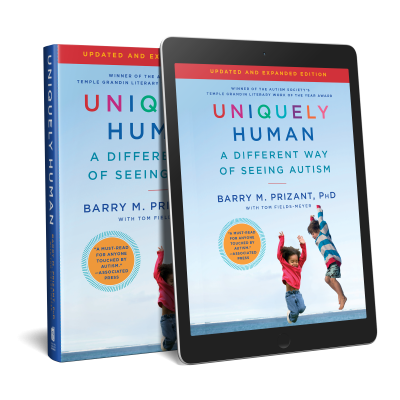
Uniquely Human, the book (Updated and Expanded edition!)
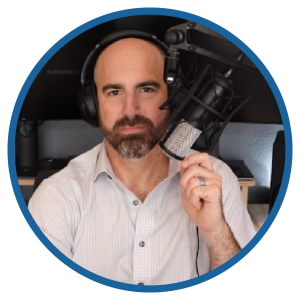
Dave Finch
Dave Finch is the author of the New York Times bestselling memoir, The Journal of Best Practices: A Memoir of Marriage, Asperger Syndrome, and One Man’s Quest to Be a Better Husband. As a writer and creative consultant, his work has appeared on ABC, CBS, NBC, CNN, NPR, SiriusXM, The New York Times, Rolling Stone, The Howard Stern Show, and the award-winning Netflix series, Atypical. Based in Denver, Dave’s company, Elevated Studio, produces this podcast and other recognized series.
Visit Dave’s website here
“I have read a million and one books on Autism. Uniquely Human is the best book I have ever read, hands down. Thank you Barry for this incredible gift!!!!”
– Navah Paskovitz, Mother of three boys with Autism, Co-Founder, the Ed Asner Family Center
“Compassion, learning and supportive strategies–the three essentials for working with folks with ASD–are an integral part of this must-read book.”
– Michelle Garcia Winner, Speech Language Pathologist and Founder of Social Thinking
“Thanks be to Barry for the first-ever must read written for parents, educators, and clinicians.”
– Michael John Carley, Founder, GRASP; Author of Asperger’s From the Inside-Out

“What makes the book compelling is how funny Mr. Finch is about himself. He’s great company.”
– Susannah Meadows, The New York Times
“In this hilarious memoir (which also gives some of the finest explications of Asperger’s out there), Finch approaches trying to be a better husband and father with the determination of Sherman marching on Atlanta.”
– Judith Newman, People (4/4 stars)
“Talk about being on a roll. This dude wrote a book, he has Asperger’s syndrome. He cured himself by listening to me on the radio!”
– Howard Stern