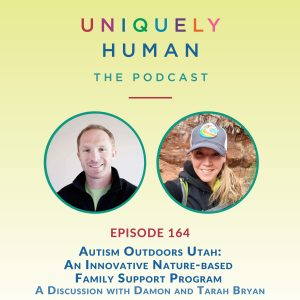
EPISODE 164
Autism Outdoors Utah:
An Innovative Nature-based Family Support Program
with Damon and Tarah Bryan
An Innovative Nature-based Family Support Program
with Damon and Tarah Bryan
Play the Episode…
Show Notes
Damon and Tarah Bryan, founders of Utah Autism Outdoors, discuss how they created their nature-based program for autistic individuals and their families after their son’s autism diagnosis. They discuss how their organization started with simple parent support groups and has grown to include outdoor activities like hiking, river rafting, paddleboarding, and yoga classes in nature. The conversation covered the therapeutic benefits of outdoor activities for regulation and sensory processing, the importance of creating safe spaces for families to connect without judgment, and how they incorporate siblings into their programming.
Featuring
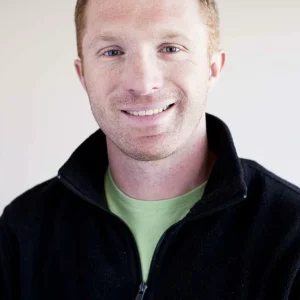
Damon Bryan
Damon Bryan, LMFT, is a mental health clinician with over 20 years of experience. He Founder and Director of Autism Outdoors Utah and is the owner of Sage Canyon Counseling and co-founder and President of Sage Canyon Autism Foundation, where he channels his clinical expertise and lived experience as a dad of two neurodivergent kids into building community for autistic individuals and their families. He has worked in outpatient and residential settings, wilderness programs, and therapeutic boarding schools.
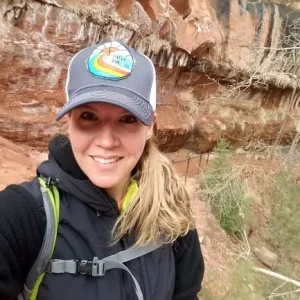
Tarah Bryan
Tarah Neujahr Bryan is Co-Founder and Assistant Director of Autism Outdoors Utah, a Chief Marketing Officer by day and a Registered Yoga Teacher (RYT-200, RCYT) with a trauma-informed and adaptive-yoga specialization. She was named Silicon Slopes CMO of the Year in 2022 and has spent her career bridging communications strategy with community impact; pro-bono work for American Cancer Society and Wings Cancer Foundation, award-winning volunteer service with Intermountain Therapy Animals, and board leadership with Utah HIMSS and Rotary Club.
Uniquely Human: The Podcast
EPISODE 164
AUTISM OUTDOORS UTAH:
AN INNOVATIVE NATURE-BASED FAMILY SUPPORT PROGRAM
WITH DAMON AND TARAH BRY
🎤 Transcript and Audio Usage Disclaimer
© Uniquely Human: The Podcast. All Rights Reserved.
The contents of this podcast, including all audio recordings, transcripts, and related materials, are the intellectual property of Uniquely Human: The Podcast and its fiscal sponsor, Community Autism Resources, a registered 501(c)(3) nonprofit organization.
These materials are provided solely for personal, educational, and non-commercial use.
No portion of the podcast audio, transcript, or any derivative materials may be reproduced, redistributed, modified, or publicly displayed without prior written consent from Uniquely Human: The Podcast or its authorized representatives.
Transcripts are provided for accessibility and reference purposes. They may contain minor transcription or formatting errors. When quoting or referencing the podcast, please credit Uniquely Human: The Podcast and provide a link to the original episode page.
By accessing or downloading transcripts, you agree to comply with this usage policy and acknowledge that all copyrights, trademarks, and intellectual property rights remain the exclusive property of Uniquely Human: The Podcast and its creators.
For permissions or inquiries, please contact:
📧 uniquelyhumanpodcast@gmail.com
Podcast Disclaimer
[00:00:00] UHP: The primary purpose of Uniquely Human: The Podcast is to educate and inform. The views expressed during all episodes are solely those of the individuals involved and do not constitute educational or medical advice. Listeners should consult with professionals familiar with each individual or family for specific guidance. Uniquely Human: The Podcast is produced by Elevated Studio. Music is graciously provided by Matt Savage of Savage Records.
Meet The Hosts
[00:00:41] Barry: Hi, I’m Dr. Barry Prizant, clinical scholar, researcher, and consultant on autism and neurodiversity, and a Brooklyn boy raised in the big city.
[00:00:51] Dave: And I’m Dave. I’m none of those things, and I grew up on a farm in Illinois. But being on the spectrum myself, I have plenty of personal insight to lend.
[00:01:01] Barry: And this is Uniquely Human: The Podcast, a show that illuminates and celebrates autism and neurodiversity.
Introducing Damon And Tarah
[00:01:17] Barry: Today on Uniquely Human: The Podcast, I am very excited to have a couple — and a couple of friends who’ve gotten to know us and we’ve gotten to know them at our parent retreat over the last couple of years — and that is Damon Bryan and Tarah Bryan. So welcome to Uniquely Human: The Podcast.
[00:01:38] Damon: Thank you. We’re glad to be here.
[00:01:41] Tarah: Yeah. Thank you.
[00:01:42] Barry: And one of the things that really intrigued me and led to inviting you on is what you shared with us at our parent retreat weekend. Damon came a couple of years ago, and then Tarah came last year. And the contributions that you make — both due to your individual expertise as well as being parents — we thought would be just wonderful for our listeners to hear. So if you could share a little bit about your professional and personal journey that led you to develop Utah Autism Outdoors, and explain what that is.
Damon’s Origin Story
[00:02:28] Damon: For me, my first experience supporting autistic individuals goes way back to college. I went to Michigan State University — I grew up in Michigan — and I was a camp counselor at a summer camp for two summers, serving individuals with all sorts of disabilities, not just autism. That was my first official exposure to working with that population, and it was in an outdoor setting. We did all the typical summer camp stuff: sleeping in cabins, going in the lake, horseback riding, all that kind of thing.
[00:03:28] Damon: And then as I got into my career — going to graduate school, then out into the work world — I’m a mental health counselor by training and in my day job. I was drawn to working with teenage clients in therapeutic settings that really provided outdoor-based therapy experiences in addition to more traditional talk therapy. Some of these were general mental health settings, some were more autism-specific. And I just gained this experience working with autistic clients and found I really enjoyed it. I also found there was a real dichotomy among the clinical staff — some of us were like, “Yeah, send me more, I really like working with autistic clients,” and some were like, “I don’t know, I don’t feel very effective.” So a lot of autistic clients ended up getting funneled to me. Fast-forward 20 years — about three years ago I was working in private practice, and I felt like I was finally fairly good at working with autistic clients. And then the universe sort of conspired to show me how much more I actually had to learn.
Diagnosis Sparks Community
[00:04:21] Damon: And that was when our youngest child, our son Fletcher, was diagnosed with autism a couple of months before he turned four. I very quickly realized that the parenting side of things is just a whole different world compared to the professional side. And like a lot of parents, we dove into learning all we could — getting connected with academic supports, therapeutic supports, all of that. And for me, it felt really important to connect with other parents.
[00:04:50] Damon: So we started off — what eventually became Autism Outdoors Utah — as just parent support groups. We ran them at a local library in a room you could rent out, and it was just sit in a circle and talk. I remember very clearly telling Tarah when I was going to run the first one, “I don’t know if anybody’s gonna show up — we’ll see if it’s just me sitting there.” But people did show up, and they were really interested and engaged. And I should say — this was close enough to things shutting down for COVID that a lot of these sorts of groups hadn’t really come back. There wasn’t a lot out there, especially in person. And kind of ironically, I was reading Uniquely Human at the time, and came across this idea of parent retreats and parent support groups, and it was kind of like: if nothing’s out there, maybe we should start it.
From Support Group To Outdoors
[00:05:52] Damon: And so then fast-forward — about half a year into doing the support groups — Tarah and I had the idea of: we like the outdoors. Our son, that’s his happy and safe place. He’s very regulated and loves being outside. And we had this idea of, what if we tried to get other families out doing these sorts of things that we’d be doing anyway — going on hikes, paddleboarding, all that kind of stuff. So our first ever outdoor event was a sledding trip. Again, we were like, “We’ll see who shows up.” I think we had maybe 20 people who braved the mountains and snow in Utah, and that was kind of where things were born. We saw there was this interest and this desire, and a lot of families told us, “I’ve wanted to do stuff like this, but I’ve always been hesitant for fear of judgment or lack of a community to do it with.” That for me was how we got to where we’re at today.
[00:06:50] Dave: Reflecting on how you’re describing this — it starts from a seed in a library and becomes this blossoming ecosystem, which is amazing. And it also must have been therapeutic for you as well. Like, you create a community because you need a community, not because you want other people to have one.
[00:07:13] Tarah: Yeah, I can add to that.
Tarah’s Perspective And Skills
[00:07:15] Tarah: My path in looks quite different from Damon’s. I am not a trained therapist, despite what I pretend to be with my friends. My whole career is more in healthcare technology marketing — I’m a chief marketing officer. I came in with an operator’s brain: I know how to get stuff done. I’ve also been practicing yoga for many years and teaching mindfulness, and that’s been more of the through line for me personally. But to your point, Dave, when Fletcher was diagnosed, Damon had the clinical instincts, the experience, the breadth of clinical knowledge — and I didn’t have that. It did feel lonely, quite frankly. We were coming at it from different places, and Damon saw that and thought other parents must feel the same way I do. So creating that community was also a part of me getting to connect with other parents who are in a similar position — just trying to figure this out, learning as we go.
[00:08:30] Tarah: And the outdoors piece — the outdoors was already part of our family’s regulation strategy. It’s always been part of my regulation strategy. We ski, we hike, we do all sorts of things. And seeing Fletcher on the water — I remember having this profound moment that’s just built into my brain — this kid is so calm and so regulated, and you can sense the peace coming off of him. And I wanted that for others. And like Damon shared, there didn’t seem to be a lot of organizations doing this specifically for autistic people, so we created it.
[00:09:01] Dave: Amazing.
Building Values Based Belonging
[00:09:02] Damon: I feel like — and Tarah, I don’t know if you feel the same way — I feel far more socially connected after navigating Fletcher’s diagnosis and creating social connection in these ways. I reflect back to before he was diagnosed, and we had friends and so forth, but now it feels more like being part of a community. Which is kind of ironic, because so often the narrative around autism is around isolation and families struggling.
[00:09:33] Tarah: Intentionally cultivating our community — I think that’s a big part of it. There are people who will not be included in activities that we’re doing, just by virtue of them not fully accepting Fletcher as he is, who he is. There’s not a lot of those people in our lives, but there are some. But we’ve intentionally fostered this community of people who share similar values around acceptance and love and tolerance. Even members of Autism Outdoors Utah who have different religious views than us share that their religious organization doesn’t always fully accept their child in their diagnosis — and so they’ve come to us specifically for that. So I think that’s a big part of it.
[00:10:32] Barry: Mm-hmm. And I began to envision what it was like at the very beginning when you began to speak to other families. Of course, there were some people who were not sure, a little bit nervous. There were others who probably felt like, “Oh my goodness, this is a place where I don’t have to explain myself.” And the other thing, Tarah, that you said I think was really important, that you were learning and you still probably are learning as you go. So how does that work in terms of taking in the signals that you’re reading from the parents — and talk a little bit about gaining traction and having families kind of find what they could find with what you’re setting up?
Creating Safe Spaces
[00:11:27] Tarah: I think one thing that Damon and I have been really thoughtful and intentional about is creating spaces where people can feel seen and heard. We are always happy to stay late at some sort of activity if it means just connecting and hearing people’s stories. People love to share their stories with us. And they love to listen to us share back. I think because Damon and I are in the position that we’re in — us being vulnerable about what our journey has been makes it safe and okay for them to also be vulnerable and share their particular story. And in doing so, we get additional ideas about things we can do differently, about different needs that are needed.
[00:12:10] Tarah: We also encourage our members to create their own events, or to volunteer with us — and that’s part of what we consider lifting up other voices. A lot of our parents are autistic themselves, and so they have particular viewpoints. And then it’s also creating safe spaces on social media, which sounds a bit like an oxymoron nowadays. But Damon’s done a really good job of bringing both humor along with a sense of seriousness and safety — making it a place where people can go and feel seen and heard and share their stories.
Managing Fear And Uncertainty
[00:13:18] Damon: I would just add, too — especially as you asked at the beginning, Barry — it was this interesting mix. There were a lot of people who were very excited: “Oh my gosh, this is awesome, we’ve been wanting something like this.” Especially in Utah, which is a pretty outdoorsy place, a lot of people loved the idea of connecting with others and doing this. But then a pretty equal mix of a lot of uncertainty — whether about a particular activity, especially when we’re doing water-based stuff like going on a river trip. Rightfully so, autism parents tend to go to worst-case scenario: “What if my kid jumps off the raft? What if my kid has a meltdown?” But then also the fear of being judged by others. Or what if there’s no good contingency plan if this doesn’t go well?
[00:14:18] Damon: And so a lot of creating that safety is letting people know, “Hey, this isn’t a big Red Bull sports outdoor expedition. This isn’t competitive mountain biking. We go outside and we do these activities because they’re enjoyable and fun, but it’s really about community and connection.” And then we try to make things accessible — both in terms of what people can do, and from a neurodiversity standpoint.
[00:14:50] Barry: You know, in a sense, the parents are kind of taking a risk by joining with you. So many times over the years, parents have said to me, “I’m really excited, I’m going to this support group,” and then they come away saying, “It was awful — people were just venting and angry.” These are not bad people, but it was something very different than what was expected. I think the fact that you’re doing fun activities and outdoor activities puts a positive shift on what’s going on.
What Autism Outdoors Does
[00:15:35] Barry: And one thing I realized we didn’t do is have you describe specifically the range of things that you do. You mentioned paddleboarding and hiking — why don’t you just toss out a sample of the things you do?
[00:15:50] Damon: Yeah. So certainly things like hiking — we do family hiking trips with parents and kids of all ages. And that’s really the cool thing: we get families with little kids, teenagers, even adults who come with their family members. We do river rafting trips in the summer — those have probably been our biggest hit overall. We just opened registration for our August trip and had almost 500 people register for our lottery draw, which is just mind-blowing. We also have mountain lakes nearby where we’ll have a lake day — people come up, paddleboard, swim. And then Tarah does really cool trauma-informed outdoor yoga classes, both for families — kids and parents together — and parent-specific yoga classes.
[00:16:50] Damon: We do a parent retreat — very much in line with the experiences we’ve had with you all. Our first retreat was just a day-long option, and this year we’re doing a three-day, two-night retreat down in Moab, which is an outdoor mecca in Utah.
[00:17:39] Tarah: Yeah, and we still do have the parent support groups too. And sledding — we’re trying to incorporate more outdoor winter-type activities. And just play dates at the park. We call it Kids and Coffee right now, which is super subversive in Utah. And I do adaptive yoga, which is trauma-informed by default — all yoga I do is trauma-informed by default.
Trauma Informed Adaptive Yoga
[00:18:06] Barry: Could you explain that for our listeners? Many are familiar with the term “trauma-informed,” but many may not be.
[00:18:13] Tarah: Sure. A trauma-informed yoga perspective first of all assumes body autonomy and assumes that this really is a journey for the student. How this works out in practice: I start every single yoga class I teach with, “Everything I’m about to say is just a suggestion. If it fits into your body and it’s right for you, then try it on. If it doesn’t, I’m happy to help adapt in any way, or child’s pose is always available to you. Sukhasana is always available. Tadasana is always available.” And we create a safe return space for them to go to if the sensations start overwhelming. So it’s really an intentional guided practice. When I do one-on-one trauma-informed yoga, we also get into various spaces in the body that carry different kinds of emotions, and we work on opening those up as it feels comfortable.
[00:19:21] Damon: And I think you’ve done a really good job of bringing fun and joy into it, especially with the kids and families classes — like the Halloween-themed class and some of the others. You think of yoga as this very serene, quiet discipline, which it can be. But bringing the fun element in was really cool too.
[00:19:45] Tarah: Yeah, and that’s the adaptive part. I like to approach yoga and the mindfulness practice with this idea that it doesn’t need to produce anything. So much of the work that autistic kids, families, and grown-ups do has goals around it — therapy has goals, school has goals for you. What I like to do instead is ask, “What if there are no goals here? What if it doesn’t need to produce anything? What if we can just be?” And in that perspective, there is no correct pose — we just adapt as we go.
[00:20:00] Tarah: For example, I love to do farm animal sounds. Even with the adults I teach, I’ll do cat-cow pose and just get on the ground and moo my head off — and it makes the adults just let go and relax and realize, “Hey, there’s no real right way to do this. Let’s all have fun.” And by the end, everyone’s kind of into their own body in an authentic way. And the other piece is that it’s subversively teaching interoception — what’s going on in your own body. That’s something we all need to work on, but for autistic people in particular, it’s an area of real opportunity. And it’s controlled by them — not prompted — it’s just naturally happening as part of the yoga practice.
[00:21:12] Barry: Hmm.
Big Feelings In Safe Community
[00:21:14] Barry: It sounds like in addition to creating a safe space where people are not feeling judged, you’re also engaging in activities that allow them to go much deeper in that safe space, and there’s a tremendous opening up for some parents. And I’m curious about that — because we’ve experienced in our years at the retreat that the opening up, because it’s so safe, can also mean parents feel very overwhelmed and overcome by the torrent of emotions that they feel safe feeling in those settings.
[00:21:53] Tarah: Yeah, and this is where it’s helpful — one of the few situations where it’s helpful to be married to a therapist. It’s definitely a partnership in that regard.
[00:21:59] Damon: The few situations.
[00:22:09] Damon: Two things. A lot of what we see is happy, excited, joyful. But sometimes, especially in support group settings and the parent retreat, people carry a lot. And I think number one is just feeling safe, heard, and validated. For me, the overlap of professional background and lived experience means that even if I haven’t experienced the exact same thing another parent is bringing, it definitely resonates — and I can connect on a level that feels like more than just a professional level. And for a lot of parents, it’s this sense of, “Oh my gosh, this does…” Sometimes we’ll get people who are almost apologizing for having these emotions. And it’s like — if not here, then where? If not in this community, in this intentional space — people need these places. We weren’t meant to do this alone.
[00:23:14] Tarah: I love that you said “space.” Because it’s not only the physical space — it’s also the temporal space. Outside, nothing is rushing you. There’s not a bell about to ring. There are no fluorescent lights. The sensory input is still really rich, but it’s not forcing you or asking you to do anything. That tree over there doesn’t care what you’re doing, if you’re stimming, whatever. So there’s more room to move, more room to pace. We cultivate this community where it doesn’t have to mean anything socially — there’s just all this open space to do things. And sometimes that does bring up feelings, but it brings them up in a safe space that’s also reflective of the environment.
Structure With Flexibility Outdoors
[00:24:10] Dave: Does the lack of parameters and structure in terms of time and schedule sometimes work against individuals out in nature? For me it’s very nice to not be bound by an arbitrary meeting time. But when I’m out camping, the first day is always tricky for me — by the second day I’ve relaxed into the pace. Does that work sometimes against individuals or families who are like, “I don’t know what the schedule is — there is no schedule”?
[00:25:00] Damon: I think what we try to do — especially with intentional planning of activities — is having enough structure where things don’t feel too open-ended, because things that are too open-ended can be anxiety-producing. A lot of our parents and the kids who come want to know the basics of what to expect. So I think about providing the parameters, the guardrails — but within that framework, there’s a lot of flexibility. Like if we’re doing a hike to a waterfall, the goal is to start at, say, 10:00 AM and get there maybe by lunchtime. But if we get halfway and that’s where we turn around, that’s fine. If we need to take a break or go off on a side trail — this idea of enough guidance and enough structure, but also enough flexibility where people don’t feel too locked in. That’s really what we strive for.
Families And Siblings In The Mix
[00:26:09] Barry: Going back to the sense of community — I’m visualizing siblings coming along who may not be on the spectrum or neurodivergent at all. And I’m curious about families who maybe haven’t had much experience having fun times with other families who have a child on the spectrum — where it’s not a school assembly, but something everyday and activity-based. So what do you see happening with that?
Retreat Mentoring Bonds
[00:26:45] Barry: And especially, one other thing that happens at our retreat is once people get comfortable with each other, the mentoring that goes on. One family sees, oh, you have a child who’s three years older than mine — what was it like navigating that transition?
[00:27:06] Damon: Yeah. Well, I think this is one where I’ll start with our own experience — we have a daughter as well. She’s older than Fletcher, nine years old, and not autistic, but she does have some ADHD going on.
[00:27:24] Tarah: She’s very proud of it.
[00:27:27] Damon: She is. And I think we see it starting more immediately with her — it’s this really cool experience for her, being around the mix of kids who are sort of like her brother and kids who aren’t neurodiverse. And what’s really cool to see is how well she connects with both. She’s just… You talk about a learned skillset — she is ahead of the curve in terms of inclusion and acceptance and awareness. She’s learning these lessons decades before either Tarah or I did.
Siblings Included Too
[00:28:04] Damon: And yeah, we very much encourage siblings to come along. I’ll sometimes get parents who ask, “Can we bring siblings to the rafting trip?” And we’re like, “Yes — this is a whole family trip.” This isn’t just one parent and their autistic child. It’s a really cool thing to see: everyone having this shared experience, connecting, siblings from different families connecting with one another.
Sibshops Expansion Plans
[00:28:37] Damon: And about a year ago, I got trained to facilitate Sibshops, which is a curriculum around running support groups for siblings — not just siblings of autistic individuals, but siblings dealing with disability or medical conditions more generally. That’s one of our growth areas. We haven’t been able to dive into it yet just from a time standpoint, but we’re really hoping to expand into nature-based Sibshops where siblings can come and have experiences connecting with one another.
[00:29:09] Barry: And a great context to do that in — out in nature. And I think that’s something many of our listeners are familiar with: sometimes the so-called typical sibling is left out of the equation. Many adult typical siblings talk about how they felt they were low on the ladder because of the needs of another child.
Outdoors Equalizes Everyone
[00:29:42] Tarah: That’s what I was gonna add — it’s the outdoors environment. Our activities — let’s take rafting as an example. Yes, it’s an autism-oriented activity. There will be families with kids on the spectrum. There will be neurotypical kids. Everyone’s going rafting. That’s the focus. We’re just all on the river together. The focus isn’t on the neurodiversity or on the autistic kid — it’s just an environment we’ve set up so everybody can share the same space where nobody’s explaining themselves, a meltdown isn’t gonna end everything, and there are people around to help support that journey. That’s one of the things I really love about the outdoors — it’s evening that out between the siblings and giving equal weight to everyone.
[00:30:29] Barry: Hmm. And you’re achieving the goals of inclusion not in an artificial environment like a classroom — it’s just kids out there doing what kids do together in nature. It’s great.
[00:30:43] Damon: Absolutely.
Regulation Rafting Story
[00:30:45] Barry: So, could you talk a little bit more about the regulation piece? Because that has become such a huge focus, not just in autism, but for all human beings right now. And how much do other parents kind of tap into that or notice that?
[00:31:18] Tarah: I’ll share a story. Our last rafting trip, there was a boy who was about nine — just him and his mom — and he was minimally verbal. He sat next to his mom for the first 15 or 20 minutes just in a little ball, right behind her. I would touch base with them every once in a while: “Oh, he’s scared,” that kind of thing. My daughter was also on the boat, along with two or three other kids, one neurodiverse. And those other kids were going nuts, doing all sorts of physical activities on the boat.
[00:32:30] Tarah: And then I turned around, and this little boy had kind of opened up a little bit. He was starting to not sit quite so close to his mom. He was starting to sit up. Then we started playing in the front of the boat — looking at the different birds, putting our hands in the water — and he started moving up toward the front of the boat. And then I turned around and he’s touching me. I said something to him, and he just looked at me and didn’t say anything yet, so I gave him a little space and time.
[00:33:05] Tarah: By the end of this rafting trip, he was using all of the verbal language that he had. He was paddling the boat at one point. He had completely opened up. And the mom was just beaming by the end of the trip. She said, “We never would’ve done this. I have never seen this happen with him before. I am so proud of him. Thank you so much for giving this space.” And it was just magical to watch happen — and it was just over an hour.
[00:33:23] Barry: Mm. So you’re helping not just parents, but family members see their autistic family member in a very different way.
[00:33:36] Dave: Yep. As a parent, I will say the best I’ve ever felt in my life is when I see my kids shine. And what you’re doing is creating environments and opportunities that are accessible — these are not $50,000 corporate-backed retreats for the elite. These are family experiences accessible in nature. And that is a very transformative experience.
Nature Science Explained
[00:34:16] Damon: And one of the really cool things is — about a week ago I did a nature-informed therapy training through an organization called CNIT, the Center for Nature-Informed Therapy, out of Maryland. And what’s really cool is that there are now things that we’ve known for generations — from intuition and experience — that are backed up by research. For some people it doesn’t matter, they just wanna get outside. But for others, there’s this element of understanding: why is it that for many autistic people it does feel regulating? And having that brain science perspective is just really cool.
[00:35:00] Damon: We observe how, if you compare being on a rafting trip or a trail to a more traditional setting like a classroom, the sensory experience, the social experience, and even just opportunities for autonomy are so different. And not only how different, but how much all of that is just built into the nature experience — whereas in school settings, they have to build sensory supports into the classroom. Out in nature, the things that are regulating — the opportunities for social connection, for autonomous choice — are all just built in. Now, we always make it clear: there are some autistic people where outdoors is just not their jam — they don’t like the bugs, they don’t like the wind — and that’s totally valid. It’s not a cure-all. But for a lot of people, it really does help.
[00:36:12] Tarah: And creating the safe space to try it out as well.
Safe Space And Risk
[00:36:15] Tarah: I think by default, a lot of parents — regardless of their kids’ neurodiverse status — are a bit scared of the outdoors. It can be unpredictable. That river’s going really fast. There’s hiking and there might be a snake. And our goal is: maybe you feel like it’s not right for you, and that’s okay — but we’re gonna create a safe space for you to try it on. And part of creating that safe space also includes what Damon talks a lot about: the dignity of risk. Creating spaces for these kids to just… My son ran into the fast-moving river last time we were there, and my Fitbit has a little spike in my heart rate right when he went in.
[00:37:06] Dave: Oh God. I’ll bet.
[00:37:06] Tarah: But we’re gonna take it back — he’s learning. He’s learning what that river means, and he’s learning that Mama will freak out if he goes too far. And that’s what we’re trying to do here as well. Instead of coming at it from a default view of “this is scary,” we’re saying, “We’re gonna create a safe space, and let’s let our kids try it on.”
[00:37:28] Damon: Yeah. And creating those broad safety parameters — things that fall outside them, obviously that’s where we have to ensure safety. But within those broad parameters, there’s a lot of latitude. And that’s something kids — or teens or adults or whomever — often don’t have. We’ve sort of gotten away from the inherent connection we had to the natural world for so long.
[00:37:55] Barry: You know, in everyday life — especially in schools and structured activities — so many of the boundaries we create are social boundaries, and sometimes those just have to do with our society’s rules. Out in nature, there are a lot of safety boundaries that kids have to learn about. And you know, why is nature so regulating for so many people on the spectrum — and for all of us? If you think about it, the shared attention piece — we’re so often trying to grab kids’ brains and have their brains focus on what our brains are focused on. The wonderful thing about being in nature is, oh, there’s a bird. Oh, it’s getting a little rocky, so I need to step gingerly here. You’re in control of your selective attention, and there are just so many wonderful things to attend to.
[00:38:56] Dave: And there’s also a lot of physical stimulation that’s vastly different from the comforts of being indoors. Prickly grass. Weird bumpy terrain that makes your ankles move in and out. You don’t realize it, but you’re exhausted by the end of the hike. Things you don’t even think about until you’re watching your child experience them. So going into it knowing there are a lot of factors here that are going to bombard our child — and one of them is sensory.
Why Water Regulates
[00:39:30] Dave: And that’s why anything in the water is awesome — it’s just so stabilizing.
[00:39:36] Damon: And again, this is that inherent wisdom overlapped with brain science — being on a paddleboard, you’ve got balance and proprioception. You’ve got interoception going on. You’ve got the tactile — the water, the sound of the waves. People spend money buying noise machines to make wave sounds. You can just go listen to actual waves. Of all the settings we do things in, I think water is the one most consistently where there are just such cool experiences that we see people have.
[00:40:17] Dave: I can see that. And since you mentioned Moab earlier — if you ever need a random adult to join you there for free, I’m your guy.
[00:40:49] Barry: Oh, yeah. And I can attest to the fact that Dave is quite random.
Start Simple Advice
[00:41:01] Barry: So I’m sure there are some listeners who are saying, “This sounds wonderful, and I want to do something like this.” Maybe you can give some bits of advice on both sides — the things to be aware of that may be challenging, and the joys, and some strategies to begin to build even a piece of what you’re offering.
[00:41:33] Damon: Yeah, I think one thing we’ve really tried to be mindful of from the get-go is this concept of low barrier to entry. I was on a rafting trip once with an outdoor-based therapist, and we were talking about how there are these high-adventure options — climbing a peak, an intense white water trip. And I really connected with this idea that the best options are ones that the most people can do. So the goal is getting people outside and connected and having experiences as a community — rather than latching onto a particular activity or the idea that it needs to look a particular way. And thinking: is this something that the average person who maybe doesn’t have a ton of outdoor experience — is this gonna feel okay enough within their comfort zone?
[00:43:03] Tarah: I would add: don’t over-index on perfection. When we started, we literally started with sledding and hoping somebody showed up. We just put it out there. And in the beginning, there were times when nobody showed up, but we kept going because we believed in the importance of what we were doing and saw the effect it could have. If you wait until you have nonprofit insurance or the perfect venue or the volunteer roster, you just won’t start.
[00:43:40] Tarah: There’s a little bit — and this is probably the growing opportunity for a lot of us — of getting comfortable with the uncertainty of knowing what this is gonna look like. And on that same note: have a plan, have a backup plan, but don’t be attached to either one. Then success is defined on its own terms.
[00:44:04] Damon: And also — bring snacks.
[00:44:06] Tarah: Bring snacks. Yes.
[00:44:08] Damon: Food is always the great equalizer. Invest in your snack profile and people will show up and be happy.
[00:44:21] Barry: Especially dark chocolate.
[00:44:24] Damon: Yeah.
Closing And How To Connect
[00:44:26] Barry: Well, guys, thank you so much. This is wonderful. I wanna come out and be with you. I’ll keep away from the river rafting — my vestibular neurological system would raise a big red flag for that. But—
[00:44:35] Damon: We’ve got spots open, you know.
[00:44:45] Dave: Barry’s underselling himself. You all know him as this rough, tumble, scrappy kid from Brooklyn. However, when I met Barry, he was a grizzled outdoorsman on the wild frontier in Banff, and I brought him back to civilization, and here we are doing a podcast. He’s as rugged as it gets.
[00:45:07] Damon: He’s Jeremiah Johnson.
[00:45:09] Barry: That’s the Barry I never knew.
[00:45:15] Barry: So continued good luck with Utah Autism Outdoors. I’m sure so many of our listeners are taking away pieces of what you’re doing. It’s just another way for families to connect and for kids to experience life in a way that’s invigorating, joyful, and connecting. Thank you so much.
[00:45:43] Tarah: Yeah. And we’re always happy to connect with anyone, wherever you are in the country — you don’t need to be in Utah. You can find us on our website, Utah Autism Outdoors, or our Facebook group, Autism Outdoors Utah. Just reach out — we’re happy to create connections and learn from others.
[00:46:02] Dave: Terrific. Great. Good luck to you both.
[00:46:07] Tarah: Thank you.
…and Continue the Discussion
Do you have a book or podcast club? If so, you may use this discussion guide to facilitate a conversation about this episode.
1) What inspired Damon and Tarah to develop Autism Outdoors Utah? Do you see a similar need in your community?
2) Tarah speaks of intentionally developing their community, creating a safe space, sharing stories and moving forward in nature. What do you take away from that discussion?
3) What is striking about the range of activities provided for families, and how they are offered to families? Why is it important for siblings to be fully welcome and involved?
HOSTED BY
Barry Prizant, Ph.D., CCC-SLP
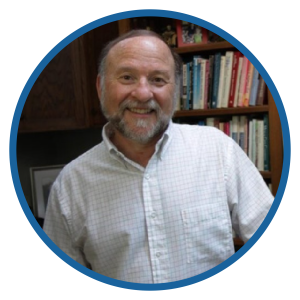
Dr. Barry Prizant is a speech-language pathologist with more than 50 years experience as a researcher and international consultant for autistic and neurodivergent individuals and their families. He is an Adjunct Professor of Communicative Disorders at the University of Rhode Island and Director, Childhood Communication Services (a private practice). Previously, he served as Associate Professor in the Department of Psychiatry in the Brown University School of Medicine, and held a tenured professor appointment at Emerson College. Publications include 5 books, most notably Uniquely Human: A Different Way of Seeing Autism (2015; 2022) and The SCERTS Model manuals, an educational approach implemented in more than a dozen countries. He has published 150 scholarly chapters and articles and serves on numerous professional advisory boards for journals and professional organizations. Barry has presented more than 1000 seminars and keynote addresses internationally, including two invited presentations at the United Nations for World Autism Awareness Day. His career contributions have been recognized with honors from Brown and Princeton Universities, the Autism Society of America and the American Speech-Language-Hearing Association.
Visit Barry’s website here
Uniquely Human, the book (Updated and Expanded edition!)
Dave Finch
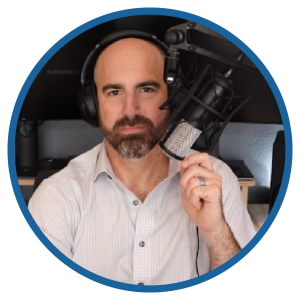
Dave Finch is the author of the New York Times bestselling memoir, The Journal of Best Practices: A Memoir of Marriage, Asperger Syndrome, and One Man’s Quest to Be a Better Husband. As a writer and creative consultant, his work has appeared on ABC, CBS, NBC, CNN, NPR, SiriusXM, The New York Times, Rolling Stone, The Howard Stern Show, and the award-winning Netflix series, Atypical. Based in Denver, Dave’s company, Elevated Studio, produces this podcast and other recognized series.
Visit Dave’s website here
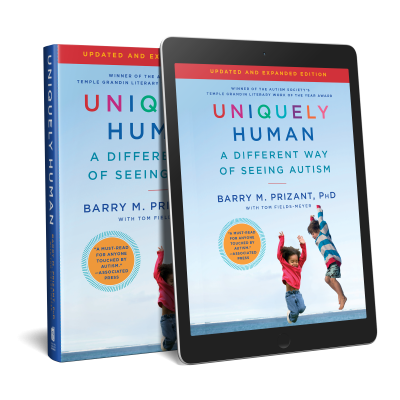
“I have read a million and one books on Autism. Uniquely Human is the best book I have ever read, hands down. Thank you Barry for this incredible gift!!!!”
– Navah Paskovitz, Mother of three boys with Autism, Co-Founder, the Ed Asner Family Center
“Compassion, learning and supportive strategies–the three essentials for working with folks with ASD–are an integral part of this must-read book.”
– Michelle Garcia Winner, Speech Language Pathologist and Founder of Social Thinking
“Thanks be to Barry for the first-ever must read written for parents, educators, and clinicians.”
– Michael John Carley, Founder, GRASP; Author of Asperger’s From the Inside-Out
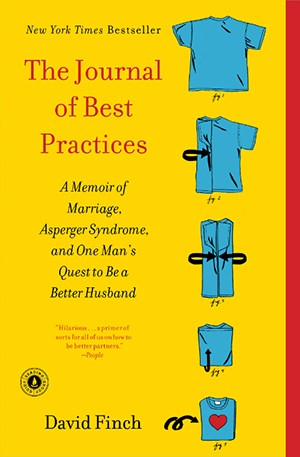
“What makes the book compelling is how funny Mr. Finch is about himself. He’s great company.”
– Susannah Meadows, The New York Times
“In this hilarious memoir (which also gives some of the finest explications of Asperger’s out there), Finch approaches trying to be a better husband and father with the determination of Sherman marching on Atlanta.”
– Judith Newman, People (4/4 stars)
“Talk about being on a roll. This dude wrote a book, he has Asperger’s syndrome. He cured himself by listening to me on the radio!”
– Howard Stern