EPISODE 163
All about Nonspeakers: Reflections on Autism Spectrum News Issue with Amy Laurent and Jen LePape
Play the Episode…
Show Notes
The discussion focused on the recent issue of Autism Spectrum News dedicated to non-speaking individuals. Topics in the issue included common misunderstandings about supporting non-speakers, including the concept of presuming competence, the role of neuromotor issues, and concerns about communication authenticity and influence. The discussion highlighted that many non-speaking individuals can learn to communicate effectively through methods like spelling and typing, though it requires time and proper support. The guests emphasized that the issue contains 40 articles, including 17 authored or co-authored by non-speakers, covering topics from mental health to legal issues to practical support strategies, demonstrating the complexity of supporting non-speaking individuals beyond simple debates about authenticity.
Access to the ASN Issue here
Featuring
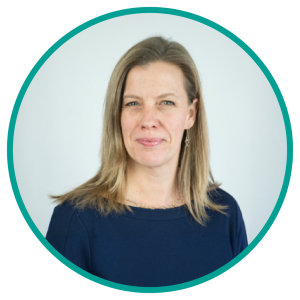
Amy Laurent, PhD, OTR/L
Amy Laurent, PhD, OTR/L is the co-director of Autism Level UP! a neurotypical/ neurodivergent partnership dedicated to the provision of education, accessible resources, and practical strategies focused on increasing active engagement for autistic individuals and the members of their communities. She is a co-author of the SCERTS Model and frequently lectures internationally. She is passionate about neurodiversity and helping others to honor and understand the implications of “different ways of being” in relation to navigating the physical and social world. Dr. Laurent strives to practice what she preaches and uses her love of play and movement to meet her own regulatory needs.
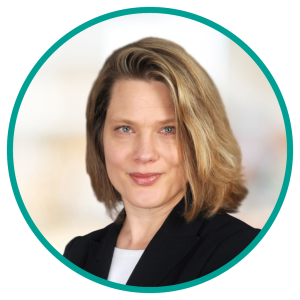
Jen Binder-Le Pape
Jen Binder-Le Pape works in strategy consulting, with a focus on technology, media and telecom. She is the mother of two adult children, one of whom is a nonspeaking autistic who communicates via spelling and typing. She was a co-plaintiff in Le Pape v. Lower Merion School District, a case that centered on the ADA’s effective communication clause. She is also a member of Voices for Choice, a group working to expand housing options for disabled adults.
Uniquely Human: The Podcast
EPISODE 163
ALL ABOUT NONSPEAKERS:
A DISCUSSION WITH DR. AMY LAURENT AND JEN BINDER-LE PAPE
🎤 Transcript and Audio Usage Disclaimer
© Uniquely Human: The Podcast. All Rights Reserved.
The contents of this podcast, including all audio recordings, transcripts, and related materials, are the intellectual property of Uniquely Human: The Podcast and its fiscal sponsor, Community Autism Resources, a registered 501(c)(3) nonprofit organization.
These materials are provided solely for personal, educational, and non-commercial use.
No portion of the podcast audio, transcript, or any derivative materials may be reproduced, redistributed, modified, or publicly displayed without prior written consent from Uniquely Human: The Podcast or its authorized representatives.
Transcripts are provided for accessibility and reference purposes. They may contain minor transcription or formatting errors. When quoting or referencing the podcast, please credit Uniquely Human: The Podcast and provide a link to the original episode page.
By accessing or downloading transcripts, you agree to comply with this usage policy and acknowledge that all copyrights, trademarks, and intellectual property rights remain the exclusive property of Uniquely Human: The Podcast and its creators.
For permissions or inquiries, please contact:
📧 uniquelyhumanpodcast@gmail.com
Podcast Disclaimer
[00:00:00] UHP: The primary purpose of Uniquely Human: The Podcast is to educate and inform. The views expressed during all episodes are solely those of the individuals involved and do not constitute educational or medical advice. Listeners should consult with professionals familiar with each individual or family for specific guidance. Uniquely Human: The Podcast is produced by Elevated Studio. Music is graciously provided by Matt Savage of Savage Records.
Meet The Hosts
[00:00:39] Barry: Hi, I’m Dr. Barry Prizant, clinical scholar, researcher, and consultant on autism and neurodiversity, and a Brooklyn boy raised in the big city.
[00:00:49] Dave: And I’m Dave. I’m none of those things, and I grew up on a farm in Illinois. But being on the spectrum myself, I have plenty of personal insight to lend.
[00:00:59] Barry: And this is Uniquely Human: The Podcast, a show that illuminates and celebrates autism and neurodiversity.
Episode Focus and Guests
[00:01:15] Barry: Today on Uniquely Human: The Podcast, we have a very, very special discussion — about an issue of Autism Spectrum News that just came out. You will have the link on the page associated with this episode. It focuses on non-speaking individuals and so many aspects of their life. And we have two very special guests. We have Jen Binder-Le Pape with us. Hi, Jen.
[00:01:43] Jen: Delighted to be here. Thanks for having me.
[00:01:46] Barry: And hi, Amy Laurent.
[00:01:49] Amy: Hey, Barry. Hey, Dave.
[00:01:50] Dave: Hello. And by the way, Amy joins us as part of a very exclusive community — a three-peat.
[00:02:01] Barry: A three-peat, my goodness. So you get to hear her melodic tones and words of wisdom again. We’re very excited about that.
[00:02:08] Dave: It’s a service. It’s value added that we bring to our listening community.
[00:02:14] Barry: And now a little bit more about our guests today. Jen works in strategy consulting with a focus on technology, media, and telecom. She is the mother of two adult children, one of whom is a non-speaking autistic who communicates via spelling and typing. She was a co-plaintiff in Le Pape versus Lower Merion School District in Pennsylvania, a case that centered on the ADA’s effective communication clause. She is also a member of Voices for Choice, a group working to expand housing options for disabled adults.
[00:02:50] Barry: And Amy is a PhD in developmental psychology and an occupational therapist — though I think OT is your true nature, Amy — and is the co-director of Autism Level Up, a neurotypical-neurodivergent partnership dedicated to the provision of education, accessible resources, and practical strategies focused on increasing active engagement for autistic individuals and members of their communities. She is a co-author of The SCERTS Model — I think I’ve heard of that somewhere — and frequently lectures internationally. She is passionate about neurodiversity and helping others to honor and understand the implications of different ways of being in relation to navigating the physical and social world. And Amy strives to practice what she preaches, using her love of play and movement to meet her own regulatory needs.
Why This Issue Matters
[00:03:52] Barry: So, the issue of Autism Spectrum News is such a rich issue, and that’s what we really want to focus on today. You might wonder why Jen, and why Amy, and why me. We have become kind of compatriots in the last two years regarding a legal action that Jen may want to talk about a little bit more as we move ahead — which was actually the focus of one of the articles in this issue.
[00:04:20] Barry: But I think one thing we would like to do is make sure that we’re clear on some issues that have created misunderstandings regarding non-speakers, and ways to support non-speakers. So I’m gonna toss out a few items, and then I’m going to have Amy and Jen respond in terms of trying to get a clearer understanding, and put some of the misunderstandings to rest.
Presuming Competence Explained
[00:04:52] Barry: So one of the big issues that’s discussed is a term many people are familiar with now, and that is presuming competence. Jen or Amy, you wanna take the lead and help us understand it more clearly?
[00:05:07] Amy: Sure. I’d be happy to, because I do agree with you, Barry — I think this is widely misunderstood. It has been distorted to mean every autistic or disabled person is a hidden genius. And to me, that’s not what it means at all. It means that every person is an expert in their own life, and that they deserve being spoken to directly, and not through a caregiver. They deserve, even if they can’t communicate, hearing things in age-appropriate language. They deserve to fully participate, in the measure they can, in all the decisions that affect their life — regardless of whether they’re a genius, average, or intellectually disabled. It’s the presumption that they have a role to play and agency in their own life. And I do think that’s really important for all of us to keep in mind.
[00:06:01] Amy: I think there’s another aspect too, Jen, that people need to keep in mind — is when we talk about presuming competence, we’re talking about presuming the ability to learn. When we present those opportunities, those options, and that information, they might not know yet, but we have the ability to scaffold and teach and help them, because they have the ability to learn. That’s the presumption of competence. It’s not that they know everything. It’s that if we get our support right, they can learn. And not everyone’s gonna learn everything, right? Somebody might be learning quantum physics, and somebody else is gonna be learning how to make the decision of what they want for dinner. And those are both really important abilities to support for two different people.
[00:06:50] Amy: Exactly. Absolutely.
[00:06:52] Barry: And that was actually one of the themes that came out in the — what is it — 40 articles in this issue. So many individuals — and I think 17 of them were authored or co-authored by non-speakers — said, “I was able to learn, but I was not being taught in a way that I could learn.” And that was so important.
Neuromotor and Praxis Factors
[00:07:13] Barry: I think another issue that is an issue of debate is the role of neuromotor issues for non-speakers. So how about that? Why don’t we start with Amy?
[00:07:26] Amy: I’ll let the OT start, I was gonna say.
[00:07:30] Amy: Well, I think we know that there are many factors that are part of why there’s a large percentage of autistic individuals who are non-speakers. They say upwards of 30% of autistic individuals will not develop reliable spoken language, and one of those factors that we look at is motor ability and praxis. You’ll hear a lot of people talking about apraxia. For a long time, people focused just on oral motor praxis — can people form speech sounds and those types of things.
[00:08:10] Amy: But now people are taking a step back and understanding that these issues of praxis are actually global issues for individuals, which impact all aspects of interacting with the environment — things like praxis and motor planning, not just for producing speech sounds, but for being able to use American Sign Language or other forms of sign, gestural communication. Being able to reliably get their body to move in ways that they’re thinking that they want to move is impacted.
[00:08:45] Amy: And there’s a large body of research that is emerging. Even 25-ish years ago, people were looking at neuromotor differences in infants — is that a way we could reliably detect a child who was likely to be identified as autistic in their future, based on how they rolled? And there was good evidence that we could look at babies and look at motor differences, and now that’s really extending into more global aspects of understanding. People like Elizabeth Torres are doing amazing research looking at really fine detailed differences in motor, and consistently demonstrating statistically significant differences in autistic and non-autistic profiles. So this motor piece is really real.
[00:09:41] Barry: Mm-hmm.
[00:09:41] Amy: Like, really real.
[00:09:43] Barry: Mm. And Jen, you communicate with and know many non-speakers, and now that some of them are able to communicate about motor issues, what do they say?
[00:09:56] Amy: Well, it’s fascinating. They talk frequently about this disconnect between what they want to do and how that message gets translated to their bodies. But it presents differently in different individuals. Some individuals have difficulty initiating an action, right? Even if they’re hungry to get up and get something, or cold to get a blanket. I think Ido Kedar talks about this in one of his books. Other people get stuck in loops where they do the same action repetitively, and it’s the stopping that’s hard. And then other times it’s just having the energy to really force the concentration that’s required for spelling and typing, because these unruly bodies require a lot more effort than I think a lot of neurotypical bodies. So it is both a very common theme, but the specific presentations vary significantly from individual to individual.
Influence and Authenticity Debate
[00:10:55] Barry: Let’s go to the next possible misunderstanding — and I won’t say possible, it is. And that is, a major argument of some of the critics is that this is not authentic communication. They’re being 100% influenced by people who are with them. And they present people who are supporting different kinds of approaches through spelling and typing as if we’re ignoring the factor of influence. Is that the case?
[00:11:30] Jen: I have to say, in my training just as a parent — and I haven’t been formally trained as a practitioner — the issue of influence was always present. I can remember doing a two-hour seminar, once I was a more open partner for Alex, just about influence, about how to ask questions, how to phrase them, and all the different ways you can influence someone. For me, this has always been present. It’s a real risk, but it’s also one that I think is quite addressable with thoughtful practice. I don’t know, what do you think, Amy?
[00:12:09] Amy: I absolutely agree. And I guess I want to take a bigger-picture step back and say all communication is relational. All communication — your partner influences the message that you’re sending, because you’re responding to the other person in interaction. And when we’re talking about supporting non-speakers, some of them are gonna be spellers and typers, and we need to think in the way you’re talking, Jen, about that type of influence. But some of them will be using other assistive technology devices. Some might be using sign language. And if we think about how we teach those methodologies, there is always a partner helping to teach somebody how to use whatever methodology they’re using to communicate.
[00:13:00] Amy: So a partner is always part of it, and I think one of the things we all need to do — regardless of the methodology we’re helping to support — is recognize how we’re helping support somebody in making those choices, or in sharing their thought or their message. There is no communication method that is learned outside of an interaction with another person. And if there’s an interaction with another person, there’s always going to be an opportunity for influence.
[00:13:22] Dave: Yeah. And it’s not even person-to-person. I can’t type a single text message on my phone nowadays without Apple telling me, “Oh, did you mean to say ballpark instead of tennis racket?” Like, no, I didn’t. But eventually it’s insisting that I spelled something wrong, and I just say, “Fine, I meant ballpark — I didn’t want to buy a tennis racket, yes, I want to buy an entire arena.” It’s everywhere.
[00:14:00] Dave: And the other thing I always wonder — and I’m not a clinician, I’m basically an armchair non-expert — I have spoken with a number of non-speaking individuals, and the burning question I always have for anybody who challenges this method of communication is: wouldn’t there have been, at some point ever, the non-speaker figuring out some way to basically express that “Hey, this person’s manipulating me. That’s not what I intended to say. They’re misrepresenting what I’m saying.” That has come up maybe zero times. You would think there would be some signal that these people are not autonomously communicating, or that their communicative intent is not being respected by their support person — and it’s just not true, as far as I know.
[00:15:05] Amy: You know, it’s interesting you say that, David, because one of the things that struck me early on is I have never seen a speller that required ABA-type rewards to continue spelling. Even for long sessions, even for two-hour book clubs, there is no reward other than the intrinsic reward of learning and communicating and the social interaction. And that has always struck me, because these are individuals who often came from self-contained classrooms where that was the norm — where it was assumed to be necessary for any type of sustained attention or learning. And I’m like, “Why would they do it, if there wasn’t that intrinsic value of making a community, of communicating, of belonging?” So I think that’s a great observation.
[00:15:56] Barry: You know, that brings up a recent memory. Not too long ago, I was with Elaine Hall — who does have an article in the ASN issue about the Miracle Project program called Express Yourself for Non-Speakers — and it was with her son, Neil, and with the speller’s method with Dawn-Marie Gaven in Southern California. And we were sitting there watching some of the first lessons he was getting, and the support he was getting. And Elaine said to me, “I have never seen Neil stay so focused and be so motivated to learn this” — he was riveted. And he was like, “Give me more. I want to take this in, because this is going to help me to communicate more effectively.” It was very, very striking.
No Overnight Miracles
[00:16:46] Barry: Okay, here’s another one. How about that this is a miracle? You know, all of a sudden these miracles are happening overnight. Is it just a miracle where you snap your fingers and all of a sudden a person is a fluent speller or typer?
[00:17:04] Jen: I wish. I know in our case it probably took Alex three or four months of working with trained professionals for an hour twice a week — and then doing smaller bits of practice at home — to become an open communicator. And then it probably took an additional three months for me to learn how to support him, for him to be open at home. He was open with the professionals before I had built my own skillset. In my experience, fast is three to four months, and it can take a year or more for people to learn the motor skills, to learn how to regulate their bodies. So it is a process that requires a lot of effort. And again, I think it speaks to the motivation of non-speakers who want to communicate, that they’re willing to put in the time. But it’s a much longer process than an overnight miracle.
[00:18:11] Amy: And I think, you know, it depends on the profile of the individual — not necessarily a young person. Sometimes adults are learning this methodology too. What their experience is, whether they’ve had some exposure to the alphabet, how people presume competence around them with that alphabet and help them understand and make sense of it. I know one young woman I’ve known for ages — she’s now an open speller, but it was a two-year journey. And at this point she’s not reading great texts, but she is making decisions about her life that are making a huge impact on her quality of life.
[00:19:14] Amy: And it’s no different than any other communication method. If we’re using a picture-based communication method, it’s gonna take time for someone to learn how to use that, especially moving from single words to multi-word, multi-picture utterances to share a sentence or an idea. That bridge all takes time. Just like in typical development of any language skill — spoken language children start with vocal approximations, move into single words, then word combinations, which eventually lead into sentences. Language development takes time. It isn’t like, put this thing in front of somebody and it’s a miracle.
[00:19:55] Jen: Right, and then on top of that, there’s a language component, and there’s what you were talking about earlier about apraxia — just mastering the motor skills, even if someone might have more advanced mental language skills. Getting that to output is an additional challenge for a lot of this population.
[00:20:15] Dave: Can you even imagine the personal frustration of knowing exactly what you want to do, exactly what you want to say, and your body shuts it down? “It’s in my head and I can’t get it out.” I just can’t even imagine. Anything we can do to make this easier and more reliable for people, we should be doing.
[00:20:42] Barry: And another topic that’s addressed in some of the articles is the mental health issues and the ramifications.
Incidental Learning and Literacy
[00:20:48] Barry: I have one more item that often is tossed out there, and that is for those individuals who begin to spell or type and people are surprised at how much they either knew about something or what they observed. Many of the critics say, “Well, they’ve never been explicitly taught to read. You know, they don’t look like they’re learning. How could they have this information in their minds if they never formally went through school like other kids or participated in those kinds of learning activities?” So what do we say about that? It brings up the issue of everyday incidental learning that happens in human beings, right?
[00:21:36] Dave: Yeah. Also, when were schools invented? I guarantee it wasn’t when mankind first crawled out of the swamps. But I’ll let the experts talk.
[00:21:46] Amy: No, I think it is a great point. Schools are a relatively recent invention in human history. We’re hardwired to learn and to observe and absorb from our environment. I would also say — have these people never heard of Children’s Television Workshop? Seriously — if you think about it, and I know in the case of my son, Alex — who is a minimal speaker, so he has some words and basic requests, but he is much more expansive and eloquent when he spells — he always loved Sesame Street as a toddler. As an older toddler, he moved into loving Starfall.com, which is an online learning support tool. He has always loved and been fascinated by these things, because I think he found a self-paced way to access some of that learning that he wasn’t getting in autistic support classrooms.
[00:22:37] Barry: And non-speaking does not mean non-thinking.
[00:22:41] Jen: Indeed.
[00:22:41] Amy: Well, and it goes back to that presumption of competence that you asked us about earlier, Barry. I think about what kids learn in school — and there’s absolutely value there — but some of the brightest minds are really absorbing and applying outside of school. Like, that integration, hands-on, exploratory type of learning that doesn’t happen necessarily in a traditional classroom.
[00:23:18] Jen: And here’s an anecdote from when Alex was younger. My husband is French. We initially raised Alex bilingual, but we pulled back because we didn’t want to further complicate language acquisition — though we continued to speak to our younger son in French, but nothing explicit with Alex. And my husband came home from work, and Alex always preferred jumping with him on the trampoline because my husband could send him up higher. He was like, “Jump, jump, jump,” and my husband said, “Alex, it’s hot. I gotta get changed. We’ll…” And all of a sudden Alex breaks in and goes, “Papa, saute” — which is “jump” in French.
[00:24:05] Jen: And my husband and I just looked at each other like, “Excuse me?” So not only was he listening to what we were doing with our younger son, he was picking up on the emotional manipulation of it — that when you speak French, they’re more likely to do it because you’re trying to reinforce it. And it was just mind-blowing. There was nothing planned. If anything, we were trying to shield him from the complexity of two languages. But when he was motivated, out it came.
[00:24:39] Barry: And hearing-impaired and deaf people who are not exposed to formal learning of language, yet they’re taking in a ton of information about the world.
[00:24:50] Barry: And by the way, our listeners might want to check in on this. I just had a discussion with a New York Times writer who’s doing an article on Jason Arday. Jason Arday is a man from the UK, autistic, diagnosed when he was young — he did not begin speaking till he was 11, he did not become literate until he was 18, and now he is a full distinguished professor at Cambridge University in England and a fluent speaker. You can see him on some interviews on YouTube. And what Jason says is that his mom in particular was always very good at pointing things out about the world to him, speaking with him about everything, narrating and describing. And he said, “I was just absorbing it like a sponge. I just couldn’t speak.” Fascinating. So there are extreme examples of people not only taking in so much of the world and learning, but then learning to express that knowledge that they have.
Aha Moments From the Articles
[00:26:27] Barry: But let’s get right back to the issue now. We could do some turn-taking here — Jen and Amy, would you like to share some of the aha moments for you that came out of reading some of the articles? Again, 17 of which were authored or co-authored by non-speakers — that’s almost half the articles in the issue.
[00:26:54] Jen: Well, Barry, I think that’s a great segue for me to start, if it’s okay, Amy.
[00:27:00] Amy: Yeah, go for it.
[00:27:01] Jen: The first thing that I saw that I just thought was so phenomenal was how many articles were co-authored by both neurotypicals and non-speakers. And that was across everything — people working in different fields. My own son wrote with his psychiatrist and his therapist. Another person wrote with their general practice doctor. Another gentleman from Toronto talked about some of the professors at Stony Brook in Long Island, where he’s part of the LEN program. And to me, this was a real highlight of the issue — because that collaboration, that participation, the neurotypicals not just saying “this is an interesting topic” but “these are interesting collaborators, I’m learning from working with them.” And to me, that was just a wonderful underlying meta-message of the issue.
[00:28:05] Amy: Yeah, and I think that absolutely popped out for me too. And the other part was just how the issue is able to look at the lives of non-speakers holistically. There are articles looking at mental health, looking at participation and activities that bring enjoyment for individuals, looking at the importance of communication in being able to feel some sense of autonomy — and that kind of goes back to what you were saying, Dave. Can you imagine the frustration of not having that ability to connect and to communicate? And then there’s this aspect of looking at individuals as individuals with full lives, and making sure we’re doing our part to get support right for them.
[00:29:29] Amy: What about you, Barry? Can I throw that back at you? You know this world very well. What struck you from the collection?
[00:29:36] Barry: I think, once again, the range. Everything from the arts to legal issues written by lawyers. It’s just — so many things impact the lives of non-speakers as whole human beings. And I think the argument has been so distilled down to “is it real or is it not?” and we’re leaving out the lives and the experiences. We’re leaving out how many people enter the lives of non-speakers as collaborators, as medical professionals, as support people, as family members. A number of the articles are written by family members. So I think it’s the richness of the issue, and it’s not a myopic view of kind of the arguments that most people are exposed to with some of the recent New York Times articles and things such as that. I think it’s so important for those people who are maybe not as fully immersed in these issues as we are to get that rich sense of the lives of non-speakers and what they have to say.
[00:30:56] Dave: Yeah. I mean, any dismissal of nuance in a topic as important as this is really just the luxury of people who want to be intellectually lazy. Or if the nuance and lived experience aspect of all of this hurts their argument, of course — let’s dismiss it and narrow it down to just one talking point or another. I really think it’s important, like you mentioned, Barry — the contribution of family members, loved ones, friends in this discussion.
[00:31:31] Barry: Absolutely essential. And one thing that just struck me — I don’t want our listeners to think that we edited this issue. We did not. The issue came about because in a discussion we were having, we said we want something that was accessible, readable for many, many people, free and online. And so we approached Autism Spectrum News — I’ve published a few articles in that over the years, and people I know have published there, including some previous guests on this podcast. We just approached the editor-in-chief, David Minow, and said, “Is this a topic that you think your readers would be interested in?” And he said, “Yes.” And he took it from there. We basically made the suggestion, gave a little feedback about the range of topics, then stepped back — and we submitted our articles like anybody else. And if you look at the issue, you’ll see so many disciplines — developmentalists, applied behavior analysts who submitted articles. It’s the full range of people involved in the lives of autistic and neurodivergent people.
Practical Supports and Regulation
[00:33:02] Barry: Any other thing I think we should say is that there are some very practical applications and tips in some of the articles. For example, Noah McSweeney talks about how support people — some people call them communication regulation partners — what they need to do to best support individuals on the spectrum. It isn’t just about people’s lives, even though there’s a lot of that. It isn’t just about how different disciplines interact and engage with non-speakers. There’s some very much applicable information for those people who are looking for strategies and support strategies in particular.
[00:33:44] Jen: Yeah, I think that’s right. And I liked how a lot of the healthcare professionals were very explicit about that. There was an article about what they were doing in a family medicine practice to support non-speakers — everything from longer appointment times to make sure non-speakers were unhurried and able to communicate. And I know in the article my son co-wrote with his therapist, she talked about very specific things that she adjusted, but also things that she didn’t change — and ways in which working with a non-speaker was very typical. And I loved how there was a blend of that in a lot of the pragmatic suggestions — like, don’t be so intimidated. This is just doing what you do with another population, and here are a couple of accommodations that just make their access to care or services a little bit easier. It’s in such plain language that I think a wide variety of audiences will find it very helpful.
[00:34:45] Barry: Mm-hmm. And I think with hearing of the journeys of so many of the contributors — it really does emphasize how courageous so many of them are. Given the frustrations, you could think, “Okay, let’s just fold up shop and get out of here.” And unfortunately, we do know there are serious mental health issues for so many non-speakers. But on the other hand, people talking about what it was like when they were three, four, five years of age and not being able to communicate — and then finally over time, when they developed more effective ways to communicate, the changes it made for them.
[00:35:30] Amy: Right. And just to piggyback on that — our thing, regulation — one of the things the issue really highlights beautifully is that, yes, supporting non-speakers’ regulation is important. But over and over again, in article after article, it comes through: if we support communication, there’s so much less dysregulation. They don’t need nearly the degree of regulatory support. And I think that is such an important point — here I am, I’m an OT and a psychologist and I’m all about regulation — but for our non-speakers, our primary way to support regulation is actually to get them a reliable way to communicate. If we get them a reliable way to communicate, the dysregulation will be so much less, and we won’t be chasing after an issue that shouldn’t even exist if they had that communication pathway.
[00:36:40] Jen: Though I think regulation is foundational to a lot of this too. And I loved the nuance in some of the pragmatic ways that regulation can affect communication even for fluent speakers. Doctors saying — if you’ve got somebody in pain because they have a toothache or an ear infection, their communication is going to be more limited because it’s hard to power through that. If you’re in therapy and talking about a difficult moment, your communication might be slower as you struggle with the effects of dysregulation. And I think all of us, when we get upset or angry or sad, we struggle more to articulate our thoughts. And given the apraxia and given some of the hypersensitivity on sensory issues, all those challenges are heightened with non-speakers.
[00:37:43] Dave: The synapses are finally connecting. Sometimes it takes a while — there’s a lot of bacon grease they have to sift through. So I’ve always looked at the communication partner, support person, whatever, as there to help facilitate just the communication. But my goodness — the importance of having a regulating presence is not only facilitating the communication, but improving it, because we’re cutting through what could potentially be the emotional noise of dysregulation. And it’s such an important role that no cellphone, no tablet, no AAC can regulate you in the way that a worthy human partner can.
[00:38:46] Jen: I think that’s absolutely true, and I think Gregory Tino in the issue talks about his journey towards independent typing, but talking about having that trusted partner in the room even when they’re not holding anything, even when they’re not speaking — having that calming presence for him is very beneficial. So I think you’re exactly right, David.
[00:39:06] Dave: For anybody too. And I say that as somebody who gets pretty emotional — I’ll be so enraged by something that my hands are trembling as I’m composing just a killer text back to somebody, and Kristen will step in — my wife — and say, “Maybe don’t send that. Just give that two hours, Dave. Take a walk and then see if you feel like sending that.” And that’s the analog, right? We all need somebody there. It just helps us.
[00:39:38] Barry: That’s right. Yes. And where have I heard that before? Social communication plus emotional regulation plus transactional support.
[00:39:46] Dave: It’s all in there. Somebody should write something about that.
[00:39:47] Jen: Almost like there’s something to that.
[00:39:52] Dave: Do you mean a framework? That would be a good idea. Maybe Barry and Amy, you two should work on this together.
[00:39:57] Barry: Okay.
[00:39:57] Amy: What if we took the first two letters of each of those things and put them together as an acronym?
[00:40:03] Barry: There you go.
[00:40:04] Amy: Is it SCERTS or CERTS?
[00:40:08] Barry: It depends whether it’s a formal event or an informal event.
[00:40:12] Dave: SCERTS and CERTS — it sounds like… Right. Yeah.
[00:40:17] Barry: And, uh, or if you’re Scottish… Never mind.
Future Research and Next Steps
[00:40:23] Barry: So, just a few conclusive comments here. I’d like to hear from everybody on this — what does the future hold? What do you think we need to focus on as we move forward? Because obviously this issue of Autism Spectrum News and our discussion says, wait a second, we’re just well past the “yeah, it’s real, no, it’s fake” arguments. And now we have to really look at the expansive future — as non-speakers have to do, that much more than even we do.
[00:41:00] Barry: Well, one thing I could chime in quickly on — and this is a shameless plug for the article I published with Vikram Jaswal, who was the first author, in 2026 — is let’s look at the people who’ve become relatively independent in their communication, and let’s study their journeys and the kinds of supports they got to reach that point. Let’s do some reverse tracking. And in other words, if something is really working, let’s try to analyze what’s working. I think we have ideas, but I think those natural histories could be very valuable.
[00:41:41] Amy: I would agree with that. I was also struck, in the articles that spoke about research in this issue, with how many of them touched on exciting new tools that just didn’t exist for a previous generation of researchers. Like talking about using functional MRI and very sophisticated eye tracking and portable EEG caps — there’s just a wealth of tools to study the brain now that didn’t exist before, that I think can be so helpful in understanding what’s effective and what’s not, in terms of regulation and comprehension and expression. We can have multiple windows into what’s going on here so we can try to diminish the barriers and kind of accelerate the things that are working for speakers. I’m excited to see more research from a range of disciplines and using a range of methodologies to broaden our picture of non-speakers.
[00:42:41] Amy: And I think I’m gonna take that and launch — so that research piece is so important because it provides an informational foundation for us, but we always need to be looking at it with an individualized lens. And really to be able to focus on the lived experience. So some of that storied past that you’re talking about, Barry — but also the research being informed by non-speakers and the application. And I’m always pronouncing his name incorrectly — a PhD student at Vanderbilt, Hari Srinivasan. He’s got a quote in my article in this issue where he talks about the importance of not getting ahead with things like generative AI. Because if he has a thought in his mind and then generative AI jumps in and tries to fill in his words, now he has to not only motor plan what he wanted to say, but go back and correct what this thing said that he never intended to say, and then move forward — and how much effort that takes.
[00:44:00] Amy: So we should listen to non-speakers when they say, “Hey, you think this text prediction stuff is really useful” — “It actually adds communicative burden for me.” Because we go, “Oh, that’s great — you wanna write that for me?” and they’re going, “No, you’re writing what I don’t intend. And now you’ve created more of a barrier for communication.” So the storied piece about what’s worked in people’s history, looking at the neuroscience and the motor components, and then making sure we keep that lens of the non-speaker to say, “Don’t get ahead of yourself, because your brains aren’t working the same way ours are — let’s interpret it through this lens” — that’s going to be so important.
[00:44:50] Amy: Mm-hmm.
[00:44:50] Jen: And I guess I would just add to that more generally — research, Barry, as you point out in one of your articles, is one component of evidence-based practice, alongside the judgment of experienced clinicians and the lived experience of non-speakers and their caregivers. And I would love to see a rebalancing of that three-legged stool. Because I think all three components are important, and also because research moves at a pace that’s gated by funding and a lot of other things that should not act as additional barriers for letting non-speakers participate today.
[00:45:30] Jen: I know this is a controversial statement for some, because some people want proof positive and 12 peer-reviewed studies before they’ll even entertain the notion. But when I think about what some of those non-speakers are saying — really? We’re not gonna allow someone to access therapy for mental health because we don’t have three peer-reviewed studies? There are just things that don’t make sense in everyday life through the lens of common sense. And we talked about presuming competence, but I think in that same school of thought is the principle of the least dangerous assumption.
[00:46:12] Barry: Yes.
[00:46:13] Jen: And I understand that a lot of people are worried about the risk of influence and things like that. But as David was pointing out, there’s the risk of silence. There’s the risk of not having access to healthcare, to mental healthcare, to things you need. And I think we need to balance those types of risks when we think about what to do while we’re waiting for all the wonderful new research to unfold.
[00:46:38] Barry: Yes. And that means not only getting back to the spirit of evidence-based practice, but in a sense, the letter of the law of evidence-based practice — as expressed by all major clinical and medical organizations. We can’t ignore that.
[00:46:51] Jen: That’s right.
[00:46:52] Barry: And that actually could’ve been discussed up front as one of the misunderstandings of evidence — of what evidence is, right?
[00:46:58] Jen: Yes. Right? Yeah.
Closing Thanks and Call to Read
[00:47:02] Barry: Well, this has been a wonderful discussion. And I hope it lights the fire of some of our listeners to go online and really look at some of the articles — if not all of them — in Autism Spectrum News. The link will be on the episode page. And a tremendous thank you to David Minow, the editor-in-chief of Autism Spectrum News, for taking this on. He knew it was a topic of controversy, but I think the range of articles and the range of contributors right away just speaks for itself.
…and Continue the Discussion
Do you have a book or podcast club? If so, you may use this discussion guide to facilitate a conversation about this episode.
1. Do you feel it is timely for such an issue to be published, and if so, why? Have you been involved directly or indirectly and issues supporting non-speakers right to use their preferred methods of communicating?
2. The discussion began with an effort to put aside misunderstandings and misinformation that have been shared publicly about nonspeakers. What do you see as the most important issues that require further discussion and clarification?
2. What was most striking to you about the range of topics discussed in the current issue of ASN, and why it is important to go beyond the debate of authenticity of authorship?
4. Jen, Amy and Barry come to this issue from different perspectives: a parents who has been in the trenches supporting the rights of her son to use his preferred method of communicating, a PhD psychologist and occupational therapist with expertise in autism, and a specialist in communication disorders and autism. Why is that important?
HOSTED BY
Barry Prizant, Ph.D., CCC-SLP
Dr. Barry Prizant is a speech-language pathologist with more than 50 years experience as a researcher and international consultant for autistic and neurodivergent individuals and their families. He is an Adjunct Professor of Communicative Disorders at the University of Rhode Island and Director, Childhood Communication Services (a private practice). Previously, he served as Associate Professor in the Department of Psychiatry in the Brown University School of Medicine, and held a tenured professor appointment at Emerson College. Publications include 5 books, most notably Uniquely Human: A Different Way of Seeing Autism (2015; 2022) and The SCERTS Model manuals, an educational approach implemented in more than a dozen countries. He has published 150 scholarly chapters and articles and serves on numerous professional advisory boards for journals and professional organizations. Barry has presented more than 1000 seminars and keynote addresses internationally, including two invited presentations at the United Nations for World Autism Awareness Day. His career contributions have been recognized with honors from Brown and Princeton Universities, the Autism Society of America and the American Speech-Language-Hearing Association.
Visit Barry’s website here
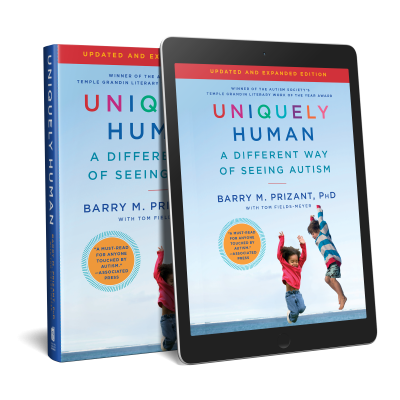
Uniquely Human, the book (Updated and Expanded edition!)
Dave Finch
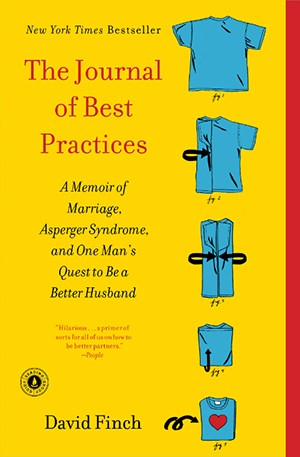
Dave Finch is the author of the New York Times bestselling memoir, The Journal of Best Practices: A Memoir of Marriage, Asperger Syndrome, and One Man’s Quest to Be a Better Husband. As a writer and creative consultant, his work has appeared on ABC, CBS, NBC, CNN, NPR, SiriusXM, The New York Times, Rolling Stone, The Howard Stern Show, and the award-winning Netflix series, Atypical. Based in Denver, Dave’s company, Elevated Studio, produces this podcast and other recognized series.
Visit Dave’s website here
“I have read a million and one books on Autism. Uniquely Human is the best book I have ever read, hands down. Thank you Barry for this incredible gift!!!!”
– Navah Paskovitz, Mother of three boys with Autism, Co-Founder, the Ed Asner Family Center
“Compassion, learning and supportive strategies–the three essentials for working with folks with ASD–are an integral part of this must-read book.”
– Michelle Garcia Winner, Speech Language Pathologist and Founder of Social Thinking
“Thanks be to Barry for the first-ever must read written for parents, educators, and clinicians.”
– Michael John Carley, Founder, GRASP; Author of Asperger’s From the Inside-Out
“What makes the book compelling is how funny Mr. Finch is about himself. He’s great company.”
– Susannah Meadows, The New York Times
“In this hilarious memoir (which also gives some of the finest explications of Asperger’s out there), Finch approaches trying to be a better husband and father with the determination of Sherman marching on Atlanta.”
– Judith Newman, People (4/4 stars)
“Talk about being on a roll. This dude wrote a book, he has Asperger’s syndrome. He cured himself by listening to me on the radio!”
– Howard Stern