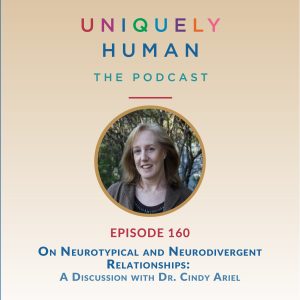
EPISODE 160
On Neurotypical and Neurodivergent Relationships: A Discussion with Dr. Cindy Ariel
Play the Episode…
Show Notes
Dr. Cindy Ariel is a psychologist specializing in neurodivergent and neurodivergent relationships, and in her discussion with Barry and Dave, she shares insights about the specific challenges and unique qualities of such relationships. Cindy emphasizes that
successful relationships require both partners to focus on mutual compatibility rather than trying to fix the other person, and how allowing both partners to be authentic
can deepen connection and understanding. Given that relationships are a huge part of Dave’s work, he actively contributes his perspective to the discussion with Cindy.
Featuring

Dr. Cindy Ariel
Dr. Cindy Ariel has practiced as a psychologist for over 20 years. Starting out working nightshift on a crisis hotline, she earned her bachelor’s degree in psychology and worked with developmentally delayed children and adults in both outpatient community mental health and private in-patient facilities. Cindy received her Master of Science degree from the Graduate School at Hahnemann Medical College (now Drexel) and earned her doctorate from Temple University in 1992. She became co-founder and CEO of an independent psychology practice in center city Philadelphia. Cindy is co-editor of the book, Voices from the Spectrum (2006), and also author of Loving Someone with Asperger’s Syndrome: Understanding and Connecting with your Partner (2012), a self-help book for partners of someone on the autism spectrum. Her new book about to be published is Autism and the Two of Us (Guilford Press).
Alternative Choices webste
Uniquely Human: The Podcast
EPISODE 160
ON NEUROTYPICAL AND NEURODIVERGENT RELATIONSHIPS:
A DISCUSSION WITH DR. CINDY ARIEL
🎤 Transcript and Audio Usage Disclaimer
© Uniquely Human: The Podcast. All Rights Reserved.
The contents of this podcast, including all audio recordings, transcripts, and related materials, are the intellectual property of Uniquely Human: The Podcast and its fiscal sponsor, Community Autism Resources, a registered 501(c)(3) nonprofit organization.
These materials are provided solely for personal, educational, and non-commercial use.
No portion of the podcast audio, transcript, or any derivative materials may be reproduced, redistributed, modified, or publicly displayed without prior written consent from Uniquely Human: The Podcast or its authorized representatives.
Transcripts are provided for accessibility and reference purposes. They may contain minor transcription or formatting errors. When quoting or referencing the podcast, please credit Uniquely Human: The Podcast and provide a link to the original episode page.
By accessing or downloading transcripts, you agree to comply with this usage policy and acknowledge that all copyrights, trademarks, and intellectual property rights remain the exclusive property of Uniquely Human: The Podcast and its creators.
For permissions or inquiries, please contact:
📧 uniquelyhumanpodcast@gmail.com
Show Disclaimer
[00:00:00] UHP: The primary purpose of Uniquely Human: The Podcast is to educate and inform. The views expressed during all episodes are solely those of the individuals involved and do not constitute educational or medical advice. Listeners should consult with professionals familiar with each individual or family for specific guidance.
[00:00:19] UHP: Uniquely Human: The Podcast is produced by Elevated Studio. Music is graciously provided by Matt Savage of Savage Records.
Meet the Hosts
[00:00:39] Barry: Hi, I’m Dr. Barry Prizant, clinical scholar, researcher, and consultant on autism and neurodiversity, and a Brooklyn boy raised in the big city.
[00:00:49] Dave: And I’m Dave. I’m none of those things, and I grew up on a farm in Illinois. But being on the spectrum myself, I have plenty of personal insight to lend.
[00:00:59] Barry: And this is Uniquely Human: The Podcast, a show that illuminates and celebrates autism and neurodiversity.
Introducing Dr. Cindy Ariel
[00:01:14] Barry: Today on Uniquely Human: The Podcast, Dave and I are very excited to have a conversation with Dr. Cindy Ariel on a topic that many of you have requested — and that Dave has requested in particular. So welcome, Cindy.
[00:01:34] Cindy: Thank you. That’s exciting — I didn’t know it was requested.
[00:01:37] Barry: Yes, we’ve had a lot of people throw that into our lineup of future podcasts. And before we go further, I want to mention that you’re in practice with a dear friend and former guest of ours, Dr. Robert Nasif — so that makes us part of the same family in a way.
[00:01:37] Barry: Dr. Cindy Ariel has practiced as a psychologist for over 20 years, starting out working the night shift on a crisis hotline. She earned her bachelor’s degree in psychology and worked with developmentally delayed children and adults in both outpatient community mental health and private inpatient facilities. Cindy received her Master of Science degree from the Graduate School at Hahnemann Medical College, now Drexel, and earned her doctorate from Temple University in 1992. She became co-founder and CEO of an independent psychology practice in Center City, Philadelphia.
[00:01:37] Barry: Cindy is co-editor of the book Voices from the Spectrum, and author of Loving Someone with Asperger’s Syndrome: Understanding and Connecting with Your Partner — a self-help book for partners of someone on the autism spectrum. Her new book, Autism and the Two of Us, is about to be published by Guilford Press. And as I alluded to, this is very much an area of Dave’s interest and experience and writing as well.
Cindy’s Journey to Relationships
[00:03:26] Barry: Cindy, could you tell us a little about your journey that led you to your current focus on relationships, and your choice to continue with a new book on this topic?
[00:03:43] Cindy: Sure. I was always kind of shy and, as a result, often misunderstood — a very introspective person who then wanted to understand other people. So understanding all kinds of people became really important to me. I wanted to be in private practice and work with a wide range of people, but I specifically gravitated toward what I called people living in alternative relationships — a lot of LGBTQ folks, stepfamily relationships, and within that, a lot of neurodivergent people.
[00:04:26] Cindy: I started out working with individuals, but individuals always come in and talk about the other people in their lives, so that naturally led me toward couples and relationship work.
Why This Book Now
[00:04:38] Cindy: I started writing about neurodivergent relationships, and that’s when I was asked to write my first book, Loving Someone with Asperger’s Syndrome. It was always a somewhat problematic book for me because it was written only for the neurotypical partner — that’s what the publisher asked for. Someone offered me a book deal, I knew I could do it, so I did it. But I always felt a little wrong about it. I’d get questions like, ’What about me? What am I supposed to do?’ or ’Does this mean my partner doesn’t have to change or think about anything?’
[00:05:35] Cindy: And then, right after that book was published, the Asperger’s syndrome diagnosis was removed from the DSM, so much had changed. I really just wanted to redo it. So that’s what I did.
[00:05:44] Dave: Good for you. And I appreciate that perspective — it’s easy for people on the sidelines to ask why you only took one perspective. But you weren’t there when a publisher called and said, ’You’re a subject matter expert, could you write this book for us?’ The important thing is that you were able to step back and say, ’There’s more I want to say,’ and you’re doing that now.
[00:06:20] Cindy: And this time I actually had to push harder for it. The publishers I approached kept saying I had to do it one way, and I knew I could do it from both sides — I work with both partners in my practice. I finally convinced them, and here we are.
Why Neurodiverse Couples Need Support
[00:06:44] Barry: There are probably a million books on relationships. Why is it specifically needed to focus on neurodivergent and neurotypical relationships?
[00:07:01] Cindy: For a long time, everyone was focused on autistic kids — and they forgot that autistic kids grow up and become autistic adults who are in relationships and trying to live a full life. So many people come in who either didn’t know they were autistic, are just finding out, or knew but had no idea what it meant for their marriage or partnership. And their partners are often completely lost as well.
[00:08:02] Barry: And could it also be that for some people, specific difficulties in relationships are actually what leads them to reflect on who they are and why they experience the world differently? I’m thinking of people I’ve known since childhood who’ve told me that relationship struggles were what first made them ask deeper questions about themselves.
[00:08:46] Cindy: Yes, that happens a lot. And often it’s the partner who first picks up on it — they’ll say, ’I’ve been reading some things. I think maybe you should read them too.’
From Fixing to Compatibility
[00:09:01] Dave: My own experience tracks this exactly. My wife Kristen brought a lot of things to my attention early in our marriage — it was rocky, and we were looking at the possibility of splitting up. But we didn’t want that, so we committed to working on it. I got an Asperger’s diagnosis about five years into our marriage. And at first, like I think most partners would, Kristen’s instinct was, ’How can you be more compatible with me?’ But she also turned that question around: ’How can I be more compatible with Dave?’
[00:09:01] Dave: She started thinking concretely: structured family time instead of open-ended weekends, preparing not just me but our toddlers for what an event was going to look like beforehand so there were no surprises, thinking through road trips so everyone could actually enjoy them. I was lucky to have a partner who looked at it through the lens of mutual compatibility. Because I’ve seen couples where the neurotypical partner’s framing is, ’Fix this person.’ And that framing doesn’t work. The person isn’t the problem — compatibility is the issue.
[00:11:02] Cindy: That’s the more common situation, at least for the couples who come into therapy. It’s usually the neurotypical partner trying to bring the other person in and saying, ’Look what they do. That’s not what people do. Fix them — help them change, because it’s wrong.’
[00:11:21] Dave: And how do you even begin to address that? Because it’s a philosophical, cultural shift — not just a behavioral one.
[00:11:30] Cindy: It’s a whole framework shift. And people do get a little angry about it. They’ll say, ’How can you say that should be okay? They’re pacing in public and it’s embarrassing me.’ When I try to explain that what actually needs to shift is the embarrassment — that the pacing itself isn’t the problem — they sometimes respond with, ’Well, you must be autistic then,’ as if agreeing with such a thing is itself disqualifying. I get that from both sides, actually: not autistic enough on one end, not typical enough on the other.
[00:12:21] Dave: My wife Kristen’s philosophy became: ’This is who Dave is. So let’s build something around what’s real.’ She knew he was going to say something that makes her cringe sometimes — but that’s between him and whoever he’s talking to. She’s not part of it. That took real work on herself. And now, as a coach, she tells partners exactly that: the work you can do is on yourself. It’s not about deprogramming your partner — it’s about expanding your ability to ask, ’Is this a me problem, or are my thoughts the problem?’ Staying in your own lane.
[00:12:21] Dave: That said, it’s not only neurotypical folks who have blind spots. Sometimes the neurodivergent partner has no interest in mutual compatibility — they’d like things to change, but they don’t actually roll up their sleeves and do the work on themselves.
[00:13:57] Cindy: It really is hard on both sides — which is exactly why I wanted to write to both partners. Your neurotypical partner was born that way. They can’t help it. And if you’re autistic and your partner’s neurotypicality bothers you, same deal: they can’t help it either.
[00:14:20] Barry: Another way of putting it is looking through a neurodiversity lens rather than through a filter of what’s acceptable neurotypical behavior. You’re both saying: I respect the fact that you have a different brain, that you process relationships and daily routines differently, that your regulation needs may differ — and that’s okay, because that’s who you are.
Communication Differences
[00:14:52] Barry: Let’s get into some of the specific patterns you write about. We could spend an hour on each one, but let’s start with communication. What are the challenges you most often see in neurodivergent-neurotypical relationships?
[00:15:33] Cindy: Communication is central to autism diagnosis for a reason — when your brain is wired differently, everything is wired differently, including the rules of communication. Without generalizing too broadly, one of the biggest differences is that autistic people tend to be more direct, while neurotypical people tend to be more indirect. That sounds simple, but the consequences are enormous.
[00:15:33] Cindy: I worked with an autistic man who kept asking a woman in his college class out, and she kept giving excuses. To most people, repeated excuses signal clear disinterest. But his reasoning was: ’If she doesn’t explicitly say no, there’s still hope — I’ll keep asking until she has to tell me directly.’ And she probably never will. She’ll ghost him, hope the class schedule changes — some indirect exit. That gap in communication style creates real confusion and pain.
[00:17:11] Cindy: It shows up in relationships too. When a partner is mad and slamming drawers and doors, the autistic partner is often just thinking, ’Why are you making so much noise?’ — not connecting the noise to an emotional message. And the partner who’s upset thinks, ’I can’t believe they don’t even notice how angry I am. It’s so obvious.’
[00:17:32] Dave: They’re not reading the subtext. They’re not putting themselves in the emotional state of the person doing the slamming.
[00:17:41] Cindy: Exactly. And the partner who’s frustrated is thinking, ’I can’t believe they don’t even care.’ But actually, they genuinely don’t see it — not because they don’t care, but because the signal isn’t registering as a signal.
Sensory Needs in Relationships
[00:17:52] Barry: It’s interesting how interconnected all of this is — because the next area on our list is differing sensory needs, and you just touched on it. Slamming a door or drawer has a sensory impact too.
[00:18:06] Cindy: Right — ’Ow, that’s hurting my ears. Why are you doing that?’ And separately, autistic people often have a very high level of sensory sensitivity to things that neurotypical people barely register. There are things that bother most people — nails on a chalkboard, for instance — but autistic individuals frequently experience that kind of sensitivity across a much wider range of inputs. And when they cover their ears in public, the neurotypical partner’s first reaction is often embarrassment: ’Why are you doing that?’
[00:18:51] Cindy: Rather than recognizing, ’Oh, when this happens I need to help get them out of here, or lower the volume if I can,’ the first instinct is, ’They just have to stop that. It’s embarrassing me.’
[00:19:11] Dave: What’s interesting about the embarrassment reaction is that nobody at the party is actually looking at the person covering their ears and judging the partner for allowing it. Let’s say a loud DJ comes on at a wedding — someone nearby gets a very stressed look and covers their ears. The partner thinks, ’That’s embarrassing me.’ But nobody at that wedding is thinking, ’What’s wrong with their partner for allowing such nonsense?’ Nobody is thinking about the partner at all. The assumption is very strange, even if it’s human.
[00:19:59] Barry: I’ve experienced this directly in my family. My wife and my son are both extremely sensitive to smells — a sensory sensitivity that’s less visible than covering your ears, but just as real. You walk into an environment with a strong smell and one person has to leave immediately, while the other is saying, ’It’s not that bad, come on.’ There’s no malice on either side — it’s just a profound difference in what’s being experienced. And it limits what you can do together: which restaurants, which neighborhoods, which activities.
Emotions and Misread Signals
[00:21:08] Barry: Emotional expression and emotional understanding have always been central to how we think about autism. What are the main challenges you see in your work, and what patterns show up most?
[00:21:29] Cindy: This is a major pain point. The misunderstandings around how people express emotions are enormous. I’ve seen autistic partners who are genuinely convinced that their neurotypical partner is unstable — because crying or yelling when upset is completely normal and common for neurotypical people, but can seem wildly dysregulated to someone who processes things differently. And the neurotypical partner, in turn, reads their autistic partner as cold and uncaring because emotional expressions tend to be more subdued or more logically framed.
[00:21:29] Cindy: The work is helping both people understand: your partner still cares deeply. They’re not crazy. They’re not cold. It’s a difference in how emotions are expressed — and that difference is real, not a character flaw. It’s all hard. But once people can name it, they can start working with it.
Direct Communication Wins
[00:22:56] Cindy: This is why so much comes back to communication — these things have to be stated directly. You cannot assume your partner knows what you’re feeling, how you feel about them, or what you’re thinking. You have to say it. Especially in these relationships where partners don’t always pick up on indirect cues.
[00:23:23] Dave: The framing of those conversations matters a lot too. Two of my favorite comedians, Bill Burr and Dave Chappelle, both have bits about how whenever their partner wanted to ’have a talk,’ it was always about something the partner needed to fix. The partner is always a work in progress with scaffolding around the building, while the ’perfect partner’ is behind glass in a museum — finished, untouchable.
[00:23:56] Cindy: Very true.
Matter-of-Fact Check-Ins
[00:24:12] Dave: What’s worked for Kristen and me is when she approaches something as a clear matter of fact: ’This is where I’m at, and when you act like this, here’s what it does to me — or to the kids.’ That’s always been the most helpful. And it works both ways. I’ve had to sit Kristen down and say, ’You’re assuming I want to be at the same thing you’re doing, for as long as you’re doing it — can we work this out?’ When you can approach it calmly and directly, you’re so much more productive.
[00:24:12] Dave: Sometimes the frustration with couples is that one partner is speaking indirectly, walking on eggshells, trying not to set the other off — and that’s also where an intermediary like Cindy can really help translate between communication styles.
[00:25:31] Cindy: That’s exactly what I try to do — help people move from blaming to problem-solving. ’Here’s a thing that’s happening. What can we both do about it? What can we both change so that I don’t feel so bad when this occurs?’ That framing puts responsibility on both people, not just one.
Boundaries and Reinforcement
[00:25:53] Dave: It doesn’t seem like we do a great job, culturally, of teaching people how to enforce boundaries in a healthy way. Some people become doormats, some become tyrants, some become rigid, some just let people walk over them. Having that initial honest conversation — ’When you act like this, here’s how it makes me feel’ — that needs to be reinforced until both partners have built a real behavioral habit with each other. And reinforcing those limits can feel uncomfortable, but if you don’t, the whole first conversation unravels.
[00:26:48] Cindy: That’s why you have to have ongoing check-ins. It’s not one and done. You have to keep having the conversation, because things change — people evolve, circumstances change, what one person needs shifts over time.
Routines and Predictability
[00:27:04] Barry: Dave alluded to this earlier — how much life needs to be predictable, and how much of a challenge it can be when partners have very different relationships to routine and spontaneity. How often do you encounter this in your work?
[00:27:33] Cindy: A lot. Most people need some kind of routine. But for autistic people, it’s often not just a preference — it’s closer to a need. Structure provides a sense of knowing what’s coming, and that can help with everything from household functioning to emotional regulation.
[00:28:03] Barry: I like to say that we all benefit from predictability, but many neurodivergent people crave it. It sets the threshold between regulation and dysregulation — how much do you know about what’s happening next in your day, your week, your life?
[00:28:26] Cindy: And this is something really important: neurotypical partners sometimes assume it’s just a preference — ’Hey, I don’t feel like it either sometimes.’ But it’s not ’I don’t feel like it.’ Sometimes it’s genuinely ’I can’t.’ It’s not a preference, it’s a real need that has to be honored.
Sex and Intimacy Themes
[00:28:59] Barry: I’m sure some of our listeners are thinking about one of the elephants in the room: the sexual and intimacy dimension of relationships. We could do five episodes on that alone — and we actually had Michael John Carley discuss his book on the topic a couple of years ago. What are some of the patterns you see, and how does this connect to everything else we’ve been discussing?
[00:29:40] Cindy: You can have sex without intimacy, and intimacy without sex — so those are two different threads. Some people need the emotional intimacy for sex to feel right, some don’t. As with everything else, you have to know yourself and your partner. In couples, sex often gets tangled up in everything else that hasn’t been resolved first, because many people need to feel emotionally good with each other before physical intimacy feels available. Not everyone — but many.
[00:30:37] Dave: If you’ve been feeling embarrassed all evening — like at a wedding with a loud DJ where your partner was covering their ears and you were mortified — you’re not going to be in the mood when you get home. One partner is stressed, the other is resentful. Neither of those is a warm-up for intimacy.
[00:30:55] Cindy: Right. And some people don’t need much warm-up at all — they can just be ready. But when their partner isn’t, that’s a real friction point. So you add sensory sensitivities, communication gaps, unresolved emotional tension — and all of that flows directly into how intimate a couple can be.
[00:31:07] Barry: And that’s really the through-line — sensory needs, communication style, emotional expression — they all converge in the intimacy space.
Diagnosis and Awareness
[00:31:33] Barry: We’ve been alluding throughout to situations where one partner may not realize they’re neurodivergent, or doesn’t embrace a diagnosis. What special circumstances come up when that’s the case?
[00:32:00] Cindy: If you don’t realize you’re neurodivergent, it’s often harder to make the kinds of changes that would help you be in a relationship. And if you don’t know your partner is neurodivergent, you’re going to be less understanding and more angry. Learning about neurodiversity very often shifts people from blame and resentment toward understanding — and that’s when you can actually start building something.
[00:32:32] Dave: When partners ask me whether to pursue a diagnosis, my first question is always: who’s it for? What are you going to do with the information? If you’re looking at it as a get-out-of-jail-free card, no. But if you’re looking for genuine self-reflection — to understand your own system, your partner’s system, and how to be mutually compatible — that’s an excellent reason.
[00:33:02] Cindy: And self-diagnosis can work too — if both partners agree on it and are willing to work with it, that’s okay. It doesn’t have to be official. But it does have to be acknowledged.
Redefining Love and Intimacy
[00:33:20] Barry: In looking at a pre-publication copy of your new book, Autism and the Two of Us, you write that typical ways of loving must be redefined for success in a neurodivergent-neurotypical relationship. Can you say more about that?
[00:33:43] Cindy: Yes. Everything we’ve been talking about creates, for a neurodivergent person, a different picture of what a partnership can look like. It’s often not the romantic ideal that neurotypical culture sells. It might simply be: it just feels good to be in a room with somebody who accepts you for who you are.
[00:34:18] Barry: I want to quote you directly, because I think it captures this beautifully: you write that ’the differences can create new paths to intimacy rather than becoming a wedge that tears the relationship apart.’
[00:34:36] Cindy: Similarities are easy — that’s how we first connect. ’Oh, this person loves all the same things I do.’ But then differences emerge, and conflicts happen. And that creates a choice: you either split, or you go deeper. You get to know who the person actually is, not just the parts that agree with you. That’s where a real, loving relationship gets built — not in the easy beginning, but through the friction of real difference.
[00:35:11] Barry: Getting to know a person more deeply — that’s really what a neurodiversity lens allows. Since I’ve been more immersed in this framework, I reflect much more on myself: my communication style, my sensory quirks, even how I now find interesting people I might have written off a few years ago. Double that in a relationship you’re actively working on together.
[00:35:11] Barry: Some of my most self-aware friends are autistic and neurodivergent — because they’ve been working at it their whole lives. They’ve been asking, ’Why did I react that way? Why does this aspect of my sensory world dysregulate me?’ That kind of constant self-examination, when it leads somewhere, produces a real sense of competence and comfort with who you are.
[00:36:39] Cindy: Neurodivergent people always have to look at themselves. Neurotypical people often don’t — they’re not asked to, because the way they do things is considered the default, the ’right’ way. So neurodivergent people may actually end up more open to change.
[00:36:39] Cindy: The risk, though, is that they’ve been told their whole lives they’re not okay the way they are — so they agree to try to become like their neurotypical partner, or accept that they’re somehow deficient. That’s what I work to counter. What I model for both partners is the belief that whatever someone says, there must be something that makes sense in it, even if I don’t understand it yet. So I work hard to say, ’Tell me another way — help me understand.’ And that often shifts things for both people. The autistic partner starts feeling like somebody actually wants to understand them, and the neurotypical partner thinks, ’Maybe my so-called crazy partner is worth trying to understand.’
[00:39:11] Cindy: When I finally crack open what someone’s been trying to say, it’s often remarkable. I had a couple where the neurotypical parent wanted to simply cut off screen time — ’Screen time is bad.’ The autistic partner was trying to say: ’Screen time helped me. I wouldn’t be who I am professionally without it. We need to talk about how to do screen time well, not whether to do it at all.’ And that person had genuinely brilliant ideas about how screen time can be enriching. Neither I nor their partner had thought of them. You have to listen to everybody.
Authenticity and Being Heard
[00:39:26] Dave: Don’t you find that when someone is allowed to be their authentic self — or as close to it as possible — within a relationship, it makes both partners more accessible to each other? Because you’re both feeling safe in who you are.
[00:39:50] Cindy: In the therapy room, I actually watch people get happier — especially the autistic partner, who often felt like nobody had ever really listened to them before. They were just supposed to make the relationship look neurotypical. Once they start feeling free to actually say things, they open up more. I love watching that. Sometimes their partner loves it too — and sometimes not so much.
[00:40:19] Cindy: I always do.
Ingredients for Relationship Success
[00:40:22] Barry: So what are the active ingredients that make these relationships work? When couples come to you and things seem hopeless, what shifts?
[00:41:08] Cindy: Listening is near the top of the list. But I find it helpful to frame it this way: if you think about putting your partner first every day, you’ll probably naturally do all the other things — listen, stay open to a different perspective, cultivate a genuine appreciation for who your partner is, even the quirky parts. In the beginning, you probably thought those things were charming. Find that again.
[00:41:08] Cindy: And be direct. Talk straight. Don’t make your partner pass a test to see if they understand your hints — they won’t, not reliably. When you’re clear, things start to shift. And then it becomes a process, not a single fix.
Culture vs. Neurodivergence
[00:42:28] Barry: You just touched on the idea of a culture of understanding. One more layer we haven’t addressed is how cultural differences — on top of neurological differences — shape relationships. I’m a Brooklyn kid; my wife grew up in rural Connecticut. Those differences have had to be worked through over years. How do you navigate that when cultural and neurological differences are both present?
[00:43:23] Cindy: Every relationship has all kinds of differences layered on top of each other. And when something goes wrong in a neurodiverse relationship, people want to blame the neurodivergence — or, if there are cultural differences, blame those. But it’s rarely that simple. If two people are genuinely willing to work together, it almost doesn’t matter what the source of the difference is — culture, neurology, personality — they can work it out.
[00:43:23] Cindy: What can’t be worked through are the real red flags: emotional or physical abuse, serious boundary violations, or consistently toxic communication — devolving into screaming and cursing at each other. Those aren’t cultural or neurological differences. Those are something else entirely.
[00:44:23] Dave: Right — and that’s the crux of it. Separating what’s ’autism’ from what’s just being a person. People ask me how much of saving my marriage was about autism. But when they read my memoir, they need to see three different things: there’s being a husband, there’s being Dave, and then there’s being autistic. When someone says their spouse loads the dishwasher wrong too, that’s probably not an autism thing. That’s likely just an engineer who wants to optimize water coverage — and a partner with a busy life who just needs the dishes done. Those things are workable, diagnosis or not.
[00:45:44] Barry: Dave, I didn’t know you were a dish hygiene engineer.
[00:45:51] Dave: Dish hygiene engineer — that’s the certification.
Closing Thanks and Books
[00:45:59] Barry: Cindy, this has been a wonderful conversation, and I feel like we’re just scratching the surface of what you explore in much greater depth in your previous book, Loving Someone with Asperger’s Syndrome, and now your new book — Autism and the Two of Us, coming from Guilford Press very soon, possibly as early as July or August. Thank you so much for your insights and your experience. You have such a rich treasure trove of stories from your practice.
[00:46:41] Cindy: Thanks for having me. It was fun — I don’t often get to talk about this work in this way, stepping back from the day-to-day of it.
[00:46:49] Dave: It’s hard to reflect when you’re in the trenches. But it’s nice to surface sometimes.
[00:46:57] Cindy: It really is. Thank you.
[00:46:59] Barry: All righty. Thank you, Cindy.
[00:47:01] Dave: Thanks.
…and Continue the Discussion
Do you have a book or podcast club? If so, you may use this discussion guide to facilitate a conversation about this episode.
1) Cindy’s practice focuses on helping NT and ND persons who are in a relationship understand each other better so that their relationship grows in ways they didn’t think was possible. Why does she feel this is needed?
2) Why is viewing relationships through a neurodiversity lens especially important for successful NT/ND relationships? What differences may be observed in patterns of communication, sensory issues, the need for predictability and emotional expression?
3) What are some of the “active ingredients” that Cindy mentions that are needed to help relationships “work” over time? How are these similar or different than those necessary for persons of the same “neurotype”? Do you have personal experiences with challenges or benefits of NT/ND relationships?
HOSTED BY

Barry Prizant, Ph.D., CCC-SLP
Dr. Barry Prizant is a speech-language pathologist with more than 50 years experience as a researcher and international consultant for autistic and neurodivergent individuals and their families. He is an Adjunct Professor of Communicative Disorders at the University of Rhode Island and Director, Childhood Communication Services (a private practice). Previously, he served as Associate Professor in the Department of Psychiatry in the Brown University School of Medicine, and held a tenured professor appointment at Emerson College. Publications include 5 books, most notably Uniquely Human: A Different Way of Seeing Autism (2015; 2022) and The SCERTS Model manuals, an educational approach implemented in more than a dozen countries. He has published 150 scholarly chapters and articles and serves on numerous professional advisory boards for journals and professional organizations. Barry has presented more than 1000 seminars and keynote addresses internationally, including two invited presentations at the United Nations for World Autism Awareness Day. His career contributions have been recognized with honors from Brown and Princeton Universities, the Autism Society of America and the American Speech-Language-Hearing Association.
Visit Barry’s website here
Uniquely Human, the book (Updated and Expanded edition!)
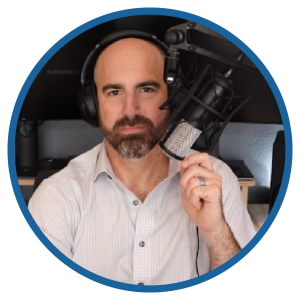
Dave Finch
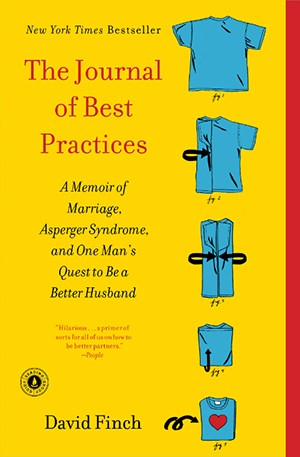
Dave Finch is the author of the New York Times bestselling memoir, The Journal of Best Practices: A Memoir of Marriage, Asperger Syndrome, and One Man’s Quest to Be a Better Husband. As a writer and creative consultant, his work has appeared on ABC, CBS, NBC, CNN, NPR, SiriusXM, The New York Times, Rolling Stone, The Howard Stern Show, and the award-winning Netflix series, Atypical. Based in Denver, Dave’s company, Elevated Studio, produces this podcast and other recognized series.
Visit Dave’s website here
“I have read a million and one books on Autism. Uniquely Human is the best book I have ever read, hands down. Thank you Barry for this incredible gift!!!!”
– Navah Paskovitz, Mother of three boys with Autism, Co-Founder, the Ed Asner Family Center
“Compassion, learning and supportive strategies–the three essentials for working with folks with ASD–are an integral part of this must-read book.”
– Michelle Garcia Winner, Speech Language Pathologist and Founder of Social Thinking
“Thanks be to Barry for the first-ever must read written for parents, educators, and clinicians.”
– Michael John Carley, Founder, GRASP; Author of Asperger’s From the Inside-Out
“What makes the book compelling is how funny Mr. Finch is about himself. He’s great company.”
– Susannah Meadows, The New York Times
“In this hilarious memoir (which also gives some of the finest explications of Asperger’s out there), Finch approaches trying to be a better husband and father with the determination of Sherman marching on Atlanta.”
– Judith Newman, People (4/4 stars)
“Talk about being on a roll. This dude wrote a book, he has Asperger’s syndrome. He cured himself by listening to me on the radio!”
– Howard Stern