EPISODE 159
Sleep Disturbances in Autism and Neurodivergent Conditions: A Discussion with Dr. Beth Malow, MD, Neurologist and Sleep Disorder Expert
Play the Episode…
Show Notes
Dr. Malow, discusses how sleep problems affect approximately 80% of individuals on the autism spectrum and family members, emphasizing that improving sleep can positively impact every aspect of an autistic person’s life and the life of the family. She explained that sleep deprivation exacerbates existing challenges and can lead to irritability and impaired social communication, which are already core features of autism. Beth framed sleep as a “window” to help autistic individuals and families, contrasting this positive approach with the common tendency to focus on difficult behavioral patterns when sleep issues occur.
Featuring
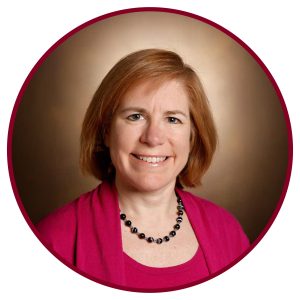
Dr. Beth Malow
Dr. Beth Malow is Professor of Neurology and Pediatrics in the Vanderbilt Sleep Division and holds the Burry Endowed Chair in Cognitive Childhood Development. Dr. Malow is board certified in neurology and Sleep Medicine. She previously served as Vice-Chair for Research and Academic Affairs within Neurology, and Vice Chair of the governor-appointed Tennessee Autism Council. She also served as principal investigator for Vanderbilt’s Autism Treatment Network, one of the regional autism centers across North America that develops standards of medical care for children with autism. Prior to joining the faculty at Vanderbilt, Dr. Malow was a tenured associate professor of Neurology at the University of Michigan and director of the Sleep Medicine Fellowship Program and the General Clinical Research Center Sleep Program. She is also the parent of two autistic children and co-author of “Beyond the Politics of Contempt- Practical Steps for Building Positive Relationships in Divided Times.”
Uniquely Human: The Podcast
EPISODE 159
SLEEP DISTURBANCES IN AUTISM AND NEURODIVERGENT CONDITIONS:
A DISCUSSION WITH DR. BETH MALOW, MD, NEUROLOGIST AND SLEEP DISORDER EXPERT
🎤 Transcript and Audio Usage Disclaimer
© Uniquely Human: The Podcast. All Rights Reserved.
The contents of this podcast, including all audio recordings, transcripts, and related materials, are the intellectual property of Uniquely Human: The Podcast and its fiscal sponsor, Community Autism Resources, a registered 501(c)(3) nonprofit organization.
These materials are provided solely for personal, educational, and non-commercial use.
No portion of the podcast audio, transcript, or any derivative materials may be reproduced, redistributed, modified, or publicly displayed without prior written consent from Uniquely Human: The Podcast or its authorized representatives.
Transcripts are provided for accessibility and reference purposes. They may contain minor transcription or formatting errors. When quoting or referencing the podcast, please credit Uniquely Human: The Podcast and provide a link to the original episode page.
By accessing or downloading transcripts, you agree to comply with this usage policy and acknowledge that all copyrights, trademarks, and intellectual property rights remain the exclusive property of Uniquely Human: The Podcast and its creators.
For permissions or inquiries, please contact:
📧 uniquelyhumanpodcast@gmail.com
Show Disclaimer
[00:00:00] UHP: The primary purpose of Uniquely Human: The Podcast is to educate and inform. The views expressed during all episodes are solely those of the individuals involved and do not constitute educational or medical advice. Listeners should consult with professionals familiar with each individual or family for specific guidance.
[00:00:19] UHP: Uniquely Human: The Podcast is produced by Elevated Studio. Music is graciously provided by Matt Savage of Savage Records.
Meet the Hosts
[00:00:39] Barry: Hi, I’m Dr. Barry Prizant, clinical scholar, researcher, and consultant on autism and neurodiversity, and a Brooklyn boy raised in the big city.
[00:00:49] Dave: And I’m Dave. I’m none of those things, and I grew up on a farm in Illinois. But being on the spectrum myself, I have plenty of personal insight to lend. And this is —
[00:01:00] Barry: — Uniquely Human: The Podcast, a show that illuminates and celebrates autism and neurodiversity.
Introducing the Sleep Expert
[00:01:15] Barry: Today on Uniquely Human: The Podcast, we are having a discussion about a topic that so many of our listeners have asked about. And for the longest time, I’ve been searching for the perfect person to talk about sleep issues in autism and neurodivergent children and adults. So welcome, Dr. Beth Malow.
[00:01:36] Beth: Thank you. I’m glad to be here.
[00:01:39] Dave: I’m glad you’re here, ’cause I’m on five hours of sleep for the last three nights, so I’m interested to hear what you have to say.
[00:01:47] Barry: Yes, that’s for sure. So a little bit about you, Beth. Dr. Beth Malow is a professor of neurology and pediatrics in the Vanderbilt Sleep Division, and holds the Burry Endowed Chair in Cognitive Childhood Development.
[00:01:47] Barry: Dr. Malow is board-certified in neurology and sleep medicine. She previously served as vice-chair for research and academic affairs within neurology, and vice-chair of the governor-appointed Tennessee Autism Council — pretty full schedule there. She also served as principal investigator for Vanderbilt’s Autism Treatment Network, one of the regional autism centers across North America that develops standards of medical care for children with autism.
[00:01:47] Barry: Prior to joining the faculty at Vanderbilt, Beth was a tenured associate professor of neurology at the University of Michigan, and director of the Sleep Medicine Fellowship Program and General Clinical Research Center Sleep Program. She is also the parent of two autistic individuals, and co-author of Beyond the Politics of Contempt: Practical Steps for Building Positive Relationships in Divided Times — and we’re also interested in hearing about that new work of yours as well.
[00:03:06] Dave: Needed more than ever.
[00:03:07] Barry: Yes. Thank you. For sure. Divided times — it goes without saying.
Beth’s Journey to Sleep and Autism
[00:03:12] Barry: So, our listeners are very often interested in the journey of our guests. So if you could talk a little bit about your professional and personal journey, and what brought you to focus on both neurology and sleep disorders.
[00:03:28] Beth: Well, thank you. It’s such a pleasure to be here, Barry. I would say that even as a kid, I was so interested in how the brain worked and what made people tick. My brother was a psychologist, and I would read all of his books — B.F. Skinner and different books as I was growing up. I thought about medicine because I thought, “Wow, it’ll give me all this opportunity to really focus,” and initially I was going to be a psychiatrist.
[00:03:28] Beth: I was also interested in the brain aspects — and some psychiatry is that way, I don’t want to make it sound like it isn’t — but there was something about neurology and focusing on the brain that really drew me in, so I became a neurologist. And then after my kids were born and diagnosed with autism, I moved from being a general sleep person to being a sleep and autism expert.
[00:03:28] Beth: Sleep, of course, interested me from the get-go because I was so fascinated by what happens when we dream and how, when we sleep, it seems to improve every aspect of our lives. And then I kind of tagged on the autism later.
[00:04:55] Barry: Yeah.
How Common Are Sleep Issues
[00:04:55] Barry: You know, as a speech-language pathologist, when I’ve consulted to schools and programs and a teacher would say, “This youngster comes in so dysregulated,” I would just say, “Well, how does he or she sleep?” And very often, of course, we would hear, “Not so well.” So how common are sleep issues in autistic individuals versus the general population?
[00:05:23] Beth: Yeah. So sleep affects probably about two-thirds to four-fifths of people with autism. I’ve seen rates as high as 87%. I would say there are some kids who sleep well, but they’re in the minority — maybe about 20% of kids with autism may not have any sleep issues, but the rest do. It’s very common. Oftentimes we see this overactivity, this “I can’t turn my brain off,”
[00:05:55] Barry: Mm-hmm — similar to —
[00:05:56] Beth: — what we see with ADHD-type kids. And then they also have a lot of medical issues, maybe on antidepressants or other medicines that affect sleep. So there’s lots of reasons why kids on the autism spectrum may struggle.
[00:06:17] Dave: That’s interesting, ’cause I’m absorbing all of this. Ever since my teens, I have not been somebody who just lays down and goes to sleep. And once I’m asleep, though, I almost have waking inertia — meaning when I’m awake, I’m awake and I can’t get to sleep, but when I’m asleep, I’m asleep and I cannot wake up.
[00:06:17] Dave: So it’s interesting to me that the autistic brain in particular would not have the same override circuit that other, non-autistic brains might have that says, “This is the time when we down-regulate, this is the time we start drifting off, now we’re asleep.” I make it sound like it’s that easy for everybody, but I assume it’s not just that easy for everybody — correct?
[00:07:10] Beth: It’s true. What you’re describing is very common, and it is amenable, though. If we can teach our brains to calm down, we can actually help ourselves sleep better, and I just look at autism as an exaggeration of that. Even those of us not on the spectrum have certainly had that experience — whether good or bad — of some event happening, and it might be a talk that I give, it might be tonight after today’s podcast ’cause I was so excited with how it went, and our brain just keeps replaying it. Even good things can create that over-arousal, that hyperarousal, that can interfere with sleep.
[00:07:59] Barry: Sure.
Sleep Stages Explained
[00:08:00] Barry: Yeah, and you know what’s coming to mind — I think so often, in a very simplistic way, people think about it as: you’re either awake or you’re asleep. But you’re really shifting states of consciousness. I didn’t really raise this as something for us to discuss, but there must be phases or stages of moving into sleep and then coming out.
[00:08:00] Barry: I remember very clearly a young autistic girl, many, many years ago, that I consulted for. She was non-speaking when she was awake, but she would sometimes speak coming out of sleep — and it sounded like more scripted kinds of things that were somehow stored in long-term memory in her brain. Could you comment a little on that — about sleep not being something where you just turn the light on, turn the light off?
[00:08:51] Beth: Right. There’s a whole stage to sleep we call N1 sleep, or stage one, or light sleep — and it’s really interesting, because when you’re in that stage you can still remember things, like, “Oh yeah, I snore,” because some people will snore as they’re falling asleep and they remember it. If they’re in deep sleep, they’re unconscious. But if they’re in that lighter stage, they remember, “Oh yeah, I was snoring as I went to sleep,” or, “I saw some images as I went to sleep.” We can give people things to remember, and sometimes they’ll remember things even though their brain activity looks like they’re in light stages of sleep — so it really is a very interesting stage to be in.
[00:08:51] Beth: And then, as we’re waking up from sleep, we sometimes wake up abruptly, but more often than not we’ll go back into lighter stages and then fully wake up. So there is — you’re absolutely right — there’s different stages of sleep. There’s dream sleep, where we have most of our dreams, called REM sleep. There’s lots of different transitions in and out.
Why Sleep Matters So Much
[00:10:09] Barry: So you gave us that astounding number — give or take 80% of individuals on the autism spectrum have some sleep problems. So let’s begin to talk about the impact of that. It’s not just an isolated problem — it affects us in so many profound and broad ways. Could you talk about that a little bit?
[00:10:34] Beth: Yeah. I like to frame things as a positive — I look at sleep as a window, or a vehicle, to help autistic individuals with their lives. Because if you think about it, it’s so easy, particularly if you’re a parent of a teen on the spectrum and they’re not sleeping well, and they’re having meltdowns, and they’re struggling at school, and they’re up at all hours of the night — it’s easy to say, “Well, they’re aggressive,” or, “They’re not able to cope,” and focus on that. And then they get put on some of these drugs with a lot of side effects.
[00:10:34] Beth: But if we can shift it and say sleep affects everything — not only will you sleep better, which creates better physical health and mental health, it can actually improve how you deal with the world. The example I love to give people, regardless of whether they’re on the spectrum or not, is to say, “How do you feel when you haven’t slept well the night before? Are you more apt to send that snarky email, or post, or whatever, that you’re going to regret later?” And the answer is everybody starts nodding — they know exactly what I’m talking about, and how dysregulated we all are when we haven’t slept.
[00:10:34] Beth: So then I say, “Well, think about the autistic individual — we know that their brain circuits are already overwhelmed, and they’re more apt to lash out already when they’re stressed. And if you add on sleep deprivation, it can make things even worse.” And people are like, “Oh, yeah.” So that’s when I say to the autistic individual, or their parent: “If we can focus on sleep, it’s not only going to help sleep — it’s going to help every aspect of your life.” And that’s so important, because that will then motivate them to get the help they need.
[00:12:43] Dave: Well, it also sets up for success when you haven’t had a day where you just threw grenades at people all day long. Because even though we all do it — and me probably more than others — we still feel bad about it at the end of the day, and then we’re regretting it, and then that’s going to ultimately affect our sleep, and the cycle continues.
[00:12:43] Dave: But when you have a day where you’re like, “You know what — I put in the work today, I did a good job, I was agreeable,” it makes a huge difference. It sets up a different loop.
[00:13:19] Beth: Absolutely. Yes. Very well said.
Medical Factors and Assessment
[00:13:22] Barry: Yeah, and I’m thinking about the fact that for some people you could say, “I’m having a really irritable, low-frustration-tolerance day,” and you could reflect on that. But when I think about so many people on the spectrum, especially kids, they could be having a really bad day, but it’s almost like you can’t pin it to, “Oh, I didn’t sleep that well last night” — which probably gives you a little distance from it, in a sense.
[00:13:22] Barry: And just by the way — full disclosure — I was diagnosed with severe sleep apnea a few years ago, and thank goodness CPAP works beautifully for me. I wasn’t so much irritable as walking around like a zombie, probably for months and months, until I realized that was it.
[00:14:14] Dave: I remember you saying you were struggling ’cause you felt like you were in a fog. To the rest of us, we were just like, “Nope — he’s still banging on all cylinders.” You masked it really well. It’s all relative, right?
[00:14:26] Beth: Yeah, no, I know. And you made me remember a paper that I read — I’d have to find the reference — the idea that it’s not only irritability and aggression, or just feeling snarky when you communicate with others. It even affects our ability — our social communication — which is one of the core features of autism. So even the core features are affected by sleep. How kids are doing in their therapies — all of that can be affected by sleep, and improved by sleeping better.
[00:15:08] Barry: And the ups and downs — the kids who come in from home who might be fully charged up in terms of their arousal level, and then they crash at 11:00 in the morning, and then after lunch they’re up bouncing. That arousal — I guess OTs call it the arousal modulation issue — where you’re just kind of bouncing all over the place. Goodness.
[00:15:32] Beth: Absolutely.
[00:15:34] Barry: So, well — I think it would be very interesting if you could reflect on the changes in how we view sleeping problems now. In the past, if a kid was having an irritable day, or pushing back, or being, quote-unquote, “non-compliant,” it was thought of as a behavioral problem.
[00:15:34] Barry: But now, especially with so much more knowledge about the biomedical underpinnings of autism and sensory issues — how has that changed the way we understand these problems, and specifically how we assess and try to address them?
[00:16:14] Beth: Yeah, this is a great question — how do we really assess individuals on the spectrum when they’re struggling with different daily functions or social interactions. And yeah, I think sleep is top of the list. There are others, of course — constipation, reflux, a lot of GI problems can play a role. Really, any medical problem can play a role. Pain can play a role. I know sometimes I’ll over-exercise and strain a muscle, and I’m just not as nice as I usually am — it affects me.
[00:16:14] Beth: I think sleep is truly up there, and it’s important to explain to people how much you’ve slept, or the quality of sleep you’ve gotten. With sleep apnea, you may think you’re sleeping all night long, but under the surface, if you’re untreated, you’re having these ins and outs of sleep — it’s almost like your alarm going off several times an hour to wake you up.
[00:17:27] Barry: Mm-hmm.
[00:17:28] Beth: All of that is going to impact your daytime functioning, and I think making that connection for people is really, really important — ’cause then they start thinking, “Oh, what do I need to do to improve my sleep? And maybe I should prioritize my sleep over taking a medicine for irritability or aggression.”
[00:17:50] Barry: You know, that issue of prioritizing sleep — I’ll share a little background here. I had a wonderful dad, passed away a number of years ago. He never even graduated high school, but he referred to himself as a “practical psychologist,” and he would always say, “Your health comes first — and on top of your health coming first, your sleep comes first.” That was just kind of folk knowledge at the time, but I’ve held onto it as a mantra. So important — I think both for parents to hear, and for all of us to hear — that prioritizing.
Age Patterns and CBT-I
[00:18:30] Barry: One other aspect that’s kind of interesting — we talk about individuals who might be preschoolers growing into the elementary years and beyond. Do you notice any patterns in sleeping issues, and how you would approach them, depending on the chronological and developmental ages of the people you see?
[00:18:56] Beth: Yeah, I think as we get older, things change. When kids are really little, there’s a lot of night wakings, and it could somehow be just signaling — for example, they wake up, they’re scared, they don’t know where they are, they don’t know what to do to go back to sleep, so they’ll call out for their parents. Not so much when they become teenagers, because they can get up and get on their phones.
[00:18:56] Beth: So I think things do change as we get older. I’ve also seen kids move from these random night wakings and difficulty sleeping to, as they get to be teens and young adults, a big focus on worrying — “I’m anxious that I’m not going to be able to get a good night’s sleep,” or, “Something bad is going to happen at school or work tomorrow if I don’t fall asleep.” And we see that even in non-autistic individuals — that ruminating and worrying that, you know, we’re just going to be not ourselves.
[00:18:56] Beth: And that’s where, when we do treatment — cognitive behavioral therapy for insomnia, it’s called CBT-I — it can be very effective in these populations, because that’s really what you’re getting at: changing the cognitive part, changing people’s views about their sleep. Yeah, maybe I’ll be a little tired tomorrow, and maybe I’ll even fit in a power nap if I need it — but I’m going to make it through, I’m going to be okay, and then I’m going to sleep better the next night. I think that is really important.
The Power-Nap Strategy
[00:20:48] Barry: I’m curious about the power nap.
[00:20:50] Beth: Okay, yes — so my son taught me this. As a traditional sleep specialist, I was giving my patients advice: “Don’t try to sleep past 3:00 in the afternoon, don’t take a nap, because it’ll mess you up that night.”
[00:21:11] Barry: That’s what I hear, yeah.
[00:21:13] Beth: Yeah, and I think that’s correct if you’re talking about a 30-minute nap. My son has taught me I can take a power nap for 10 minutes — and I’ve done this as late as 5:00 in the evening, like if I’m going out that night or I have something I have to do, like a podcast that evening. I find that 10 minutes is amazing — it resets me, it resets my mood, it resets my energy level.
[00:21:13] Beth: Another possibility is, if I can just lie down — even if I don’t fall asleep, it’s not as effective as if I do, but even lying down for 10 minutes and closing my eyes… Sometimes I have this heated eye mask that I’ll put on, and I find that to be very effective. Sometimes I’ll couple it with a walk — after the power nap I’ll go out and walk, and that brings my energy back up. Just that little reset can make a huge difference. So now I’m a big believer in the 10-, or maybe 15-minute at most, power nap.
[00:21:13] Beth: And one of the things I love about working from home is, I can be seeing patients and then I’ll get a gap in my schedule of 10 or 15 minutes. I go and say to my husband, who’s working next door, “Hey honey, I’m going to take my power nap now.” And then he knows to leave me alone. I set my timer, put my phone on silent, and get my sleep.
[00:22:54] Dave: I get it. Can you walk me through the process of that? Because I’ve tried power napping, and as soon as I set the timer, there’s a voice in my head that says, “Well, you’ve only got 10 minutes — now you’ve only got nine minutes, better get to sleep, now you’ve only got eight minutes, better get to sleep.” It never works. But then if I don’t set the timer, I’ll be asleep for 12 hours.
[00:23:15] Beth: I don’t know — airplane mode, I can find a way that it will still ring but somehow silence it, or I turn the volume off on my phone but it still rings. But you do set a timer — you’ll lie down, but it’s not like… I don’t look at it once I set it. I know what you’re talking about. I’ll wait to set it until I actually get into bed, ’cause if I set it and then go find my eye mask, I’ll get all upset because now I’m down to 14 minutes rather than 15, and now I’m not going to have enough time to sleep.
[00:23:15] Beth: So I try to make it the last thing I do before I get into bed — but it works. I really credit my son with this, ’cause I really thought it was going to affect my sleep at night, and it doesn’t. It just gives me that extra boost of energy to get through the day when I haven’t had a good night’s sleep. I think the other thing it does is — I know when I’m not sleeping well at night, I know, “All right, I’ll take a power nap tomorrow,” and it gives me the confidence to know that I’m not going to die — that I’m not, even though I’m not sleeping right now in the middle of the night, I’ll just get through it, and tomorrow will be a better day.
[00:24:36] Barry: You know, I must say — you’ve just relieved decades of guilt for me, because early in my career, when I was hospital-based and supposed to be developing a communication disorders department — well, I actually did do it, in a children’s psychiatric hospital — I used to feel so guilty because after lunch I would fall asleep for 15 minutes in my office. And I’ve never let go of that guilt, as if someone’s saying, “You were terrible, I can’t believe you did that.” And now you’ve just relieved all that guilt, just like that.
[00:25:06] Beth: I’m so excited — well, if that’s what I accomplished for you today, Barry, I am really… and who knows, maybe some of our listeners are also feeling, “Oh good, my naps…” I mean, think about Europe — people go and do their naps, their siestas, after lunch. It’s brilliant — they close all the businesses. I really do believe we can learn from the nap.
[00:25:33] Barry: Yeah.
[00:25:34] Dave: Yep.
Sleep Hygiene Basics
[00:25:37] Barry: So what are some of the low-hanging-fruit issues — in the sense that sometimes some simple suggestions can really make a big difference, especially for parents who might be listening right now?
[00:25:50] Beth: Yes — there’s a lot you can do. There used to be this myth — or maybe there still is — that if your child is on the spectrum, or you’re on the spectrum, these behavioral approaches aren’t going to work. And it’s so wrong, because they are. In fact, I’ve seen kids do better with the behavioral approaches if they’re on the spectrum than if they’re not. I’ll say that again: if you’re on the spectrum, you might actually do better with some of these approaches I’m going to bring up.
[00:26:20] Beth: Number one is a routine. Autistic people love routines — they’re really good with routines. For a kid it might be a bedtime routine with a checklist, or visuals — pictures. The idea is to know what’s going to happen before bed and make it really predictable: I’m going to take a bath, then I’m going to use the bathroom, then I’m going to put on my pajamas.
[00:26:20] Beth: And — including, for parents who’ve got kids we used to call “Asperger’s” but who are very self-determined and really know what’s best for them and want to be in control — give them an option: “You’re going to either get to listen to music, or you’re going to get to read a book,” and they can pick, they can choose. So I think the bedtime routine is super helpful. A lot of autistic individuals are very visually based, strength-wise, so they really find that valuable. That’s probably number one.
[00:27:38] Beth: The second thing is to delay bedtime, even by 30 minutes. There’s a whole concept in sleep called the “forbidden zone” — and what it is, is that the 30 minutes before we’re ready to go to bed is when we’re most awake. So if we go to bed too early, we actually interfere with our ability to fall asleep. Think of the airplane you have to catch in the morning — “Oh, I’m going to go to bed at 9:00 tonight instead of 10:30, because I want that extra sleep” — and what happens is you can’t fall asleep. It’s too close to your usual bedtime.
Why Going to Bed Earlier Backfires
[00:28:10] Beth: You’re too awake. 9:30, you’re not asleep. 10:00, you’re not asleep. 10:30, when you would normally go to sleep, you’re not asleep, because you’ve been fidgeting, tossing and turning. So really, that illustrates the fact that if you try to force yourself to go to bed earlier than your brain and body are really ready for, it’s going to be self-defeating.
[00:28:35] Barry: And that’s a toughie, ’cause it flies in the face of logic — you think, “I’m going to go to bed earlier, I’m going to get more sleep, I’ll be better prepared.” But you’re saying not necessarily.
[00:28:44] Beth: It’s not — and it flies in the face of two other issues.
School Start Times and Parents
[00:28:48] Beth: One is that our school start times are insanely early. We’re trying to push — one of the advocacy things I do is push for later start times, like 8:30 for high school and middle school. And then there’s the parents — if I were to make that recommendation to one of my parents in clinic and say, “Well, let’s just put Johnny to bed at 9:00 at night instead of 8:00,” and explain my charts and graphs and forbidden zones — chances are, if that’s all I say, they’re just not going to come back.
[00:29:26] Barry: Mm.
[00:29:26] Beth: Because it’s hard on the parents. Instead, what I add is a question: “Do you think this is going to work for your family? How can we make this work for your family? Do you need to have Johnny watching a video earlier in the day, or early in the evening, while you make your school lunches, while you have some time to prop your legs up and relax — which will then allow you to have your son go to bed a little later, when he’s really ready, because you’ve given yourself that 30 minutes or an hour that you need.”
[00:29:26] Beth: It’s just so important. That’s one of the recommendations — to delay that time, where the kid is always like, “Yay, Dr. Malow, I love you,” or “Dr. Beth,” and the parent is looking at me like, “We are not coming back. We are not coming back.” So I think that a lot of these things — what I’ve learned over the years — is that they work.
Collaborative Sleep Planning
[00:30:28] Beth: The challenge is to get people to do them, and part of that is something I really love, which is respecting the autonomy of the parent and the child, or the teen, or the individual — the young adult on the spectrum. Being able to say, “This is a two-way street. I’m going to suggest some things that I think might help, and I want to hear from you what you think — because if we don’t talk together, if I just tell you what I think and tell you what to do, it’s not going to work. I want to hear what you think is going to work for you, or for your child.” That’s something that’s really been helpful in my work and my career.
[00:31:20] Dave: I have a question — I know I ducked out for a minute, but I’m back. We’ll edit out me saying this, but I did catch what sounded like a very important point. So, for the purposes of the episode, here’s the question.
Debunking Rigid Sleep Rules
[00:31:33] Dave: One thing I’m curious about — I know you have to be consistent, especially with any habit or behavior, but certainly with sleep. Your body just says, “Pick a lane here — are we going to bed late? What’s the time of day that we’re going to bed?” And I know that helps. I’ve heard — we’ve had other guests on the podcast, I’ve read things — that say there are rules, right? Like, no food three hours before, no screens one hour before, no arguments with your spouse two hours before — whatever the factors are. In your experience, are these more or less hard-and-fast rules, or are they kind of just folk wisdom, like Barry mentioned before? What’s your take?
[00:32:19] Beth: Yeah, I mean, I think they’re folk wisdom. I actually find that very funny — I feel like I could see a cartoon where somebody’s getting ready for sleep, and it’s like, “Three hours before, stop fighting with your spouse. Two hours before…”
[00:32:34] Dave: Apologize to your spouse one hour before.
[00:32:37] Beth: Right, right, right.
Personalizing Sleep Tools
[00:32:38] Beth: I think everybody’s different. So in addition to making sure I engage the person — or the person and the parent — in these discussions, and really hear what they’re thinking and how this is going to work for them, I think the other thing is to make it as personalized as you can, because not everybody’s going to respond to a weighted blanket, and not everybody’s going to respond to soft, calming music.
[00:32:38] Beth: In fact, I have some teens and young adults on the spectrum I take care of who fall asleep with rock music — I kid you not, that’s what they need to hear to have their brain turn off. So rather than telling people what to do, I ask them what they think might work for them, and I’m not afraid to implement that. I have kids who fall asleep with the TV on — I know it’s really bad, sometimes I’ll suggest they put a blanket or sheet in front of the TV so they don’t get that stimulating light, but they’re still hearing it, and it’s still comforting to them at some level, because they’re anxious and need that background noise.
[00:32:38] Beth: So I learn something new every week that I’m in clinic, and I work with them, because there’s a reason they’re listening to rock and roll as they’re trying to fall asleep.
[00:34:10] Barry: You know, I’m smiling ear to ear here, because — and maybe you use these terms — but what you’re describing is person- and family-centered sleep support. You want to know the routines of the family, the values of the family, because we know that parents are not necessarily going to carry over with suggestions if it flies in the face of the family culture and the family routine. And you’re also saying every person’s an individual — we have to come up with individualized plans, as opposed to here’s-the-prescription-to-follow.
[00:34:45] Beth: Absolutely — for two reasons. One, it’s personalized, and what works for you or me is not going to work for Dave, or someone else. And number two, people are going to buy into it more if they feel like they’re being valued as individuals who know what’s best for them.
Autonomy Over Blame
[00:35:08] Beth: And that’s really what I’ve carried on — whether I’m doing videos on melatonin safety for parents, or even the new book I wrote, Beyond the Politics of Contempt. It’s this idea that really puts people in the driver’s seat, regardless of whether they’re autistic or not. One of the things I really admire about autism — from an early age, seeing it in my kids, seeing it in the families I treat — is this strong self-determination. This is what’s important to me, and not necessarily being steered into the peer pressure of, “Well, this is what I’m supposed to be doing.” I think that’s a virtue — to have that identity.
[00:36:03] Barry: And from the parent’s perspective, by having them collaborate with you, it gets away from the blaming. I hear that so often — even from teachers and therapists I really respect — that if a child’s having difficulties, “Well, they’re probably not putting in…” and the blaming: “It’s the parents’ fault. Because we don’t see it, it must be something happening at home that’s leading to this child coming in so dysregulated in the morning.”
[00:36:32] Beth: Absolutely. I remember — one of my sons loved to touch little girls’ hair. I’m on a podcast, so — but imagine that. And they decided he was doing that because I wasn’t spending enough time with him, ’cause I was working too hard as a doctor.
[00:36:55] Barry: Nice.
[00:36:55] Beth: It was really ridiculous, and it just made me feel awful — there was so much shaming and blaming around all these, quote-unquote, “disruptive behaviors” that your kids are having.
[00:36:55] Beth: I really feel like one of the things that’s helped me be so successful in my practice with families is — there comes a time, usually 10 or 15 minutes into the session, where I reveal that I have sons on the spectrum, and it’s like a wall goes down, and they’re like, “Oh — you get it, you understand.” And it’s my superpower in a way, because what I’m basically saying to them is, “Yes, I’ve been there with you. I’ve been through the disruptive — you know, the fact that you’re not a good parent, and all those other things we’ve had to deal with in addition to the autism” — which sometimes are even harder than the autism itself.
[00:37:56] Dave: Well, absolutely — because autism doesn’t blame anybody, people blame people. The last thing parents need is to deal with blame — that’s no fun. But the problem is it gets into your head somehow, and you start wondering, “Man, should I feel guilty about this or not?” Even just being plainly misunderstood or dismissed as being the problem — unbelievable. Both of my parents worked, a farmer and a teacher, and I didn’t touch anyone’s hair.
[00:38:32] Beth: Right — and here’s the deal: it has nothing to do with whether or not your parents work. We went out and got him a fuzzy blanket from the store, and we Velcroed it onto a shirt. You know why that solved the problem? It was a sensory thing.
[00:38:35] Beth: I was already spending a lot of time with him — I didn’t spend any more time with him, we just — I mean, it’s incredible, and I know they’re well-meaning. I really do. It’s just that I have so many stories of how inappropriate people sometimes are, even though they’re well-meaning.
[00:39:12] Dave: You’re a lot more gracious than I am, because I question whether people are well-meaning, or if they’re just… There you go — I’ll let’s leave it on a positive thing. They are well-meaning. Let’s go.
A Hopeful Treatment Roadmap
[00:39:25] Barry: Well, speaking about a positive thing — Beth, I heard you speak on another interview, or maybe a presentation you gave, that the good news is there are a lot of things that can be done. You’ve already discussed some of those. So could you put together a message that maybe parents especially would see as hopeful, given the challenges that a sleep-deprived, or an inconsistently-sleeping, child may pose — for the parents as well, for their own ability to get a good night’s sleep?
[00:40:04] Beth: Oh, yeah — there’s a lot we can do. I can’t think of any child I haven’t helped throughout the last, I don’t know, 30 years I’ve been doing this. First, let’s hunt for the medical issues — I mentioned the GI problems, seizures, sleep apnea — let’s really hunt for those medical issues. What medicines is the child taking that might be interfering with their sleep?
[00:40:04] Beth: And then, after we do that, let’s try some behavioral approaches — cutting out the caffeine, increased exercise, getting them off their phones, making sure they have that bedtime routine in place, figuring out ways a parent can interact with a child. And I can tell you more about a bedtime pass in a moment, that really speaks to the child’s autonomy and focuses on rewards rather than punishments.
[00:40:04] Beth: And then sometimes we do use medicine — I’m actually a big proponent of melatonin, as long as you use a safe, reputable brand. There’s also some new things coming down the horizon — I’ve seen some success, for example, with magnesium glycinate supplements. And sometimes we use medications that are stronger — that’s okay, I look at them as jump-starting the sleep patterns. If you can help a child fall asleep more easily, then you can get a routine in place, ’cause parents are sometimes so overwhelmed, they need something stronger than melatonin or magnesium to help their child fall asleep. And that’s okay — with the idea that we’ll get rid of that medicine down the road, once they have all those other things in place, like the routine.
The Bedtime Pass Strategy
[00:42:02] Beth: The bedtime pass is one of my favorites for kids who have some language and also want to be in control. Rather than having your child in their room trying to fall asleep, and ignoring them, letting them cry it out, whatever — I like this method where they have a little card, called the bedtime pass. Pat Friman put it together for typically developing kids — he was a pediatrician — and it’s basically a ticket. It could be Dora the Explorer, or some moon-and-stars card, but it’s a ticket.
[00:42:02] Beth: They can turn it in for a hug, or a glass of water, or another bedtime story from mom and dad. But if they don’t use it — if they just keep it all night long, stay in their rooms, stay in bed, which means they’re probably going to fall back to sleep on their own — they get a reward in the morning. It’s basically not really a bribe — it’s like a security blanket, almost — and it gives them an opportunity to be strong, to be a big girl or a big boy: “I can just have this pass, and if I need it in the middle of the night ’cause I’m worried about the monsters in the closet, it’s there for me to use. But if I’m really strong, in the morning I get a reward for being big.” And it’s just beautiful — it doesn’t involve punishment.
[00:43:38] Beth: And it’s up to the child to decide, “I’m going to use this or not” — it’s just so fitted to self-determination. Anyway — that’s brilliant, I wanted to get that out.
[00:43:53] Dave: What a strategy. So, similarly — this was my wife’s idea — our kids during their waking hours, we gave them mental health passes: meaning, any day you’re at school, if you’re experiencing anxiety, or if you wake up that morning not feeling it, you don’t have to go to school that day. Now, you’ll get one every three or four months — but you’ve got a mental health pass, just keep that in your back pocket.
[00:43:53] Dave: And it really helped them through the weeks when they would be having a really busy or chaotic week — just knowing they had this get-out-of-jail-free card. I didn’t even think about applying that to a nighttime scenario — ’cause we had one of our kids who definitely woke up a lot every night and came into our room, and, you know, it was what it was. But I think that’s a fantastic strategy.
Exercise and Simple Wins
[00:44:48] Dave: And as far as the routine of getting into it and setting yourself up for success — just anecdotally, what I’ve noticed for myself, now that I’m 48 and starting to understand how my body works: I know that if I haven’t exerted myself that day with some form of strength, exercise, cardio, whatever it might be, I’m just far less likely to get to sleep easily and stay asleep.
[00:44:48] Dave: And I think another piece of it — when you’re a kid, there’s a lot more opportunity to bounce off the walls and run around. But as kids get older, into their teenage years, you can’t be sedentary and then expect to get to sleep right away.
[00:45:30] Beth: Absolutely — I’m glad you mentioned the exercise, Dave, ’cause that’s still another piece I really stress. Sometimes I’ll say to a family, “Is there any time Johnny ever slept, and slept well?” And they’ll usually mention, “Well, when he’s at camp and they’re running around all day and swimming and whatever, he comes home exhausted and sleeps really well.” And I’m like, “Okay — let’s use that to our advantage.”
[00:45:30] Beth: So yeah, I’m a big believer — I’m the same way, I’ve got to move in some way every day. It makes a huge difference, and it’s good for our health, good for our mental health too — stress reduction.
[00:46:14] Barry: Mm-hmm — totally agree. So what I’m hearing is there’s no one magic bullet — there needs to be a plan, in terms of life routines, exercise, medications if needed, as part of a bigger plan. It’s just so essential, because human beings are very complex in so many different ways — what’s going on in your head, and what’s going on in your body.
[00:46:42] Beth: I will say one thing — sometimes it’s really simple. I’ve sometimes seen families latch onto, “I’m just going to try to delay bedtime by 30 minutes or an hour.” I’ve actually seen that work wonders — or the bedtime pass. So I don’t want families to feel like, “Oh my goodness, I’m going to have to do all of these different things.”
[00:47:08] Barry: Good point.
[00:47:09] Beth: Sometimes when a family’s overwhelmed, I pick one thing for them to work on — or, I should say, they pick one thing to work on, I’ll give them some choices. And I’ve been amazed — they’ll come back in three months and say, “We delayed Sally’s bedtime by 30 minutes, and she started falling asleep, and she’s doing great.” And I’m like, “Great.” So sometimes — you’re right, most families need the plan — but some families just put one or two simple things into effect, and it’s like night and day.
[00:47:44] Barry: And the low-hanging fruit — what could they own and implement, and be motivated to do? That’s great.
Wrap-Up and Farewell
[00:47:53] Barry: Beth, are you available to be my sleep doctor?
[00:47:58] Beth: If you live in Tennessee — I don’t know, I can see anyone in Tennessee, or who can travel there.
[00:48:05] Barry: I can travel there — because the challenge is, I know…
[00:48:08] Beth: I can’t — I mean, that’s the way Vanderbilt works. And it’s fine, but yeah, I can see anybody as long as they’re in Tennessee.
[00:48:15] Dave: So Barry — here’s what we need to do. This’ll be a win-win-win-win, a four-win situation. You and I need to buy a very affordable cabin in Tennessee. Start paying some utility bills so we can claim it as an address. Your son can move there — he’s moving there, live there rent-free. And then we can avail ourselves of Beth’s services.
[00:48:40] Barry: Ah, that sounds great. Okay — so when I need a good sleep consult, it’ll have to be out of my little cabin. How about in the Smoky Mountains?
[00:48:51] Dave: I’ll come easily — I get bored, I’ll come back.
[00:48:52] Beth: You know what — and I can… did I mention I can come to the cabin in the Smoky Mountains, and treat you, and enjoy the Smoky Mountains?
[00:49:00] Dave: Now that the cabin is in the Smoky Mountains, now Beth is available to come.
[00:49:06] Beth: As long as it’s in Tennessee, right?
[00:49:10] Barry: Beth, thank you so much. This has been just eye-opening, and I knew that our listeners would come away with a wealth of information that they can really digest and apply as needed.
[00:49:25] Beth: I enjoyed it so much, you guys. This is the highlight of my week.
[00:49:29] Barry: Beth, that’s great. Thank you. Excellent. Thank you. Take care, be well.
[00:49:34] Beth: Bye-bye.
[00:49:34] Barry: Bye-bye.
…and Continue the Discussion
Do you have a book or podcast club? If so, you may use this discussion guide to facilitate a conversation about this episode.
1. How does Beth’s personal history and lived experience inform her beliefs about sleep problems and the disabling aspects of sleep disturbances in autistic and neurodivergent children and adults. How does this impact her approach to support individuals and families?
2. According to Beth, what aspects of daily routines and specific strategies are most helpful and are a good match for neurodivergent individuals? What have you implemented with yourself or others and have found helpful?
3. Beth’s approach is characterized by a person and family centered approach when working with individuals and families. What was most striking to you about how she integrates these philosophies for the long-term benefits of improving sleep? What new strategies do you feel you can do for yourself, your students, or your family?
HOSTED BY

Barry Prizant, Ph.D., CCC-SLP
Dr. Barry Prizant is a speech-language pathologist with more than 50 years experience as a researcher and international consultant for autistic and neurodivergent individuals and their families. He is an Adjunct Professor of Communicative Disorders at the University of Rhode Island and Director, Childhood Communication Services (a private practice). Previously, he served as Associate Professor in the Department of Psychiatry in the Brown University School of Medicine, and held a tenured professor appointment at Emerson College. Publications include 5 books, most notably Uniquely Human: A Different Way of Seeing Autism (2015; 2022) and The SCERTS Model manuals, an educational approach implemented in more than a dozen countries. He has published 150 scholarly chapters and articles and serves on numerous professional advisory boards for journals and professional organizations. Barry has presented more than 1000 seminars and keynote addresses internationally, including two invited presentations at the United Nations for World Autism Awareness Day. His career contributions have been recognized with honors from Brown and Princeton Universities, the Autism Society of America and the American Speech-Language-Hearing Association.
Visit Barry’s website here
Uniquely Human, the book (Updated and Expanded edition!)
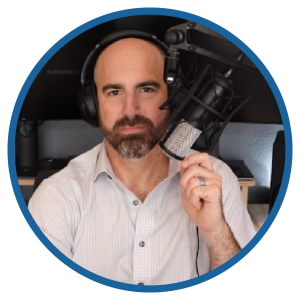
Dave Finch
Dave Finch is the author of the New York Times bestselling memoir, The Journal of Best Practices: A Memoir of Marriage, Asperger Syndrome, and One Man’s Quest to Be a Better Husband. As a writer and creative consultant, his work has appeared on ABC, CBS, NBC, CNN, NPR, SiriusXM, The New York Times, Rolling Stone, The Howard Stern Show, and the award-winning Netflix series, Atypical. Based in Denver, Dave’s company, Elevated Studio, produces this podcast and other recognized series.
Visit Dave’s website here
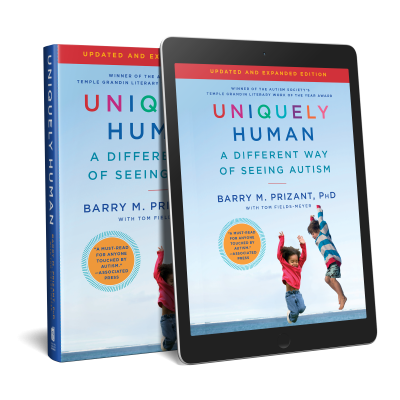
“I have read a million and one books on Autism. Uniquely Human is the best book I have ever read, hands down. Thank you Barry for this incredible gift!!!!”
– Navah Paskovitz, Mother of three boys with Autism, Co-Founder, the Ed Asner Family Center
“Compassion, learning and supportive strategies–the three essentials for working with folks with ASD–are an integral part of this must-read book.”
– Michelle Garcia Winner, Speech Language Pathologist and Founder of Social Thinking
“Thanks be to Barry for the first-ever must read written for parents, educators, and clinicians.”
– Michael John Carley, Founder, GRASP; Author of Asperger’s From the Inside-Out
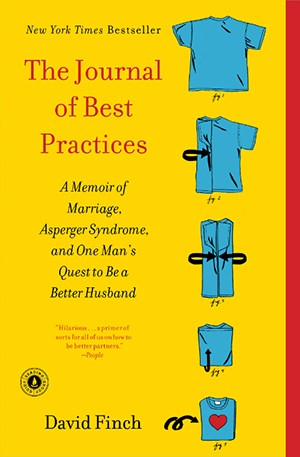
“What makes the book compelling is how funny Mr. Finch is about himself. He’s great company.”
– Susannah Meadows, The New York Times
“In this hilarious memoir (which also gives some of the finest explications of Asperger’s out there), Finch approaches trying to be a better husband and father with the determination of Sherman marching on Atlanta.”
– Judith Newman, People (4/4 stars)
“Talk about being on a roll. This dude wrote a book, he has Asperger’s syndrome. He cured himself by listening to me on the radio!”
– Howard Stern