EPISODE 158
Nature and the Neurodivergent Experience:
A Discussion with Becca Lory Hector
A Discussion with Becca Lory Hector
Play the Episode…
Show Notes
Becca Lory Hector, an autistic self-advocate, has the lived experience of moving through different environments that afford different access to nature, and natural activities. She, Barry, and Dave discuss the benefits of immersion in nature and nature activities and contrast those benefits with the challenges of limited access. They also discuss the importance of awareness and modifying life routines with sensitivity to seasonal changes.
Featuring
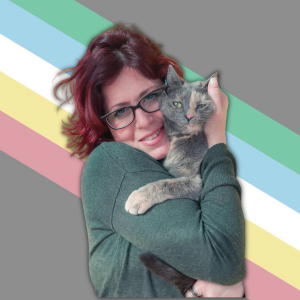
Becca Lori Hector
Becca Lory Hector is a passionate and seasoned autism and Neurodiversity advocate, consultant, researcher, and author with a career dedicated to supporting and educating about autism. Based in Maine, she is focused on living an active, positive life, and she brings that same energy to all her work. Her journey has led her to create tools and resources that empower others to embrace their authentic selves and live fulfilling lives. As an openly Autistic adult, she has poured her lived experience into her writing and teaching. Her book, Always Bring Your Sunglasses: And Other Stories from a Life of Sensory and Social Invalidation, offers a candid look at the challenges and triumphs of navigating the world as an Autistic person. Alongside her book, Becca has designed and teaches a course called Self Defined Living: A Path to a Quality Autistic Life, which is all about helping others find their own path to a fulfilling, self-empowered life. When she is not working, you will likely find her enjoying time with her husband, Antonio, and their many animals, especially Sir Walter Underfoot, their Emotional Support Animal (ESA).
CHECK BECCA’S WEBSITE
BOOK: ALWAYS BRING YOUR SUNGLASSES
BECCA’S COURSES
FOLLOW HER ON LINKEDIN
ON YOUTUBE
Uniquely Human: The Podcast
EPISODE 158
NATURE AND THE NEURODIVERGENT EXPERIENCE:
A DISCUSSION WITH BECCA LORY HECTOR
🎤 Transcript and Audio Usage Disclaimer
© Uniquely Human: The Podcast. All Rights Reserved.
The contents of this podcast, including all audio recordings, transcripts, and related materials, are the intellectual property of Uniquely Human: The Podcast and its fiscal sponsor, Community Autism Resources, a registered 501(c)(3) nonprofit organization.
These materials are provided solely for personal, educational, and non-commercial use.
No portion of the podcast audio, transcript, or any derivative materials may be reproduced, redistributed, modified, or publicly displayed without prior written consent from Uniquely Human: The Podcast or its authorized representatives.
Transcripts are provided for accessibility and reference purposes. They may contain minor transcription or formatting errors. When quoting or referencing the podcast, please credit Uniquely Human: The Podcast and provide a link to the original episode page.
By accessing or downloading transcripts, you agree to comply with this usage policy and acknowledge that all copyrights, trademarks, and intellectual property rights remain the exclusive property of Uniquely Human: The Podcast and its creators.
For permissions or inquiries, please contact:
📧 uniquelyhumanpodcast@gmail.com
Show Disclaimer
[00:00:00] UHP: The primary purpose of Uniquely Human: The Podcast is to educate and inform. The views expressed during all episodes are solely those of the individuals involved and do not constitute educational or medical advice. Listeners should consult with professionals familiar with each individual or family for specific guidance.
[00:00:19] UHP: Uniquely Human: The Podcast is produced by Elevated Studio. Music is graciously provided by Matt Savage of Savage Records.
Meet the Hosts
[00:00:39] Barry: Hi, I’m Dr. Barry Prizant, clinical scholar, researcher, and consultant on autism and neurodiversity, and a Brooklyn boy raised in the big city.
[00:00:50] Dave: And I’m Dave. I’m none of those things, and I grew up on a farm in Illinois. But being on the spectrum myself, I have plenty of personal insight to lend.
[00:00:59] Barry: And this is Uniquely Human: The Podcast, a show that illuminates and celebrates autism and neurodiversity.
Becca Returns Again
[00:01:14] Dave: Barry, it is Running on Fumes Friday — but not for me. Why? Because I am a neurodivergent night person, we’ll say. A night owl. A night finch. And so that’s why I’m kicking off the discussion, because I’ve got nothing but energy here at this late hour on a Friday.
[00:01:35] Dave: We have a very exciting hat trick. Becca Lory Hector, everybody’s favorite parent of Sir Walter Underfoot. Actually, there are a lot more names than that one, but that’s the one that always sticks in my mind. Becca’s joining us again today for the third time, and it’s really exciting because every time we talk to Becca, we conclude the conversation by saying, “You gotta come back again because we didn’t even scratch the surface.”
[00:02:05] Barry: So true. You know, one thing we know is that on so many previous podcasts, the topic of nature seems to kind of be briefly commented on. And with Becca, we know somebody who is passionate about talking about that. So Becca, welcome.
[00:02:26] Becca: I am so excited to be back. I love chatting with you guys, and this is a good topic for me. This is one that we’re, like, almost in special interest territory — so you might have to hold me back.
[00:02:38] Dave: So this’ll be a four-hour episode. Everybody just grab a blanket and a cup of coffee and —
[00:02:42] Becca: Right.
[00:02:44] Barry: And — take a walk in the woods, yeah.
[00:02:47] Dave: I will say, this is a great topic too because, maybe not so recently, but Becca and I moved to Colorado at around the same time, chasing the same dream that would ultimately fail to materialize. But we moved there at the same time. I ended up in a suburban utopia — all pavement and manicured tiny lawns and blegh, all that stuff. Becca moved to an area up in the mountains that is gorgeous, and every time she would post a picture on Instagram I was just like, “How did I get this so wrong? I moved to Colorado and I’m still in a suburb,” and she’s in nature doing the real thing.
From Colorado to Maine
[00:03:32] Barry: And she has moved on since, which I think she’ll tell us about.
[00:03:34] Becca: I certainly will.
[00:03:35] Dave: Correct.
[00:03:39] Becca: And really, that’s the story. That’s the beginning of the story, because it was in search of nature and time outside that that move really came about — and even the move I made back to Maine, which is where I am now. When we left Colorado, I said, “We must pick Colorado comparable.” Like, it has to be as beautiful as Colorado or I’m not moving there. I’m not downgrading.
[00:04:02] Dave: From a natural beauty standpoint —
[00:04:02] Becca: And so it’s tough. It didn’t leave us a lot of choices.
[00:04:05] Dave: Well, it’s a tricky needle to thread for you, because you hail from New York City and very East Coast frenzy. And then you go to Colorado — it’s an immediate culture shock, but naturally it’s beautiful, so it’s a tough needle to thread to find something with that Northeast energy where it’s not the creepy people waving hello from the street, saying hi, which is ironically off-putting.
[00:04:31] Becca: It is. As a New Yorker, it’s very off-putting.
[00:04:34] Barry: That’s right. It’s like, “Why is this person greeting me? This is really strange.”
[00:04:37] Becca: And immediately I assume you want something. That’s why you’re being so nice. What is it you need?
[00:04:44] Dave: Get to it. Let’s go.
[00:04:45] Barry: Yeah.
[00:04:45] Becca: Right.
City Life Sensory Toll
[00:04:47] Becca: But that was the shift. I had grown up my whole life in New York City, and I really, really hated it. I hated every damn second of it. And I lived around a bunch of people that thought, “You live in the best place in the world. How could you possibly wanna leave the best city ever?” Which is how every New Yorker feels about New York, and I don’t know if that’s the lie they tell themselves so they don’t feel stuck. But that’s what I grew up with. I grew up with people telling me that I was already living the best life. How could I possibly wanna leave? And I hated it.
[00:05:20] Becca: Um, you know, I always — so that’s the beginning, yeah…
[00:05:24] Barry: And you grew up in Queens, right?
[00:05:27] Becca: Yep. Yeah. I sure did.
[00:05:28] Barry: And in the neighboring borough, I grew up in Brooklyn. And I always like to say, wildlife to us was putting a piece of Bazooka gum on the ground, watching the ants crawl over it, and playing with the ants.
[00:05:42] Becca: Yeah. And it really was, though. It’s like if you wanted nature, you had to really seek it out. It wasn’t just there. You had to make an effort to find nature in New York. Maybe there’s a tree on your block or something. But if you wanted to get lost in nature, that’s a search. That’s a hunt. It’s a drive most of the time.
[00:06:01] Barry: Absolutely.
[00:06:01] Becca: So it’s a big difference from where I live now.
[00:06:06] Barry: Yeah, for sure.
Who Is Becca
[00:06:07] Barry: So if I might — I think some of our listeners who did not have the great fortune of hearing you on Becca podcast one, Becca podcast two, may want to know a little bit about you. Becca is a passionate and seasoned autism and neurodiversity advocate, consultant, researcher, and author. She’s now based in Maine, as she said, focused on living an active, positive life, and brings that same energy to all of her work — that’s why she’s back. Her journey has led her to create tools and resources that empower others to embrace their authentic selves and live fulfilling lives. As an openly autistic adult, she has poured her lived experience into her writing and teaching. Her recent book, Always Bring Your Sunglasses: And Other Stories from a Life of Sensory and Social Invalidation — which by the way was our focus of podcast number two — offers a candid look at the challenges and triumphs of navigating the world as an autistic person. Becca’s really busy. She designs and teaches a course called Self Defined Living: A Path to Quality Autistic Life, all about helping others find their own path. And when she’s not working, you will likely find her enjoying time with her husband, Antonio, and their many animals. Dave already mentioned the king of the roost, Sir Walter Underfoot, the emotional support animal. So let me pass it back to you, Becca. You already gave us a little bit of your story from Queens to Colorado to rural Maine — how about your perception of that, from being a child then to being an adult now?
Late Diagnosis and Burnout
[00:08:07] Becca: Yeah. Actually that’s part of the reason I wrote my book in the first place — for people to start to understand how incredibly difficult it was as somebody with as many sensory challenges as I have to grow up in a city like New York, and the difference it has made in the quality of my life to remove myself from that situation. We’re sort of born where we are — that’s our parents’ choice, and we don’t have a lot of say in where we start out. But a lot of parents, as we’re growing up, will notice that their kids are not doing great in whatever environment they’re in, and may choose to move them. That was not the opportunity I had. I didn’t have the privilege of growing up with a family that had the finances to do that. So we were in New York, and getting out of New York is really hard because everything’s so expensive. I spent a lot of my childhood dreaming about not being where I was — not being in my own body, not being where I lived. Just fantasies of escape, all the time.
[00:08:07] Becca: I was very later in life identified. My identification came at 36 — that was about 14 years ago. I am turning 50 in a few weeks, which is crazy to me.
[00:09:26] Barry: Life begins at 50!
[00:09:28] Becca: I’m very thrilled. I feel like I’m on borrowed time. It’s crazy to me.
[00:09:31] Dave: I still see you as being like late 20s, early 30s.
[00:09:36] Becca: Thank you.
[00:09:37] Dave: Will continue. We’re the same age?
[00:09:38] Becca: Yes.
[00:09:39] Dave: I had no idea. Oh, okay.
[00:09:41] Becca: Yep. We are. And I really just, you know, I was living this miserable, unhappy life in New York, and everyone around me invalidated that experience. They invalidated my sensory discomfort, they invalidated my anxieties around things, and they certainly invalidated the idea that New York should be a terrible place for some people. And it just is. It’s not a match. And it showed itself in different ways — in where I ended up being able to attend school or not attend school, in family occasions, going out places. And then certainly as I got older, it really impacted my work life: what I was able to do, where I was able to go, how long I was able to sustain that. Growing up in a city like New York where people are judgmental and comparative, where you’re very much under a microscope for the way that you look and the way that you behave — it’s hard to succeed there if you’re not someone who aspires to that part of life. And so I ended up, towards the end of things when I was really in burnout, looking for work on night shifts, because I wanted to be opposite rush hour. All I wanted was to not be in Penn Station when everybody else was miserable and in Penn Station. So: I’ll go be a bartender and work at night, and I’ll wave at you on my way home as you’re headed into work. That’s how we’re gonna handle life. And that’s the kind of solution that autistic people who are not identified come up with in their lives in order to survive. You can see just how the state of the environment can really have an impact on how you’re feeling daily.
Discovering Nature’s Quiet
[00:11:40] Barry: I’m just curious. I’m trying to envision the first time you were really immersed in nature and what it felt like. I remember — it wasn’t until I was 17, and we went up to Baxter State Park in Maine. And it was like, “Oh my God, there’s this whole other world of tranquility and quiet and animals.” It was like, “Okay, it took me 17 years to figure this out.”
[00:12:08] Becca: Yes. That’s exactly how I felt too, Barry. Like — I had read about nature. Nature is science fiction to a New Yorker. If I’ve never experienced it — especially as an autistic person, where if it’s only theoretical it might as well not exist — I was like, “Great, that’s so lovely that somewhere on some timeline people are enjoying the woods.” But I live in New York, and that’s not gonna happen for me. And so the first time I really found out it was real — which is exactly what it felt like, like finding out the woods are actually real, there really are places where you can truly get lost because you’re off the trail — that happened to me in my early 20s. I was dating someone and we went on a trip up to the Berkshires in Massachusetts, and I could have stayed there forever. My jaw must have been on the floor the entire time. I had never felt so at peace in my whole life — just being able to be without people watching all the time. The silence. The way that everything shifts. And in that moment I really knew: you don’t have to live in New York. You don’t have to live like that. That’s insanity, and you can opt out.
[00:12:08] Becca: The second time it happened to me was in Colorado. If you ever get a chance to do Red Rock State Park, go for a walk around the park itself. You have never heard silence so loud as you will hear in that space. And that gave me goosebumps, and I was like, “Well, maybe it’s Colorado.” That was it.
[00:14:19] Dave: And it doesn’t hurt that your immediate connection when you’re in a space like Red Rock State Park or Garden of the Gods down in Colorado Springs — anywhere in the foothills, up in the mountains, even in the plains on the eastern side of Colorado where you can see the whole Front Range — there’s virtually nothing interfering with your comfortable direct engagement with the earth and the environment. I grew up in the Midwest, and if you wanted to go outside, you had a hefty price to pay: dewy thick grass in the morning, very humid evenings, mosquitoes, high winds all the time for no reason. In Colorado: dry air, no bugs. You’re just in nature without any of the prices of admission.
[00:15:14] Becca: Yes. Right? It doesn’t drain you. It doesn’t give you all that sensory overload. It just — you’re unbothered. I don’t know how to describe it other than like you’re unbothered, just like Pooh. I’m unbothered when I’m in that space. And I think that unbothered space is what autistic and neurodivergent people are desperately in search of all the time. We seek alone time because we assume alone time is the only way to get that silence and that unbotheredness. But I think we find that same space if we take ourselves out into nature — into a space that is minus the people. When you minus out the people, you also minus out all the social obligations, the communication obligations, the obligation to be polite or dress appropriately. All of that goes out the window. You’re allowed to just be. Just live in the present.
[00:16:13] Dave: Yes. No tree, rock, or stream has ever been a pain in my ass — has never demanded anything from me that was an unfair ask.
[00:16:24] Becca: Yep. That is correct.
[00:16:25] Barry: Unless you wanted to climb the tree and you say, “Wait a second — why are you so tall?” But you know, Becca — when you said you got goosebumps out in Colorado, I thought right away: the loudest noise here is my goosebumps.
[00:16:43] Becca: Yeah. But that’s what happens out there. And if you come from a place where you’re used to input all the time — New York is just input. If I had to describe New York in one word: it’s input all the time.
[00:17:00] Dave: Yeah, a lot of input all the time.
[00:17:03] Becca: So to experience the lack thereof, for any amount of time, for someone who’s sensory sensitive — it’s recalibrating. It’s really just like, “Oh.” It’s like taking a Xanax. It very much regulates you almost instantly. Your body just kind of goes, “Oh, I can just be. I don’t have to be on guard all the time.”
[00:17:23] Barry: Yes. Yeah.
Nature as Regulation
[00:17:23] Barry: You know, there’s a dichotomy spoken about in children’s development research about protective factors and risk factors. The environment can pose a ton of risk factors if you’re sensorily sensitive and you don’t like a lot of people and movement around you — and nature provides protective factors. So what does it feel like, and I’ll throw this at both of you, to be deeply in nature? We put so much energy into staying well-regulated —
[00:18:05] Becca: Mm-hmm.
[00:18:06] Barry: And it sounds like the effort to stay well-regulated doesn’t have to be so heightened when you’re out there.
[00:18:18] Becca: Yeah. You’re not fighting through so much to find regulation — that’s what it feels like. I think a lot of our challenges come from the fact that we are not built for the world as it stands. We don’t opt into social hierarchies, so none of that works for us. We don’t really subscribe to groupthink, so that part of society doesn’t work for us. We tend to be sensitive across the board, so we need to be taking in less most of the time. We also take a little extra time to process, and the world can come at you too fast when you live in those kinds of spaces. There’s not much forgiveness for processing time or for taking time to think about the words you’d like to say before they come out of your mouth. And so when I get to…
[00:18:18] Becca: What I wanna say is: regulation can’t happen if you’re always in that up, up, up place. The reason moving out of that environment was helpful to me is because it took away half the things I was battling just by leaving that space. All I did was leave a city and choose rural life — and by choosing rural life, that set the stage for me right away.
Rural Life Fits Better
[00:19:44] Becca: The next thing that happened in rural life for me, which I find fascinating, is that when you look at rural communities really closely, people there — even if they have political differences, religious differences, thinking differences — are tolerant of all kinds of differences as long as you are a participating member of that community.
[00:20:05] UHP: Mm.
[00:20:06] Becca: There’s not judgment about clothes, or what kind of car you drive, or when you got your hair cut last. There is judgment about: are you kind to your neighbor? Are you keeping the neighborhood clean? Are you taking care of your property? And those are things that align very much with autistic thinking — they’re logical, they’re reasonable to ask of people, they’re clear rules that everyone’s subscribing to, and they’re not about social hierarchies. We don’t see the same kind of bias that neurodivergent kids face in cities. There are other parts to deciding to move out of a loud, people-heavy space that just take us closer to the way we naturally function. We function more easily in those environments. They’re set up for our needs a little better, and that makes the trip to regulation that much easier. You’re halfway there just because you woke up in a different space.
[00:19:44] Becca: And regulation — after I got out of the city and spent some time out of it, I started to feel what regulation could feel like, and then I could try to replicate it. But you can’t replicate something you’ve never experienced. That was the journey: I’m clearly overstimulated, I now have a word for it, and I need to do something about it. For me — not for everyone — I knew that a lot of my challenges came directly from where I was living. And I needed to change that for myself, no matter how scary that idea was.
[00:21:53] Dave: Which is wild — because I would be somebody who’d say, “Oh, this is just the environment. This is what life is like.” You were actually able to say, “Even though I was born here and spent my whole life here, this isn’t working. This isn’t right.”
[00:22:11] Becca: Mm.
[00:22:11] Dave: I think that’s really important — and also something that hopefully families and parents can check in with too: “How are we feeling about living where we are? Not just friends and school, but how does your body feel where we live?”
[00:22:34] Becca: Right. Like: how do you feel when you wake up in the morning? Do you want to throw the window closed and go back to sleep because of where we live? Because that was literally me — I would wake up and look out my window in New York and all I wanted was to close it and go back to sleep. I isolated in my room all the time because outside of my room was just awful. I had no control over it. And I think about that, and I think that’s a really important thing to bring up. I have a couple of different families in my personal life that have gone on that journey, Dave — because they’ve seen what’s going on for their kids and they’ve said, “Even though we like living here, it’s not working for us as a family.” So we gotta go.
[00:22:34] Becca: One of my favorite stories is one of those families — they went on a journey together to figure out where the best place was. They said, “We don’t know. Just because we’re your parents doesn’t mean we know all the answers.” And they were like, “Let’s sell our house. Let’s buy an RV. We’ll do the country and find our next home as a family.” And they went. And that to me gives kids a real lesson about life: when you don’t know the answer, you go in search of the answer. How to make good decisions, how to make moves like that — and what better way to do it than with your parents? Your kids couldn’t be in a safer place to let them figure it out.
[00:24:07] Barry: This sounds like a new kind of side job for you. Becca’s Relocation Services.
[00:24:14] Becca: Well, no — I’m not that much of a courtesy person. I won’t be that nice to you. But that’s why I fit in New England so well. I’m kind, but I’m not nice. So I’ll give you some links and those kinds of things, but somebody else has to find you where you’re gonna eat breakfast and all of that.
Burnout and Isolation
[00:24:30] Barry: Is it fair to say that living in a place where you’re assaulted by things you can’t really deal with — but you still need to be in the world somewhat — means you just have to mask less when there’s less pressure on your life, whether it’s social pressure or sensory pressure? Because if you’re choosing to isolate yourself to survive, that’s one thing. But if you need to go out, then you have to deal with that — and a lot of that falls into the issue of masking.
[00:25:04] Becca: It’s not voluntary isolation, right? You’re forced into isolation — and that’s what happens to a lot of people in our community. They’ve tried to survive for so long, and then they hit burnout. Autistic burnout — which is very different from burnout from work — when you get to it, the only solution is isolation. There is no recovery without isolation. And we’re not talking about laying down for a week or two weeks. Most of us take upwards of three years to recover from autistic burnout. We’re talking about years of someone’s life in isolation to recover, and then slowly rebuilding the skillsets they had before burnout. We see a lot of skillset regression with burnout, so yeah.
Creativity in the Woods
[00:26:03] Barry: So let’s talk a little bit about what nature does for you as far as creativity. I’m a visual thinker, and I’m just imagining Becca prancing along in the woods. What are you drawn to? The birds? The flowers? The fusion of all of it? And where does your mind go at those times?
[00:26:25] Becca: It depends. If it’s somewhere well known to me, I have my favorite spots and I’ll make sure I stop in certain areas. If it’s a new place, though — I’m sorry to whoever’s with me — I’m like the annoying dog that stops at every sniff spot. I have to look at every little thing that might be interesting, because the rest of my life doesn’t allow me to be that present in the now. The rest of my brain wants to prepare and be ready for all the things that are gonna assault me out in the world. But I know when I’m out in nature that’s not gonna happen, so I can let that guard down, relax into my body, and just enjoy whatever I see.
[00:26:25] Becca: And that’s the side of sensory issues that people don’t talk about: as sensitive as I am to light, and as painful as that can be, when I see something beautiful — because my eyes are that sensitive — it’s that much more beautiful to me. So when I spend time in nature, I’m actually energizing myself. It’s sort of like a strengths-based approach: if I do more of what feels good to my sensory system, the more regulated I’m gonna feel. And what feels good to my sensory system is quiet, listening to animals, seeing new things, seeing nature just as it is — untouched, just existing.
[00:26:25] Becca: I have dreams of disappearing into a forest and becoming, you know, like a little forest creature that they talk about in town because they never see her. My dream is to be like a little weird witch lady in my forest that never comes out.
[00:28:02] Dave: You’ll be like Sasquatch. You’ll be in the background of videos.
[00:28:03] Becca: Yeah, I just wanna be a rumor in my town. Does she exist? We’ve heard Antonio has a wife. Nobody’s seen her. She’s a legend. That’s what I want. Because that’s when I feel most regulated — when the outside world and all of its stupidity cannot touch me. Other people find regulation from literally the touching and feeling of trees, or the smells out there. All kinds of things. I really just like to see nature being nature — especially as someone who never got to see that as a kid. It’s still very much my inner child getting fulfilled. And you can do that walking, running, on a bike, with someone. Sometimes I take Walter, sometimes I’m annoyed by him — all of that is par for the course.
Nature and Quality of Life
[00:28:58] Becca: I know that if I don’t have access to that space of regulation in a really convenient way — where I can just go out my door and go, not have to get in a car and drive there — I feel better on a much bigger basis. And it’s that peace that made me want to look into autistic quality of life: what are the things that add to our quality of life as autistic people — not just as human beings, which is the information we have out there now? The nature regulation piece, the connection with animals, the desire for safety and calm, that state we’re calling “gruntled” — the opposite of disgruntled, just being — that is what autistic people are seeking. We don’t want a rollercoaster of a life. That doesn’t work with our body systems.
[00:28:58] Becca: It’s one of our boxes, like food and shelter.
[00:30:10] Barry: So you speak to and support so many autistic and neurodivergent people. Do you feel that nature plays a role — or could play a role — for so many of the people you speak to? And what is the level of awareness? Do you find yourself saying to people, “You need to get out in the country more — believe in that”?
Breaking Inertia
[00:30:44] Becca: Sometimes, yeah. Because sometimes we’re stuck for lots of reasons. Autistic people get stuck a lot. We get stuck in our thoughts. We get stuck in inertia — if we hit a place of exhaustion and then we recoup, but we can’t get the motivation to get back up to do the next thing. So what I say to a lot of the people I coach is, “Make sure that you’re always in motion. Don’t let the inertia set in.”
Walks and Micro Wins
[00:31:11] Becca: And some of it is: make yourself go out and go for a walk. Ugh — the internet yells at us for going out to take a walk. But it works, and I hate to say it. It works. So I do go for a walk for my stupid mental health. I do. Because it does work. And I would frankly rather go for a walk than add yet another medication into my system.
[00:31:34] Dave: And go on a journey.
[00:31:35] Becca: So if I have the option, I’d rather go for a walk. And often I’ll say to people, “Well, give it a try. If it doesn’t work for you, don’t keep doing it.” But try it, because without trial and error, you’re never gonna find the thing that does it for you. And sometimes we need to push ourselves because the brain likes habits — if we’re in the habit of sitting still all the time, our brain just wants to stay there. But if we start creating a new habit of moving once a day, then your brain’s in that habit and it wants to do that. So we have to learn to trick our own brains.
[00:31:35] Becca: I say to people: stay in motion. Even if some days you’re so tired and all staying in motion means is that you put your laundry in, or you did the dishes, or sent one email — just stay. Don’t let the inertia settle. Some people, like you and I, Barry, have never experienced nature, and so they don’t know what they’re missing. You have to be like, “Go try because you don’t know.”
Try New Regulation
[00:32:35] Becca: I never really went kayaking that often. I went on a canoe and a few things, but now I kayak regularly. Because I found that the smoothness of that motion and being able to see nature at the same time might be the most epic regulation and grounding activity I can think of. That motion is really helpful to me — that’s another piece of it. And I wouldn’t know that if I didn’t go out there and try. So some of it is, “No, you might not like it, but let’s find out” — because otherwise we can’t get to where you find what you do like.
[00:33:13] Barry: Mm-hmm.
Solo vs Shared Nature
[00:33:14] Barry: And what do you think about, of course very individually, the role of doing nature with a loved one or friends, as opposed to giving yourself the space?
[00:33:28] Becca: I think that’s a personal thing, and sometimes I do want a person with me and sometimes I don’t. So it’s not like you have to pick one lane and stay in it. Some days you wanna share that space with someone, some days you don’t. And there are some people I will share that space with and some people I will not — because they won’t understand it or they won’t appreciate it, much like some people won’t share their special interests with people who don’t appreciate them.
[00:34:00] Dave: I’ve learned not to open my mouth if I love something.
[00:34:03] Becca: Me too. Because it’s really tough — especially when you know a lot about your special interest and the other person doesn’t know anything about it.
[00:34:13] Dave: Or they just wanna correct.
[00:34:14] Becca: But that’s tough, right?
[00:34:17] Dave: Yeah. Or they give you reasons like, “Oh, well, that’s dumb because…” Like, why would you take a chocolate milkshake and dump it on someone’s freshly waxed car? Why would you say something shitty about my thing that I love? And they always do it.
[00:34:37] Becca: They do it. They yuck our yum every single time.
[00:34:39] Dave: Yuck our yum. Yeah.
[00:34:40] Becca: Yep. And so we are very sensitive about who we share that stuff with. I am that way about my space in nature. There are some people I will share that with, and some people I’ll just say, “Yeah, there’s a great kayaking spot over there. I’ll tell you how to get there.”
[00:34:59] Dave: But that accountability partner thing, too — a nature accountability partner, where one of the motivators is wanting to share the experience with somebody, but you don’t want them with you on the trail. Just saying, “I’m going this many times this week. How many times are you going?” Maybe that’s one way to do it without making it a social thing.
[00:35:25] Becca: Yes. Yeah. Or sharing pictures. I share pictures all the time with people. “Oh, I went to this gorgeous place. Let me show you the picture I got.” I’m not a photographer — nobody trained me — but I like taking photos because it’s part of that visual sensory thing. And there are sometimes people in our lives who physically can’t go on a hike, but would love to spend time outside with us. We can still share with them what it was like. We can take video, we can do FaceTime. You can share so much with people.
Co-Regulation Partners
[00:36:08] Becca: But co-regulation — which I think is what you’re talking about, Barry — a partner to go on the regulation journey with you: that is one of the most successful tools we have as human beings. Because the one thing that will never regulate an unregulated person is another unregulated person.
[00:36:28] Barry: Totally.
[00:36:29] Becca: Okay? Do not come to me unregulated when I’m having a meltdown. You and I are not gonna do well together. If you really want to help someone who’s feeling unregulated, getting yourself regulated is the best way to do it. And if we go out together, now we are co-regulating. Now we’re both feeling good, and we can talk about the hard thing.
[00:36:54] Barry: And it’s amplified by the environment you’re in.
[00:36:57] Becca: Yep. 100%.
Justice and Place
[00:36:59] Barry: You know, one thing that’s coming to mind: I remember consulting to an elementary school, and there was a seven-year-old who got so upset when there was an oil spill on the coast of Massachusetts. Everybody marveled at his sense of social justice — how could this happen? And he actually helped organize and lead a beach cleanup, was there every day for weeks with his friends. Everybody was astonished by this innate sense of justice about the natural world and the environment.
[00:37:39] Becca: Yeah, well, it’s part of our justice sensitivity as autistic people. We can certainly tell right from wrong, and we will tell you when we see it. And I think people don’t understand how that can impact your life — the choices you’re making, who you’re choosing to be with.
[00:38:03] Barry: And he wouldn’t have had that sense of justice if he hadn’t taken walks on that beach for years with his parents when he was young.
[00:38:13] Becca: Right — that place belongs in his heart. That’s a special place. And some places we don’t share with everybody, and to see other people disrespect it is like someone yucking your yum. Don’t yuck my yum.
[00:38:28] Dave: Mm-hmm.
[00:38:29] Becca: I take care of my yum.
Bring Nature Home
[00:38:30] Dave: I’m thinking of families who are listening who are like, “Awesome. Well, my financial situation is such that I live in the middle of Cleveland or Cincinnati, and yeah, we’ll get out in nature when we can.” I start to think: there’s gotta be after-school things, summer things… Anything we can do?
[00:39:00] Becca: But also you can bring nature in. We bring nature in all the time. If you’re in that situation — and I certainly was in that situation most of my life, where it was a process and money to go where you wanted to go — we can bring that stuff in. We can opt to grow plants in our home. We can opt to have fish and birds and cats and dogs in our homes, and share that space with animals. And if that’s the life you’re living, you have to make an effort to take time out of your month or your week to find those spaces.
[00:39:00] Becca: Human beings are animals. I hate to say it so bluntly, but we are — which means we’re not really totally built to live in cities. Anybody who’s not getting exposure to nature is missing out on parts of life. We need to honor that piece of ourselves. We’re still hunter-gatherers under here. It’s really not that different. We need to honor that.
Seasonal Living Rhythms
[00:40:14] Becca: And the other part of this that’s a bit woo-woo — but I’m gonna go there with you guys —
[00:40:19] Dave: Do it.
[00:40:19] Becca: Is that we really oppose our own nature in terms of the seasons. We follow a calendar year that makes no biological sense to our bodies. I’m writing about this right now in my newsletter — I’m doing a whole year called Seasonal Living, where I’m trying to encourage people to follow their energy as it goes with the seasons.
[00:40:19] Becca: I say this by reminding you of the holidays and what they feel like. In November and December, we start to slow down — socially everybody wants to be together with family, work stops mattering as much. We kind of shift and slow down in a very obvious way. And then somewhere after New Year’s — usually around January 15th — everybody kind of wakes from their slumber and panics about resolutions. But our bodies don’t do that. Our bodies slow down intentionally in the wintertime and ask us to rest and slow down — which is why slowing for the holidays feels so good. It’s exactly the right time of year seasonally to be doing that. When we then flip the switch and force ourselves back to full speed, we feel it. Everybody complains. Everybody’s blah.
[00:40:19] Becca: Our bodies are like, “No, I slow down till March.” Then around March, the light gets longer, and I’m like, “Oh, I have more energy. Let me go do more things.” That’s usually when I encourage people to start real goal setting. You’re waking up, you’re feeling energized, you had your period of rest — now start to chase goals. In the springtime you start to set things up. We spend our summers busy doing all our productivity when the weather gives us that much daytime and comfort outside. And then fall comes, and you naturally want to start to slow down again.
[00:40:19] Becca: If we worked with our bodies on a system like that, instead of deciding random days mean certain things and that we all have to participate — we could follow more closely our own rhythms: when it’s time to start doing new things, and when it’s time to rest. We’ve taken that away from ourselves as human beings. We don’t let rest in because society tells us we should be busy.
[00:43:27] Barry: Hmm. And that demands — and could nurture — much greater self-awareness if you pay attention to that.
[00:43:32] Becca: Mm-hmm.
[00:43:33] Barry: To be able to do that, yeah.
[00:43:36] Becca: Yeah. And so that’s what I’ve been challenging the folks signed up for my newsletter to do with me this year — not rush through January, not give in to that January pressure, and know that there are still a few more months of winter left. You’re still in the slow season. As you get towards the end of it, you know it’s coming. You can start to think about moving: what plants do I want to plant? Should I get bulbs yet? Those are end-of-winter thoughts. Not “hurry up, I have to change everything.”
[00:44:11] Dave: Right. Nature isn’t wrong about what it does. And so if we actually pay attention to that… It’s been a very strange winter for Kristen and me here in Colorado. We didn’t get a winter, not in the traditional sense. It never felt like the world shut down. And everybody’s like, “Oh my gosh, this beautiful weather.” I’m like, “No, it’s not beautiful. This is terrifying.” It almost feels like when the tulips come up in the second week of March and every tree is already green — nature didn’t get its nap. It didn’t get its winter break. Kristen and I feel like there was never that reset that drives us through spring, because we never quite went to sleep. And I think if you pay attention to how nature does things and get closer to its rhythm, the more naturally well we would all feel.
[00:45:26] Barry: Well, we in the northeast could have sent you a lot of snow.
[00:45:30] Becca: Oh, we did.
[00:45:31] Dave: You’re still getting buried under, so, yeah.
[00:45:37] Barry: We’re finally breaking out here. But one thing that’s striking me is — we talk a lot about emotional regulation plans, but usually that means from when you wake up in the morning till you go to sleep at night. You’re talking about emotional regulation plans that are seasonal — across a year.
[00:45:58] Becca: Yes, because I really think what we did to ourselves was take out our rest period. If we went back to a farmer’s schedule — when planting crops, when growing crops — we’d have a rest period in there. Farmers are the busiest people in the summertime, but in the wintertime, farmers enjoy their rest. That’s the way it is. They keep up with what they have to keep up with, and that’s it. And so we should learn from that. It worked for us for a very long time. We’ve only for a very short amount of time been doing it this weird new way.
Nature vs Industrial Pace
[00:46:35] Dave: Well, it really works out well for the handful of billionaires whose lives are enriched by us ignoring everything that nature needs from us, and we need from nature. It’s: sit at your desk, 16-hour workdays. We’re gonna call it a 40-hour workweek, but no. How dare you step outside for a walk, whereas in an agricultural-dominant society, you play by nature’s rules, and things just logically shuffle out in terms of your overall wellbeing. You’re going to bed because you’re exhausted because you’ve been working all day.
[00:47:26] Becca: Yeah. And it gives you that stay-in-motion thing — always in motion to some extent. And it also gives you this sense of being in the now all the time, because you’re always talking about right now or tomorrow. There’s always a plan, and so there’s never this rush, this “I have to be the first to do this thing.” That is industrialization. Farmers don’t say, “I have to be the first to ripen my pumpkin.” That’s not how it happens.
[00:47:55] Dave: It ripens when it ripens. And growing up on a farm — this is the first year in my lifetime that my dad is not prepping to go do all the field work. He has been on a devoted schedule at nature’s mercy for his entire career. It’s really something to see how he processes time versus the rest of us.
[00:48:28] Becca: Hmm. Yeah. It’s so much more organic because it builds in our rest. It tells us to stop. Instead of, “Oh, we gotta keep going, keep going, keep going” all the time. That’s craziness. That’s insanity.
[00:48:43] Barry: Well, it’s understanding that some things are out of your control. You can’t control everything, and you need to be responsive to the changes in the natural world. And that’s what it’s about.
Build Your Own Life
[00:48:53] Barry: So we always like to leave our listeners with a few takeaways, a few little hints. You started talking about that a little bit earlier. What would you say to the full range of our listeners — which really is a full range of humanity?
[00:49:14] Becca: Well, it is. This is a conversation about nature, about humanity. And autistics are a part of that — we’re not the only ones. But what we can be is the ones that model how it should be. We can be the ones that step outside of the groupthink mentality and say, “We’re doing it wrong, and we’re gonna do it this way now,” because it works better. That’s an autistic mentality. We are the group that would take on doing things differently, being willing to look at things from a different perspective and address things from a different perspective.
[00:49:14] Becca: I know people say change is hard for autistics, but it’s hard for human beings. Most people avoid change. And yeah, we need to have things change, and folks need to start doing stuff. We’re already the different thinkers. We might as well be the different doers — and go out and build a world that is the world we’d like to see. Let everyone else figure out if they can make it work. And that’s sort of what I lay out for people: build the life the way you want it to be. Shut out the voices. Listen to the voice in your gut. People intrude — they step in on your life, and they think they can ignore the difficulties in their own life if they focus on the difficulties in yours. So let them go deal with their stuff, and you deal with yours.
[00:49:14] Becca: I’m sure people even who live near me now still think I’m crazy — that I grew up in New York and lived there for 40 years and just up and moved to the Rockies and to the top of a mountain. But I was like, “Please send me to the polar opposite of how I am living.” And that’s what I want for every autistic out there: if you’re waking up every day looking out your window and you’d rather shut it and go back to sleep — it’s time to start doing some work. It’s time to start asking some questions. It’s time to start remembering that you have autonomy in your life. You do have the ability to make choices. It may not always feel like you have a lot of choices, but you always have some. And once you start taking that autonomy back, you’ll get more choices.
[00:51:34] Dave: Mm-hmm.
[00:51:35] Becca: So if nature is something you feel compelled to spend time in — and I think everyone should spend some time in nature, breathe fresh air, be outside, touch grass, as they say — there are also some of us for whom there is an excessive amount of time required in that space. You need to honor that. If that’s you and you’re not living in alignment with that, you’re going to always be uncomfortable. So we have to do something about making it different.
Let Kids Explore
[00:52:07] Barry: And for parents of young kids: allow them to be kids out in nature.
[00:52:12] Becca: Yes, please. My goodness. Autistic kids are just kids. Please just let them experiment. Even if it looks weird to you, let them climb the weird thing or touch the dirty animal — whatever it is. That’s your garbage, not their garbage. Let them experience life.
[00:52:29] Dave: Yes. Don’t provoke a raccoon trying to usher its babies up a tree, but also don’t flip out when the kiddo’s like, “Oh, look at this,” and they pick up a caterpillar. Not, “Oh God, don’t touch it, it’s gross.”
[00:52:43] Becca: Right. I hate that. You’re yucking their yum when you do that. Don’t do that. Let them be kids. Especially autistics — we do not learn well if we’re not doing. We don’t learn unless we’ve failed ourselves. We have to fail some of the time. You have to let us fall. You have to let us try and not like it — or we will never be able to make decisions.
[00:53:08] Dave: And there is a book called The Blessing of the Skinned Knee. It’s exactly what you’re describing.
[00:53:13] Barry: Yeah.
Work and Learn While Moving
[00:53:14] Barry: And if I could add — directed to parents: don’t think that more hours sitting at a table is where learning happens.
[00:53:21] Becca: No. I don’t think I’ve ever learned anything sitting at a table. I’ve memorized lots of things at a table. But I don’t think I’ve ever actually learned anything there.
[00:53:30] Dave: And I’ll extend that to employers too: don’t think that sitting at the desk for four hours is where productivity happens. You have to let things marinate away from your desk.
[00:53:42] Becca: Walking meetings. That’s what I say. Walking meetings.
[00:53:45] Barry: Walking meetings.
[00:53:45] Dave: Standing desk, walking meeting, yeah.
[00:53:47] Barry: Or walking in nature during a meeting. Yep. Great.
Closing Thanks
[00:53:51] Barry: Becca, thank you so much. This was terrific. It was everything we hoped it would be. And I know our listeners will come away with a lot of thinking from what we’ve discussed. It’s so important, especially for those of us in the northeast who’ve come out of a pretty tough winter — but for people across the country as spring and summer come down the pike. So yeah. Thank you.
[00:54:16] Becca: My pleasure.
[00:54:17] Dave: Thanks, Becca.
[00:54:18] Barry: Take care. Bye-bye.
…and Continue the Discussion
Do you have a book or podcast club? If so, you may use this discussion guide to facilitate a conversation about this episode.
1. How does Becca’s personal history and lived experience inform her beliefs about the benefits of nature, and the disabling aspects of growing up in an environment not friendly to the neurology and sensory systems of many neurodivergent people?
2. According to Becca, what specific aspects of natural environments and nature activities are a good match for neurodivergent individuals, especially those with sensory sensitivities?
3. What does Becca believe are the long-term benefits of being more in tune with the seasons, and what specific recommendations does she provide for neurodivergent and neurotypical people regarding the seasonal changes that we all experience? Is this something that you feel you can do for yourself, your students, or your family?
HOSTED BY
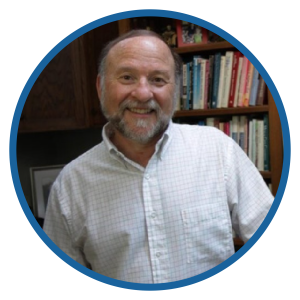
Barry Prizant, Ph.D., CCC-SLP
Dr. Barry Prizant is a speech-language pathologist with more than 50 years experience as a researcher and international consultant for autistic and neurodivergent individuals and their families. He is an Adjunct Professor of Communicative Disorders at the University of Rhode Island and Director, Childhood Communication Services (a private practice). Previously, he served as Associate Professor in the Department of Psychiatry in the Brown University School of Medicine, and held a tenured professor appointment at Emerson College. Publications include 5 books, most notably Uniquely Human: A Different Way of Seeing Autism (2015; 2022) and The SCERTS Model manuals, an educational approach implemented in more than a dozen countries. He has published 150 scholarly chapters and articles and serves on numerous professional advisory boards for journals and professional organizations. Barry has presented more than 1000 seminars and keynote addresses internationally, including two invited presentations at the United Nations for World Autism Awareness Day. His career contributions have been recognized with honors from Brown and Princeton Universities, the Autism Society of America and the American Speech-Language-Hearing Association.
Visit Barry’s website here
Uniquely Human, the book (Updated and Expanded edition!)
Dave Finch
Dave Finch is the author of the New York Times bestselling memoir, The Journal of Best Practices: A Memoir of Marriage, Asperger Syndrome, and One Man’s Quest to Be a Better Husband. As a writer and creative consultant, his work has appeared on ABC, CBS, NBC, CNN, NPR, SiriusXM, The New York Times, Rolling Stone, The Howard Stern Show, and the award-winning Netflix series, Atypical. Based in Denver, Dave’s company, Elevated Studio, produces this podcast and other recognized series.
Visit Dave’s website here
“I have read a million and one books on Autism. Uniquely Human is the best book I have ever read, hands down. Thank you Barry for this incredible gift!!!!”
– Navah Paskovitz, Mother of three boys with Autism, Co-Founder, the Ed Asner Family Center
“Compassion, learning and supportive strategies–the three essentials for working with folks with ASD–are an integral part of this must-read book.”
– Michelle Garcia Winner, Speech Language Pathologist and Founder of Social Thinking
“Thanks be to Barry for the first-ever must read written for parents, educators, and clinicians.”
– Michael John Carley, Founder, GRASP; Author of Asperger’s From the Inside-Out

“What makes the book compelling is how funny Mr. Finch is about himself. He’s great company.”
– Susannah Meadows, The New York Times
“In this hilarious memoir (which also gives some of the finest explications of Asperger’s out there), Finch approaches trying to be a better husband and father with the determination of Sherman marching on Atlanta.”
– Judith Newman, People (4/4 stars)
“Talk about being on a roll. This dude wrote a book, he has Asperger’s syndrome. He cured himself by listening to me on the radio!”
– Howard Stern