EPISODE 157
Culturally Responsive Services
for Neurodivergent Children:
A Discussion with Jordyn Montique
for Neurodivergent Children:
A Discussion with Jordyn Montique
Play the Episode…
Show Notes
Jordyn Montique’s personal and professional experiences created a passion for addressing cultural responsiveness in serving marginalized children with disabilities, and their families. Jordan, Barry and Dave discuss how essential it is to be in culturally, responsive, and for professionals to be aware of their own cultural biases in developing trusting relationships with children and their families.
Featuring
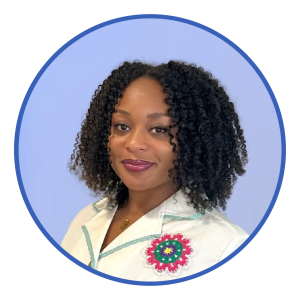
Jordyn Montique
Jordyn Montique is a speech-language pathologist specializing in culturally responsive therapy and advocacy for Black and other marginalized communities. In her work, she pushes for improving and diversifying the field. She is the host of the podcast “Views from The 8%” and has a passion for cultural responsiveness and holistic childhood development. Jordyn is a proud alumna of Howard University, where she received her M.S. in Communication Sciences and Disorders. Jordyn is currently licensed in Georgia, California, Oregon, and Washington, D.C., and provides services virtually full time.
Follow her on Instagram
Uniquely Human: The Podcast
EPISODE 157
CULTURALLY RESPONSIVE SERVICES FOR NEURODIVERGENT CHILDREN:
A DISCUSSION WITH JORDYN MONTIQUE
🎤 Transcript and Audio Usage Disclaimer
© Uniquely Human: The Podcast. All Rights Reserved.
The contents of this podcast, including all audio recordings, transcripts, and related materials, are the intellectual property of Uniquely Human: The Podcast and its fiscal sponsor, Community Autism Resources, a registered 501(c)(3) nonprofit organization.
These materials are provided solely for personal, educational, and non-commercial use.
No portion of the podcast audio, transcript, or any derivative materials may be reproduced, redistributed, modified, or publicly displayed without prior written consent from Uniquely Human: The Podcast or its authorized representatives.
Transcripts are provided for accessibility and reference purposes. They may contain minor transcription or formatting errors. When quoting or referencing the podcast, please credit Uniquely Human: The Podcast and provide a link to the original episode page.
By accessing or downloading transcripts, you agree to comply with this usage policy and acknowledge that all copyrights, trademarks, and intellectual property rights remain the exclusive property of Uniquely Human: The Podcast and its creators.
For permissions or inquiries, please contact:
📧 uniquelyhumanpodcast@gmail.com
Show Disclaimer
[00:00:00] Dave: The primary purpose of Uniquely Human: The Podcast is to educate and inform. The views expressed during all episodes are solely those of the individuals involved and do not constitute educational or medical advice. Listeners should consult with professionals familiar with each individual or family for specific guidance.
[00:00:19] UHP: Uniquely Human: The Podcast is produced by Elevated Studio. Music is graciously provided by Matt Savage of Savage Records.
Meet the Hosts
[00:00:39] Barry: Hi, I’m Dr. Barry Prizant, clinical scholar, researcher, and consultant on autism and neurodiversity, and a Brooklyn boy raised in the big city.
[00:00:50] Dave: And I’m Dave. I’m none of those things, and I grew up on a farm in Illinois. But being on the spectrum myself, I have plenty of personal insight to lend.
[00:00:59] Barry: And this is Uniquely Human: The Podcast, a show that illuminates and celebrates autism and neurodiversity.
Introducing Jordyn Montique
[00:01:14] Barry: Today on Uniquely Human: The Podcast, we have a special guest to talk about some very important issues, and our special guest is Jordyn Montique, who is a speech-language pathologist. So welcome, Jordyn.
[00:01:29] Jordyn Montique: Hi. Thank you so much for having me today.
[00:01:32] Barry: It is our pleasure. So a little bit about you. Jordyn is a speech-language pathologist and a trailblazer within the field of speech pathology. She specializes in culturally responsive therapy, child language development, and advocacy. Jordyn’s services include therapy and assessment, speaking engagements, providing learning opportunities, consulting, product editing, creating diverse materials, and selling meaningful products and apparel. So we’d love to hear a little bit about your personal and professional journey that led you to where you are today.
Jordyn’s Path to SLP
[00:02:11] Jordyn Montique: Of course. I mean, we all have a story, right?
[00:02:13] Barry: Yeah.
[00:02:13] Jordyn Montique: So I am, as you said, a speech-language pathologist. I just, for the first time this year, I’m 100% working for myself as a private practice owner. And I have some school contracts, but there’s a long journey, like you said, to get here. Both my parents are actually special educators.
[00:02:13] Jordyn Montique: My mom was a special education teacher for over 30 years, and then went back to school and is now a school counselor, but I grew up in her classroom. And so I always say she showed me what it means to be neurodiversity-affirming before anybody knew what the term was. She had such high expectations for her kids. They always outperformed what anybody else thought they could do, and they were cool — we were friends. I was friends with all the kids in her class. So I was just really born into the field. I was born into caring for others and being neurodiversity-affirming.
[00:02:13] Jordyn Montique: And then my dad — he also still teaches. He teaches middle school, the support classrooms for science and math. But before that, he was a preacher, and before that, he worked in tech, so he’s done a lot of different things. But most importantly, I think about him — he’s albino. He is a Black man who does not look like it, if you don’t know. And so I think just from him, early on, I learned there’s no one way to be something. So I feel like both of those kind of shaped how I grew up.
[00:02:13] Jordyn Montique: And then for college, for undergrad, I went to a PWI — a predominantly white institution. And actually, when I was there, the school population was 3% Black, which is very similar to the field of speech pathology, which is 3.6% Black. It’s about 8 to 10% people of color in general. And my experience in undergrad — I was like: wow. It was honestly probably the hardest four years of my life.
[00:04:25] Dave: Mm-hmm.
[00:04:25] Jordyn Montique: But I just learned so much. I learned how to stand up for things I believed in. I learned what was important to me, what mattered to me, how to have a voice and use it to support others, and create things that were bigger than me.
[00:04:38] Barry: Mm-hmm.
[00:04:38] Jordyn Montique: And then for grad school, I went to Howard University — which is a historically Black college and university — and it was the opposite experience. It was the first time I ever saw or met a Black speech-language pathologist, and I was surrounded by them. I was learning from the best of them. I was on campus with future Black doctors and dentists and lawyers and politicians. And it changed my life. It really just shaped: wow, I could do and be anything.
[00:04:38] Jordyn Montique: And it was the first time I was known for just being myself. Growing up I played basketball, and I was the only Black person in a lot of spaces. So I was just known as “oh, the little Black girl that plays basketball.” I was never known for being Jordyn, or what I bring to the table. So that was my experience when I went to Howard. All these things just really shaped how I view the world and how I know people view me, and how I want to show up.
[00:05:37] Barry: Mm-hmm.
[00:05:38] Jordyn Montique: So after Howard, I started my social media journey, which is how I became known in my business, because I just wanted people to see me. I just wanted people to see a Black SLP. I wanted to be the representation that I needed. I understood how much representation mattered, and so that’s how I got to where I am today.
Othering and Belonging
[00:05:59] Barry: You know, it’s interesting, as you describe your journey, how so many different ways a person can feel othered. And, you know, we have so many terms for that — unfortunately, though, many of them have a negative connotation, like feeling marginalized, feeling othered.
[00:06:16] Jordyn Montique: Mm-hmm.
[00:06:16] Barry: And I experienced that, because my mother died when I was young, and I was the only kid I knew who didn’t have a mother. And it — when it allows us to really understand what that experience is, and then support — almost by definition — children who are different in some ways, especially in communication, it leads to a very different experience of: okay, I’ve kind of walked in those shoes a little bit in some parts of my life. But then you add the contrast with going to Howard — that’s quite amazing.
What Intersectionality Means
[00:06:53] Barry: So much of what you’re known for in your work falls under the category of intersectionality. Could you summarize what that means to you and why it’s important?
[00:07:06] Jordyn Montique: Yeah. So intersectionality — the term was created by Kimberlé Crenshaw because she was in the court systems and seeing how Black women were being treated differently than Black men, and Black men were being treated differently than white men, and Black women were being treated differently than white women. So she was like: there needs to be a term to understand what’s happening here. All these people are being perceived differently, treated differently based on their different identities. And so she created the term intersectionality.
[00:07:06] Jordyn Montique: And so for me, it’s just the idea that you have all these different overlapping things that make you who you are as a person. And you cannot remove any of these identities to become somebody else or to just leave that identity at the door. These identities are always who you are — things like race, ethnicity, financial status, gender, sexuality, education — all these different things that make us who we are. When we think about ability, disability, race, body type — all these things can make you more or less marginalized, give you more power or less power. But everybody has a balance of both.
[00:07:06] Jordyn Montique: Like you were talking about — technically you are a white man, the epitome of privilege. But then you throw in your other identity of: my mom died when I was very young. I didn’t have that figure in my life that really shapes who you are as a person. And so you have both sides. Yeah, I have this privilege on this side, but I also had way less power, or I felt oppressed, or I felt othered or marginalized because of this other identity that I have. So it’s just the idea that all these different things make us who we are, and we can’t separate them from anybody. Going into different experiences with other people — I have no idea what shapes this person or all the different identities that they have, but I know they’re all important to that person.
[00:09:02] Barry: Hmm. And it shapes how people look at us in terms of what they impose on us. And you gave a perfect example of that when you said — when you were at an almost all-white school, you were “the little Black girl who played basketball.” But when you went to Howard, you were Jordyn.
[00:09:22] Jordyn Montique: Yeah.
[00:09:24] Dave: Yeah. And, you know, it’s interesting too, Jordyn, that everything you’re describing — none of these things are things that individuals choose. So the way that we’re perceived — I had no choice over my socioeconomic status, had no choice over whether or not I would go bald at age 25. All these things — the way that people see you — it’s like, okay. And that’s where it becomes so challenging, because as the perceiver, we forget sometimes that: this person didn’t choose to be born into a wealthy family. This person didn’t choose to lose their mom at a young age. But it definitely shapes who you are.
[00:10:11] Jordyn Montique: Yeah. And that’s a great point. And I think another great point you made is that it changes as you get older, as you age. Like, you weren’t thinking about going bald when you were a teen — you still had all the other identities that you have, but now this other one — how people are going to perceive this — is added on to my identity. If people gain or lose weight, people become physically disabled, or people become sick — all these different things can change how you perceive yourself and how other people perceive you.
[00:10:40] Dave: Yeah, and that becomes really important with late-diagnosed autistic people.
[00:10:47] Jordyn Montique: Exactly.
[00:10:47] Dave: And that sort of thing. So it’s very interesting.
[00:10:52] Jordyn Montique: Mm-hmm.
[00:10:52] Barry: Mm-hmm.
Cultural Responsiveness Basics
[00:10:54] Barry: So a big part of your work falls under the term “being culturally responsive.” And I guess we could go both ways on this: how can we, as professionals, be culturally responsive? But you also talk about the importance of self-awareness — of your own history. Why don’t we talk about that a little bit — how those perceptions impact the families we serve, the individuals with disabilities that we serve? What kind of lens does that require us to have?
[00:11:35] Jordyn Montique: Yeah, great question. I think self-awareness and being culturally responsive go hand in hand, because you can’t be culturally responsive if you’re not self-aware, if you don’t reflect on things that you believe, why you believe the things that you do, how you grew up, what your own culture is — because we all have a culture. Even if it’s the dominant culture, we all have one, or we all have our family culture or different traditions. So being able to look within yourself is very important just to become a better therapist — just to identify: what are my strengths? How do people think about me when I step into the room? How does that perception change the way that people might interact with me? These are all things that are very important to consider as somebody who works with people.
[00:11:35] Jordyn Montique: One tool I like to talk about often is called the Wheel of Power and Privilege. It goes through those different identities, and you might mark: okay, I’m on the outside of the circle here, so I’m more marginalized — but on this side, I’m right in the middle of the circle, so I have a lot of power here. And with SLPs, that might be: we’re all very educated, we all have a good career, we are in a position of power when we’re going in to work with a patient because they’re coming to us for help. So keeping in mind: okay, I’m in a position of power — I need to make sure I’m using it ethically, I need to make sure I’m responsible and put thought into what I’m doing with this individual. And that’s really the biggest thing about being culturally responsive — it’s individualized. You’re just responding to the room.
[00:11:35] Jordyn Montique: And that’s why I like to call it being culturally responsive. I know cultural humility is another really popular term. They’re very similar. I just like to use “responsive” because I think it’s an action. I’m continuing to learn. I’m still aware of the different identities that are coming into the room, that are in the community I’m around. Just responding to things that are happening in the world. Like, if I know I work with a lot of immigrant families, my sessions might look different given things that are happening in the community. I might lean toward: okay, I want to be more nurturing and caring, or make sure that we’re play-based today versus drill-based, because they might be having a hard time at home. That’s what it means to be responsive.
[00:11:35] Jordyn Montique: I also think it’s very important to ask questions and not be afraid to make mistakes. I think that’s where people are scared — they don’t want to offend somebody, they don’t want to come off the wrong way, which I understand. However, I also think that in itself is a form of othering, because if that person was similar to you, you wouldn’t feel that way.
Microaggressions in Practice
[00:14:24] Jordyn Montique: I actually have a really recent example of this. I work in a private school — I work across multiple schools, I’m at this one once or twice a week. And I was in the building — they gave me a visitor’s badge that’s a sticker, and I had it on, but I had it under a cardigan.
[00:14:42] Barry: Hmm.
[00:14:43] Jordyn Montique: And so I was walking around, and I was there a day I typically wasn’t there, so I had to take my student back to another classroom and got turned around. Somebody saw me and they’re like: “Oh, do you need help finding where you’re going?” And I said: “Yeah, I’m just trying to get back downstairs.” And she pointed me to the different stairs and elevators. I said: “Okay, thank you.” I went down, went back to my office. Everything was fine.
[00:14:43] Jordyn Montique: Like two weeks later, I go to the front office and somebody — in a hushed tone — goes: “Hey, did security speak with you?” And I’m like: “No — why would security need to speak with me?” And she’s like: “Oh, you know, there was an administrator and she saw you in the building a while ago, and she didn’t see your badge. We just didn’t know if you belonged here, we didn’t know who you were.” And: “We went back to look at the cameras and we saw that it was you, so I told her she’s supposed to be here.” But she really wanted me to know I needed to wear my badge. Security was supposed to tell me, but: “I’ll just let you know.”
[00:14:43] Jordyn Montique: And of course I’m like: okay, it’s fine. I understand. It’s a school, you want to be safe, you want to wear a badge — I get that. I let her know: yeah, I had it on, it probably just got covered. Moved on with my day. But of course — and I think this is the biggest point about microaggressions — you just think about it constantly. Like, if that was somebody else, would she have treated me that way? Would they go back and look at security cameras? Why didn’t she just ask me who I was when she saw me?
[00:14:43] Jordyn Montique: And so many people — because I posted about this — said: “You know, maybe she didn’t want to come off offensive and ask you where your badge was.” But I’m like: if it was a white woman, I don’t think she would’ve been hesitant to ask. I think she would’ve just asked me instead of going the roundabout way of handling the situation.
[00:16:32] Dave: Yeah. Mm-hmm. And especially if safety is at stake, so you give someone the benefit of the doubt. You say: oh, well, they were just… But that’s not exactly being protective of safety when you don’t even have the courage to say: “Hey — even though we don’t look alike — I need to see your badge,” right?
[00:16:32] Dave: And I think that’s the reason I jumped in and said yes so loud. Because you know, like you, Barry and I both do a good amount of public speaking, and one of the things that usually comes up is — I will try to force the issue sometimes during a Q&A session. People are hesitant to even ask questions or have a dialogue because they’re afraid. For just one example: if I were to say “autistic person” or “person with autism,” whatever I end up saying, it’s going to be wrong for half the room. And so then you start tiptoeing around and you avoid having the real conversation that can actually move the needle and result in progress, even if it looks messy for a few exchanges of the dialogue. To not have that dialogue because you’re afraid of offending someone — because it’s such loaded terrain — well, then nothing changes.
[00:17:45] UHP: Mm-hmm.
[00:17:46] Dave: So in your case, the stakes are that much higher, because you’re entering a school. And the funny thing is — you were wearing your badge.
[00:17:55] Jordyn Montique: Yeah. That’s it. Right. Exactly. But no — you’re right. People are scared to make mistakes, and I think that’s one of my biggest pillars of being culturally responsive: remove yourself from the situation. Don’t make it about “Oh, I’m going to offend. I’m going to feel so bad. Oh, I feel guilty.” Don’t make it about that. Make it about: “I want to make sure I’m getting this right. I want to make sure what you prefer is what I’m saying, so I’m going to ask questions.” Or: “I’m going to make sure I’m pronouncing your name correctly. I’m going to make sure I know about your background and history because it’s important.” And it all informs your communication. It’s all connected.
[00:18:34] Dave: Yes.
[00:18:35] Barry: And, you know, that is such an issue — and Dave was alluding to this about identity-first versus person-first language. And, you know, after probably a few years of debates about what’s allowable and what’s insulting, people just finally came to the conclusion that if the person is capable of responding to you, ask them, you know?
[00:18:58] Jordyn Montique: Exactly.
Disability as Culture
[00:18:59] Barry: It’s that simple. The whole issue of cultural responsiveness — I think it’s a fascinating one when you talk about disability as having its own culture. And something you’re probably very familiar with is that many autistic people are saying that what has been pathologized in their communication style is autistic communication. We have our own style. We will info-dump. We will approach this very directly, as opposed to dancing around a sensitive issue. So I think that’s another important dimension — trying to understand not just ethnic and racial aspects of culture, and your own cultural heritage, but the fact that disability in and of itself presents its own culture. It’s probably most clear and earliest articulated by the hearing-impaired Deaf population, but I think we’re seeing it more and more in other neurodivergent populations.
[00:20:08] Jordyn Montique: Yeah. Because it’s so true. There are so many different types of culture. Obviously race and ethnicity are talked about heavily, but there are so many other things that influence who we are. Disability culture is huge. Even if we just talk about regional cultures — I’m from California, from the West Coast. My husband is from New Jersey, from the East Coast. We grew up so differently. And we have similar cultures, obviously, but there’s so much influence in just where you’re at. Again, like Dave said, not where you chose — just where you happened to grow up influences who you are. Your abilities or disabilities influence your entire life, and that’s your culture.
[00:20:08] Jordyn Montique: So I think just being able to consider that about people — and like you said, just asking the questions. Especially with autistic communication — there are times I’ll ask parents… I don’t follow any type of guidebook or script. I ask my parents and I ask my clients specifically: “What is important to you? What do you want to be able to do? What does your day look like? What are the pain points, and how can we create goals to fix those pain points?” Not to fix how he communicates or to change anything about him, but — I feel like the goal of speech pathology is to improve quality of life. How can we work together to improve your quality of life? And that’s it.
[00:21:27] Barry: Mm-hmm.
[00:21:27] Jordyn Montique: How can we work together to improve your quality of life? And that’s it.
[00:21:32] Barry: Mm-hmm. Crucial. Absolutely.
Working with Families
[00:21:36] Barry: And you know, that leads me to ask you a little bit about engaging with families. I know it’s a big part of what you do, it’s a big part of what I’ve always done. And when I say engaging, that is as much learning from as it is supporting. Why don’t we talk about that — kind of the piece of intersectionality here, engaging with families — and then, especially in the last decade or two, we have many parents who are parent-professionals, many of whom have gone back for degrees and come into situations wearing a hat of a different shape and color than parents who don’t have that background. So I’m just curious about your experiences and your feelings about that piece.
[00:22:31] Jordyn Montique: Yeah. I think my biggest thing with communicating with families, again, is being responsive. And my perception has changed a lot since I started going into homes more consistently and working so closely with families — my job is not… Again, removing myself from the situation, it’s not about me at all. It’s: how can I help this family? How can I help these first-time parents who are stressed, anxious, don’t know what to expect, feel like they’re doing something wrong, feel like they’re behind? And my goal — and I feel like a lot of what we do — is counseling. It’s providing information. It’s letting them know: “You didn’t do anything wrong. This is what I’m seeing. These are the issues that you’re having. Let’s come together and figure out what we can do together.”
[00:23:20] Dave: Mm-hmm.
[00:23:20] Jordyn Montique: And I think it’s tough in the schools to do that because you don’t have as much contact with families and parents, but I think it’s still really important to do what you can to build relationships with those parents. Even if you don’t get a lot of contact, make sure those contacts that you do have are positive experiences. A lot of times people are coming into these situations anxious and afraid, not knowing what’s going on, don’t have access to the information that we do. I think a lot of times we forget that what we do is not common sense — so being able to break down the strategies that we’re using, things we’re noticing, recommendations they can use at home, in a way that they can understand it, using laymen’s terms.
Time Poverty and Support
[00:24:08] Jordyn Montique: Talking about things that they can easily implement into their routines — because families have different time. They have different access to time. One of the terms I like to talk about a lot is time poverty, because we talk about finances and not having the ability to purchase the things that you need to survive — but we also have time poverty, where instead of coming home, cooking dinner, working on homework with your kids, you’re coming home, pulling some food out of the freezer hopefully, and then going to your second job. You don’t have time to sit and read with your kids. You don’t have time to sit and make sure their homework is done or their lunch is packed for tomorrow, because you have to prioritize making sure they have food in their stomachs.
[00:24:54] Dave: Mm-hmm.
[00:24:54] Jordyn Montique: So that is what’s most important at the time. Being understanding that people have different situations — it’s not my place to come in and judge. It’s my place to come in and improve quality of life, and how can I do that with this specific family or this specific client?
[00:25:12] Barry: Mm-hmm.
[00:25:12] Dave: And again, time poverty — not someone’s choice.
[00:25:16] Jordyn Montique: Exactly.
[00:25:16] Dave: You’ll get some cynical voice in Washington who says: “Oh, well, if you made better choices…” And these are the same people who were born with a silver spoon in their mouth. So time poverty — not someone’s choice. And some families — or even empathically, some families — the parents don’t even agree on whether or not the child should be labeled in a certain way that would avail themselves of certain services and give themselves a leg up. And that’s something that the family didn’t choose — that’s just how the person was wired, dad versus mom. And so your job is very much to meet them where they’re at, not to come in with this big SLP agenda and say: “This is how SLP works for literally everyone.”
[00:26:25] Jordyn Montique: Yeah. It’s okay. This is how I do my job, but your job is to help me.
[00:26:30] Barry: That’s right. That’s right.
[00:26:31] Jordyn Montique: Yeah.
[00:26:32] Dave: And rest assured, I am definitely helpful.
[00:26:36] Jordyn Montique: Exactly.
Time Poverty and Guilt
[00:26:37] Barry: Yeah, you know, the time poverty piece is really such a crucial piece because once again, if we want to be an empathic professional, we want to think about the guilt that causes for many, many parents.
[00:26:52] Jordyn Montique: Yes.
[00:26:53] Barry: I mean, we’ve been doing a parent retreat weekend for 28 years, and what parents come up with over and over again is that feeling of: “Am I doing enough? I don’t feel like I’m doing enough.” But it’s just not possible in life sometimes to have that standard that you set for yourself — or that people tell you you should have — about doing enough. Yeah. It’s absolutely crucial.
[00:27:17] Jordyn Montique: And we’ve heard — I’m sure both of you have heard — other professionals talk about parents like: “Oh, these parents never show up. These parents never answer the phone. These parents don’t care.” Like, how many parents do you know that actually don’t care about their children? 99 times out of 100, that’s not the case. It’s not that they just don’t care or don’t want to show up — they have other things that they have to do, whether they want to or not. So it’s our job to care, and it’s our job to show up and ask questions and do what we can to support.
[00:27:49] Barry: Yeah. That’s what family-centered practice is.
Nonjudgmental Family Practice
[00:27:52] Barry: I mean — we have to really understand and respect — and something you just said — be nonjudgmental on so many levels: as far as cultural differences, everything having to do with meal practices in the home, the routines, everything, and just be respectful of that. It’s so important.
[00:28:14] UHP: Yep.
Parents as the Experts
[00:28:14] Barry: I personally feel, and I’ve said this many times before, that the worst thing we could do is challenge a parent’s intuitions about their child and challenge the way that their family moves through their journey in life. Because then trust is shattered — if they feel you’re judging them.
[00:28:33] Jordyn Montique: Yep. Judging me. I mean, I tell families all the time: “You’re the expert on your child. This is my first time meeting them. I’m an expert in what I went to school for. I don’t know your child from anybody else. So it’s my job to get to know them and get to know you as a family and figure out how I can support. But you are the expert on them.” Just giving parents and families back that agency — because we’re coming in with an imbalance of power, and I want to come in and balance that out. I don’t know better than you do. I have my skills that I’m bringing to the table to try to help you, but you know your child best, and so that’s why I want to learn from you.
[00:28:33] Jordyn Montique: And I think — Dave, you had a great point about how there’s still so much stigma in a lot of cultures and a lot of families: “I don’t want that label” or “I don’t want my kid to do that” or “I don’t want them to use this device.” And it’s my job to provide information as the expert in communication. This is what the research says. This is my opinion. I hear what your goal is, and I hear what you think — so let’s figure out how we can meet in the middle. Because communication looks different for every culture, for every family. And so we have to keep that in mind when we go into that room.
[00:29:57] Barry: Hmm.
Introducing AAC with Trust
[00:29:58] Barry: And also not jumping to assumptions. We talk about looking for the deep why for kids — from their experience, what are they experiencing? But we should think about the deep why for parents as well. So if you recommend an AAC system, and the parent says: “No, I don’t want that,” some people will jump to the assumption that they just don’t want to help their kid. But it might be that they’ve heard over and over again that somehow AAC prevents speech — which is inaccurate.
[00:30:31] Jordyn Montique: Exactly.
[00:30:32] Barry: Exactly. And so I guess it’s a matter of respect rather than judging — trying to really understand the parent’s reasoning and perspective and have a good conversation about that.
[00:30:43] Jordyn Montique: Yeah. And I think it goes back to building relationships. I’ve had those tough conversations where — okay, I don’t think this family is ready to hear at our first session that I’m going to be bringing an AAC device in. That’s going to happen, you know? But we’re going to get there as a team. So these first three sessions, I’m staying after for 10 minutes, talking to the parents, getting to know them, helping them understand: this is what I do — and: have you heard of AAC devices? I know this is what people say, but this is what the research says. And I’m thinking about it — just so you know, here’s some information if you want to consider it.
[00:30:43] Jordyn Montique: And when we get to that point, they’re like: yes — if you think it’s going to work, then I’m going to do it. Because we spent so much time making sure we understand that we are on the same team with the same goals, and I have this education and I want to use it to help you. So this is what I know from my education — here’s some information if you want to take your time to read it, because it might be a lot to just listen and process. I’m going to leave it with you — reach out if you have any questions — and I’m going to bring it up again in the next session. Just giving them opportunities to warm up to it and not feel judged or forced into doing something.
[00:32:17] Dave: Hmm.
How SLPs Are Trained
[00:32:18] Dave: Can I ask an outsider’s question, speaking of being othered — and by the way, this is total privilege: I get to have my name on a podcast and I have no subject matter expertise whatsoever. So if we’re talking privilege, ding, ding, ding.
[00:32:33] Jordyn Montique: Right. Well, you bring other expertise, though.
[00:32:35] Barry: Exactly.
[00:32:36] Dave: Sure. Yeah. We’ll go with that. Wisecrackery. So — from the outside, and I’m asking this almost on behalf of the parents who are listening as well — what you just described, Jordyn, sounds so reasonable and practical and efficient and important, in terms of not creating problems that don’t need to exist by coming in with an agenda or a script. Is SLP training — and obviously every school is going to be different, every professor is going to be different, every ideology is going to be different — but is the emphasis, if I’m a newly minted SLP, on “this is how you SLP,” or on “meet the family where they’re at and these are the tools that you can use selectively”? What can parents expect from an SLP these days?
[00:33:40] Jordyn Montique: That is a great question. And I think it’s changed over time. But I think that is a really big gripe in the SLP grad school world — we’re not taught how to do the job. A lot of times you learn how to do the job in your externship experiences, learning under a supervisor, and that varies because supervisors vary. I was blessed — I had amazing supervisors. But everybody does not have that same experience. When you’re in class, your courses are mostly theory — you’re learning about anatomy, about different communication disorders, about how they might present. But it’s hard to have a “this is how you do therapy.” There’s literally a book called This Is How You Do Therapy for speech therapists. And it’s a huge conversation, honestly — because it really is so dependent on those externship supervisory experiences. You’re learning from these different people, and that varies based on your program. Some programs have maybe two of those experiences total. My program had six to eight — a really big difference.
[00:33:40] Jordyn Montique: I took something from all of my supervisors that made me the clinician I am today. So if I only had two of those experiences, I feel I would have been lacking. But one of the best things about speech pathology is there is continuing education — you’re mandated to keep learning. And once you get out of grad school, there are a lot more of those niche classes on how to have these conversations with parents, various specialties, things like that.
[00:35:45] Dave: Yep.
[00:35:45] Barry: Mm-hmm.
[00:35:46] Dave: Yep. Okay, thanks. That’s interesting.
[00:35:49] Jordyn Montique: Yeah.
Academia vs. Real Practice
[00:35:49] Barry: You know, Jordyn, I’ve also heard you speak on a related topic, and it really has to do with what you just mentioned about getting varied experiences with good supervisors. But at a different level, I’ve heard you speak about university faculty who teach courses and probably have not spent more than 15 or 20 minutes with a child with a disability on the floor with them in forever. And then there’s this big gap between what students are taking away from their classes on supporting children and people with disabilities and what then happens in the real world. Do you want to expand upon that a little bit and how that — it’s almost a crime — because you’re getting context-less information in many cases, as opposed to something that will actually help you.
[00:36:37] Jordyn Montique: Absolutely. Another gripe — for sure. I think it’s really frustrating, especially when you’re in grad school or even in undergrad in your major. You don’t really realize that these people haven’t been in a therapy session in decades. You’re like: oh, I’m learning from the best, I’m learning from somebody who knows exactly what they’re talking about. And then you get into the real world and you’re like: they actually had no idea. I feel like academia is so separate from practice. And I think a lot of people are trying to fix that gap, trying to make that research-to-practice period shorter. I’ve seen it get smaller because of social media — people are sharing new information and new research much faster.
[00:37:37] Jordyn Montique: Another really great organization: The Informed SLP. They do a great job of sharing new research. If you’re not familiar, this is not an ad — I’m just a fan. They’re a subscription-based company where they take all this new research, pretty much daily, and summarize it — either short audio clips or podcasts or articles — getting new research to put into practice immediately. They’re doing a really great job of closing that gap.
[00:38:10] Barry: Mm-hmm.
[00:38:10] Jordyn Montique: Another thing I talk about is supervisors — such an important position. We are working hand-in-hand with students who are in the classroom and doing research. We should be learning from each other. They are getting the most up-to-date research information in the classroom. So if I’m an SLP working in a school, I would be asking my student: “Hey, what are you learning in class about X, Y, and Z? Let’s go over your notes because I have a student who’s doing this.” That’s just a way to close that gap — to share that information. But I think so many SLPs feel like: “I’m the SLP, I’m in charge, you should be learning from me, it shouldn’t go the other way.” It needs to go both ways. And I feel like that would change that gap.
[00:39:02] Dave: Hmm. Yeah, because then you’re more an extension of the family and not a friction point for the family.
[00:39:11] Barry: Mm-hmm.
[00:39:11] Jordyn Montique: Yeah. Ideally.
[00:39:12] Barry: Yes.
Misdiagnosis and Intersectionality
[00:39:14] Barry: I think it’s important to get back to the intersectionality issue and how that kind of impacts serving kids of color — and especially when we talk about neurodivergent kids, kids on the autism spectrum, who are so misunderstood anyway in many cases. Do you feel that students and young kids of color are impacted differently, and maybe served or looked at differently, because they look different to many mainstream white professionals? I know that’s been an issue for a long time around diagnosis — that typically, kids of color will be more likely to get a diagnosis of emotional behavioral disorder when the accurate diagnosis would be autism spectrum, ADHD, or something along those lines. So your experience — you’re out there.
[00:40:15] Jordyn Montique: Yeah. I mean, it’s true. I remember my CF year — the first year into the field — I was in Washington, DC public schools, predominantly Black, and I had never seen so many kids with an ED — emotional disturbance — diagnosis. And this is just before I even met the kids. I’m reviewing the IEPs that I got, and I’m like: they can’t all have this same diagnosis. That’s crazy. That doesn’t even make sense. And then I finally meet the kids, and I’m like: no, absolutely not. That’s not what this is. That’s not what’s happening.
[00:40:15] Jordyn Montique: And I think it happens for a lot of reasons. One article I read about this stuck with me because it said: it’s not just that they’re getting the wrong diagnosis. They’re misdiagnosed with an emotional or behavioral disorder — and on top of that, because they have that first diagnosis, nobody’s looking any further. Nobody’s going to do any more assessments to say: is there a learning disability? Could they be neurodivergent? Is there anything else going on here? Because everything is just chalked up to: “No, they have a behavior issue.” So they don’t get the support.
[00:41:42] Jordyn Montique: And Black students are the most underdiagnosed and the most misdiagnosed. We know the importance of early identification and early intervention — we know how important those first three to five years are. When most Black kids who are autistic or have an ADHD diagnosis don’t get that diagnosis until around eight years old. And that’s also after they’ve brought up concerns at least three times to three different professionals. So it takes longer, they’re not heard, and they miss those prime years of intervention.
[00:41:42] Jordyn Montique: And then if you think about just being in school — if you are neurodivergent, regardless of race, you’re two times more likely to be suspended. If you are Black, you’re three times more likely to be suspended. So imagine — if you want to talk about intersectionality — if you are both Black and neurodivergent, you’re at least six times more likely to be suspended for the same things a white peer is doing, and get a completely different consequence just because of your intersectional identities.
Safety and Police Encounters
[00:42:55] Jordyn Montique: So it is a huge impact. And then most importantly — we’re talking about safety — because those same kids: Black kids are more likely to be pulled over, more likely to be harmed or killed by police. So are autistic kids or anyone who’s neurodivergent — you’re more likely to have an interaction with a cop. So if you’re already more likely to have an interaction because you’re autistic, and then you add race on top of that, when you’re also more likely to be harmed or killed — there are so many of those stories.
[00:42:55] Jordyn Montique: Just the other day I heard a story of an Afro-Latino teen. He eloped from the house. His parents called for support — they had spoken with this police department before, the police department knew this kid. They said: he ran out, we’re just trying to find him and bring him back. He got shot six times. The police claimed that the kid was coming into the street to attack him — and it was later proven that he never even left the sidewalk. So these things happen, and they’re scary. It’s dangerous to just have these identities that you didn’t choose. And so I think for us as professionals, it’s so important to just be aware of these things and spread the word — and use your privilege for good in those situations, if you can, when they come up.
[00:44:34] Dave: Mm-hmm. Yeah. And there’s the formal, systemic way to go about it — which is very slow change — talking to first responders, legislation, educating school districts. And then there’s pounding the pavement, where the incident — that’s absolutely disgusting and tragic — happens more often than just an isolated incident here and there. And that’s a first responder, a cop. So we’re not even talking about the self-appointed neighborhood security officer who’s just a very trigger-happy neighbor. It really has to be a grassroots, community-level change, but it also has to happen systemically. And that takes a lot of voice and a lot of critical mass.
[00:45:36] Jordyn Montique: Yeah.
[00:45:37] Dave: And consistency.
[00:45:38] Barry: And learning from people who’ve experienced it themselves. Just a few episodes ago, I’m going to give a little plug going back in our podcast — we interviewed Saulo Barbosa, who is a Brazilian autistic policeman, and who currently, as we speak, goes around Brazil doing trainings for police officers about what it feels like and means to be autistic. And Dave doesn’t know this, but I just got an email from him yesterday: the Army is now asking him to do trainings about understanding what an autistic person or neurodivergent person in crisis might look like, and how to approach that person — in a way that really prevents more gasoline being thrown on the fire. He’s having a big impact now and is in demand, and he never thought that would be a part of his life. He just discovered that a couple of years ago.
[00:46:49] Dave: Godspeed. Yeah.
[00:46:50] Barry: Yeah, absolutely. So —
[00:46:52] Jordyn Montique: It’s so important to learn from those people.
[00:46:54] Barry: Absolutely essential. It’s so important. I think we’re all learning more and more about learning from the neurodivergent community — and not just learning, but embracing and changing our unfortunate assumptions sometimes that lead to problems.
[00:47:08] Jordyn Montique: Yeah.
Vision for Neurodiversity
[00:47:12] Barry: So in the big picture, what is your vision for embracing neurodiversity and intersectionality? It sounds like we’re moving a bit in the right direction — but how can we accelerate that?
[00:47:26] Jordyn Montique: Yeah, I think we are. And I think having conversations like this — where we’re talking to professionals and to the neurodivergent community about their experiences — is how we’re going to learn from them. A lot of recently the neurodivergent community has had so much to say about the treatment they went through growing up, whether it was therapy services or things that happened at school. And I’ve learned so much just from people sharing their own experiences that I really hope people continue to do so. Because we don’t know — we won’t know how it is until somebody tells us. And that’s the best way to make a change. You can’t do it if you’re not aware. So just become aware of what’s wrong, and then when you know better, do better. If you know that you’re being harmful, choose not to be harmful anymore. Choose to do no harm.
[00:47:26] Jordyn Montique: And I think that is kind of my biggest thing with being culturally responsive — you’ve learned, you’ve understood your own culture, now you’re learning about other people’s cultures, and you’re continuing to learn. But along with that process is making changes based on the information you’ve received. Like: okay, now I’m not going to ask this specific question anymore. Or: one question that comes up a lot in speech therapy materials is “Who keeps us safe?” and the answer is: the police officer. And I might not show that one. Just being aware of the materials that we’re using, who we’re working with, and how they’re going to be impacted by it.
[00:49:04] Barry: Yeah. And how do you say to a young child: “Yeah, a police officer — but only if he or she has had the right training.”
[00:49:10] Jordyn Montique: Yeah.
[00:49:11] Dave: Depending on which elementary school you went to, the police officers are framed as heroes or — yeah, a different reality for many communities.
[00:49:23] Jordyn Montique: It could go either way, for sure. So yeah, I think big picture: I would love for people to just accept that everybody’s different. There’s no such thing as normal. There’s no such thing as: everyone should be this way. That’s my biggest pet peeve. I don’t think anybody should be exactly one thing. We all have so many different identities that make us who we are, and I think the world needs to do a better job of just embracing everybody for what they are and what they bring to the table — instead of trying to force them to be something that they’re not. We could be using their strengths. We could be using what they can give us for bettering the world in some form or fashion. Yeah. That’s my biggest thing.
[00:50:09] Barry: Yeah — be curious rather than judgmental.
[00:50:11] Jordyn Montique: Mm-hmm.
[00:50:13] Barry: Learn, right?
[00:50:14] Jordyn Montique: Yeah.
Closing Thoughts and Thanks
[00:50:15] Barry: Jordyn, this has been terrific. And I think that our listeners — who really are the full range of parents, neurodivergent people, teachers, SLPs — we cannot talk enough about this. It’s just so important in terms of increasing our awareness and increasing our ability to look at our own biases and our own judgments. So important.
[00:50:41] Jordyn Montique: Yes. Thank you. I’m so glad we’re having this conversation, and I hope you all take something from it.
[00:50:48] Dave: Oh — yes.
[00:50:49] Barry: For sure. Well, thank you for being on.
[00:50:51] Jordyn Montique: Of course. Thank you for having me.
[00:50:53] Barry: All right. Thanks, Jordyn. Take care, Jordyn.
…and Continue the Discussion
Do you have a book or podcast club? If so, you may use this discussion guide to facilitate a conversation about this episode.
1) How has Jordyn’s family and college experiences increased her awareness of critical issues facing services for neurodivergent children of color and their families?
2) How does Jordyn explain what it means to be culturally responsive, and the importance of awareness of how each of our unique identities impacts families, and individuals with disabilities that we serve?
3) Jordyn discusses the importance of service providers being aware of their own cultural biases. Why does she say this is important, and what is the danger of not doing so? In your own experiences, have you encountered situations in which a lack of awareness of cultural biases had a negative impact on the development of trusting relationships between professionals and families?
HOSTED BY

Barry Prizant, Ph.D., CCC-SLP
Dr. Barry Prizant is a speech-language pathologist with more than 50 years experience as a researcher and international consultant for autistic and neurodivergent individuals and their families. He is an Adjunct Professor of Communicative Disorders at the University of Rhode Island and Director, Childhood Communication Services (a private practice). Previously, he served as Associate Professor in the Department of Psychiatry in the Brown University School of Medicine, and held a tenured professor appointment at Emerson College. Publications include 5 books, most notably Uniquely Human: A Different Way of Seeing Autism (2015; 2022) and The SCERTS Model manuals, an educational approach implemented in more than a dozen countries. He has published 150 scholarly chapters and articles and serves on numerous professional advisory boards for journals and professional organizations. Barry has presented more than 1000 seminars and keynote addresses internationally, including two invited presentations at the United Nations for World Autism Awareness Day. His career contributions have been recognized with honors from Brown and Princeton Universities, the Autism Society of America and the American Speech-Language-Hearing Association.
Visit Barry’s website here
Uniquely Human, the book (Updated and Expanded edition!)
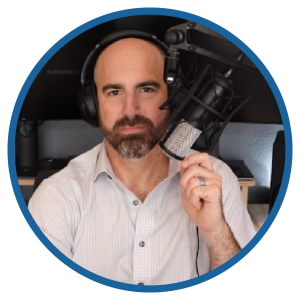
Dave Finch
Dave Finch is the author of the New York Times bestselling memoir, The Journal of Best Practices: A Memoir of Marriage, Asperger Syndrome, and One Man’s Quest to Be a Better Husband. As a writer and creative consultant, his work has appeared on ABC, CBS, NBC, CNN, NPR, SiriusXM, The New York Times, Rolling Stone, The Howard Stern Show, and the award-winning Netflix series, Atypical. Based in Denver, Dave’s company, Elevated Studio, produces this podcast and other recognized series.
Visit Dave’s website here
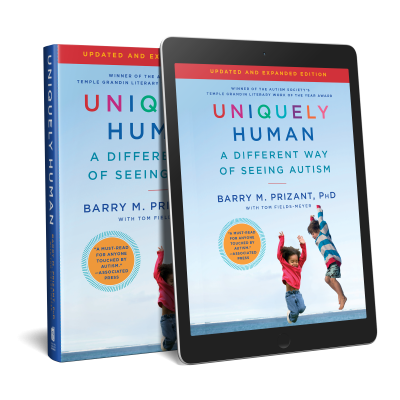
“I have read a million and one books on Autism. Uniquely Human is the best book I have ever read, hands down. Thank you Barry for this incredible gift!!!!”
– Navah Paskovitz, Mother of three boys with Autism, Co-Founder, the Ed Asner Family Center
“Compassion, learning and supportive strategies–the three essentials for working with folks with ASD–are an integral part of this must-read book.”
– Michelle Garcia Winner, Speech Language Pathologist and Founder of Social Thinking
“Thanks be to Barry for the first-ever must read written for parents, educators, and clinicians.”
– Michael John Carley, Founder, GRASP; Author of Asperger’s From the Inside-Out

“What makes the book compelling is how funny Mr. Finch is about himself. He’s great company.”
– Susannah Meadows, The New York Times
“In this hilarious memoir (which also gives some of the finest explications of Asperger’s out there), Finch approaches trying to be a better husband and father with the determination of Sherman marching on Atlanta.”
– Judith Newman, People (4/4 stars)
“Talk about being on a roll. This dude wrote a book, he has Asperger’s syndrome. He cured himself by listening to me on the radio!”
– Howard Stern