EPISODE 153
Part 2 of 3 Series
Assisted Communication with Non-speakers
What the Naysayers Get Wrong and The Damage They Cause:
A Conversation with David Kaufer
Assisted Communication with Non-speakers
What the Naysayers Get Wrong and The Damage They Cause:
A Conversation with David Kaufer
Play the Episode…
Show Notes
Barry and his guest David Kaufer engage in a “no holds barred” critique of the small group of naysayers who have challenged the rights of non-and minimally, speaking people to have access to their preferred and most effective modes of communication. David shares his knowledge from two perspectives, a dad whose teenage son has experienced success with assisted communication, and as an author and advocate for autistic individuals who has a sharp eye for calling out the misinformation and hypocrisy of those who challenge the lived experience of countless non-speakers, family members and professionals. As part 2 of this three-part series, we also specify how evidence-based practice has been misrepresented by the naysayers.
Featuring
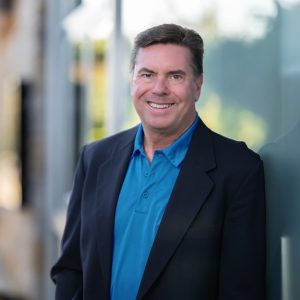
DAVID KAUFER
David Kaufer is a digital marketing strategist, autism advocate, and host of “The Lighter Side of the Spectrum” podcast. His work focuses on communication rights, motor-based communication methods, and challenging assumptions about intelligence in nonspeaking individuals. He is the father of 20 year old twins, his son Stone is a nonspeaking autistic self-advocate who communicates through spelling, and Ty is a sophomore at the University of Washington, studying political science.
Learn more about David on his website
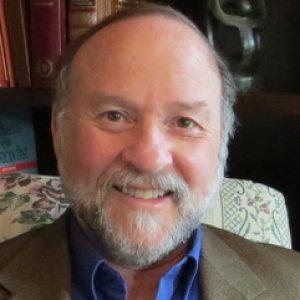
BARRY PRIZANT, Ph.D., CCC-SLP
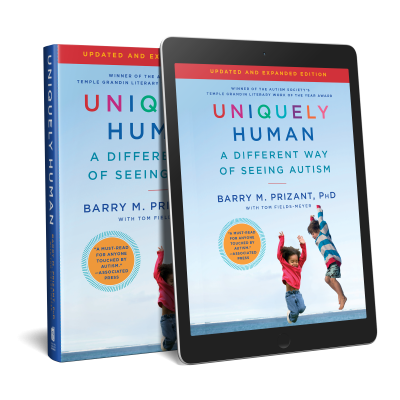
Barry M. Prizant, PhD, CCC-SLP is recognized as among the world’s leading scholars on autism and as an innovator of respectful, person- and family-centered approaches, and is known internationally for his inspiring keynote addresses and presentations. He is Director of Childhood Communication Services, Adjunct Professor of Communicative Disorders at the University of Rhode Island, and has fifty years of experience as an international consultant and researcher. Barry has published five books, 150 articles/chapters, and is co-author of The SCERTS Model now being implemented internationally. He was a two-time featured presenter at the UN World Autism Awareness Day with more than 1000 presentations internationally. Barry’s book Uniquely Human: A Different Way of Seeing Autism (2022) is the best-selling book on autism since 2015, published in 26 languages and ranked by Book Authority as #1 of the “100 best books on autism of all time”. Barry co-hosts a podcast, Uniquely Human: The Podcast (www.uniquelyhuman.com) with his friend, Dave Finch, an autistic audio engineer. It is ranked # 1 of all time by Goodpods in categories of disability, psychiatry, autism, and ADHD.
Visit Barry’s website here
Visit SCERTS website here
Uniquely Human, the book (Updated and Expanded edition!)
Uniquely Human: The Podcast
EPISODE 153 – MARCH 13th. 2026
PART 2 OF 3 SERIES
ASSISTED COMMUNICATION WITH NON-SPEAKERS
WHAT THE NAYSAYERS GET WRONG AND THE DAMAGE THEY CAUSE: A CONVERSATION WITH DAVID KAUFER
🎙️ Transcript and Audio Usage Disclaimer
© 2026 Uniquely Human: The Podcast. All Rights Reserved.
The contents of this podcast, including all audio recordings, transcripts, and related materials, are the intellectual property of Uniquely Human: The Podcast and its fiscal sponsor, Community Autism Resources, a registered 501(c)(3) nonprofit organization.
These materials are provided solely for personal, educational, and non-commercial use.
No portion of the podcast audio, transcript, or any derivative materials may be reproduced, redistributed, modified, or publicly displayed without prior written consent from Uniquely Human: The Podcast or its authorized representatives.
Transcripts are provided for accessibility and reference purposes. They may contain minor transcription or formatting errors. When quoting or referencing the podcast, please credit Uniquely Human: The Podcast and provide a link to the original episode page.
By accessing or downloading transcripts, you agree to comply with this usage policy and acknowledge that all copyrights, trademarks, and intellectual property rights remain the exclusive property of Uniquely Human: The Podcast and its creators.
For permissions or inquiries, please contact:
📧 uniquelyhumanpodcast@gmail.com
Show Disclaimer
[00:00:00] UHP: The primary purpose of Uniquely Human: The Podcast is to educate and inform. The views expressed during all episodes are solely those of the individuals involved and do not constitute educational or medical advice. Listeners should consult with professionals familiar with each individual or family for specific guidance.
Uniquely Human: The Podcast is produced by Elevated Studio. Music is graciously provided by Matt Savage of Savage Records.
Meet the Hosts
[00:00:39] Barry: Hi, I’m Dr. Barry Prizant, clinical scholar, researcher, and consultant on autism and neurodiversity, and a Brooklyn boy raised in the big city.
[00:00:49] Dave: And I’m Dave. I’m none of those things, and I grew up on a farm in Illinois. But being on the spectrum myself, I have plenty of personal insight to lend.
[00:00:59] Barry: And this is Uniquely Human: The Podcast, a show that illuminates and celebrates autism and neurodiversity.
Series and Guest Intro
[00:01:16] Barry: Today on Uniquely Human: The Podcast, we are continuing our series under the umbrella of depathologizing autism, and more specifically looking at evidence-based practice. So I’m thrilled to have as our guest today, David Kaufer. David, welcome.
[00:01:34] David Kaufer: Thank you, Barry. It’s truly an honor and a pleasure to be here. I’ve been a big fan of yours for a long time, and I’m just so happy to be here.
[00:01:44] Barry: And let me just also add that I’ve been so taken by your writings on Substack, which we’re going to talk about. But a little bit more about you first. David Kaufer is a digital marketing strategist, autism advocate, and the host of The Lighter Side of the Spectrum podcast. His work focuses on communication rights, motor-based communication methods, and challenging assumptions about intelligence in nonspeaking individuals.
[00:01:44] Barry: He is the father of 20-year-old twins. His son, Stone, is a nonspeaking autistic self-advocate who communicates through spelling, while Ty is a sophomore at the University of Washington studying political science. So you have a very busy household, don’t you?
[00:02:30] David Kaufer: Very busy. Yeah, absolutely.
[00:02:33] Barry: One of the reasons that I thought it was important not only for us to speak, but for our listeners to hear you, is that in a sense you’ve been involved in a couple of paths and journeys. One is your family’s personal journey, and also your current role as an advocate. So please feel free to share some important aspects of your family’s personal journey, and then a little bit of how you got into advocacy.
Family Journey Begins
[00:03:04] David Kaufer: Yeah, so the family journey has been interesting because Stone was diagnosed on the spectrum just before his third birthday, and so we got into early intervention work right away. We jumped into it with both feet. My wife and I were both huge proponents of doing whatever we could, like many parents.
[00:03:04] David Kaufer: And his brother Ty, in the meantime, was showing great aptitude. He was one of those precocious toddlers. He was counting to a hundred. His favorite channel when he was four years old, Barry, was The Weather Channel. He could talk about high-pressure systems. He had all of the highway systems in the state of Washington memorized. He was one of those kinds of kids, right?
[00:03:04] David Kaufer: So we were dealing with Ty, and we were like, “Oh my God, this kid’s incredible. We want to do what we can to support him and make sure he’s challenged.” But with Stone, he had his communication challenges, right? And we knew that he was smart. We knew the intelligence was in there, and we always felt from the beginning that it was just kind of locked in. And so the journey for him has always been: How can we unlock it? How can we unlock him?
Unlocking Communication
[00:04:34] David Kaufer: And we were fortunately finally able to do that three and a half years ago when a friend of mine reached out to me. It was very fortunate, very random, and she told me about J.B. Handley’s book Underestimated, which actually I had, but I hadn’t read yet.
[00:04:34] David Kaufer: She was actually family friends with him and knew that this method had worked for that family and that he was able to communicate. And she said, “I don’t know if it’s the same with Stone or if it will help you, but I thought I’d pass it along.”
[00:04:34] David Kaufer: And to make a long story short, it was life-changing. We started the process, went down to San Diego, spent three days down there, had six sessions, and after that, like I said, it was life-changing. We were off and running, and things haven’t been the same since.
Spelling Methods Explained
[00:05:32] Barry: Our listeners are probably aware — and if they aren’t, they will be now — that there are different approaches for nonspeaking individuals to access spelling or typing. If you would, do you want to share the approach that was used with Stone, just by name?
[00:05:49] David Kaufer: Sure. Yeah. It’s Spelling to Communicate, and that’s a good way to put it, Barry, right? There are different flavors, so to speak, but they’re all based on the same approach.
[00:05:49] David Kaufer: When you talk about RPM, Rapid Prompting Method, which a lot of nonspeakers use, that was the next generation after facilitated communication, which provided more physical support. Then RPM came along, and Elizabeth Vosseller, who founded Spelling to Communicate, was a speech-language pathologist who learned RPM, practiced it, and then added her own methodology and created S2C.
[00:05:49] David Kaufer: There’s also another derivative called the Spellers Methodology. But they’re all basically similar in the sense that they really address motor issues, and they all take the same approach of saying, “We presume competence.” We know that the cognitive ability is intact, but the problem is there’s no way to communicate that because of the challenges this population has with speaking.
[00:05:49] David Kaufer: And even with some other approaches, maybe AAC apps, the brain-body disconnect can be too strong, so they’re not able to execute the skills. They’re unable to communicate and unfortunately are presumed to be intellectually disabled.
[00:07:36] Barry: And I think that’s something we could talk about a little bit more.
[00:07:40] David Kaufer: Yeah.
[00:07:41] Barry: Definitely, in a few minutes, about the whole issue of presuming competence, and also the fact that motor issues — neuromotor issues both for speech and for accessing communication displays — have been documented in research and have really been de-emphasized by so many of the critics. So Stone was about, it sounds like, 16 or 17?
[00:08:08] David Kaufer: Yeah, he was 16, a couple of months away from turning 17, literally, when we finally unlocked him and he was able to communicate.
[00:08:18] Barry: Yes. Yeah.
Supports and Independence
[00:08:20] Barry: And so what kind of supports does Stone need right now in accessing communication displays through spelling or typing?
[00:08:29] David Kaufer: So the support that Stone needs — and again, this is common with nonspeakers who are using these motor-based systems — is that he needs a communication and regulation partner to sit with him. A lot of it is really, frankly, for regulation.
[00:08:29] David Kaufer: In my case, I’m his primary CRP and I hold the keyboard for him. That’s literally all I do. Most of the time, one hand’s holding the keyboard and the other hand is holding his hand, and that’s the grounding and regulation.
[00:09:05] Stone: Happy.
[00:09:06] David Kaufer: Happy.
[00:09:08] Stone: Happy.
[00:09:09] David Kaufer: He’s happy.
[00:09:11] Barry: So Stone has some speech, but obviously he communicates in much more complex ways through spelling and typing.
[00:09:19] David Kaufer: Exactly. And the speech has always been unreliable and unable to really communicate complex thoughts or needs or things like that. Getting back to your question, he needs someone to hold a letter board or hold the keyboard for him. But all the pointing — or in his case, typing, for the most part — is completely independent.
[00:09:19] David Kaufer: And we’re working on independent communication. That’s absolutely the goal. There are many who have gone through the different levels of progression who do type independently, and I have no doubt we’re going to get there. We’re working on it. I have a stand that I put on the desk, and Stone’s practicing.
[00:09:19] David Kaufer: It’s going through the same process that we had to go through when he first began spelling in the first place — training the motor system and getting all these pieces to work together so that he can actually execute it.
Facing Skepticism
[00:10:25] Barry: Okay, so as a dad, what were your initial reactions when you hear people claiming, “Wait a second. This is not authentic communication; it’s just other people speaking for Stone and other nonspeakers”?
[00:10:41] David Kaufer: I was 100 percent dumbfounded. I couldn’t believe that there was that level of skepticism out there because, for me, experiencing it, it’s one of those things that once you see it, you can’t unsee it. There’s just no doubt.
[00:10:41] David Kaufer: And especially once I learned how to work with him as a partner, which happened early on, that was huge. Donnamarie, the practitioner down in San Diego, made sure that parents learned how to communicate with their children. There are certain things that go into being a communication partner that you wouldn’t necessarily think of. I didn’t. You think, “Oh, you just hold the letter board.” But there’s actually a lot more that goes into it than you realize.
[00:10:41] David Kaufer: So I was, of course, very elated — euphoric is kind of the word I used the other day when I was talking with another parent. There’s this euphoria that you have once you’re able to access your child for the first time and hear their thoughts, hear their wishes, and get to know your child in a totally new way.
[00:10:41] David Kaufer: And then to find out that there was an organization that put out a position statement — handed to me by our speech therapist at the time — expressing concern because we were doing Spelling to Communicate. From ASHA, the speech and hearing association, it basically said it was harmful. It used really inflammatory language.
[00:10:41] David Kaufer: I was looking at it thinking, “What the hell? How can you be saying this when I’m sitting here having these conversations with my son? I’m not making this up. This is real. This is happening.”
School Pushback Sparks Advocacy
[00:12:48] David Kaufer: So I think, like I said, it was being dumbfounded, but then as it progressed — as we wanted to find support for Stone in the school — that’s what really threw me onto this path of advocacy.
[00:12:48] David Kaufer: Like many parents, I was so excited to share it with his school. Oh my God, they don’t know about this. This is going to change the world. They’re going to love it. They’re going to want to bring in letter boards for all the other nonspeaking students in this class. And I went in and told them about it, asked for support, and they said no.
[00:12:48] David Kaufer: They said, “No, we’re not going to allow letter boards. We’re not going to allow him to access age-appropriate education until he completes an assessment.” And the primary reason they gave was the ASHA guidance and position statement. And again, that’s what really threw me onto this path of advocacy.
[00:13:40] Barry: And just a little sidebar to that: I did have an exchange with Diane Paul, who is in ASHA — I think she’s the director of clinical policy, though I’m sorry if that’s not the exact title. She was the ex officio member for that committee, for that position statement.
[00:13:40] Barry: Initially it was facilitated communication, and then somehow they decided it was any kind of spelling or typing method.
[00:14:12] David Kaufer: Yeah. They conflated it all.
[00:14:15] Barry: Exactly. And she said the statements were never developed to prohibit the use of these techniques. It was to raise concern about the lack of supportive research. The second version was much more vehement, but it was never said, “This should not be used.” So there’s a little bit of a misinterpretation in how it’s actually been applied. But anyway, moving ahead.
[00:14:45] David Kaufer: Yeah, and I’d love to go down that path because I think that could be argued as well. She may say that, but I invite listeners to read the statement and make their own interpretation.
[00:15:01] Barry: Yeah. And it also flies in the face of what we discussed in the first part of this three-part series, and that is evidence-based practice — and what evidence-based practice is.
[00:15:01] Barry: It also flies in the face of family-centered practice, where we say, okay, a parent may not be an expert on the technical aspects of a labeled condition, but they are an expert on their son or daughter or family member.
[00:15:30] Barry: And I’ve said for many years that the worst thing you could do is say to a parent, “Your intuitions and knowledge of your child are dead wrong.” It totally shatters trust. It’s a terrible path to take and, in my opinion, it borders on clinical malpractice.
[00:16:05] David Kaufer: Oh, great. Yeah.
[00:16:06] Barry: But what are some of the issues that you’ve addressed — whether it’s specific arguments that some of the naysayers have made, or whether it’s just a misunderstanding of what’s happening with nonspeakers?
[00:16:23] David Kaufer: One of the areas that I’ve addressed, because I think it’s so pivotal in this movement, is how schools are using the ASHA position statement.
Due Process and Message Passing
[00:16:42] David Kaufer: Stone was in a public high school. I had gone to the school asking for letter boards and support, and they denied it. So we hired an attorney who specializes in education law. She didn’t have experience in this particular area, in terms of working with a nonspeaker, so she was intrigued. There was education I had to provide, but long story short, we sued the school district for due process for denying him his rights.
[00:16:42] David Kaufer: They said he had to go through a standardized assessment. Part of that assessment also included the message-passing test. The assessment was given by the school SLP, who had already stated in our IEP meeting that she did not support Spelling to Communicate because of ASHA’s statement. So she was already on the record saying that she didn’t support it.
[00:16:42] David Kaufer: They were going through the motions with this quote-unquote assessment. So I want to paint the picture, Barry. We go in for the assessment, we sit down, and Stone was still on the letter boards at this time. I said, “Before we begin, Stone, is there anything you’d like to say?”
[00:16:42] David Kaufer: And he spelled out on his own, with no prompting and no coaching — I’m paraphrasing — “My last day at school here was the happiest day of my life. This place is toxic.” She just looked at him. She didn’t respond. And he said, “Why am I here? I don’t want to be here.”
[00:16:42] David Kaufer: He made a number of other similar spontaneous statements during this assessment, including before and after the message-passing test. Then, when they gave their report, they focused on the message-passing test and said Stone failed, so they concluded he wasn’t capable of independent communication.
[00:16:42] David Kaufer: What they didn’t know — what Stone later told me, and I have on video — was that he intentionally failed it because he didn’t want to go to school there anymore.
[00:19:22] Stone: Goodness.
[00:19:24] David Kaufer: He was like, “Why would I pass something? I want to get out of here.” And there were reasons. It was a very bad situation for him. A number of things made a lot more sense later than they did at the time. But even then we knew he hated it because they were having him count coins, Barry. He was getting no academic instruction.
[00:19:52] Barry: Wow. Yeah, and that’s not so far apart from a situation I was involved in that you know about, where a young man was denied the opportunity and the ability to use spelling to communicate. The stress that caused him was validated by outside assessments from psychiatrists and a pediatrician who had known him for many years. School was the debilitating factor in terms of mental health. And we’ve heard these stories so many times from so many parents, and I know you speak to a lot of other parents as well.
Why the Test Fails
[00:20:40] David Kaufer: Yeah. I think there are a lot of drivers, but right now the overwhelming driving force for me is that it’s not only unfair — it’s illegitimate. This message-passing test isn’t even a valid test or assessment. There’s no guidebook for how to implement it. There’s no standard for what counts as passing or not passing. There’s so much about it that’s wrong on that level.
[00:20:40] David Kaufer: And then you get into the constitutionality of using something like a message-passing test for a student to access education. You’re talking about denying basic civil rights — freedom of speech.
[00:21:30] Barry: Exactly.
[00:21:30] David Kaufer: Yeah. The 14th Amendment, due process — there are all these areas that need to be addressed. That’s what I’m writing about on Substack. It’s a BS test to begin with. We shouldn’t be using BS tests in schools to decide if a student can access education or communicate. Communication is a fundamental human right. And using that to prevent communication is diabolical.
[00:21:30] David Kaufer: And then, in court cases, they want people to pass the message-passing test to be allowed to testify on their own behalf, even when there are hours and hours of video evidence showing clearly that they can type or spell on their own.
[00:21:30] David Kaufer: To your point, Barry, you really couldn’t create a better test for failure with this population than the message-passing test. It’s almost like the evil genius behind it, I think.
[00:22:49] Barry: Absolutely. And of course you and I have had discussions about the failures of the validity of the test. It’s interesting that it’s only used to prove that a person is communicating authentically. It’s presented as a gold standard of authenticity by the people doing research on it — Shane, Beals, and those folks — yet it has never been reviewed in the Mental Measurements Yearbook, which is considered the bible of all kinds of tests and assessments.
[00:22:49] Barry: We actually have a couple of our tests in there that have been standardized nationally. And we’re talking about the Mental Measurements Yearbook, which goes back to the 1930s, is updated every three years, and has looked at over 7,500 assessments of human behavior. Yet this isn’t included because there are no psychometrics, no real reliability, and no validity data.
[00:22:49] Barry: And as a speech-language pathologist, I also find it fascinating that if this is such a gold standard of authentic communication, why isn’t it used in any other speech and language clinic? It wasn’t used as a regular assessment in Shane’s own clinic for years at Boston Children’s. It is specifically designated as: you’ve got to prove this is your authentic communication, and we don’t care about the validity or soundness of this assessment.
[00:24:34] David Kaufer: Absolutely. It’s designed to fail. Its purpose is to silence nonspeakers and silence this methodology. And they don’t use it for AAC-based apps, right?
[00:24:51] Barry: Exactly.
[00:24:52] David Kaufer: You don’t see it for anything else. But if you mention that you’re using a motor-based platform like Spelling to Communicate, RPM, or anything like that, all of a sudden it’s, “Oh, this is bad. Very bad.”
ASHA Language and Abuse Claims
[00:25:10] David Kaufer: And that gets back to the language used in the position statement. They don’t just caution against it. They come out hard against it, saying it could be harmful.
[00:25:24] Barry: Yes.
[00:25:25] David Kaufer: And what I think is interesting, Barry, is that they specifically talk about how it could potentially be used for false accusations of sexual abuse. That’s actually in their position statement.
[00:25:25] David Kaufer: Now I want to talk about that, because who is most likely to be harmed in a sexual abuse case? The victims, right? Who are the ones most likely to be victimized? Nonspeakers. They are among the most vulnerable populations you could think of, especially with a disability. They have no way to report abuse if and when it happens. Whereas if you’re a speaking student, you do have that ability.
[00:25:25] David Kaufer: So they’re not only saying this could be harmful for all these other reasons, but they specifically call out that it could be used for potentially false sexual abuse allegations, which kind of gives cover. If you’re a sex abuser — and unfortunately, they’re out there — you have this built-in defense provided by the ASHA statement if and when a nonspeaker uses a communication method to report it. The doubt is already planted.
Challenging the Naysayers
[00:27:00] David Kaufer: There’s the seed of doubt planted, because the statements say, “We don’t know. It’s probably not true because look — look at this paper.”
[00:27:08] Barry: And of course that’s one of the major arguments used by naysayers. But look at the damage that’s caused. What about the damage when a person can communicate their thoughts and observations, but they’re not allowed to? What about the mental health issues? What about the issues within the family when parents have seen their family member communicate more successfully through spelling or typing — or at least in a more detailed way — and then literally have their voices taken away?
[00:27:08] Barry: The naysayers say, “If you’re just speaking for them, you’re taking their voices away.” Let’s be real. Let’s look at the very few cases presented by the naysayers versus the hundreds, if not thousands and thousands, of family members who are saying exactly what you just said: “My son and my daughter can really communicate to us more effectively than ever before.”
[00:28:12] David Kaufer: Absolutely. And again, there’s no other place in our society or our lives where you see this, right? There have been cases across the board — teachers, preschools, all these things where bad stuff has happened. But we don’t say, “We’re going to stop certifying preschool teachers because we know of cases that have happened.” They’re trying to apply that same standard here, and it’s wrong.
Life Changes Through Communication
[00:28:48] David Kaufer: And I want to get back to something you said, Barry, in terms of the lived experience of parents. It’s not only seeing and hearing the words and thoughts and communication with our children. The other part that you can’t fake is that we see changes in our children.
[00:28:48] David Kaufer: Stone is a completely different person than he was three and a half years ago. His confidence is soaring. You heard him earlier talking about “happy.” That is Stone now. He goes up to people — I love it when we go to Costco — he’ll go up to people and say, “Happy,” and try to high-five them. Half the people look befuddled. Other people smile.
[00:28:48] David Kaufer: His confidence is off the charts, which is wonderful, because he’s got a plan. He’s getting his high school degree. He’s going to college. If all of this were fake, you can’t fake that. You wouldn’t see these changes if they weren’t communicating authentically, if they didn’t feel — and I think this is what’s happening — that their voice is finally being heard and their intelligence is finally being recognized. I can only imagine how liberating that must feel, but that’s what you see in the way they act and present themselves.
[00:28:48] David Kaufer: Again, it’s life-changing across the board for them.
A Skeptic Turned Believer
[00:30:23] Barry: And on this point, let me just mention that a major turning point for me — because I go back to the years of having seen Doug Biklen with some people who were looking totally in the other direction and just saying, “How could that be their communication?” — I was skeptical, but with an open mind.
[00:30:23] Barry: My turnaround was almost ten years ago now. In 2017, when I went down to the University of Virginia, I spent two days with nine members of the Tribe of the Nonspeaking who worked with Elizabeth, and sat down with them and had discussions with them.
[00:30:23] Barry: Now, I want to put right up there for our listeners: I have expertise in analysis of communicative intent. I’ve published articles about it. I’ve used it in research. And I had those little checklists in my mind: Are they engaged in reciprocal interaction? What is the timing of that? Do they shift gaze to other people when they expect a response?
[00:30:23] Barry: Another big issue for me — and this gets right to your point, David — is that these mostly older teens and young adults, when they sat down with a letter board or an AlphaSmart keyboard, were focused. They were well regulated. They were literally in the zone.
[00:31:54] David Kaufer: Yeah.
[00:31:55] Barry: And when they were not doing that, a few of the guys were jumping around the room happy, flapping, or taking a break and lying down.
[00:32:04] David Kaufer: Yeah.
[00:32:04] Barry: And all of a sudden it hit me, because this is an area I’ve been studying now for close to 30 years: communicating in this way is an amazing regulating factor for them. And sometimes, as you mentioned, another person is also a regulating factor. So we’re talking about self-regulation as well as what’s called co-regulation or mutual regulation. That was the turning point for me where I said, okay, there’s a lot more going on.
[00:32:04] Barry: I was down there because I’d been invited to speak to the psychology department — not on nonspeakers, but on themes from my book Uniquely Human. And then I was asked, when I was coming down, if I could also meet with some of the nonspeakers and their parents.
Community Proof at Scale
[00:32:49] Barry: One other thing I’d like to say as well: just a year and a half ago, I attended a conference in Washington for nonspeakers. There were more than 300 people there. It was sold out at the time.
[00:32:58] David Kaufer: Was it Metamorphosis?
[00:33:00] Barry: It was Metamorphosis, yes. It was sold out — more than 300 people. About one-third spellers and typers, one-third parents, and one-third professionals. So we’re not even having to hold up some of these unique stories of people who are doing tremendously well, like Reuben, who’s finishing his doctorate in cognitive neuroscience, or Elizabeth Bonker, who was valedictorian at Rollins College.
[00:33:00] Barry: So my point is: we’re not even talking about a single case. That’s what the naysayers do. We are talking about innumerable families and people who have now experienced at least various degrees of success — not necessarily fluent, high-level communication, but certainly communication that is much more successful than speaking or communicating in other ways.
[00:33:57] David Kaufer: It’s exciting. And like you said, I talk to families all the time, to parents. It never gets old when I see an initial post from a parent who has just begun the journey and they talk about the tears of joy of finally hearing their child — the euphoria of beginning that journey and knowing what they’re in for.
[00:33:57] David Kaufer: And like you said, different levels of success, but success is still communication, and just having them be heard. Ultimately, isn’t that all we want — to be heard and understood and respected?
[00:34:44] Barry: Absolutely.
[00:34:45] David Kaufer: And unfortunately, for so long, for most of their lives, that’s just something that was missing for this population, like you said.
Bias and Motor Planning Reality
[00:34:54] David Kaufer: And I think that skepticism — going back to what you said about being skeptical — I would say I was skeptical too. As a parent, you try everything. You hear all the biomedical approaches. We all go through the same things. So by the time your child is 16, like Stone was, you’re just tired.
[00:34:54] David Kaufer: And like I said, even though we knew he was smart, after years of hearing teachers literally call him intellectually disabled, it’s hard for some of that not to seep in. You start to think, maybe he’s just not as smart as his brother, and maybe this is the path he’s going to be on: work experience, learning to stack boxes, build birdhouses — which is where he was, which was supposed to be his junior year when we discovered this.
[00:34:54] David Kaufer: And as I tell people, there’s nothing wrong, per se, with that path where it truly fits. But I think that’s a very small percentage of the population, personally. My point is that, from a societal standpoint, we’re hammered with these messages all our lives. There’s a clear systemic bias toward those who can’t communicate.
[00:34:54] David Kaufer: And when you pair that with motor planning issues — this brain-body disconnect — it makes it hard for them to execute basic functions. We would ask Stone, “Hey Stone, can you go out to the car and get your backpack?” and he would freeze or wander around, and we’d think, “Oh, he doesn’t understand.”
[00:34:54] David Kaufer: Now we know, because he’s been able to explain it and because I’ve learned a lot more about apraxia and this brain-body disconnect, that initiation is really hard. Sometimes their brain knows, “I want to do this,” but the body doesn’t allow them to do it.
[00:37:08] Barry: And we see similar patterns in people who’ve had strokes. We see similar patterns with people with Parkinsonism. This is known. This is not unknown information.
[00:37:18] David Kaufer: Exactly. This isn’t unique to autism.
[00:37:22] Barry: Absolutely. Yeah.
Debunking Blanket Assumptions
[00:37:24] Barry: And one of the arguments that the naysayers use — which I think you know is another important issue that needs to be debunked — is this notion of nonspeakers all being the same. They say: “We found these results in our study with these few people, therefore the whole universe of nonspeaking people are being fully influenced by their partners and therefore it needs to be prohibited.”
[00:37:24] Barry: It makes no sense when we know that even under the label of autism we’re talking about an extremely heterogeneous group. Yes, there are people who are nonspeaking and intellectually disabled, and there are people who are nonspeaking who have abilities far beyond what we ever thought — but they could never reveal those to us.
[00:38:19] David Kaufer: No, it’s ridiculous, and it’s incredibly insulting. And when you apply it in the environment of schools, it’s also illegal. Every student has a right to their own individualized education plan or program and a right to access education from an individualized standpoint. When you take these blanket assumptions, you’re denying that.
[00:38:19] David Kaufer: We wouldn’t do that with any other category — and if and when it does happen, it gets called out. Treat every individual as an individual. What’s so hard about that?
Dogma Incentives and Courts
[00:39:14] David Kaufer: But we know that particularly with this group of haters — the ones who are the most vocal — they have incentives of their own to call it out. This is a group I’ve learned about from talking to parents: they’re consistently called to be quote-unquote expert witnesses to try to debunk it, usually in cases with school districts or in other cases.
[00:39:14] David Kaufer: And that’s their primary role: to say this isn’t valid and help the defense win their case, and they get paid handsomely for their participation.
[00:40:03] Barry: And that is so true. One of the common questions I get — and my colleagues get — is: what’s the motivation for these people to not even leave a little bit of daylight open and say, maybe this is helpful for even a very few people?
[00:40:03] Barry: When you get locked into a belief, and it’s toxic to even try to loosen up that belief a little bit, that starts to resemble cult-like thinking. The social sciences, by definition, are ever evolving. Human understanding and human behavior are ever evolving. Yet they want this issue to be settled law, which flies in the face of how we progress in the first place.
[00:40:51] David Kaufer: And they try to present it as science, but what it is — Barry, you hit on it — is dogma.
[00:40:58] Barry: It is.
[00:40:59] David Kaufer: This isn’t science. This isn’t intellectual exploration at all. This is dogma that they repeat again and again, whether it’s through their website or whatever else they do. It’s the same message.
[00:40:59] David Kaufer: As a matter of fact, one of them was called out when he was hired as an expert witness in a case. His testimony was thrown out because the judge said, “You didn’t even evaluate the child in this case.” She asked him: “Did you review the video? Have you talked to or met this person?” Nope. He was just going based on what he “knows.”
[00:41:42] Barry: Yeah.
[00:41:42] David Kaufer: How could that be? To the judge’s credit: nope, that’s not allowable. That’s not legal.
[00:41:49] Barry: And it’s the same game plan applied over and over again. So when you say it’s dogma from individuals who refuse to engage with parents or nonspeakers directly — yes. These are their ideas, and even people with questionable academic credentials are putting forth dogma.
[00:41:49] Barry: Yet, for example, the National Institutes of Health recently put out a statement that any research done on autistic people has to involve autistic researchers or autism consultants on the project. And we know — and this has been substantiated — that one of the leaders, Dr. Howard Shane, when he learned there was going to be an NIH conference and a nonspeaker was going to present, refused the invitation based on that fact.
[00:42:55] David Kaufer: What does that tell you? I mean that — geez.
[00:42:57] Barry: Cult means you absolutely refuse to acknowledge any potentially relevant information that’s going to violate your cast-in-concrete belief system.
[00:43:11] David Kaufer: That’s like the definition of discrimination too.
Turning Tide and Legal Fight
[00:43:16] Barry: Let’s talk about the turnaround. The tide is turning. The masks are being taken off. The false facts that are presented — the curtain is being pulled back.
[00:43:28] David Kaufer: Yeah.
[00:43:30] Barry: Exactly. The curtain is being pulled back. And we don’t see it just based on the words of a few. We see it based on the words of hundreds, if not thousands — the experience of hundreds, if not thousands, of parents, and of course the spellers and typers themselves. So what do you see the future as, or at least what do you desire the future to be as we move forward?
[00:43:58] David Kaufer: I think the wave is just going to continue, like you said. It’s been amazing to see the changes just in the last couple of years since we began the journey. Parent power is never to be underestimated. We are so dependent on each other. We’ve all been through the same struggles, so word is getting out, people are learning about it, people are beginning to discover it.
[00:43:58] David Kaufer: And I think we’re reaching that tipping point where denying it just starts to look silly. You start to look like the equivalent of a Luddite.
[00:44:40] Barry: And if I could just interject: to deny it is to fly in the face of the science that supports it now.
[00:44:46] David Kaufer: Yeah, because when you talk about evidence-based practice, it’s not just clinical studies, right? It’s lived experience that counts as well. That’s one of the components. But there still are these legal issues we have to overcome. ASHA’s position statement is a big problem, because school districts are using it as a shield to deny the accommodations we’ve been talking about.
[00:45:22] Barry: Yes.
[00:45:24] Barry: By the way, if I could also interject, ASHA’s position statement was developed by a designated committee that included some of the people we’ve been talking about, who I call the naysayers.
[00:45:40] David Kaufer: I call them the haters.
[00:45:41] Barry: Yeah. And I’ve spoken in particular to Darlene Hanson, who is a speech-language pathologist and goes way back to the facilitated communication years at Syracuse University. She says it was the Wild West at that time — everybody was doing whatever they wanted to do and calling it facilitated communication.
[00:45:41] Barry: But she also said that as an expert in AAC, she and one of her colleagues — credentialed speech-language pathologists — volunteered to serve on that committee. They were denied being invited. They weren’t even responded to. So right away we see the bias developing, where the committee was only going to involve people who already had cast-in-concrete beliefs, and they weren’t letting anybody else in the door.
[00:46:32] David Kaufer: Yeah, and let’s remember again: ASHA is not like a government agency. They’re a professional trade association. They don’t have legal standing. But school districts and courts, in some cases, are letting them dictate law and practice — and as I’ve mentioned before and will keep mentioning, they’re denying these individuals their civil rights.
[00:46:32] David Kaufer: These are constitutional violations. I am adamant about that. I’m working with a legal team to explore different avenues of not only communicating that, but maybe pursuing other action.
[00:47:18] Barry: Yes. We have to keep moving forward. And I think especially with the results of some recent court cases, we are seeing judges who come in knowing nothing about autism or nonspeakers and saying, “This is silly. How can you make these claims about a person you’ve never even spent time with, about a family you won’t speak with?” It makes no sense, both in terms of evidence-based practice and pure clinical ethics.
[00:47:57] David Kaufer: And education and visibility are obviously key to this, Barry. This is why the work that you do is so important. The work that I’m doing, the podcast, talking to people, raising awareness — all of that matters, because judges are people too. They’re going to read these articles, they’re going to see these cases, and it’s going to make them think twice about assumptions they previously had.
[00:47:57] David Kaufer: I’m seeing this with doctors too. It happens across the board. We all have stereotypes and assumptions, and then all of a sudden when you see a nonspeaker communicating, you’re like, wow. I was wrong. And to your point earlier, we were all wrong to a certain point.
Research Momentum and Next Steps
[00:48:49] Barry: And I also want to mention that some listeners may be asking, where’s the academic piece of this in terms of trying to open people’s eyes to some of the practices that have been put forth to prohibit or limit opportunities for spelling and typing?
[00:48:49] Barry: Let me point out that, under the leadership of Vikram Jaswal, we just published an article in a highly respected research journal called Autism Research, where we documented the need to keep the door open. We go from the premise that, with lived experience and all the qualitative evidence we have, we don’t need to prove that there are some people who benefit from this. Let’s put aside that false assumption and move ahead to understand what helps nonspeakers best.
[00:48:49] Barry: What are the practices that allow nonspeakers to be most effective in communicating through spelling and typing? I think that’s where we have to begin to take off from, as opposed to saying, “We’re not going to do anything until we give a message-passing test and prove this.”
[00:50:04] David Kaufer: And bravo to you and to that team. I think that’s a huge milestone moment in this movement. I know I speak for many when I say there’s huge excitement over that and gratitude that there’s that level of acknowledgment on the academic side.
[00:50:04] David Kaufer: And again, there was a strong group that you were a part of that endorsed this approach.
[00:50:31] Barry: Yeah. And based upon both lived experience and research, which is the accurate definition of evidence-based practice.
[00:50:43] David Kaufer: Yeah.
Parting Words and Community Love
[00:50:44] Barry: David, any parting words?
[00:50:46] David Kaufer: Oh my gosh. I think you’ve learned I have a lot of words, but no — it’s an exciting time, and I consider myself extremely fortunate to be in this position. I never thought I would be. And again, I always talk about how, if three years ago you would’ve told me that Stone would be doing everything that he’s doing, I never would have believed it. Never.
[00:50:46] David Kaufer: And that we’d be at this point with so many nonspeakers — it’s exciting. And by nature I’m an optimist, so I’m going to remain optimistic that we’re going to continue to see this growth, and not only continue to unlock these individuals, but also recognize that they have so much to contribute to this world.
[00:51:30] Barry: Yes.
[00:51:31] David Kaufer: And that’s something else we didn’t talk about, but this is an incredible group of people. We can learn so much from them, and in my own case, I’ve learned so much and I’m a far better person than I was, like I said, three years ago.
[00:51:49] Barry: And right on that point, let me just add that it’s a very loving and supportive community. A young man, Danny Whitty — whom we had on our podcast a few years ago — has a regular blog. And when he communicates about difficult things in his life on that blog, so many people chime in to support him and say, “We’re with you, Danny. We understand. We’re so sorry,” or to celebrate the positive things as well.
[00:52:20] David Kaufer: I just want to add one part, because I think you’re right. It’s a loving community. And again, this community — the nonspeakers — this is the part that I marvel at, Barry. This is a group that has every right to be bitter and to be the opposite, given some of the trauma they’ve experienced, but it just blows me away that they’re the opposite.
[00:52:20] David Kaufer: They’re loving, they’re gracious, they’re understanding, and they have so many traits — almost universally — that are just so admirable, and that, like I said, we can learn from.
[00:52:55] Barry: David, thank you so much.
[00:52:57] David Kaufer: Oh, my pleasure.
Uniquely Human: The Podcast · Transcript
…and Continue the Discussion
Do you have a book or podcast club? If so, you may use this discussion guide to facilitate a conversation about this episode.
1. How did David and his family’s personal journey lead to his role as an advocate for the rights of autistic people, especially those who use assisted methods to communicate? What did David share about Stone’s journey in becoming a young man who now communicates through spelling/typing? Are you familiar with similar stories?
2. What were David’s initial reactions to those who claim all assisted communication is simply the result of others’ influence, and not the authentic thoughts and feelings of the individuals involved? What were your reactions, and how did (do) you move forward?
3. What are the issues that David and Barry discuss that raise serious questions about the misunderstandings, questionable ethics and legal ramifications of the critics of assisted communication approaches? What are some of the concerns you have and how have you addressed them in your lives or in professional practice?
HOSTED BY
Barry Prizant, Ph.D., CCC-SLP
Dr. Barry Prizant is a speech-language pathologist with more than 50 years experience as a researcher and international consultant for autistic and neurodivergent individuals and their families. He is an Adjunct Professor of Communicative Disorders at the University of Rhode Island and Director, Childhood Communication Services (a private practice). Previously, he served as Associate Professor in the Department of Psychiatry in the Brown University School of Medicine, and held a tenured professor appointment at Emerson College. Publications include 5 books, most notably Uniquely Human: A Different Way of Seeing Autism (2015; 2022) and The SCERTS Model manuals, an educational approach implemented in more than a dozen countries. He has published 150 scholarly chapters and articles and serves on numerous professional advisory boards for journals and professional organizations. Barry has presented more than 1000 seminars and keynote addresses internationally, including two invited presentations at the United Nations for World Autism Awareness Day. His career contributions have been recognized with honors from Brown and Princeton Universities, the Autism Society of America and the American Speech-Language-Hearing Association.
Visit Barry’s website here
Uniquely Human, the book (Updated and Expanded edition!)
Dave Finch
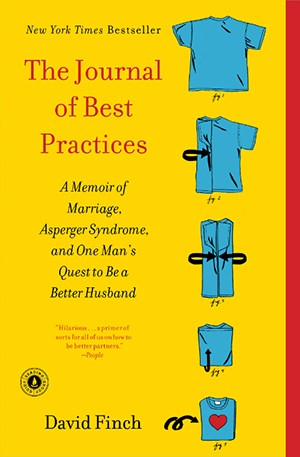
Dave Finch is the author of the New York Times bestselling memoir, The Journal of Best Practices: A Memoir of Marriage, Asperger Syndrome, and One Man’s Quest to Be a Better Husband. As a writer and creative consultant, his work has appeared on ABC, CBS, NBC, CNN, NPR, SiriusXM, The New York Times, Rolling Stone, The Howard Stern Show, and the award-winning Netflix series, Atypical. Based in Denver, Dave’s company, Elevated Studio, produces this podcast and other recognized series.
Visit Dave’s website here
“I have read a million and one books on Autism. Uniquely Human is the best book I have ever read, hands down. Thank you Barry for this incredible gift!!!!”
– Navah Paskovitz, Mother of three boys with Autism, Co-Founder, the Ed Asner Family Center
“Compassion, learning and supportive strategies–the three essentials for working with folks with ASD–are an integral part of this must-read book.”
– Michelle Garcia Winner, Speech Language Pathologist and Founder of Social Thinking
“Thanks be to Barry for the first-ever must read written for parents, educators, and clinicians.”
– Michael John Carley, Founder, GRASP; Author of Asperger’s From the Inside-Out
“What makes the book compelling is how funny Mr. Finch is about himself. He’s great company.”
– Susannah Meadows, The New York Times
“In this hilarious memoir (which also gives some of the finest explications of Asperger’s out there), Finch approaches trying to be a better husband and father with the determination of Sherman marching on Atlanta.”
– Judith Newman, People (4/4 stars)
“Talk about being on a roll. This dude wrote a book, he has Asperger’s syndrome. He cured himself by listening to me on the radio!”
– Howard Stern