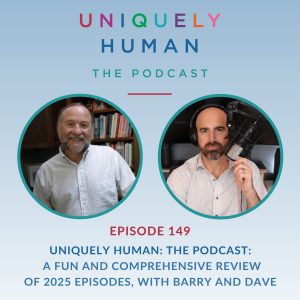
EPISODE 149
Uniquely Human: The Podcast:
A Fun and Comprehensive Review of 2025 Episodes with Barry and Dave
Play the Episode…
Show Notes
Dave and Barry reflect on the themes and highlights from Uniquely Human: The Podcast in 2025, with their typical insight and good humor. They emphasized themes of collaboration and diversity among their guests. They address specific topics including the importance of early developmental support for neurodivergent children, educational inclusion, and cultural perspectives, while also touching on unique profiles and creative supports for neurodivergent individuals. The hosts shared personal insights gained from their guests and expressed their commitment to continuing the podcast in 2026, inspired by the knowledge and connections formed throughout the year.
Uniquely Human: The Podcast
EPISODE 149 – JAN 16th. 2026
UNIQUELY HUMAN: THE PODCAST: A FUN AND COMPREHENSIVE REVIEW OF 2025 EPISODES WITH BARRY AND DAVE
🎙️ Transcript and Audio Usage Disclaimer
© 2026 Uniquely Human: The Podcast. All Rights Reserved.
The contents of this podcast, including all audio recordings, transcripts, and related materials, are the intellectual property of Uniquely Human: The Podcast and its fiscal sponsor, Community Autism Resources, a registered 501(c)(3) nonprofit organization.
These materials are provided solely for personal, educational, and non-commercial use.
No portion of the podcast audio, transcript, or any derivative materials may be reproduced, redistributed, modified, or publicly displayed without prior written consent from Uniquely Human: The Podcast or its authorized representatives.
Transcripts are provided for accessibility and reference purposes. They may contain minor transcription or formatting errors. When quoting or referencing the podcast, please credit Uniquely Human: The Podcast and provide a link to the original episode page.
By accessing or downloading transcripts, you agree to comply with this usage policy and acknowledge that all copyrights, trademarks, and intellectual property rights remain the exclusive property of Uniquely Human: The Podcast and its creators.
For permissions or inquiries, please contact:
📧 uniquelyhumanpodcast@gmail.com
Introduction to the Podcast
[00:00:00] UHP: The primary purpose of Uniquely Human: The Podcast is to educate and inform the views expressed during all episodes are solely those of the individuals involved and do not constitute educational or medical advice. Listeners should consult with professionals familiar with each individual, or family for specific guidance.
Uniquely Human: The Podcast is produced by Elevated Studio Music is graciously provided by Matt Savage of Savage Records.
Meet the Hosts: Barry and Dave
[00:00:39] Barry: Hi, I’m Dr. Barry Prizant, clinical scholar, researcher and consultant on autism and neurodiversity, and a Brooklyn boy raised in the big city.
[00:00:49] Dave: And I’m Dave, I’m none of those things and I grew up on a farm in Illinois. But being on the spectrum myself, I have plenty of personal insight to lend.
[00:00:59] Barry: And this is Uniquely Human: The Podcast, a show that illuminates and celebrates autism and neurodiversity.
So Dave, and to all of our wonderful listeners, happy New Year!
Reflecting on 2025 and Looking Forward to 2026
[00:01:19] Dave: Hey, happy New Year, Barry. It’s 2026 for those of you who are just waking from a decades long coma on a soap opera somewhere. And, I’m telling you, 2026 is going to be another fantastic year, I think for us on the podcast. And I say that because of, what we got to enjoy in 2025.
Which is essentially your incredible Rolodex of subject matter experts, people, with lived experience, parents, professionals. This is just continuing to grow and grow. I love doing this podcast.
[00:01:56] Barry: Yeah, it’s been fantastic. And every now and then I realize how old we are when I’m thinking maybe for some of our listeners you should define what a Rolodex is.
[00:02:08] Dave: That’s right. Before apps, there was literally paper cards that were like stuck onto a wheel and you just flipped the card and, you wrote people’s names and addresses on cards. It was incredible how we organized things.
Diverse Guests and Representation
[00:02:24] Barry: Yeah, so we’ve done a lot of flipping and we’ve come up with incredible guests, who have joined us.
And, as you said, we’ve heard from so many parents of young children, who have been on our podcast, but also listened to our podcast. And we hear back from so many of you who are loyal listeners, some of you are 70 years old and self-diagnosed. Some of you are professionals who work in so many different areas.
And, let me just put right up front, one of the ways that we know that at least we’re getting through and being helpful to people is that over the last few months we’ve been ranked number one of all time, based upon GoodPods in the areas of disability, in the area of autism, ADHD, and even psychiatry.
[00:03:20] Dave: That’s right. And, there’s one other category that I just learned of this morning. We are number one in the category of podcasts co-hosted by, a bald guy.
[00:03:33] Barry: There we go.
[00:03:34] Dave: I’m bringing the bald guy demographic.
[00:03:37] Barry: And, we’ve had such incredible, varied guests and, very proud to say, that three quarters of our guests in 2025, and this goes back years to when we started four years ago, three quarters of our guests on were neurodivergent. And about one quarter those boring category of neurotypical people, and all genders. Male, female, transgender. We’ve had people of color, Latino people, Asian people, first Nations, guests from Canada, native American guests. So we really do want to let you know this is intentional. We want very broad representation of so many people in their experiences of being neurodivergent, having loved ones who are neurodivergent or autistic.
And we hope that we’re accomplishing that goal.
[00:04:37] Dave: it’s, it is 100% by design. Barry, you refer to this as autism, as a shared human experience. And maybe that was also somebody else referred to it that way, and we carry that forward. I can’t remember, but
[00:04:49] Barry: Carol Gray, of social experience.
[00:04:50] Dave: Carol Gray. Yes, that’s right. Okay. So when she was referring to your book, referring to autism as a uniquely human or a shared human experience, you can’t realistically have a podcast about that if you’re not sharing the full spectrum of human experience. And, we could publish a million episodes and never really capture it all, but we’re doing our best to, make sure that all voices are heard. And it’s not easy always selecting guests because we do have a finite number of episodes to publish and, people aren’t there for our Monday morning planning meetings. But, most of the hour is usually dedicated to discussing who we would like to bring on. And what the perspective is where we think it would resonate with people.
[00:05:42] Barry: So we do send an apology out to some of you, who maybe wanted to be on the podcast or your agents wanted you to be on the podcast, and some of you are on waiting lists for us to contact. We appreciate that and some topics aren’t just not that relevant. And so we also apologize to those folks who wish to be on.
But one of the reasons that we’re so proud of having such a diverse group of guests is that we have such an incredible diverse group of listeners, some of whom also represent disciplines, as guests. Everything from educators and occupational therapists to speech language pathologists, to psychologists, to psychiatrists, to pediatricians, to sociologists, people representing all these disciplines have been on our podcast.
And one of my favorites is music producers.
[00:06:40] Dave: Who would’ve thought that like an Emmy winning Erykah Badu, music producer would be on Uniquely Human and be a perfect fit.
[00:06:50] Barry: And then without knowing, sharing on our podcast, which has to do with Spin the Spectrum, we’ll talk about that in a few minutes on that, he has two adult children who are neurodivergent. That wasn’t the reason we invited him. We invited him because of this incredible creative project that he’s involved in. And also we speak to people who work in hospitals, who work in families homes, who work in schools, who work in clinics, who work in universities.
Yeah, we could throw the diversity word to you, but we hope we are truly walking the walk and not just talking the talk.
[00:07:35] Dave: It is, a catchy word right now, neurodiversity, and then some people, it can be very nebulous and vague to some people. ’cause they say, aren’t we all diverse?
Yes. But, let’s put some certain parameters on this, what we’re talking about.
The Importance of Collaboration and Interdependence
[00:07:48] Dave: But, one of the narrative through lines that I picked up on started realizing it halfway through the year, but then actually reflecting on it, more recently, was this theme of collaboration. Every, almost every guest that we had on had some angle of, not just being quote unquote the frozen chosen, but how can we take what we’ve learned and improve the settings, the quality of life, whatever out in the world, and do that collaboratively. And we’ve had a lot of really good discussions with people about working within an organization across organizations to really make improvements. And I think that was a really important theme from the last 24 conversations that we’ve had.
[00:08:42] Barry: Absolutely. And, you talk about through lines, that takes us directly to an issue that’s come up a number of times, and that is interdependence that we all learn from each other. We all work together to achieve valued goals together. And unfortunately, for years, especially in the treatment sphere for neurodivergent children, especially, even for adults, the whole notion of you need to be independent just totally dismisses the fact that some of the best achievements happen as a cooperative, collaborative effort. Huh?
[00:09:22] Dave: Even this podcast. If I had my own neurodiversity podcast, it would be a disaster. ’cause I know about four people. You seem to know everybody in the world. This whole wide range of brilliant people that, we’ve spoken with.
And, on the technical side too, I know that I bring the chops to be able to produce this into an episode every week. But, it’s not just a neurodiversity thing. It’s not just an autism thing or ADHD or whatever. It’s human beings. I got this far because of interdependence. And so we should steer into it rather than try to be ruthlessly independent.
[00:10:02] Barry: And that was actually one of the themes of one of our episodes this year. About, just putting it very simply, you know, what you’re great at, I’m lousy at and what I’m good at, you have some issues with.
[00:10:16] Dave: Some issues. No, you can say lousy. It’s okay. I accept my lousyness.
[00:10:22] Barry: So let’s follow up on this theme of both collaboration, interdependence, but also the general theme of how much we’ve learned.
People often say to me, how long is this gonna go on this podcast thing? and my response right away is, this is my free deep dive into learning, that we invite people we wanna learn from. Yeah. And that’s that interdependence thing and that’s that collaboration thing as well.
Why We Do This Podcast
[00:10:57] Barry: But Dave, I’ve always been curious, why the hell do you want to do this podcast?
[00:11:03] Dave: Two things. Fame, money, that’s all I’m in this for. It’s such a lucrative thing, having you pay me out of your pocket. No, honestly, I, as I went back and to stabilize our family income situation, I went back and got a corporate day job after years of insisting I would never go back to the corporate world mostly ’cause I liked sleeping until 11:00 AM. But okay, so I put on my big boy pants and I got a day job and there truly is no time for me to do this if you look at it on paper. But I make time to do it. I make time to plan, attend our weekly meetings. Now I’ve missed, I think two or three in the past year. So I’ve, achieved 49 Monday meetings in the last 12 months, but recording’s counting, hopefully not the payroll department, which is you.
But, I make time to do this podcast because it really, genuinely lights me up to learn from these people to hear these stories. I think it’s funny when I go back and listen to episodes, sometimes I sound astonished by what I’m hearing and I really am. This hearing from individuals, from professionals, all these new perspectives or, ways of Dealing with things that I never would’ve thought of myself. It definitely improves me as a person. And then I also get to hang out with my friend like once or twice a week, which is you. And That’s awesome. So it’s like, why wouldn’t I do this? I make time to do it because it’s, very rewarding to be, but I guess my question is, since you’re the one who has to write the checks to people, why do you pay to do this?
[00:12:56] Barry: I already mentioned that, it’s a major part of my learning. Yeah. And, this is, I guess breaking news, I don’t know if I mentioned it before, but I am working on a new book with Tom Fields Meyer, and we are pulling so much of what we’ve learned from the podcasts. Yep. but it also organizes my life.
So rather than walking around my house and pulling dead leaves off of all my plants. I say to myself, okay, we have an episode that is due on so and so date, and I need to listen to it and bring it into our time restrictions and send it over to Dave, to make it palatable and digestible for all of you listeners out there.
And my life would be a disorganized mess if I didn’t have that to organize around.
[00:13:49] Dave: So two things about that. One for the listeners at home. Everybody, I think is plainly aware that when you say, shuffling around the house, picking off dead leaves from plants, that’s definitely a metaphor or a euphemism for a very tight swamped schedule of appearances consulting expert witness in lawsuits. You’re a pretty busy fella. But the other thing too is I don’t know if people know this. What they end up hearing in the final episode is, of course, the conversation that we have, but it’s made for, it’s cleaned up for an audience and Barry’s the one who sits down.
I give it a listen, but Barry’s the one who sits down and says maybe we could shave about five minutes off of this. Maybe that, mention of that thing or that practice was maybe not appropriate for the episode. So Barry’s the one who actually sits down and determines what content makes the cut.
And while, we’re recording, I’m listening for, is this thing hitting all the conversational markers that we are trying to hit? and so it’s you’re, not just sitting down hitting record. You’re doing a lot of the legwork on this too.
[00:14:58] Barry: What’s really interesting is that, I think I read somewhere that the sweet spot as far as duration of podcasts tends to be 20 to 30 minutes.
And our podcasts run sometimes, Almost twice that length, or a little bit shorter than twice that length. But we did a survey a few years ago and asked listeners to let us know. Do they want it shorter? Do they think it’s just right? Do they want it longer? And the majority of people said, we think it’s just right.
Yeah. So I think that people appreciate the deeper dive, and that’s one of the comments that we get from so many of you that you appreciate the deeper dive into topics than they typically hear on other podcasts.
[00:15:40] Dave: Oh, exactly. And by the way, you’ve got a neurodivergent individual me co-hosting the show. So hello is 20 minutes.
Ask somebody with autism. Actually, the old joke is ask an engineer what time it is and they’ll tell you how to build a watch. But I modify it to ask an autistic guy what time it is and we’ll tell you how to build a watch.
[00:16:01] Barry: Yeah, no comment.
All righty. So why don’t we just dance through some of the things that we’ve learned and maybe some of what you and I have taken away.
So we looked at some potential kind of topics that our listeners are interested in.
Early Development and Support
[00:16:51] Barry: And with the first one, let’s start where it all begins early in development. So we actually have had a number of podcasts, and I’ll just toss out, some of our guest names, for example, and, who spoke about the importance of understanding and supporting the youngest human beings early in development and how we need to really make that trusting relationship and connection. People such as Daria Brown, both a mom and is on the spectrum, but she also supports families, in the floor time model, which is very close to our model, the SCERTS model, in a lot of ways. So what’d you take away from those discussions about the importance of the littlest ones and how parents and professionals must be there for them.
[00:17:15] Dave: So this collection of episodes, was one where I smacked my very, generously allocated forehead, a number of times thinking like, of course, it makes so much sense. The if the way that human development works or brain development works is you’re constantly forging new neural connections path, they become pathways. Those pathways get repeated and they become the dominant or the defacto sort of behavior. How we do things, how we see the world. If you’re starting from a clean slate and you keep it as healthy and connected, interactive as possible. That’s maybe sets you up then for what comes in your third year, in your fourth year.
And Kristen, my wife was an early intervention speech therapist. That was some of the most rewarding work she did was working with the birth to three kiddos.
[00:18:18] Barry: Yes. And that’s what, our guests, we also had an episode in an initiative that I’m involved in, about developmental relationship based interventions, and then Carrie Alvarado of PhD level OT, spoke beautifully about sensory affect of relationships. The way we present ourselves to the youngest kids, even to infants on a sensory level. Do we speak too loudly? Do we touch them too much? Do we back off when they need a little bit of chilling out space. How that has everything to do with developing social and emotional relationships.
[00:18:58] Dave: Yeah. If you don’t, if you don’t trust the creature coming at you outta the gates, forget it. You’re always gonna feel othered.
[00:19:05] Barry: Exactly. And, what you just said is so important about how that is the foundation for later development and trust and connection. Yeah. That it’s absolutely so important that unlike some approaches and especially ABA approach, it’s not about training skills.
It’s about developing, trusting emotional and social relationships from the get go.
[00:19:32] Dave: When it comes to neural pathways, I do know for a fact it is far easier to avoid a mess than it is to undo a mess and retrain it.
[00:19:43] Barry: Yes, absolutely.
[00:19:45] Dave: I’m living proof.
[00:19:48] Barry: And when I see therapist, teachers and clinicians who think it’s all about training skills and pulling behaviors out of kids, then I really say, wait a second. There’s a lot of unlearning that needs to happen here. That’s not what the research on child and human development teaches us, and it’s not what kids, especially more vulnerable kids, desperately need.
[00:20:12] Dave: If you don’t start early, it’s a lot of work later.
[00:20:15] Barry: Absolutely.
Educational Settings and Neurodivergent Perspectives
[00:20:16] Barry: And then as we move up into educational settings. ‘Cause many of our listeners work as related service professionals or educators. And one thing we haven’t even said, how many parent professionals, who in many cases are neurodivergent, work in educational settings now. And it’s really nice that they bring the parent perspective, the lived experience perspective of raising a child.
And in many cases, the neurodivergent perspective of how the world’s view, seems to them and what has been helpful and not helpful to them. So speaking exactly on that point, two of my dear colleagues, on autism Level Up initiative, Amy Laurent doctors, Amy Laurent and Jacquelyn Fede, both neurodivergent, both PhD level developmental psychologists. And Amy just throws in some other degrees in special ED and OT. How they view the importance of understanding. How we can help change systems to be educational systems, to be more responsive, by not blaming, oh, you’re doing this wrong, but by saying here’s where you are and here’s where both research and clinical experience tells us. Here’s where it would be helpful for you to go.
Therefore, autism level up.
[00:21:49] Dave: Yeah. Yep. Exactly. and again, not pointing fingers and saying, look how wrong everybody’s doing everything, but hey, have you considered this? And, from lived experience too with Dr. Fede, she lives it to give it.
[00:22:05] Barry: Yeah. And of course a little plug for our evidence-based educational model, the SCERTS model. Both of them are SCERTS collaborators. So it’s pulled from them as well.
And then internationally known professionals such as the clinical psychologists, Ross Green. Collaborative problem solving. Let’s not blame kids who have problems staying well regulated and therefore might be perceived as problem behaviors. Let’s understand what’s missing in their lives, what’s missing in their educational experience? What abilities do they need that we could help them develop to be successful human beings, not just in school, but well beyond.
[00:22:48] Dave: Yep. The underlying thesis of uniquely human.
[00:22:52] Barry: Absolutely.
[00:22:53] Dave: What’s going on?
How are you? Where are you at? Let’s work together.
[00:22:57] Barry: And one of our most energetic and popular guest, Shelly Moore,
[00:23:04] Dave: she was wonderful. I loved it. Yeah.
[00:23:06] Barry: Yeah. Once again, here we have a very high level PhD level, actually, EDD level, I believe, educator who has the lived experience. A feeling misunderstood and left out in the school years.
[00:23:22] Dave: Yes. And betrayed by what she thought were friends. But then coming to terms with it a couple decades later and realizing, oh, that was a little bit different than I thought it was. Maybe I just, it was a really interesting conversation with Shelly Moore
[00:23:35] Barry: and, her unique perspective on inclusion and what successful inclusion really looks like.
And, of course a lot of this doesn’t just happen when we talk about education in kindergarten to 12 through 12 years. We had just recently a couple of my wonderful guests, Nina Schiarizzi-Tobin, and Vanessa Harwood. Who are at the University of Rhode Island. Nina is the Assistant Director of Equity and inclusion. Vanessa is an associate professor in my department, communication disorders, and specifically talking about how to support college students who may have an autism or neuro divergent diagnosis.
[00:24:23] Dave: So important and I can now attest, obviously I was a college student at one time, but now my kids are both early in that post high school sort of career.
My son’s doing the four year university track. My daughter is at Second City doing comedy writing and acting and improvisation work. And, just so proud of them both. But this is so key because that transition from high school, I don’t know why the world expects or has historically expected people to act like adults, because they’re legally an adult now. There’s still so much risk. And I was a great example of the risk of being such a bright academic student, and then falling on your face as soon as you had to live independently. And the world has expectations of somebody after the age of 18 that I was not meeting and that was an adjustment.
[00:25:19] Barry: Yeah. And, exactly, the challenges that Nina and Vanessa spoke about of the transition to being literally more on your own. Where so many things in high school, for example, are so organized for you , and then you go to a college campus and you’re expected to be able to organize your own life, right?
Just there. And of course the START program is a program I’ve been involved in where I meet every year with first year, neurodivergent students at University of Rhode Island. Very small role where I give some talks and, a few of the students have contacted me on their own. But just a wonderful program, that has shown tremendous success, in supporting students, at the university level who are neurodivergent
[00:26:07] Dave: listen, outcomes say it all. Whether you’re talking about controversial therapy approaches or START program, whatever the case may be, the outcomes says it all.
Are these healthy people who have developed and gotten the skills they need, but still have self-esteem, respect for themselves.
[00:26:31] Barry: And, agency. Agency. ’cause one last comment about the start program, a lot of how it is structured and how it has changed over the five or six years that it’s been in process comes from the students.
They say what they need, they say what’s helpful, they say what’s not helpful. yeah. And isn’t that the goal for all human beings to be able to take your own life by the reigns and steer it in a way and get that support to help you steer it in a way when it’s needed so important?
[00:27:01] Dave: Absolutely.
Family Experiences and Insights
[00:27:05] Barry: So of course we can never, ever, dismiss the importance of the family context. And we have been blessed to have so many people who talk about their experiences embedded. In the family experience. And one of the themes that clearly has come out, not just the past year, but in the last few years, is how many parents, and we’ve had, I guess more moms than dads who discover their own neurodivergence after their child is diagnosed, who work directly in supporting families, but who have given our guests that family perspective, the journey that the family is on.
[00:27:51] Dave: Right?
And I think these episodes, anytime we get guests on who are coming at it from in our family, X, Y, Z, it really resonates because there’s no, unfortunately, there’s no repeatable path for any family. The best you can do is just aggregate as much insight or, personal experience, personal anecdotes as possible. And that’s why it’s really important to bury in me that we find these guests who are going to be able to speak in this way. Not saying the way my family does it is right, but this is what worked for our family. This is what the challenges were for our family. Maybe things that didn’t work.
Yes. And the more you hear those perspectives, the more you start to synthesize a story of, oh, there are some really interesting options I wanna explore. Or maybe that’s definitely not right for my family, but it’s good to know it’s out there.
[00:28:44] Barry: Absolutely. And so we’ve had Julie Green and Daria Brown, both Neurodivergent themselves who speak about their family experience, on our podcasts, and then the unique experience of Destiny Huff, who she herself is autistic. And she works with professionals to better support families in educational systems.
[00:29:10] Dave: collaboration.
[00:29:11] Barry: Yeah, exactly. And, so the family perspective piece is just one of those evergreen issues that, pervades everything we’re talking about here because the most enduring influence on human development is the family sometimes in a positive way, sometimes in not so much of a positive way.
[00:29:34] Dave: Yeah. That’s the reason we have therapists is because sometimes it’s not positive that family influence.
[00:29:42] Barry: So true.
Cultural and Societal Perspectives
[00:29:44] Barry: Then we had wonderful guests and discussions on, I guess a more general area that is so exciting to me, and that’s the cultural and societal perspectives. And how illuminating was it to you, Dave, to hear from Grant Bruno and to hear from Otilia Johnson?, who are respectfully First Nations and Native American parents, who teach us about, wait a second, you white, mainstream middle class Americans are not the last word on how we should support our kids.
Cultural Humility and Indigenous Perspectives
[00:30:30] Barry: Looking through a different cultural lens may give you a very different perspective.
[00:30:34] Dave: Exactly. It was a light switch like flipped on for me when they were talking about, we actually celebrate the unique individuals, the unique gifts of the individual. We don’t lump it into a category and say, ah, that’s to be fixed. And I do remember, I don’t know what it is, but I feel so either apologetic or ashamed that I’m not better informed or have just zero insight into it.
But just the experience of the indigenous people that we had on the show, I remember thinking like, I don’t know if I have anything to say in this conversation. I’m just listening with wide open ears because this is, I don’t know anything about this culture. Yes. So it was very eye-opening for me.
[00:31:28] Barry: And that’s what is referred to as cultural humility. Just understanding that we need to be humble because there’s so much we don’t know, and what we’ve been indoctrinated into in our particular cultural community may not be the only or even the right way. So seeing gifts first. One thing that I’ve always hung on to is how in many Native American first nations, Pacific, Maori culture, there is this belief, and I always feel guilty trying to put it into my own framework of explaining it, but there is this belief of individuals who are neurodivergent possibly being closer to the spirit world than we are, and closer to God, if you want to use that term, than we are.
But more importantly, how that changes the way you love them and support them and learn from them.
[00:32:31] Dave: Absolutely. when you talk about closer to God, of course. So I, could have listened to those guests all day long.
Autism and Politics
[00:32:40] Barry: A absolutely. And talk about, having a different cultural lens. Eric Garcia.
Oh my gosh. Yeah. In incredible journalist who is autistic and who’s looking at everything going on in our country in particular, from the proclamations of Robert F. Kennedy, Jr. About the tragedy that he sees autism as being, and how wrong that is. And always in there as a Washington correspondent for I believe it’s MS
NOW, and he really tries to let us understand, as an autistic person, here’s what’s wrong with so much of what’s being spewed out there.
[00:33:34] Dave: There needs to be, the amount of whack information that people have access to, that sounds like it’s truth, gospel, well-founded is staggering. And so to have people like Eric Garcia who are framing this for us all and putting it into common sense terms is so vitally important, especially when you have people at the helm who takes certain extreme views, that are not really rooted in, my opinion, in common sense.
But, that was an interesting conversation because the political division in America and maybe around the world, I don’t know, but certainly in America where it’s if you don’t agree with me on everything, you’re the problem and get out and you’re the worst and this, that and the other.
it’s so funny because autistic people get pegged as black and white thinkers. It feels like the world is black and white. And then you’ve got somebody like Eric who goes in and says, it’s more nuanced than that.
[00:34:41] Barry: Absolutely. Exactly. You love it. An artistic person isn’t supposed to be doing.
[00:34:45] Dave: Exactly. Exactly. he’s brilliant. He’s brilliant. And he had, similar vocal Tamil qualities to Steve Silverman, which I thought was stunning. ’cause Steve has such a unique voice. But we’ll get, to that in a minute.
[00:34:58] Barry: Absolutely.
Neurodivergent-Friendly Hospital Settings
[00:34:59] Barry: And then, how society is changing. having Dr. Wendy Ross, a developmental pediatrician at Jefferson Medical Center in Philadelphia Talking about changing hospital settings to be more neuro affirming, even at the point of a neurodivergent person coming into a hospital. And how your typical hospital waiting rooms are very often toxic to neurodivergent people and what they actually are doing. Again, really walking the walk, not just talking the talk.
But setting up a special way to accept patients into this large urban hospital for neurodivergent people so they feel supported and not stressed out.
[00:35:44] Dave: Yes. Let’s take your blood pressure after you’ve been sitting under fluorescent lights with beeps and horns and honks and urgency.
Humor and Personal Anecdotes
[00:35:50] Dave: And, it’s funny anecdote.
I was just at the dermatologist yesterday, because I’ve got this fair skin, so in the Colorado sun, I get burned a lot. But, they were doing an examination and they said, okay, we’ll do a full body, just a whole scan. So dressed down to your underwear and I have a seat on the chair there. And so I did, and then they came in and they said, oh, I’m sorry. We, should have told you, use the other side of the room because that window people can’t see in from the outside. And it didn’t even occur to me. I got completely undressed in front of the wide open, no curtains window.
And it’s this medical center’s across the street from a whole townhouse complex. Oh my goodness. So it’s the sort of thing where I didn’t even think about the fact that I was just in front of a wide open window and my body, I should have clothes on for the general public. It’s not a good thing to look at.
[00:36:47] Barry: Okay. See, I thought you were gonna say that after that happened, you were invited to be a underwear model. Maybe somebody in the parking lot is recruiting underwear models. Hey, that’s the guy.
[00:37:01] Dave: Listen, if any, Han’s underwear wants me to model their stuff, I’ll do it. I think it would be a very powerful ad campaign because it would be the exact opposite of what you wanna see in an underwear model. And it would stick with people now it wouldn’t sell a lot of underwear, but they would remember seeing it.
[00:37:20] Barry: And for our listeners, by the way, we do try to intentionally put some humor in, ’cause so many of you say you enjoy the humor.
So yeah, we always, look for those little openings and yeah, get it in there.
Okay.
Spin the Spectrum: DJing for Neurodivergent Individuals
[00:37:33] Barry: So we also had wonderful guests talking about very unique and creative supports. And one of them that I know we absolutely loved was Spin the Spectrum, supporting neurodivergent people, kids of all ages on how to be involved, both in a technical way, but purely in a fun way in being DJs.
[00:38:03] Dave: Yep. By world class DJs, record producer. And that was such a fun conversation because what I always loved about music engineering and audio engineering is you’re approaching it from the scientific, like molecular atomic level of this, of what makes all this possible. Not so much the art artistry that’s also in there, but, I thought this was really good for people to listen to, two professionals talking about, Hey, we’ve been in this industry, our whole careers, we’ve been successful.
And what comes down to it is, your sort of connection to the art and then the technical side of making that art for other people to consume. Yes. Brilliant episode.
[00:38:50] Barry: And the fit between learning how to be a DJ and what really is helpful for so many neurodivergent people being in total control of the sensory inputs.
Yep. Having systematic sequences to follow in producing, short segments that could be used in DJ gigs. So much. And, again, walking the walk, not just talking the talk, getting out into the community. As I recall, it was the Dallas community. To do events, at museums and other places.
Wonderful.
[00:39:25] Dave: And then internationally too, they all met in I, forget where in Africa, but they were going to some like Kenya or something and
[00:39:32] Barry: I think it was Ghana. Ghana. yeah. that’s incredible.
Kate Reynolds: The Lavender Librarian
[00:39:36] Barry: And again, we talk about from the music and from the auditory to whenever I think of Kate Reynolds, the lavender librarian.
Purple just gets painted all in front of my visual field.
[00:39:53] Dave: Another excellent sort of Collaborative, through line on that episode as well. Where it’s these are we have excellent opportunities for community learning. And her approach is that was again, something I never would’ve thought of, but as we’re in the conversation, I’m just like, wow, this is brilliant.
Of course this makes sense.
[00:40:20] Barry: And coming from an experienced librarian who’s late diagnosed autistic, but who is also held in extremely high esteem in the library network, both in the US and Canada. she is based, I believe either in Toronto or just outside of Toronto. And she is involved on a very high level of creative ways to support kids in community libraries. She has that double level of expertise.
Then we also had some very unique discussions about, for lack of a better term, people with very special and unique profiles.
Empaths and Emotional Sensitivity
[00:41:03] Barry: So we had a discussion about empaths, Dr. Orloff from UCLA, talking about not only herself, but people she works with who are highly sensitive on an emotional level to others to the point that it’s difficult to even tolerate strong emotional experiences or displays of other people. And sometimes being shy as a child goes much deeper than just being labeled as shy, is that you’re highly sensitive on an emotional level, which we all know many neurodivergent people explain as part of their experience.
[00:41:43] Dave: Yeah. I, count myself in that category, very honestly, very tuned in and shy as a child.
And weirdly, now that I’m an adult, making the mistakes that I observed as a child. coming in hot or coming in too big to a conversation and really putting somebody on their heels or, you would think that having grown up that way, that I would be more attuned, And yet, as. For one example, just as a parent, I think one of the examples we gave was I would, sit my two year olds down on the steps and give them a 30 minute lecture, about, social responsibility and our civic obligation to each other.
Just because one of ’em took a toy from the other. It’s like my wife would say, no, you’re not reaching ’em. Just put ’em in timeout and move on. But I do make the mistakes of everything she described in that episode. So I could turn the lens inward when we were talking to her, but I could also see my own sensitive kids, in the conversation.
[00:42:46] Barry: Yeah. And also I think that’s something we really hadn’t mentioned, which we really do emphasize, is our own personal learning from listening to these experts. Hey, maybe I’m a little bit of an empath because i’m a crier in movies. I don’t have those emotional boundaries. If something is terrible is happening to a person and they’re terribly distraught or depressed or upset, it’s almost okay, I feel that too.
Here come the tears, Yeah. And we gotta get away from all you just not being a man.
[00:43:22] Dave: Right. that’s just it. I will be reduced to tears if I see anything quote unquote helpless. So an animal or a child or somebody with a deep affliction suffering can’t handle it.
It makes me deeply sad. Same with teddy bears. When I was a kid, if I had a teddy bear that I accidentally spilled food on, the floor, and I’m like, oh, I didn’t, I would feel heartbroken. Meanwhile, if I spilled glue on some idiot kid in class, I’d be like, get over it. I have so little compassion for certain humans.
[00:43:53] Barry: I guess that’s called selective empathy. But,
[00:43:56] Dave: we’ll take it. We’ll just go into new phrase.
Sam Young and the Young Scholars Academy
[00:44:00] Barry: And then the wonderful discussion, we had with Sam Young, who’s Neurodivergent
[00:44:05] Dave: Yeah.
[00:44:05] Barry: And who developed an online support network called Young Scholars Academy for twice exceptional individuals who might have some vulnerabilities that sometimes are defined by clinical categories.
But also who are intellectually gifted in some areas. And all of those challenges, but the story of his father was just amazing as well. How, and I believe he wrote a piece that was called, my Father’s Neurodivergence, killed him, because of his dad’s need to be actively creative, and later in his life, he did not have access to those creative outlets, which really led to significant mental health issues.
[00:44:54] Dave: Yeah, it was an interesting conversation about when you’re trying to run a household and you are chasing sort of the creative, fulfillment that can lead to a lot of instability in the house. But if you’re an artist who’s trying to pigeonhole s or not pigeonhole, but shoehorn yourself into a, like an eight to five kind of whatever.
Fine. Maybe the household becomes slightly more stable, but not really, if it’s such a burden on you personally,
[00:45:27] Barry: and if you need to squelch your creativity to achieve some of those kind of concrete needs, how that really impacts your own mental health. Absolutely.
Non-Speakers and Communication
[00:45:40] Barry: and again, this broad category, special, unique profiles we have to come back to Non speakers.
[00:45:46] Dave: Yeah.
[00:45:47] Barry: Who are so often left out of the important conversations. and Tiffany Hammond, who’s both autistic, and a woman of color and a mom of a youngster who uses augmentative communication, who wrote a beautiful book about her son, and how we all need to value and understand that nons speakers, and it’s a cliche now, but it’s an important cliche.
That, and that is non-speaking doesn’t mean non-thinking or non feeling. And the importance of that. And I remain actively involved in trying to uphold following many other people, uphold the rights and the recognition of nons speakers, as whole human beings that just need to be supported in the appropriate ways.
[00:46:39] Dave: Yes. Who is anyone except for the individual to say what should be working for the individual? Does it work great? Does it harm you or anybody else? No. Great. Do it. Everything else is bullying, noise and nonsense garbage. Forcing my will down your throat. It’s what works for the individual. Works for the individual.
[00:47:02] Barry: Absolutely.
And why would other people think they have the audacity? To tell people what is valid communication and what is not valid communication, especially when people who know those individuals the best have connected them with them successfully.
[00:47:20] Dave: Exactly. over a Zoom call while we’re recording a podcast, I can see the effective communication. And I don’t have a trained eye, so if somebody calls themselves an expert and says that what you’re doing is wrong, I would say don’t listen to ‘ em.
[00:47:39] Barry: And I think that’s a strategy that a lot of people are taking right now. That gives us a link into just our last few comments of what we covered over the last year and what we’ve learned.
And, this notion of respecting nons speakers has everything to do with assuming competence. And assuming competence does not mean, and I wanna get this out there because so many people have articulated this clearly. It doesn’t mean that you’re going to assume every human being you come in contact with, is, absolutely brilliant and talented in every area.
It assumes that every person is capable of learning with the right supports. And do we go in with that attitude or do we go in with the attitude of?, You need to demonstrate to me in the way that I value, how much and that is a huge issue.
[00:48:36] Dave: If you can’t learn how I want you to learn or expect you to learn, you haven’t learned.
And then you’ve got Gyasi, whose mother I think wins all the awards. Completely different situation.
[00:48:52] Barry: Yes. And his book is about what he learned from his mother. That’s Gyasi Burks-Abbott. Yes.
Masking and Authenticity
[00:49:01] Barry: Another big issue that cuts across so many other themes is the issue of masking. And we had Dr. Devon Price on for the second time, and his books remain bestsellers. And what is beautiful about his work is that masking, which initially arose as a real challenging issue just for autistic people, is now something that we recognize we all do. And sometimes, to not so positive end results if it is imposed upon us. But in other cases, just recognizing. That all human beings, sometimes intentionally, sometimes unintentionally react differently depending upon the pressure they feel to act in a certain way.
[00:49:53] Dave: Yeah. I feel like masking is in a, is a very important skill for everyone. we, have to be able to, put our best self forward for the situation, the appropriate self forward for the situation.
Now when you are expected, when you take the mask off and people aren’t tolerant yes, that’s where it becomes an issue. And so some people feel like they have to mask all the time. This leads to burnout, this leads to mental health issues. And I think Devon’s work is invaluable here. You don’t write a bestseller by accident.
You don’t write the top ranked books by accident. He really has powerful things to say about this that really resonate with people.
[00:50:40] Barry: And don’t we all wish that we could be our authentic selves in all situations?
Which is, quite honestly in my career, it’s one of the most engaging and things I respect the so much out of neurodivergent people and autistic people. And that is the honesty and that is the directness. When we think about us neurotypicals. When we think about all of the layers of social niceties that we run through our mind when we have to talk to people or react in different situations, it would be nice to be relieved of some of that.
[00:51:20] Dave: Oh, just the burden of, it’s so funny, in the technology world, software developers would call this bloat wear, meaning all the different layers of software that have to perform operations just to get the output that you want. Yeah. When it could just be something as direct and efficient as very small software, which is honesty, and that is saying what you feel. Who knew it could be so simple.
[00:51:50] Barry: And that’s a great example of what we discussed much earlier in this discussion. And that is your bringing your expertise in for a beautiful analogy that I’m totally ignorant about.
[00:52:00] Dave: Half of our audience is going Yes, bloatware. And the other half is like looking up what bloatware means.
[00:52:05] Barry: That’s right. Looking up how you spell it.
[00:52:08] Dave: We’ll have links in the show
Bullying and Neurodivergent Rights
[00:52:10] Barry: and then the very last issue, which actually has come up in a number of podcasts over the last four years is the issue of bullying. And how terrible it is when neurodivergent people are mistreated and sometimes traumatized by the way people react to them by looking at the lens of deficit, and looking at very narrow boundaries of what a human being is supposed to act like while they themselves are acting in ways that human beings should never act towards another person.
[00:52:43] Dave: Exactly. And I thought Liz did a, I knew she would, but I thought she did an excellent job to just speak in very plain language about this. It’s not an easy topic to talk about. anything that’s that emotionally charged is difficult to talk about with objectivity. But she, was a fantastic conversation.
[00:53:04] Barry: And, thank goodness there’s recognition of that in bullying prevention programs.
But you would think after years of bullying prevention programs, we wouldn’t see bullying anymore. But that is not the case.
[00:53:17] Dave: Or you would think we wouldn’t see federally funded forces out there with masks over their faces, advertising to them on podcasts and TV shows saying, come join us. And meanwhile, at the other corner of our mouth, it’s not okay to bully people.
[00:53:32] Barry: That’s so true. That’s so true. And that brings up just another quick thought. We’ve had one or two comments, not a lot of comments about. Why are you guys bringing politics into your discussions like having Eric Garcia on? And because it impacts neurodivergent people probably in ways that are more intense and more debilitating, what our leaders say, how people are treated.
The legislation that seems to limit the possibilities for neurodivergent people, and taking away their rights. So that’s why politics leak into our discussions now, and then we will not apologize for that. A nice way we could bring this kind of freewheeling discussion to a conclusion is, how we return this year with a special episode.
Tribute to Steve Silverman
[00:54:29] Barry: In tribute of our dear friend, Steve Silverman, whose incredible book NeuroTribes, I was so honored to have my book and the theme of our podcast, Uniquely Human, companioned with. In the way people talk about that, the way it was reviewed. Steve felt that, and of course he was one of our very first guests. Going back, what is it, four or five years on, on our podcast, how much we learned from Steve. We still learn from Steve in, in his writings, how much we love Steve and, how much we wanna keep all that he’s contributed very much alive.
[00:55:13] Dave: What a legacy, Steve. Like love, just common sense, which has actually become uncommon sense lately. Scientific rigor. Really not doing it from the outside looking in, going and speaking to people who have lived this their entire lives. And then. Helping them, giving them, almost a platform, to share lived experience. But he’s always done it from a place of love and it It’s, again, we should all be so lucky to leave this kinda legacy and, tragedy that he’s gone, but blessing that we knew him.
[00:56:01] Barry: And let me just add on a lighter note. One of the most fun people to hang out with. Oh my gosh. I had the privilege, even though we were, had a bi-coastal friendship, from San Francisco to Rhode Island, I had the privilege of hanging out with him, all around the country from New Orleans to his neighborhood in San Francisco to his coming out here to the northeast. On many occasions over the years, starting actually before Neuro Tribes was published. And then continuing after both of our books were published.
[00:56:32] Dave: I know A Providence Province town, the Northeast meant a lot to Steve.
[00:56:37] Barry: Yeah, absolutely. Alrightyy.
Conclusion and Looking Forward
[00:56:53] Barry: that was a quick run through. I hope our listeners had positive flashbacks if you’ve listed to some of these podcasts. We don’t want to cause any negative emotional memories for you, but 2025 was quite the year and, as we’ve said before, we’ll just keep on keeping on.
[00:56:58] Dave: Listen, you asked me at the beginning why the hell would I do this? we just walked through why I wanna keep doing this. When else do you get an opportunity to have this? Are you kidding? 26 knockout jaw dropping conversations in a year before this podcast. I had one every 10 years.
I know I hang out with the wrong people, but,
[00:57:20] Barry: okay. buy your rocking chair and find the porch for when we’re well beyond, for 2026 days of energy and clarity.
[00:57:34] Dave: Exactly. I’ll keep doing this as long as you wanna keep doing it. This is fun for me. Great.
[00:57:40] Barry: Alrighty, Dave, welcome to 2026.
[00:57:42] Dave: Welcome to 2026. I can’t wait to see who you bring to the table. Okay.
[00:57:47] Barry: Alright. Take care to all our listeners. Thank you for your loyalty and stay with us. we have all so much more to learn together.
[00:57:55] Dave: Absolutely. Thank you, Barry.
[00:57:57] Barry: Bye-bye.
Featuring
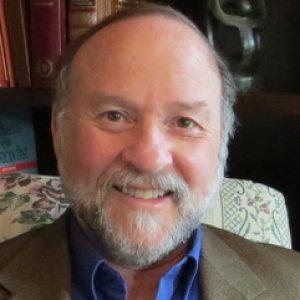
BARRY PRIZANT, Ph.D., CCC-SLP
Barry M. Prizant, PhD, CCC-SLP is recognized as among the world’s leading scholars on autism and as an innovator of respectful, person- and family-centered approaches, and is known internationally for his inspiring keynote addresses and presentations. He is Director of Childhood Communication Services, Adjunct Professor of Communicative Disorders at the University of Rhode Island, and has fifty years of experience as an international consultant and researcher. Barry has published five books, 150 articles/chapters, and is co-author of The SCERTS Model now being implemented internationally. He was a two-time featured presenter at the UN World Autism Awareness Day with more than 1000 presentations internationally. Barry’s book Uniquely Human: A Different Way of Seeing Autism (2022) is the best-selling book on autism since 2015, published in 26 languages and ranked by Book Authority as #1 of the “100 best books on autism of all time”. Barry co-hosts a podcast, Uniquely Human: The Podcast (www.uniquelyhuman.com) with his friend, Dave Finch, an autistic audio engineer. It is ranked # 1 of all time by Goodpods in categories of disability, psychiatry, autism, and ADHD.
Visit Barry’s website here
Visit SCERTS website here
Uniquely Human, the book (Updated and Expanded edition!)
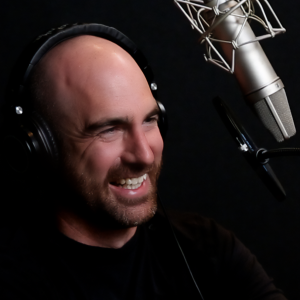
DAVE FINCH
Dave Finch is the author of the New York Times bestselling memoir, The Journal of Best Practices: A Memoir of Marriage, Asperger Syndrome, and One Man’s Quest to Be a Better Husband. As a writer and creative consultant, his work has appeared on ABC, CBS, NBC, CNN, NPR, SiriusXM, The New York Times, Rolling Stone, The Howard Stern Show, and the award-winning Netflix series, Atypical. Based in Denver, Dave’s company, Elevated Studio, produces this podcast and other recognized series.
Visit Dave’s website here
…and Continue the Discussion
Do you have a book or podcast club? If so, you may use this discussion guide to facilitate a conversation about this episode.
1. Barry and Dave discussed the themes and content of their podcast episodes, focusing on collaboration as a key throughline, as well as the importance of diverse representation in their guest profiles, including neurodivergent and neurotypical individuals from various backgrounds. Given enough the current state of knowledge and support for neurodivergent individuals, why are these themes important to put “on the front burner”?
2. What themes did Barry and Dave highlight which have been most meaningful to you in your lived experience with, or as a neurodivergent person?
3. The discussion also touched on the podcast’s impact, emphasizing that both hosts learn from their guests. How has the podcast affected you and others you know who listen?
HOSTED BY
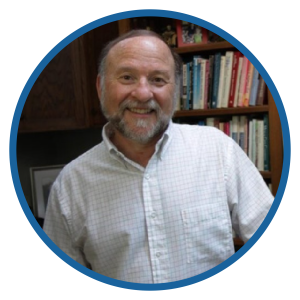
Barry Prizant, Ph.D., CCC-SLP
Dr. Barry Prizant is a speech-language pathologist with more than 50 years experience as a researcher and international consultant for autistic and neurodivergent individuals and their families. He is an Adjunct Professor of Communicative Disorders at the University of Rhode Island and Director, Childhood Communication Services (a private practice). Previously, he served as Associate Professor in the Department of Psychiatry in the Brown University School of Medicine, and held a tenured professor appointment at Emerson College. Publications include 5 books, most notably Uniquely Human: A Different Way of Seeing Autism (2015; 2022) and The SCERTS Model manuals, an educational approach implemented in more than a dozen countries. He has published 150 scholarly chapters and articles and serves on numerous professional advisory boards for journals and professional organizations. Barry has presented more than 1000 seminars and keynote addresses internationally, including two invited presentations at the United Nations for World Autism Awareness Day. His career contributions have been recognized with honors from Brown and Princeton Universities, the Autism Society of America and the American Speech-Language-Hearing Association.
Visit Barry’s website here
Uniquely Human, the book (Updated and Expanded edition!)
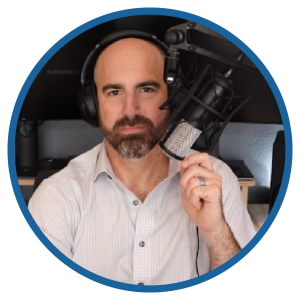
Dave Finch
Dave Finch is the author of the New York Times bestselling memoir, The Journal of Best Practices: A Memoir of Marriage, Asperger Syndrome, and One Man’s Quest to Be a Better Husband. As a writer and creative consultant, his work has appeared on ABC, CBS, NBC, CNN, NPR, SiriusXM, The New York Times, Rolling Stone, The Howard Stern Show, and the award-winning Netflix series, Atypical. Based in Denver, Dave’s company, Elevated Studio, produces this podcast and other recognized series.
Visit Dave’s website here
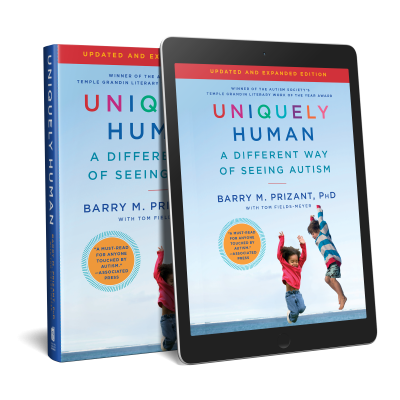
“I have read a million and one books on Autism. Uniquely Human is the best book I have ever read, hands down. Thank you Barry for this incredible gift!!!!”
– Navah Paskovitz, Mother of three boys with Autism, Co-Founder, the Ed Asner Family Center
“Compassion, learning and supportive strategies–the three essentials for working with folks with ASD–are an integral part of this must-read book.”
– Michelle Garcia Winner, Speech Language Pathologist and Founder of Social Thinking
“Thanks be to Barry for the first-ever must read written for parents, educators, and clinicians.”
– Michael John Carley, Founder, GRASP; Author of Asperger’s From the Inside-Out
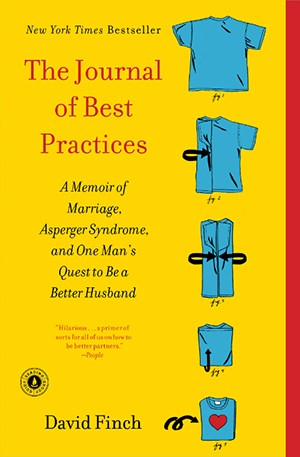
“What makes the book compelling is how funny Mr. Finch is about himself. He’s great company.”
– Susannah Meadows, The New York Times
“In this hilarious memoir (which also gives some of the finest explications of Asperger’s out there), Finch approaches trying to be a better husband and father with the determination of Sherman marching on Atlanta.”
– Judith Newman, People (4/4 stars)
“Talk about being on a roll. This dude wrote a book, he has Asperger’s syndrome. He cured himself by listening to me on the radio!”
– Howard Stern