EPISODE 147
Understanding Highly Sensitive People (or Empaths):
A Discussion with Dr. Judith Orloff
Play the Episode…
Show Notes
An area of great interest is understanding the experience of highly sensitive people, also known as empaths. There are many overlapping characteristics of highly sensitive people with individuals who have neurodivergent profiles (with or without formal diagnoses). Dr. Judith Orloff is a recognized expert in this area and Barry, Dave and Judith discuss the best ways to understand and support empaths, as well as her new book for children,The Highly Sensitive Rabbit.
Learn more about Dr. Orloff on her website
Featuring
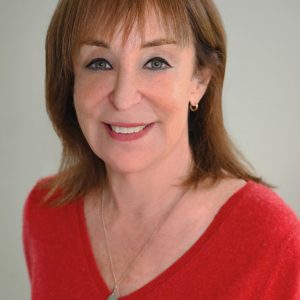
Dr. Judith Orloff
Dr. Judith Orloff, M.D., is a psychiatrist, an empath, and a New York Times best-selling author who is a champion of highly sensitive children and adults. She is also on the UCLA Department of Psychiatry Clinical Faculty. Dr. Orloff is the author of The Genius of Empathy, The Empath’s Survival Guide, and her new children’s book The Highly Sensitive Rabbit, which helps sensitive kids embrace their empathic gifts as a strength. Dr. Orloff’s work has been featured on The Today Show, CNN, Oprah Magazine, the New York Times and USA Today. Her simple but powerful message is ‘Listen to your patients.’”
Follow Dr. Judith Orloff on Facebook
On X
On Instagram
Connect on Linked In
Uniquely Human: The Podcast
EPISODE 147 – DEC. 19TH 2025
UNDERSTANDING HIGHLY SENSITIVE PEOPLE (OR EMPATHS): A DISCUSSION WITH DR. JUDITH ORLOFF🎙️
Transcript and Audio Usage Disclaimer
© 2025 Uniquely Human: The Podcast. All Rights Reserved.
The contents of this podcast, including all audio recordings, transcripts, and related materials, are the intellectual property of Uniquely Human: The Podcast and its fiscal sponsor, Community Autism Resources, a registered 501(c)(3) nonprofit organization.
These materials are provided solely for personal, educational, and non-commercial use.
No portion of the podcast audio, transcript, or any derivative materials may be reproduced, redistributed, modified, or publicly displayed without prior written consent from Uniquely Human: The Podcast or its authorized representatives.
Transcripts are provided for accessibility and reference purposes. They may contain minor transcription or formatting errors. When quoting or referencing the podcast, please credit Uniquely Human: The Podcast and provide a link to the original episode page.
By accessing or downloading transcripts, you agree to comply with this usage policy and acknowledge that all copyrights, trademarks, and intellectual property rights remain the exclusive property of Uniquely Human: The Podcast and its creators.
For permissions or inquiries, please contact:
📧 uniquelyhumanpodcast@gmail.com
Introduction to the Podcast
[00:00:00] UHP: The primary purpose of Uniquely Human: The Podcast is to educate and inform the views expressed during all episodes are solely those of the individuals involved and do not constitute educational or medical advice. Listeners should consult with professionals familiar with each individual, or family, for specific guidance.
Uniquely Human: The Podcast is produced by Elevated Studio. Music is graciously provided by Matt Savage of Savage Records.
Meet the Hosts: Barry and Dave
[00:00:40] Barry: Hi, I’m Dr. Barry Prizant, clinical scholar, researcher and consultant on Autism and Neurodiversity, and a Brooklyn boy raised in the big city.
[00:00:50] Dave: And I’m Dave. I’m none of those things and I grew up on a farm in Illinois. But being on the spectrum myself, I have plenty of personal insight to lend..
[00:01:00] Barry: And this is Uniquely Human: The Podcast, a show that illuminates and celebrates autism and neurodiversity.
Introducing Dr. Judith Orloff
[00:01:14] Barry: Today on Uniquely Human: The Podcast, we’re going to explore some very important issues about highly sensitive people and children with Dr. Judith Orloff. So welcome, Judith.
[00:01:25] Judith: Thank you. Happy to be here.
[00:01:28] Barry: Pleasure to have you. A little bit about Judith. Dr. Judith Orloff is a psychiatrist and empath and a New York Times bestselling author who is a champion of highly sensitive children and adults.
She’s also on the UCLA Department of Psychiatry clinical faculty. Dr. Orloff is the author of The Genius of Empathy, the Empath’s Survival Guide, and her new children’s book, the Highly Sensitive Rabbit, which helps sensitive kids embrace their empathic gifts as a strength. And it is not only a beautifully written book, but a beautifully illustrated book, and we’re gonna dive into that as part of our discussion.
Dr. Orloff’s work has been featured on the Today Show, CNN Oprah Magazine, the New York Times, and USA Today, and Her simple but powerful messages: Listen to your patients and listen to the people you support—very important.
Judith’s Personal Journey
[00:02:29] Barry: So Judith, we always like to ask our guests just to share a little bit about their personal and professional journey, how you became involved in your current work, focusing on highly sensitive people and children, and the empath movement.
[00:02:44] Judith: As well, I’m a psychiatrist and an empath, and I combine both my traditional psychiatric skills with empathy and intuition and spirituality and just including it all in the treatment of patients and also in my life. But when I was a little girl, I was shamed for my sensitivities and I was told “you’re overly sensitive. You’re too sensitive. You need to get a thicker skin. You’ll never fit in the world.” You basically have to change. And that’s very shocking to a young girl—how do you change? You are the way you are. But I wasn’t given any support for it, and I had loving parents.
They just were afraid I wouldn’t fit in and they had this idea that I would be considered weird and they couldn’t tolerate that, that you’re weird. And it had a big charge for them. So I grew up without any support and it took getting mentors and meeting people and being in therapy myself and to embrace my empathic abilities and my intuitions.
And the part of me that is the road less traveled. I’ve never been the person on the main road. I’ve always been the person on the road less traveled, which is just fine with me. I feel more comfortable there. But they didn’t see it that way. And so I grew up believing there was something wrong with me.
And I wanted to write this Highly Sensitive Rabbit book to help sensitive children know there is nothing wrong with them. As I went through it personally, it’s a gift and it has challenges. And you need to learn how to deal with the challenges such as setting boundaries, taking alone time. Being able to say when you wanna be with people or not be with people, and to be able to assert your needs more. But in any case, that’s just a capsule of my childhood and why I want, wanted to write this particular children’s book.
Understanding Highly Sensitive People
[00:04:47] Dave: So I have a question about that, just we haven’t met yet. I’m all questions. When you were growing up, how did that manifest or how did that look for you when you say you were highly sensitive, you needed to get a thicker skin? I was always told the same thing. I could not handle teasing and, being a guy and all my friends were guys, everybody, the basis of all relationships was, hey, we are going to bust chops. And it would make me infuriated and jeopardized, friendships, relationships. So in, in your case how did that show up for you in, when you would get home from school or when you were at school?
[00:05:30] Judith: I would get over, Overwhelmed a lot by emotions or too much activity, or if too much was coming at me too fast.
And so I would have to be alone a lot. And so I’d wanna go into my room and close the door. ’cause that was the way I brought it all down. Or I wanted to be in nature—I loved walking in nature because that calmed me down. But I noticed that my friends didn’t get thrown off in the same way that I did.
I couldn’t walk into shopping malls or crowded places without changing somehow, where I, walked in feeling okay, and then I walked out with some ache or pain I didn’t have before, or feeling anxious or feeling depressed or just feeling discombobulated. So I didn’t know. I would ask my parents, “What’s happening?”
And they said, you just don’t have a thick enough skin, as opposed to The freelancer is, you’re sensitive, when you go in crowded places, there are lots of people with lots of different energies and you’re receptive to that and you may tend to take it on, and this is what you do when you take it on.
This is how you don’t take it on. This is not good to take on everybody’s stress, obviously, but you do that as a child. It’s just a natural kind of absorptive function that happens if you’re highly sensitive.
[00:06:52] Barry: So I’m putting myself in the minds of our listeners right now because obviously most of our listeners who are parents, who are professionals, who are neurodivergent themselves are saying, wait a second. There seems to be a lot of overlap with what we’ve experienced. And it’s not uncommon for all the guests that we’ve had for them to give similar descriptions of what you experienced.
Empathy and Neurodiversity
[00:07:21] Barry: So I guess the natural question is, how do you distinguish between being an empath and neurodivergent? Or is it a distinction that’s worth even digging into?
I’m thinking about a Venn diagram here, with overlap.
[00:07:38] Judith: Yeah, I’ve never been that into labels, and I try not to do that. I think people have their individual experiences of the world and you need to just honor what people are experiencing. And yes, I think there’s a, an overlap between neurodivergent and highly sensitive and, they might be a little of this or more, a little more of that.
No, but it’s all good. And its particular challenges though, of being highly sensitive when you have to learn how to set boundaries. When you have to learn how not to absorb this distress of other people. And you have to learn how to bring yourself down and neuro regulate, when you get over overwhelmed.
So no matter what your label is, you have to learn how to do those things, and we have that in common. And so it’s good to have friends who also have similar issues so you can have something in common with them. And I have a lot of empath friends, and it’s—I like having empath friends. I like having non-empath friends too, so it’s different. It’s just honoring where each individual is at and not generalizing. That’s a big thing. ’cause one of my pet peeves, growing up is highly sensitive people, and doctors would say this to me when I go into doctor’s offices, that you are the only one who’s ever experienced this.
And it’s a way of putting you down. So what if I’m the only one? I experienced it. This is what’s happening to me. And so, if everyone’s listening and that’s been said to you, just realize you’re not alone. It’s an ignorant comment—they don’t know. It’s not malicious, it’s just—
[00:09:30] Dave: It is ignorant. It’s dismissive.
And my wife is an empath, a thousand percent. We’re 48 now, and she has spent essentially her entire adult life learning techniques to put up sort of energetic boundaries so she doesn’t get sucked into someone else’s energy.
[00:09:50] Judith: Yes, that’s very important, and all kinds of boundaries that one can learn. but the ability to say, no, I’m so sorry, I can’t do that right now, is an important one to learn how to say a positive no.
Not a negative. No, not a punishing, no. Not a frightened, no, but just, I’m so sorry. I can’t do that right now. I need to go home and Get quiet. And people are disappointed—this is what empaths—and you have to get used to that. It’s part of maturity, emotional maturity, and emotional intelligence.
Sometimes you’re gonna disappoint people and you have to accept that. Like in the highly sensitive rabbit, that was an issue for Aurora, who was the heroine, the highly sensitive rabbit heroine. And she had to learn how to say, no, I can’t do this now. I don’t wanna play with my brothers who are rough and tumble and making a lot of noise.
I wanna go off by myself or I wanna go with my friend, the Javelina, who’s a wild boar in the Sonoran Desert. in case you didn’t know.
Those are the characters in this book, as they’re all animals. They’re not people, because I didn’t want to write about people for this book. I write about people in all my other books—write a book on animals. To go off with your friend who’s considered maybe different, and just go off and walk, maybe not even talk. Just look, around. You don’t have to talk so much. That’s what I think a lot of sensitive people—they like being quiet. They like reading, they like walking in the woods. They like looking at the birds. They like, discovering things in nature.
They like certain music. They don’t like video games, so don’t make them do video games. It’s horrible for them—it’s too overstimulating, the lights, the sounds. It’s too much. But that’s the point—there’s nothing wrong with you if it’s too much. It’s just a preference, it’s your sensory abilities. Some people don’t feel anything—they have lights and sounds coming at them, and they’re like rocks. They don’t have it. The sensory interactions or the absorptive tendencies and they don’t, and that’s fine. They’re a different temperament. This is what we’re talking about now, because your listeners, your audience, can relate to this, and so can we all just relate to it without saying much, because we all know what this experience is.
[00:12:28] Barry: And relate to this in a thousand different ways. Everything from the sensory sensitivities to the overwhelm and when what we refer to as the social complexity just gets too dense.
[00:12:40] Judith: That’s well put.
[00:12:41] Barry: And too challenging.
Parenting Highly Sensitive Children
[00:12:44] Barry: I’m just curious, you alluded to this, in your personal journey, but, especially for parents who are out there, what are some of the characteristics that you observe in very, young children?
And I know your goal is to de-pathologize or not pathologize at all. So helping parents to say, “Wait a second, there’s a continuum of humanity here.” And, but if they see characteristics, what might they see in their young kids that might lead them to believe that, okay, my child is an empath.
[00:13:27] Judith: They like their alone time, and they have their animals. They love their stuffed animals, they love their imaginary friends and don’t get up if they have imaginary friends, if they’re talking to people. Having these secret relationships that are loving. And they get overwhelmed and they tend to, to tantrum when they’re overwhelmed, if they’re not given what they need.
And so what I think parents need to recognize with their kids is that they’re tantruming because they’re on sensory overload. So that moment, so it doesn’t gather momentum, you wanna put them in their room, someplace they love, give them what they need, calm down, turn down the lights, turn down the sound level, and just let them come back to themselves. And that’s fine. Let’s just do that. And you can do that too. You might be a highly sensitive parent. ’cause I treat a lot of highly sensitive parents in my practice. And when you have to learn how to honor your sensitivities as well. ’cause having children, it’s a big deal.
And it takes a lot out of you. And if they’re tantruming or screaming, which they do, they have this high pitched screen that goes right through You ’cause they’re biologically, I assume, you’re, it’s so that you will respond emergently, they know how to hit that note. so you have to learn how to deal with that and to be able to take the time for you to equilibrate and neuro regulate yourself.
and not when you notice that you’re getting overwhelmed to do something about it, take some time to re reboot. You don’t wanna keep doing that activity if you are going on overwhelmed too. I said, it’ll just snowball and then the two of you will, collide and that’s not healthy, that’s not good.
So you taking time out—if you have someone who’s helping you, that’s really useful—to give your child to them. If the child’s really little, just for a few minutes—even just go in the bathroom. I know that’s not a perfect solution either. ’cause I, one of my empath of, mothers and empath children. She would go in the bathroom, but there’d be a space under the door and she’d see the little fingers come
[00:15:48] Dave: The call is coming from inside the house.
[00:15:52] Judith: So you do the best you can, and you keep breathing through it. one of the techniques that, that I teach Aurora, or Aurora learns from the animals In the Sno Desert because it takes place in the desert, which I’m so proud of because it’s an unusual environment for a children’s.
But usually they’re in the forest because forests are magical. I wanted to introduce children to a different environment that has a different kind of magic, which is the desert. It has so many magical animals and light and space. And it is just, anyways, the, Aurora learns from all the different desert animals who said, when I get overwhelmed, I do this.
I take some time out, take some alone time, or I find somebody I like to talk to. This works for me. And then Aurora would try it, and it worked for her. And it was just, communicating with birds. The birds and the javelinas. And the skunks are all her teachers.
[00:16:53] Barry: I have to say that, I’m developing a very different sense of a javelina.
’cause I went horseback riding in a ranch, in Arizona. My wife is a horse person and, I’m not a horse person. so I go on okay, I can do this because Elaine wants to do this and a javelina spook my horse. And my horse reared back and I held on and, anyway, one thing that’s so magical about the book is how all the wonderful desert creatures come up with different ideas for Aurora.
just showing that there are many possibilities that you could draw from to help you when you’re feeling challenged in those instances.
[00:17:39] Judith: That’s right. And the children need to know those very simple possibilities such as just take a breath, honey. Take a breath. That’s what you do when you start to feel too much is coming at you—very simple things. And I wanted. Aurora to learn from different animals and different shapes, different sizes. commonality of, the respect and love that they have for each other. And they could, you could teach each other. People who are going through similar experiences can be very helpful for, being friends and, talking it out and understanding as opposed to somebody looking at you like what you know, which can happen.
And not everyone will understand you—I want to make that point—and they just won’t.
[00:18:31] Dave: And they’re under no obligation to—that’s why we can’t take it personally. And not taking things personally is something that I still work on with very little success.
[00:18:44] Judith: It’s hard, but sometimes people’s limitations stop them.
It’s not a bad heart, it’s not malice, but their limitations—they can’t grasp certain things. if you see the color green and somebody doesn’t have that ability to see the color green, they’re never gonna see it, And it’s just the way they were made. But there are other people who see the color green, who you can get excited about green with.
[00:19:13] Dave: Yeah.
Practical Tips for Empaths
[00:19:13] Dave: And what’s so interesting about this too, to me is that highly sensitive children become highly sensitive adults. It’s not like. The, your birthday gift when you turn 18 is the universe just says, okay, now you’re not sensitive to, you’re empathic, but you’re not, it, doesn’t, affect you in a way like you’re protected.
That just doesn’t happen. And everything you’re describing to me, like the way that we would, intervene and. Give our child some quiet time. Kristen and I have done this with both of our children. one, one probably more than the other, who is, continues to be very sensitive. but now I’m seeing that I need the exact same things.
In a typical work day in a corporate environment, you’re getting inundated and at any point I feel like I could snap and lash out. The consequences of that are dire—lose your house, all that stuff. I’m, finding my own ways to stay regulated now too, which very much. Mirror what we used to do for our kiddos when they were in elementary school and junior high and high school.
[00:20:26] Judith: That’s right. And that’s what’s beautiful about it, is that we can, all use these techniques and put them into action in corporate environments and to pause when agitated. that’s very important because if you’re in a corporate environment and you’re about to blow, there’s a lot stake.
[00:20:45] Dave: Yes.
[00:20:47] Judith: Anything—even if you don’t know how to handle a situation, just pause when agitated. Just excuse yourself, go to the bathroom. Just do something so you don’t say something you regret or send that email that you can’t take back.
[00:21:01] Barry: Judith, I love what you say that your book is for children four to eight years of age, and people of any age who have a sensitive inner child that wants to be honored.
And to be loved. I do wanna ask you this. We, were talking, about the challenges of being a highly sensitive person or child. What are some of the gifts that go along with that?
[00:21:28] Judith: Intuition, caring, empathy for our fellow humans. Caring about the earth, knowing that it’s our job to take care of the earth.
learning how to help people and as they grow up being attracted to the helping professions or something earth related, that they wanna help improve the situation in general. a lot of them wanna do this, they wanna be helpful, and, they’re very open to other people and they’re very loving.
Like I had my, My partner’s, son is on the spectrum, excuse me, grandson is on the spectrum. And he came over and my friend was sitting in the couch and she had a hurt hand And he just walked over—he’s so cute—walked over, and he just took her hand up and went— He was really kind, and then she was like, “Oh my God, he’s so empathic.”
It just, it was so kind. It was just so kind that he even noticed it wasn’t a huge injury, but he noticed that there was something wrong and he wanted to just connect and I’ll never forget that. That seemed like such a beautiful thing to do. No. And, not that, children don’t do that at times, but it was just, I witnessed it in him and it was just beautiful.
[00:23:04] Barry: And of course, that’s one of the myths that, has been shattered. We hope about children or people who have a diagnostic label of autism or who identify as autistic. that, that. That lack of empathy myth has gone on for so long. And very often what we actually see is the reverse, as you just described it.
[00:23:30] Judith: I wrote a book called The Genius of Empathy, which is how to connect with empathy in your lives. And I had the honor of interviewing Temple Grandin For that book. and we were talking about the whole empathy question, and she was describing. Her empathy and she said her empathy is action oriented.
When she sees somebody in trouble or an animal in trouble, she really relates to animals. she wants to kick, into action and do something. That’s how her empathy manifests as action. And so it’s not just feeling for the animal or feeling it’s taking action to help and how she automatically goes into that.
And I found that really interesting ’cause I think each person has their own way of showing empathy. And it’s important, to just, again, see everyone as individuals, see how they naturally cope with things and how the empathy manifests. ’cause there are different kinds of empathy.
[00:24:31] Barry: So I’m just curious, and this question is more clinically oriented in a sense. I know there are many listeners out there who are saying, this describes my child, or this describes me. How important is it for me to try to get a clinical diagnosis now? since being a highly sensitive person or an empath is not a clinical diagnosis.
And in the world that we live in, very often that’s what leads to funding for services. So I know Dave and I fully agree with what you’re saying. What matters the most is each individual person and each person’s experience. But do you wish to comment on that piece since there’s such obvious overlap?
The experiences of people who are empaths and people who have neurodivergent labels or maybe not yet diagnosed
[00:25:31] Judith: It depends on what your goal is. it’s important to know to find a healthcare system if you do wanna have a, diagnosis and help of, from the system in that way to find a health system that is supportive of all this and to find out where they’re coming from because a lot of health systems aren’t supportive and it could just make things worse.
The Importance of Self-Care
[00:25:53] Judith: Because they have different views. They have limited views and they don’t even believe an empath exists. So this is just true for strictly empaths.
if they don’t go to a practitioner who knows about energy and knows about, empaths and I have a 20 question self-assessment test that empaths can take in the, The empath survival guide, if they don’t have that or something like that, to I to diagnose someone as an empath. Empaths are notoriously misdiagnosed.
But generalized anxiety disorder as depression and they want all kinds of things. So they’re given meds and of course they only partially work or don’t work. And the, you wanna go to a system where they understand asse and it’s more and more. Possible, but you have to ask, if they have that perspective.
And if a, clinical setting is not known for accepting impasse or, allowing for the individuality of each human being, then I wouldn’t go there. it depends if you need a diagnosis, if you wanna get in and hooked up with county programs or something like that’s a little different.
So it depends what your goal is in wanting the diagnosis.
[00:27:16] Dave: What diagnosis would a family seek? And then I have a follow-up question based on the answer.
[00:27:25] Judith: What diagnosis would a family seek?
If a family was wanting to get a diagnosis of some sort that they could fit into the DSM?
That would give benefits or that would help with registering in programs or, getting help in some way that they would need a diagnosis to, to get in the system.
[00:27:46] Dave: Okay, I gotcha. There might be some creative problem solving to getting the diagnosis that closest matches the child or the individual situation.
And then are you, are you aware of, or do you have recommendations for maybe online therapists who conduct virtual, via Zoom or something like this, or telephone? for instance, if there’s a family in rural Kentucky and they don’t have a health system that’s accessible to them in person, have you found ways to avail yourself of services online that are reputable?
[00:28:28] Judith: There are some services online. like Elaine Aaron, who, works does research on highly sensitive children. She has trained a bunch of practitioners through around the country. So I’ve had pretty good luck with referring to them. You might wanna check out my website ’cause I have some resources there and some of them are online and I’ve had pretty good luck, but it’s not perfect, but you have to interview the person.
You know, you can’t just go, you have to see if there’s a connection, have a session, see if there’s a connection. See if you’re on the same wavelength as if you’re not, it won’t work anyways.
[00:29:07] Barry: And most therapists these days who do online work, I believe, usually allow for a trial session or meeting so that you can feel, is this the right fit for me?
Does this feel that this is a supportive person? Yeah.
[00:29:21] Judith: Hopefully you, have to go person by person and you have to, pray that you find just the perfect person, really, because it’s, there’s a wide range out there as you all probably know and have found out.
[00:29:35] Barry: Yeah, and what you described earlier about finding what the right agency or the right people, I think that lines up with.
Distinctions that are being made right now with services that only try to fix people as opposed to neuro affirming services, which recognize that we all have different neurology, we all emote differently, we all communicate differently and it’s not helpful to say, here is what we need to fit you into to fix you.
And this seems to be especially crucial for empaths to be recognized for who they are.
[00:30:19] Judith: Oh, totally. Because if you, if a diagnostician misses this, it’s, a huge piece to miss. Because you’re not treating the basic issue, which is you’re an empath, you’re sensitive, you’re overwhelmed by the world, you’re absorbing all of this from the world, and you don’t know how to process that.
And so you wanna give people behavioral skills that they can do, that they could practice, and gain some kind of mastery with, so they can see they’re not just victims of the world’s intensity. You know that you can do something when you’re feeling overwhelmed, you’re not just, oh my God, I’m overwhelmed.
You wanna say, all right, this is what I’m gonna do. I’m gonna take myself to a quiet place. I’m gonna go for a walk. I’m gonna take a breath. I’m gonna, put this on pause. Whatever’s in my mind that’s going around and around, which can be overwhelming, and just get myself back to center again. So you develop this inner dialogue and you get used to doing something, certain things where you’re trained.
You train yourself and your parents, the parents train the child. “This is what you do when you’re overwhelmed—no big deal.” it, it’s not like a huge thing, but it’s this is a skill. how are you doing with it now? How does it feel? And so you have dialogue with the child or you have dialogue with the adult, how’s it working?
Not working. Okay. Let’s find something else. So it’s just a, matter of teaching and keeping an open heart. Finding out what resonates with the child or the adult. ’cause each, again, I keep saying this, each person is different. What resonates for me might not resonate for you. You might not like the desert.
it might scare you or something. Or it might be too raw and open. I don’t know, but it could be anything.
[00:32:08] Barry: I don’t like javelinas.
[00:32:09] Dave: Yeah, I was gonna say, Barry, I know what I’m not going to be for Halloween next year with Barry as a Javelina.
[00:32:17] Judith: I just wanna say that in you, I’ve spoken to so many people, I’m like the javalina advocate.
They can be the sweetest, most loving creatures as long as you don’t try and feed them or get in their way or have them, think it’s a dangerous situation.
You know, they’re very sweet and loving and they could come visit you. And, so I, I had very positive experiences with them, but they are wild creatures and they’re different and, but that’s why I chose the javelina ’cause they were different.
And maybe they process the world differently.
[00:32:56] Dave: I can relate—I’ve been referred to as a wild boar, but it’s spelled B-O-O-R.
[00:33:02] Judith: Very nice.
[00:33:05] Barry: Judith’s, as you speak, different terms are entering my mind that come out of the neurodivergent community. So when you say you need to learn how to say no, that’s self-advocacy. you need to know. How to deal with different situations and how you might respond. And that is self-awareness,
[00:33:29] Judith: right?
[00:33:30] Barry: these, are such crucial foundations that empaths really need to acquire with the support of others and, as they grow developmentally,
[00:33:42] Judith: Exactly. Exactly, and to just try things out and be patient and just little by little, not everything at once.
Tiny baby steps. Not overwhelming, no rushing. take it easy. Have some fun doing it.
[00:33:59] Barry: Yeah,
[00:34:00] Judith: And this is fun—this is like, “How do I regulate the world? How do I be in the world?” And this is, a great background for children who are just learning to do that. So as adults, they don’t have to reinvent the wheel.
Which was like so many of us had to do. But that’s okay. If you’re an adult and you’re learning at whatever age, just be grateful that you have the opportunity to learn and that this is coming on you. On your path and that you can take advantage of these, techniques and know there are so many of us out there, who have found these techniques useful.
and it makes life, so much better because you have a, kind of mastery, or at least a, a just know what to do in situations. Just know. I’m about to go down a bad road here. I’m so overwhelmed. I just have to get out of it. That’s all. Figure out how to handle it later, but just don’t say anything.
Just don’t blurt anything out, And just take care of myself. Self-care is a magical word—it’s just, it’s okay to feel overwhelmed by the world. Look at this world. It’s overwhelming. My God. it’s and, I would suggest not listening to the news for lengthy periods of time because it’s bad so far.
[00:35:20] Dave: Oh, and I will add to that, scrolling on social media. Ironically, a lot of people use this as a palliative. When they’re feeling overwhelmed, they go right to the phone, scroll, social media. But what you’re being inundated with is suffering. Horrific news. Terrible consequences for this person or that group of people.
And then you absorb that and then it just pushes you down even further. And I think, probably one of the, one of the challenges that, that folks on the spectrum will have is in some cases, depending on, intero is interoception or proprioception. One of the words where you can’t decide, like I don’t feel well, but you can’t specifically say, oh, it is my stomach. And it actually feels more upset and agitated than it does nauseated.
[00:36:11] Barry: Yeah.interoception, yes.
[00:36:13] Dave: Ah, thank you. Okay, so Interoception. Yes. Proprio is where you are in space. Yeah. so Interoception, could, potentially be, something that parents wanna watch out for as well with their kiddos because sometimes it’s really hard to do some kind of self-assessment and say, that’s why I am feeling overwhelmed.
[00:36:34] Judith: Yeah, you can, but you could do a little mini inventory of what could cause overwhelm in the child’s life. And if, they’re looking at their computer all the time, if they’re looking at the news, that’s a good culprit. you wanna, Educate the child that the world is going through a hard time and you can look at it.
I guess it depends how old the child is, but you wanna have a life, you wanna live a life in the current moment and, not think about the news or what’s going on 3000 miles away. You wanna. Be in the now. You wanna enjoy your life as a child. You wanna have a beautiful childhood, And you wanna grow up and feel good and be happy. And you can do that even in the midst of what’s happening in our world. And it’s very important to do that, is, that’s the goal, is to feel happy to look at life as a challenge. And you could, enjoy life. And there are challenges, of course, but there are also periods of grace. You just, I just look out my window here and I see the sunlight and the birds flying and the trees.
Just anywhere, just look out your window. Even if you live in a city that’s, has big buildings, you could always find that little flower in the sidewalk. that you could think is beautiful.
So that’s very important that the, point of all this, what we’re talking about is to lead a happy life.
And to, focus on that and let, yourself let have permission to do that.
[00:38:06] Barry: Your point is so important that ultimately we can choose the lens that we look through. and that’s so essential.
Conclusion and Final Thoughts
[00:38:14] Barry: So I’d love to conclude with a wonderful quote that comes from you. And, I did wanna say that, of course, we will include links on the webpage for this episode for many of the resources you mentioned for your books and everything else, since you referred to them, so people can get to that.
But a quote that I loved—you said, “I believe that sensitive children will save our world.” Tell us more.
[00:38:47] Judith: That’s right. I do. And that’s why I wrote the Highly Sensitive Rabbit, because these children are gonna inherit the earth and we’re gonna go on and travel on at our journeys, whatever they may be.
But these children are growing up. They’re 8, 9, 10, 16, 21. There they are, with the earth and they are the proper stewards of the earth because they have the connection to the earth and they don’t debate whether or not there’s climate change. They don’t debate whether or not it’s a good thing to take care of our animals, and they don’t debate that because it’s not an issue for them.
And so they’re the perfect people to have, be in leadership roles and. The way to do that is to make sure they’re gonna be in good shape.
And that’s why I wrote the Highly Sensitive Rabbit and to give them tools so that when they get older, they won’t have as many blocks. They’ll be able to move forward more quickly with what they really want. And they’ll know how to handle the challenges. And so that, that’s what I mean by sensitive children will inherit the Earth because they literally will.
[00:39:55] Barry: With the strengths that they bring to all of us.
[00:39:58] Judith: Important. That’s right. That’s right. Yeah.
[00:40:01] Dave: And I think such an important part of that happy life—healthy life—is the self-esteem. It, gets very tricky territory when you are feeling overwhelmed by things that everybody, nobody else seems to be overwhelmed by. And then you think now you’re not just having to process the. the things that you’re perceiving, but you’re also processing the emotion of, oh, why am I different?
Why am I the broken toy? Which becomes a very dangerous snowball effect as far as self-esteem is concerned.
[00:40:35] Judith: It is, and it’s not true—that’s not a true statement: “I’m a broken toy.”
[00:40:39] Dave: Right?
[00:40:40] Judith: Or broken in any way—that’s not true. So you must know that, and that’s why I wanted to talk about the shame that others inflict on anyone who’s different.
Basically. Yeah. Any if they’re considered different, they have a hard time with that. And you could see that acted out on the world stage too. anyone’s different than me. I’m suspicious of. So it’s the same thing but in a different context. and you just wanna, not come down on yourself, not, continue to tell yourself these stories that aren’t true.
It is not true that you are broken, and I really want to get that across to everybody. And if you still can’t stop that, you might need some help in reprogramming your brain, in terms of seeing the actual truth say to yourself. I’m a beautiful person and I handle things in my own way.
might not be like I, I’m so used to doing it differently than other people, ’cause I’ve had so many years on this earth.
That it’s just, I expect it.
[00:41:44] Dave: Absolutely.
[00:41:45] Barry: So we’re not just changing the lens that we look at highly sensitive children and people, but we want.
These individuals to change the lens that they look at themselves through.
[00:41:59] Judith: Yes. Most important. Yes. Change the lens. So it’s kindness. And it’s empathy and it’s adventure, and it’s how can I be my most real, authentic self? How can I enjoy this time on earth that I have?
[00:42:18] Barry: Judith, this has been absolutely wonderful.
I’ve learned a lot. And, I know that, our listeners will be, doing their quiet applause as they listen because it, you’ve provided a very important alternative lens to the world that sometimes tends to be to compartmentalized clinically. And two pathologizing. This is a whole different way of, looking at the children and the adults that we all share our lives with.
So important. Great. Thank you.
[00:42:56] Judith: You are so welcome—this has been a great interview. Thank you both.
[00:43:00] Dave: All right, thank you—I’m going to go order the book.
…and Continue the Discussion
Do you have a book or podcast club? If so, you may use this discussion guide to facilitate a conversation about this episode.
1. How has Judith’s personal and professional journey impacted how she became involved in her current work focused on highly sensitive people and the empath movement?
2. How does Judith distinguish between being an empath and being neurodivergent—given that sensory sensitivity, emotional intensity, and feeling overwhelmed be common to both experiences? Does she feel such a distinction is important? What are common misunderstandings about people who are empaths?
3. Why did Judith write The Highly Sensitive Rabbit, and how does she feel it will help children embrace their gifts of sensitivity and feeling different from other children? Do you know children who fit the profile of being an empath, or do you fit this profile yourself? If so, what are the best ways to provide understanding and support?
HOSTED BY

Barry Prizant, Ph.D., CCC-SLP
Dr. Barry Prizant is a speech-language pathologist with more than 50 years experience as a researcher and international consultant for autistic and neurodivergent individuals and their families. He is an Adjunct Professor of Communicative Disorders at the University of Rhode Island and Director, Childhood Communication Services (a private practice). Previously, he served as Associate Professor in the Department of Psychiatry in the Brown University School of Medicine, and held a tenured professor appointment at Emerson College. Publications include 5 books, most notably Uniquely Human: A Different Way of Seeing Autism (2015; 2022) and The SCERTS Model manuals, an educational approach implemented in more than a dozen countries. He has published 150 scholarly chapters and articles and serves on numerous professional advisory boards for journals and professional organizations. Barry has presented more than 1000 seminars and keynote addresses internationally, including two invited presentations at the United Nations for World Autism Awareness Day. His career contributions have been recognized with honors from Brown and Princeton Universities, the Autism Society of America and the American Speech-Language-Hearing Association.
Visit Barry’s website here
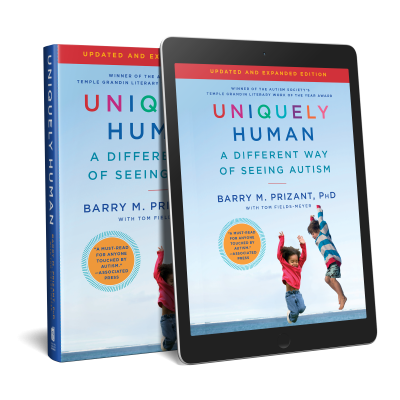
Uniquely Human, the book (Updated and Expanded edition!)

Dave Finch
Dave Finch is the author of the New York Times bestselling memoir, The Journal of Best Practices: A Memoir of Marriage, Asperger Syndrome, and One Man’s Quest to Be a Better Husband. As a writer and creative consultant, his work has appeared on ABC, CBS, NBC, CNN, NPR, SiriusXM, The New York Times, Rolling Stone, The Howard Stern Show, and the award-winning Netflix series, Atypical. Based in Denver, Dave’s company, Elevated Studio, produces this podcast and other recognized series.
Visit Dave’s website here
“I have read a million and one books on Autism. Uniquely Human is the best book I have ever read, hands down. Thank you Barry for this incredible gift!!!!”
– Navah Paskovitz, Mother of three boys with Autism, Co-Founder, the Ed Asner Family Center
“Compassion, learning and supportive strategies–the three essentials for working with folks with ASD–are an integral part of this must-read book.”
– Michelle Garcia Winner, Speech Language Pathologist and Founder of Social Thinking
“Thanks be to Barry for the first-ever must read written for parents, educators, and clinicians.”
– Michael John Carley, Founder, GRASP; Author of Asperger’s From the Inside-Out
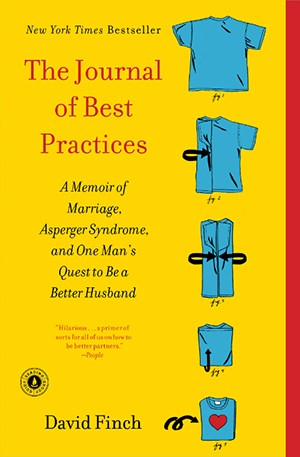
“What makes the book compelling is how funny Mr. Finch is about himself. He’s great company.”
– Susannah Meadows, The New York Times
“In this hilarious memoir (which also gives some of the finest explications of Asperger’s out there), Finch approaches trying to be a better husband and father with the determination of Sherman marching on Atlanta.”
– Judith Newman, People (4/4 stars)
“Talk about being on a roll. This dude wrote a book, he has Asperger’s syndrome. He cured himself by listening to me on the radio!”
– Howard Stern