EPISODE 146
An Innovative Support Program for Neurodivergent College Students:
A Discussion with Nina Schiarizzi-Tobin and Vanessa Harwood
A Discussion with Nina Schiarizzi-Tobin and Vanessa Harwood
Play the Episode…
Show Notes
This episode of the Uniquely Human: The Podcast features Nina Schiarizzi-Tobin and Vanessa Harwood discussing innovative supports for neurodivergent college students, highlighting the START program at the University of Rhode Island. The conversation explores common challenges neurodivergent students face upon entering college, the specific support needs, and how these compare to those of neurotypical students. The episode also delves into the mission of the START program and its role in fostering community and inclusion.
Featuring
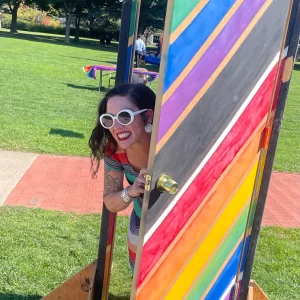
Nina Schiarizzi-Tobin
Nina Schiarizzi-Tobin is a proud neurodivergent educator with nearly 25 years of experience in teaching, curriculum design, policy formation and program development. She is the Assistant Director of disability access and inclusion at the University of Rhode Island. She also is a team member of the START program that supports neurodivergent students as they begin their college journey. Nina overseas neurodivergent programming, providing training and consultation on teaching practices, disability rights, transition planning and inclusion. Nina loves working with students and empowering them and her colleagues to promote inclusion representation and visibility in shared communities.
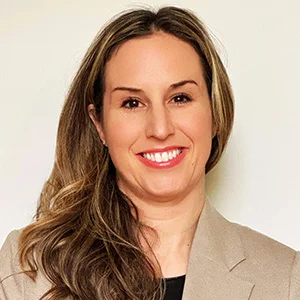
Vanessa Harwood
Vanessa Harwood is an Associate Professor in the Department of Communicative Disorders at the University of Rhode Island. Dr. Harwood has several years of experience as a pediatric speech and language pathologist through Lifespan School Solutions – The Bradley Schools, RI where she worked with a range of students, many of whom were neurodivergent. She completed her doctorate at the University of Connecticut in Speech, Language and Hearing Sciences in 2015. Dr. Harwood is interested in translational research aimed at improving diagnostic and therapeutic services for the pediatric clinical populations. She uses methodologies such as EEG to investigate brain mechanisms associated with speech perception in autism and other populations. Dr. Harwood is a proud member of the START program at URI where she supports autistic students in their first year of college.
.
.
Uniquely Human: The Podcast
EPISODE 146 – DEC. 5TH 2025
An Innovative Support Program for Neurodivergent College Students: A Discussion with Nina Schiarizzi-Tobin and Vanessa Harwood
🎙️ Transcript and Audio Usage Disclaimer
© 2025 Uniquely Human: The Podcast. All Rights Reserved.
The contents of this podcast, including all audio recordings, transcripts, and related materials, are the intellectual property of Uniquely Human: The Podcast and its fiscal sponsor, Community Autism Resources, a registered 501(c)(3) nonprofit organization.
These materials are provided solely for personal, educational, and non-commercial use.
No portion of the podcast audio, transcript, or any derivative materials may be reproduced, redistributed, modified, or publicly displayed without prior written consent from Uniquely Human: The Podcast or its authorized representatives.
Transcripts are provided for accessibility and reference purposes. They may contain minor transcription or formatting errors. When quoting or referencing the podcast, please credit Uniquely Human: The Podcast and provide a link to the original episode page.
By accessing or downloading transcripts, you agree to comply with this usage policy and acknowledge that all copyrights, trademarks, and intellectual property rights remain the exclusive property of Uniquely Human: The Podcast and its creators.
For permissions or inquiries, please contact:
📧 uniquelyhumanpodcast@gmail.com
Introduction to the Podcast
[00:00:00] Dave: The primary purpose of Uniquely Human: The Podcast is to educate and inform the views expressed during all episodes are solely those of the individuals involved and do not constitute educational or medical advice. Listeners should consult with professionals familiar with each individual, or family for specific guidance.
[00:00:21] UHP: Uniquely Human: The Podcast is produced by Elevated Studio Music is graciously provided by Matt Savage of Savage Records.
[00:00:40] Barry: Hi, I’m Dr. Barry Prizant, clinical scholar, researcher and consultant on autism and neurodiversity, and a Brooklyn boy raised in the big city.
[00:00:51] Dave: And I’m Dave. I’m none of those things and I grew up on a farm in Illinois, but being on the spectrum. I have plenty of personal insight to lend,
[00:01:00] Barry: and this is Uniquely Human: The Podcast, a show that illuminates and celebrates autism and neurodiversity.
Introducing the Guests: Vanessa and Nina
[00:01:07] Barry: Today, in Uniquely Human: The Podcast, , Dave and I are very excited, to have two guests who are also my relatively new colleagues at the University of Rhode Island. and that is Vanessa Harwood and Nina Shazi Tobin. Welcome, Nina and Vanessa.
[00:01:37] Vanessa: Hello. Hello. Thank you so much for having us.
[00:01:41] Nina: We’re really grateful.
[00:01:43] Barry: Yeah, we’re ready to learn a lot. it really is our pleasure. Little bit more specific information about each of you.
Nina’s Background and Journey
[00:01:53] Barry: Nina is a proud neurodivergent educator with. Nearly 25 years of experience in teaching curriculum design, policy formation, and program development.
She is the Assistant Director of Disability Access and Inclusion at the University of Rhode Island. and let me just say that and that’s where my adjunct appointment is, the, public university that is highest ranked in all of New England. Yay!. And she is also a team member of the START program that supports NEURODIVERGENCE students as they begin their college journey.
And we’re gonna be digging in on that. Nina oversees neurodivergent programming, providing training and consultation on teaching practices, disability rights, transition planning and inclusion. And Nina says she loves working with students and empowering them and her colleagues to promote inclusion, representation and visibility in our shared communities.
Background and Journey
[00:02:59] Barry: Vanessa, is an associate professor in the Department of Communicative Disorders at the University of Rhode Island. Vanessa has several years of experience as a pediatric speech and language pathologist. working with a range of students, many of whom were neurodivergent. she completed her doctorate at the University of Connecticut in speech, language and hearing sciences, and she’s particularly interested in translational research aimed at improving diagnostic and therapeutic services for pediatric clinical populations.
But more apropos to our discussion today, Vanessa is a proud member of the START program at University of Rhode Island, where she supports autistic students in their first year of college and beyond. So we have a lot to talk about here. and, we always are interested in the journeys, of our guests and how you got to what you do now.
if you could just discuss your backgrounds a little bit that led to your focus on supporting autistic and neurodivergent students on their journey to attending college, and also once they begin their journey.
[00:04:12] Vanessa: Yeah, sure. So I’ll start first. Thank you so much Barry, and thank you for the beautiful, introduction there.
That was so nice. And yeah, I see myself first really as a clinician and then secondary as a researcher and professor now at URI. So I had this amazing opportunity when I was doing my clinical work to be a clinician for what we call now lifespan school solutions.
It’s the Bradley schools, which is also really cool ’cause I know someone else on this podcast also has a background from there.
[00:04:54] Barry: Bradley Hospital got me to Rhode Island.
[00:04:57] Vanessa: That’s right.
[00:04:57] Barry: A lifetime ago. Yes.
[00:05:00] Vanessa: It is. and I was so very lucky. I feel like to do a lot of my clinical work at Bradley.
I learned so, so much. So it was really there where I worked with a hoost of students from all walks of life, from all backgrounds. And in terms of our autistic students working with students who had what we consider high support needs. So our students who were maybe non-speaking or minimally verbal, and then all to the other flavors of the, spectrum to who were really verbal students. When I took the position at URI, I knew I wanted to train the next generation of clinicians. That was really important to me. That’s why I wanted to teach. And I was approached in 2020, by Katie Masella and Lisa Mc Russo, who were starting this program at URI called the START Program, and they said we think you have some expertise to help us launch this program. And, it’s really then that I started to learn more about the needs of our neurodiverse students who were at the college level, like young adults. So that’s been my journey here. I know we’ll talk more about it, but I’ll let Nina talk.
[00:06:34] Nina: Also thank you for the lovely introduction. And we are so happy to have you here at URI. You’re the celebrity of the place right now and that’s not a minimization, like you’re like big man on campus anyway.
I would say that certainly my own path being a person who’s Neurodivergent was diagnosed my first year of college. Thanks to an amazing education professor who was like, there’s a study happening at Beth Israel right now and they’re trying to norm. Some of the assessments on women and young women, and I think you find it really interesting. And it was absolutely. ’cause I was very obviously neurodivergent and undiagnosed. And because it was this unbelievable opportunity. Through that process, I found receiving a diagnosis at that time, given where I am generationally, I was born in the seventies, that it was liberating and school felt different to me, like a light switch. Like it was very, it marked a difference. And I was able to view myself with more possibility and less self-criticism. and I felt that I had a pathway toward proving to everyone, like I had in the great cinematic fantasies in my mind like that I really was smart, deep down, even though I made every single nun and every single teacher very upset throughout my entire academic career, at my inability to apply myself.
So I think, or, communicate, or connect with other kids in the way that was expected at the time. So of course I ended up in education and all of these different amazing places and had so many different opportunities, while also parenting two young kids, one of whom received, in the early two thousands, a diagnosis of Asperger’s at the time.
Initially his diagnosis was very inaccurate because the assessor that he met with, he thought that the guy had bad breath and didn’t wanna talk to him, and so he just did not respond. And Vanessa’s laughing because she knows my kid. And it tracks. The assessment was making pronouncements about his ability to go to college one day.
All of these different things. And if I had not been a parent who worked in education with an amazing co-parent who also worked in education, it would’ve been a potentially frightening path. And I think at that point I moved away from doing more arts education, which I started out with, and really getting into special education advocacy and otherwise, and helping found autism strands in public schools.
And working at MG hs Lurry Center to create like a really authentic summer camp experience for students.
Just looking at all of these different areas where there were opportunities for inclusion. We started the first inter museum panel in Boston to talk about making these spaces or any educational space more accessible to people who have quote invisible disabilities.
So at each point, I think I tried to be a bit of a step ahead of my own kid and in that process, of course it was a healing for me to be able to go through it and see that different things are happening. But, I have found an unbelievable place at URI in terms of the openness that people here have in all different departments, to doing the best possible work and really not having some of the, more traditional pathways or programming or structures be what dictates how we support certain populations of students.
I ended up here to. Here because I want this work to be spreading out in the world beyond as well. And I feel like college is such a great space to do that.
[00:10:55] Dave: Absolutely. And by the way, I can empathize with your son. We live in a world where it’s rude to point out that somebody has bad breath, but totally acceptable to have coffee breath.
[00:11:04] Nina: Yeah.
[00:11:04] Dave: And there’s nothing on these standard forms that says interviewer had terrible sour breath. So I get a, I should get at least some kind of pass here.
[00:11:16] Nina: Yeah. They did Listerine right? Did they apply deodorants that day? That’s right. That’s a known marker, right? In this population. Look at the sensory stuff maybe.
[00:11:27] Dave: Yes. Let’s look under the hood of the person conducting this project during this
[00:11:31] Nina: is the medical model for you, right?
[00:11:34] Barry: By the way, big coincidence, we recently. interviewed a guest, and her area is the relationship between sensory issues and developing relationships with people.
[00:11:47] Nina: Love that.
[00:11:48] Barry: There you go. Wow.
Challenges Faced by Neurodivergent Students
[00:12:15] Barry: So you both have the opportunity to see students literally walking through the door for the first time into a college experience. And based upon your past experiences and your personal experience, especially for you, Nina, what do you see as the kinds of support needs that you could almost predict that your students are gonna have as they begin, in particular at University of Rhode Island?
[00:12:24] Nina: Okay, I would say that a very interesting component is that it changes a little bit every year. Vanessa and I were talking about that this week. What we are seeing coming in, especially now that I think, it’s not that we’re away, quote from COVID ever. But we noticed a market difference in the incoming student populations. Having lost a lot of support, skill development, access to diagnosis, like any number of things, the social connection. And outside of that, I think we are really genuinely seeing, ’cause I remember even my own child who’s now in, in his early twenties, the number just sheer numbers of students who have an autism diagnosis, especially who are coming to college that is in record numbers right now compared to even 5, 6, 7 years ago.
And so the support needs are really different because where your home district is. What, when you got diagnosed, what you received has definitely influenced right. How students will present in a college setting. But I will say that, the bigger the IEP not better right at the college setting, and I will say specific to URI, unless that IUP includes a lot of increased independence in increased self-advocacy, Increased independent work, and increased transition planning and a lot of previewing maybe opportunities, to be able to take college courses and having that be something that students are getting to experience as a preview. but I would say that the needs by and large have to do with some level of like independent work.
And it isn’t that our students are not capable of that, it’s that they have had no opportunity to practice that. The parents are very afraid to do that. And I understand that ’cause it can be hard to watch your kid, totally flub filling their prescription. It’s hard, right? Like it’s painful.
It’s painful to watch your kid go on to try to not mine the ITS, the zoom support desk here, to get onto whatever platform, and get really frustrated in that Zoom call because things just are not working. So I will say that a lot of what I see in terms of need is like a clear understanding of what the college level expectations are for the institutions that you’re applying to.
I would say that the increased independent right work, increased self-advocacy goals, even if students are just practicing requesting use of their accommodations for exams. They’re gonna be in place anyway. ’cause the IUP or the 5 0 4 is there. But to practice those things, really practically, because it is so much for a student when they are coming here.
And there’s, like I said, the heartbreaking part is almost just like my own child’s evaluation is like what we’re seeing is not an accurate demonstration of what the student’s capable of doing.
So there’s an accessibility barrier, but a lot of that, like I said, has to do with whatever’s coming in here.
And so there’s a pretty broad range of independence, of communication, of understanding of their own diagnosis.
I really see a lot of problematic stuff with that. Like really not understanding what their diagnoses are, what it means, like where their areas of strength are. Any sort of specific.
So I would say that there’s still the need for social emotion, emotional supports, but they have to be specific to what students are doing. They can’t be that abstracted, talking about things and then going into spaces. But I think what’s hard is, like how do you access some of those supports when you get to school?
Executive functions are another huge one.
I definitely noticed students who have had a deliberate fading of support have a very smooth transition into college.
Over the course usually of a senior year or if the student decides to do like a transition program, maybe with a community college or like another program. Some of those supports of the weekly check-ins or like making sure that people are staying on task, the what we call like the externalized dependence. So someone else is telling you and you’re there waiting to get the prompt. Those supports when faded as much as possible. Definitely improve the student’s level of independence and make for a much smoother transition.
[00:17:38] Vanessa: I was gonna follow up with Nina by… I have a lot of the high school experience of many of my students and working with them at the high school level. And I can, I think of the full day support.
We’re in class from 7:00 AM to 3:00, and it’s highly structured. And then you go to a home environment where you have a lot of external supports and whether that’s parents checking in and they talk about this in the literature that the transition into college, it could be like falling off a cliff, right?
So all of those supports are highly structured and there, and then when we transition into college, a lot of that is gone. We have a lot more free time. We have a lot more, right? And it becomes the precipice to get those supports really becomes on the student to go out and actively seek them.
And that’s a whole microcosm I think, of this.
[00:18:50] Dave: This whole conversation is going to be a dance of me wanting to pounce on topics and having to honor the fact that Barry actually has a conversation plan. Go ahead, Barry.
The Importance of Independence and Interdependence
[00:19:05] Barry: I was gonna say pounce away, but, now the one thing that kind of struck me, and this has come up in a number of conversations with previous guests as well as, especially online conversations, and that is finding that balance between being independent. But also honoring interdependence, knowing when to seek support and how to get support when needed. But also understanding that at times, you have to create your own path and stick to that path and do everything that we all talk about in terms of executive function needs, having goals and working towards those goals and making sure you’re not pulled off the road too much.
So that just struck me, and I’m just curious because obviously a lot of what you’re doing, which we’re going to get to in a few minutes in depth, is creating in the most positive sense, a community of interdependence, especially when it comes to social connection and emotional connection. I just wanted to throw that out there because I know it’s a very hot topic right now. This notion of we’ve been fighting for independence for years. We say independence. Independence. And then, but have we left interdependence behind? And I know you’re not saying that at all.
[00:20:31] Vanessa: No, that’s great.
[00:20:32] Dave: Yeah. I will say, just a little personal anecdotal stuff to support this, is my own transition into college.
I was so different from my kids and I’ll, do this in the, 62nd version. My transition in was, my parents wanted me, wanted to set me up for success. And so in, in their approach to that, it was, yes, I filled out my college application, but they were the ones who were really like driving me in terms of you need to get your dorm room assignment.
You need to reach out to your new roommate. What is your address going to be? Bank account you did, They were handholding me through all of that. Nothing wrong with that by any means. When I got to college, I was unnecessarily extremely hard on myself because it occurred to me probably midway through my first semester that like, wait, I have to do stuff.
What do you mean I have to pay the bill for this? there’s a bursar’s office. I’ve never even heard the word bursar. That’s where I have to take my payment. I thought mom and dad paid for college, right? And yep. I would get these phone calls, Hey, your account is delinquent. I’m like, I don’t have an account! My parents do. I flopped, in terms of just being a put together adult human being, academically I did fine. But, in contrast with my kids who we had an opportunity to send them to a college prep school, and so we jumped on that opportunity. We sent them there, and my son is in a engineering track right now in college. My daughter is studying comedy writing and improv and acting, and both of them are just so freaking prepared for the real world. And it really strikes me that for those of us who don’t have that balance of independence and interdependence, it’s a very daunting thing having, transitioning into school, into college.
All of your routine is different. Your meals are now different. The smells are different.
The expectations are different, I have to say to hello to somebody who’s sleeping six inches from my face every morning. Oh my gosh. This is such an important topic. And I honestly, this could we could spin this off into its own little podcast series if we want.
[00:22:53] Nina: I think we should.
[00:22:54] Dave: Uniquely students
[00:22:55] Nina: Yeah. Uniquely reparenting myself, podcast
[00:22:58] Dave: reparenting. So anyway. I’m all on board for this whole conversation. I’ll let Barry back into the driver’s seat.
[00:23:07] Nina: I think to your point though, one, and I love Barry’s point too about interdependent. It’s because it is that magic space of feeling safe, advocating for help and like you said, like it’s not an a failure To ask for help. ’cause the goal of college is to be as typical as possible or to mask as much as possible.
And that is so hard to see. Especially when the student doesn’t really feel prepared and the student is feeling also, I think a little distrusting of a department like mine because they come here with an IEP and they’re like, these are the things I need. And we can provide reasonable accommodations. And we’ll talk more about that in a minute, but we don’t provide the same things, and they’re not always aware of that. Even from awesome districts like, high, performing areas. And like I said, it’s really that not that the students can’t perform those levels of independence. It’s like they have not been given the opportunity. When my students called themselves a cognitive feel calf, which I loved, as an analogy because he’s I’m not allowed to do those things. My mom does them. Like a feel calf. Good lord. Yeah. Okay.
[00:24:30] Barry: It’s interesting because a number of our guests, and I talk about this with the youngest kids, but also what I’ve learned from so many friends, colleagues, and adults who are neurodivergent. It blows me away to hear that. And somebody, I forget who it was, we entered on our podcast, said, I didn’t even understand the concept of asking for help until I was 18 years old. I didn’t know. And it wasn’t that I’m a bad person if I do that, just the concept that other people, when I’ve reached the wall that other people kinda reach over the wall and provide the extra support that’s needed. Which is, and that probably comes out of, really extensive learn helplessness situations where everything is totally done for you every step of the way. Yeah.
[00:25:21] Nina: I feel so much for parents too, because I don’t ever like any situation that comes down on parents, Myself included, for what we should have known or should have done. Because we do trust the schools so much. But the schools are also in a tough position ’cause they’re limited in what they can recommend. Sometimes and limited in what they’re allowed to say. In terms of oh, that would be like a good school for you, but do you know that they require X, Y, and Z? Because your grades, if you have an IEP and you don’t tell that school. Can look a certain way and convey a level of independence that may not be accurate. And parents don’t always know that their kid is being put almost at a disadvantage or kind of inaccurately counseled. And then again, like that can create this terrible, I think, dynamic for parents too, and feeling that they have not prepared their students appropriately.
[00:26:21] Barry: Yeah, that’s something you alluded to earlier, importance of transition planning. Making sure that what needs to be known is known. How important is that?
The START Program at URI
[00:26:34] Barry: So we got a little bit of a sense of some of the challenges. So why don’t we talk really specifically about what you’re doing about that at URI, with the START program. And when students walk through the door.
First of all, explain what the START program is for our listeners. I’m proud to contribute just a tiny little bit each year by meeting with some of the students and giving, my uniquely human lecture, if you will, and discussion. But go ahead, let’s hear about that.
[00:27:11] Vanessa: Yeah. And, so I’m happy, and I’m actually going to say the mission of start, so that will put us all on the same page, right?
[00:27:21] Barry: yes.
[00:27:21] Vanessa: So Start is a one year no cost transition and leadership program, and it’s co-designed with autistic individuals. We are a strength-based growth mindset program support system, with identify affirming peer community. And we provide proactive guidance on the hidden curriculum, while providing respectful support for our autistic students. START hopes to empower students through building motivation, neurodivergent pride, and authentic social and academic skills from day one. It’s our mission to prioritize student voice and student choice.
So that’s our whole, that’s our mission. The logistics of START. It has morphed and changed over years. START started to be like a one week or a summer. Like early move in transition program, where we were going to support students, bringing them on campus early and providing opportunities for students to know and see the campus know and see the surroundings. We wanted opportunities to really connect with our students, understanding their academic, their social, their sensory needs, and then trying to build in some planning and preparation process.
So we started by planning some workshops around what is Residence life? What is our meal plan? What is right?
And that’s how START really began and it’s now grown into a full year transition support system where we do the early move in, we have workshops and it’s this prep work. We have community building.
[00:29:20] Vanessa: And then in the fall we do something called, a specialized UCS 160, which is much more of a academic planning and preparation course, which we designed through a neurodivergent lens. So our start students work on this course together.
Positive Psychology and Social Communication
[00:29:49] Vanessa: And in the spring we have a really cool, I’m biased because we work together to do this, but we’ve designed a course for credit that is, it’s two-pronged course on positive psychology and social communication in higher education. So that’s a two credit course where we meet weekly, as a group, and then we have peer mentors and, through the communication disorders, graduate students that are working individually with START students, on a one-on-one. And it’s been fab. It’s been fab, it’s been fabulous.
And that’s the part Barry comes into to work a little bit on.
[00:30:27] Nina: The evolution of the program is the really exciting part because where it has evolved has always been initiated and informed by the students who are participating, but not just the ones who are participating in the moment. It’s once you’re part of start or even what we just call, like now our wider like neurodivergent community, because not everyone goes into the START program or people will do different parts of it.
We don’t gate keep anything at all. There used to be more of like an application process, but what we have found is that that’s not really meeting our population where they’re at. And also not giving the opportunity for students to have a little bit of experience with school and then decide that they want to join in, some of those things.
[00:31:13] Nina: But really like the workshops when they’re arriving to campus are about community standards, and understanding the campus. I do a campus prides scavenger hunt where I talk about the fact that we had one of the first gender and sexuality centers in the country. We had Martin Luther King Jr come and speak at the Keeny gymnasium. We have had all of these really phenomenal, groundbreaking things happen in this little quiet farming community in Rhode Island, and it’s something to be incredibly proud of. But while we’re doing that, we’re also looking at where their classes are.
We’re timing how long it takes to get from the dining halls to here and there. So we’re being very intentional and being social sportscasters the entire week, narrating the length of time, the heat, the this, the that, the considerations what’s available at this place. The pizza here is not the same as the pizza in this dining hall. Like Vanessa said, understanding the dining plan, understanding the office of community standards and what it means if you get in trouble, because can get really worried, right? If they get a notification of a certain type. We talk about academic integrity, we talk about right where to go if you need to figure out what to do for IT, for your books, anything else, health services, all the free things that are available there.
And what ends up happening with that information is that everyone else moves in at the end of the week and our students know everything and they know where everyone is and they’re able to support all of these other incoming students right off the bat. That’s the really lovely like leadership component of it.
But also every evening that week, they are doing either slightly scaffolded and then independent by the end of the week, totally independent social things every evening. And the way we present it is we’re not expecting you to be friends ’cause you’re adults and we talk to you like adults, we expect you to be each other’s support system. Because we’re here building neurodivergent community intentionally, so that we can be advocates as a community because we have power when we’re in community. And we have now with the addition of the UCS 160 class, which is all executive functions, and I really include, ’cause I teach that course a lot about like social emotional learning and communication as it has to do with all of those different executive functions.
We do a lot of activities in class where we’re pre-writing emails to professors and other people to self-advocate, where we are using like AI in a healthy way to take our notes and make a study guide for an exam.
[00:33:46] Nina: So we can preserve some of our cognitive gaps every Friday we’ve launched what we just call neurodivergent Friday meetups, and it’s a two and a half hour period, Friday afternoons where people can get together and make plans with other people for the weekend.
And I will list different things that are happening on campus or off campus, free and fun, other things that are around. I will have some kind of structured thing there, run by another student because the minute I walk into the room, I cramped their style. And so we have some special events like once a month if someone wants to host, right? We’ve been doing some board games, some d and d, some other, types of events. But we also bring in right community organizations like ORS who will pay our students to do an internship right. In an area of interest if they wanna engage in some coaching. And our students have really loved those partnerships with ORS and other people.
And I think that having that space, we now have about 25 students showing up every Friday finally. And it took a year of like consistently providing it for it to take off. But it’s all student directed at this point and it’s been really helpful for students because of its proximity to the weekend. Just in terms of even just going out to dinner with somebody that night.
Because you can feel really lonely and then all of a sudden it’s the weekend and you get all this unstructured time and nothing right to do around it.
[00:35:16] Barry: Addressing that sense of isolation, which we all know is one of the greatest stressors for all people.
Student Experiences and Success Stories
[00:35:50] Barry: I, have to say, just from, a bit of an outsider who dips in, typically in the spring and meets with the students and does a presentation, and we have a discussion that, the thing, Nina, that you just mentioned many times that struck me was the sense of community with the graduate students of communication disorders and the autistic and neurodivergent students as part of the START program that, you know, as I recall, I think it’s two or three years now.
And it’s just so informal and the students come in and I think it, it was like early evening, and everybody’s sitting down and schmoozing and hanging out and, and it’s springtime. I realized that. So the students have gotten to know each other for a number of months.
But you could just see how organic that sense of community becomes. And, is just such a pleasure to see. Just one other quick note, as you both know, I actually met with a former start student this week, and without getting into the weeds on that, she’s graduating now. And I met with her because she requested just to chat with me around some issues in neurodiversity and I asked her about the start program and what she thought about it, and she said it was so helpful, she said it really got me grounded in the first year. She said, got me grounded socially. I really felt like I wasn’t starting from scratch, trying to guess at everything going on, and she said it, it was a wonderful. Beginning to my URI career and that, and that was three years later, and she’s graduating in May.
So it was just a pleasure to hear the long-term impact, at least her perception of it.
[00:37:12] Dave: You’re hitting it right on the head when you’re saying like, we don’t, you’re adults, we don’t expect you to all be friends, like you’re in third grade, each other’s support system. Yes. That is what we’re aiming for.
I remember very clearly my freshman year, I have it so vividly in my memory that I remember thinking like, I don’t know which of these people I’m supposed to be friends with. I guess the kids in my engineering classes make sense, but then like the stoners down the hall, they’re really nice to me, but my parents told me not to do drugs, so can I really be friends with them?
And it’s, and just having the mentality of relationships are gonna happen, so don’t go architecting relationships, just be there to support each other. Reach out for support when you need it. That would’ve made me breathe so much easier my freshman year.
[00:38:01] Nina: Yeah. Yeah. I had to be the vice president of my class so that I could run the events to socially interact with other people because I did not know like another venue in on how to do that.
[00:38:15] Barry: Interesting. Yes.
[00:38:17] Nina: I will, the one thing I will say about the organic formation of our wider neurodivergent community right now is the way that they have just organically become their own thing. In that I see that they’re roommates. Like a whole bunch of them are roommates with people of different start groups.
I see that they are dating. We’ve had multiple relationships and dramas around dating and it’s amazing, honestly, and I’m not saying any of my students listening. I’m not saying that your breakup is great because not that is a normal college experience. That is what it’s all about, right?
Is I started a club, right? One of them is now in charge of a club that she was so afraid to join that first year. And because of Vanessa’s class and understanding how to organize events, how to do right leadership type things, because that’s another really cool component of the spring class is they have to plan an event together.
They have to go through that executive functioning and social activity and have there be a tangible outcome. And they have to figure it out and right. The fact that student can run the club that they were too afraid to join first year is unbelievable. Like the amount of choice agency that is happening and community and opportunity.
Just when you give people space to be together and say, you’re awesome. We appreciate you, you’re important. It’s not rocket science and it has not cost Vanessa or I any money. I think we don’t have money. We work in education, right?
[00:39:56] Barry: Yeah.
Challenges and Support Systems
[00:39:58] Barry: And, Vanessa, I want to ask you also about the experience of some of the students in communication disorders.
I just heard a wonderful talk, that actually was sent to me and it was a multiply handicapped individual at a temple. And he spoke about that he was so different physically, that he was treated when he was a young child and even a teenager in very disrespectful ways.
And he made a comment, and the comment was, proximity overcomes stigma. And he’s saying, the closer you get to a person, the more you see the humanity in that person and who that person is. I want you to just comment on, your experience of the students. Yeah.
[00:40:48] Vanessa: Yeah, it’s really been twofold.
It’s the START experience, but also this new generation of clinicians and support folks coming up and understanding. And I will tell you, like Barry, and Nina knows this, it’s been my own journey. Like really, like I, working as a clinician, at the high school level, like I was doing a lot of the prescribed, these are social supports that I think that are supposed to help neurodivergent students. And we’re going to talk about the right way, in the wrong way of how to react and we’re gonna do video modeling and we’re gonna do this and we’re gonna do that. And I brought those experiences over into my first year at START. And guess what I got a lot. It’s Different strokes for different folks, right? So not one recipe is correct, but I spoke with so many of my start students who are saying, that doesn’t work for me. You know what? I felt like that’s been really like a pejorative, and I’ve been infantalized a lot by a lot of those approaches. And I started to go, whoa, okay.
okay. And we really started to talk about, okay, what do you need? You need, the same things that all of us need, right? What does it mean to be human? What does it mean to understand my strengths as a human person? And how do I mobilize those strengths in the face of right.
Interacting with the world around me and, overcoming sometimes some challenges, right? That approach, being able to give that, I feel like, or model that for my, CMD graduate students has been so awesome and we’re constantly in conversation about like new trends and new shifts and how to support so many students. As they, Nina really brought it up, you joined START not because your parents want to join START, you join START because you want to join START. This is moving from taking on that role as a young adult and saying, okay, I’m going to engage in supports if I want them, if I need them. And if I don’t, then that’s okay too. That’s okay too.
I feel like that’s been really powerful and I do think that there is a new generation of clinicians that really needs to understand the neurodiverse experience. And what it is supporting neurodivergent individuals across the lifespan. Not just within that K 12 model.
[00:43:30] Nina: Also doing that with deep respect for that person as an adult human, not that person’s behavior in class and making your life easier as an educator. And I’m sorry, like I worked in special ed and in leadership and special ed for a really long time, and I understand the whole structure to determine a lot of goals. And it is always worth it to prioritize goals around self-advocacy, right? It’s always, worth it. the student voice is necessary and the student consent to participate and START is necessary. The student voice, meaning what the student wants to work on.
For example, my kid in high school, I had to argue to have his IEP goal be self-advocacy around a specific club that he wanted to participate in instead of the English class that his teacher wanted him to participate more appropriately in.
[00:44:31] Barry: The term that comes to mind, which has come up many times in previous episodes of our podcast, is our goal is not to have students comply or adults to comply.
it’s not a com it’s not a compliance model. Oh. It’s a self-advocacy model.
[00:44:48] Nina: And, that’s what a lot of our students are coming from though, right? Where they had a self-advocacy goal that had to, or like their SLP goal had to do with basically being quiet in class.
That’s not the student driving.
The student will develop trust and support and trust. And that, partnership that can occur. ’cause we have unbelievable resources here at URI, right across the board, not just through my department, but everywhere. And when there’s distrust, because that’s been ingrained in the individual because no one’s listening to them, everyone sits around at a table once a year to talk about everything they’re bad at. Where is the, pride in that? Where is the student going to develop intrinsic motivation.
[00:45:35] Dave: Absolutely. This is interesting. The mental health implications on somebody transitioning out of that is, and I say that as a product.
It’s interesting. Barry, you mentioned, the compliance thing, like I am a product of, I still just am a compliance person where it’s I wish somebody would tell me how to live an adult life and I’ll go do that. What are the steps? but everybody’s oh, it’s choose your own adventure self-advocate.
And I’m like, I don’t have a rule book. My early college sort of experience, was me just beating the crap outta myself with huge, like ki my friends, my closest friends would come into my dorm room and just crack up and laugh at me because I would have huge signs that would say do these three assignments or fail out of college.
I was that. So there’s gotta be…
[00:46:29] Vanessa: yes. There you are, right Dave? there’s a give and take, right? Because that, that is the other piece is like some of our students really thrive on really explicit teaching and explicit directions and want a little bit more of the recipe or wanna be, we wanna talk about the recipe for how to do something. And that’s, okay too. That’s okay too.
[00:46:57] Nina: And I think that, that tax on one of the bigger barriers that many students do face across the board in higher ed, which is a toxic relationship around the hidden curriculum, right? It’s every university tells you like what you should or shouldn’t know to an extent, but also there’s this entire language. My child would call it lore, that has to do with a space that nobody tells you, but you figure out as you go. And for many of our students, from undergrad all the way through PhD, there are aspects of that can be like generational, that can be to do just with like American culture and also, are further othering them because they’re an international student who’s neurodivergent. And the response that any student will get. Often when they’re interacting with faculty, I will say, is you should know. Or maybe you’re not supposed to be here to some extent. Or the types of things they’ll hear in response. And that can be like very challenging too.
Is that every place has its own kind of language and set of expectations. And if there isn’t an environment that will talk about that, right? Overtly, that’s a problem.
[00:48:11] Barry: Yeah. Even that comment you should know is like a sledgehammer to your self-esteem if you already are not feeling great about yourself and your sense of who you are and what you know.
[00:48:24] Dave: Right! Yeah… ugh!
[00:48:26] Nina: Because that’s probably why you felt like that, Dave. I know. That’s why I felt like it colleges ’cause like college is the place and especially as I was doing like a thesis and research and then routinely getting my work taken because a lot of neurodivergent people have that problem too, is because there is that you should know and you should or shouldn’t talk about X, Y, and Z in higher ed.
So our also having to battle that a lot.
[00:48:50] Dave: It’s oh, I should know. Awesome. I didn’t know human beings were biologically coming out of the womb saying, oh, by the time I’m 20, I’ll definitely know how to engage with a professor. Like what?
[00:49:01] Nina: Yeah. Pay taxes, all that stuff.
[00:49:06] Barry: So you’ve had the experience with the START program for how many years now?
Has it been?
[00:49:12] Vanessa: started in 2020.
[00:49:14] Barry: Okay.
[00:49:15] Vanessa: In our fifth cohort. Yeah. Fifth
[00:49:16] Barry: One thing I, will say, and, not so apologetically, because this is coming out of some pride with my new connection to URI, there was a conference here, labor Day Weekend, not the best time on neurodiversity in college and in the workplace.
Vanessa and Nina presented the START program, but there were also a number of either faculty or in some cases, neurodivergent individuals from other universities talking about how they support students in college. And I, have to say, I was most impressed with URI, as far as how far along you are and the breadth of which the way you support students.
Faculty and Future Goals
[00:50:03] Barry: So what are you talking about in terms of your short and long-term goals for the START program? and, the word START explains what it’s about. Let’s get the students off into the college experience. But I know I’ve heard you say that there may be longer term plans, for the impact of START, Kind of community, and it’s already happened.
[00:50:30] Vanessa: Yeah. I, think Nina started to allude to it with the comment that she said about the faculty member. I do think one of our goals is to get more faculty on board.
We have, we have, fa we have amazing faculty at URI, we have an amazing faculty at URI.
and we have an amazing culture at URI. The fact that we were right from from the engineering department hosting like our diversity conference. I’m like, oh my God, awesome. But not everybody knows, right? And when you are a professor, you are an expert in your field. And that might be in chemistry or animal sciences or agriculture or whatever that is. But maybe teaching Neurodiverse students that might be new. I think some work around, advocacy and working with faculty. We see that in our future. We wanna build our autistic leadership within START and beyond. And Nina’s doing that, I think with so many students there they’ve been amazing.
I see those absolutely as goals. And we’re building and growing, we have START, it’s usually for freshmen or it’s your first, first year college experience. But there’s a need for masters and PhD students, who are also neurodivergent. To, have some support. So at the graduate level.
We supporting or can we support.
[00:52:08] Nina: And I have to go all of that so deeply. I am routinely inspired by the inclusive work that our faculty does. And I’m not saying that in any sort of I am allergic to charitable anything. I’m saying like they’re doing deliberately inclusive, dynamic assessment, dynamic classroom experiences, experiential learning, are immersing themselves in understanding all of our different and unique student populations because we have many, right?
But URI does acknowledge disability as a diversity component of our institution. And that I think is so important, number one. Number two, We, like I said, have total freedom to do any kind of programming connections with other departments, partnerships, conferences, anything that we want to do.
And we have unbelievable leadership that supports that. Yeah. In terms of Vanessa, our faculty teach a lot. Our faculty are also researching, our faculty are also advising and are like overseeing graduate students, but they need more support. In terms of understanding our current student populations and understanding proactively how to teach, design their curriculum design assessments.
So that right there maybe are the need for less accommodations, and a more inclusive experience, which also makes it way better for faculty. But many faculty don’t have the confidence or the pedagogy background to feel like it’s okay that I do this. They feel genuinely, ’cause I talk to them no matter how hard they seem or tough, or oh, everyone fails my class.
Then I have them crying on the phone with me. And they’re saying to me like, I don’t wanna hold them to a different standard. I, know that’s wrong or I don’t wanna harm the student, but I don’t know if it’s okay for me to do this. I have no idea like how long my test should be.
I just was handed this by the other person who taught the class and so this is my Bible and I’m like, oh god damn, that’s a terrible exam. it’s on Scantron. You don’t need to do that. For a lot of faculty, it is permission to have a conversation privately with someone where they can be vulnerable and say, I don’t understand the student population, and this student annoyed me the other day.
I annoy people and guess what Professor? You annoy people too. They won’t tell you because they’re afraid, but still they’ll say it on cortical later. And rate my professor. But I think in this moment everyone just wants to have a safe space to be able to learn and understand things that students, and that is the faculty here.
I have yet to meet a Disney villain who’s like waking up in the morning trying to make things less accessible possible for anybody. but they need training and they need support across the board. Where our program is going that’s really exciting is we’ve made start just that summer initial experience, and that it is helpful for students who are starting out here, but that, UCS 160 class, Vanessa’s class, we can open it up to other students who have disclosed to us, we think will be a good fit. And we’re talking about that in an ongoing basis. So it’s always win to people now.
[00:55:21] Barry: Yes.
Conclusion and Final Thoughts
[00:55:31] Barry: Thank you so much and I’m excited to see how things begin to continue, not begin, but continue to evolve because I could just see all the steps ahead of the game that you already are. Engaging in and thinking about and that’s terrific.
[00:55:41] Vanessa: Thank you.
Thank you for giving us the opportunity to talk about it.
[00:55:44] Nina: Thank you so much.
[00:55:45] Vanessa: That’s really important too. So we appreciate the platform ’cause we hope folks will hear us.
[00:55:51] Barry: Vanessa and Nina, thanks so much. And I, really, quite sincerely look forward to see how things continue to grow. Because you guys, your heart’s in the right place, your minds are in the right place and URI is so lucky to have both of you.
…and Continue the Discussion
Do you have a book or podcast club? If so, you may use this discussion guide to facilitate a conversation about this episode.
1. What are some of the greatest difficulties and barriers faced by neurodivergent individuals once they arrive in college? How do these vary depending on the previous experiences students have had?
2. What are the variety of support needs Nina and Vanessa observe for neurodivergent students who attend college, and specifically, at the University of Rhode Island? How does this overlap with, but also may be different from the needs of neurotypical students?
3. Describe the mission of the START program, and the range of supports provided to students? How does the program help develop a sense of community for the neurodivergent students? Are you aware of other programs that provides similar levels of support whether in college and university settings, or employment settings?
HOSTED BY
Barry Prizant, Ph.D., CCC-SLP
Dr. Barry Prizant is a speech-language pathologist with more than 50 years experience as a researcher and international consultant for autistic and neurodivergent individuals and their families. He is an Adjunct Professor of Communicative Disorders at the University of Rhode Island and Director, Childhood Communication Services (a private practice). Previously, he served as Associate Professor in the Department of Psychiatry in the Brown University School of Medicine, and held a tenured professor appointment at Emerson College. Publications include 5 books, most notably Uniquely Human: A Different Way of Seeing Autism (2015; 2022) and The SCERTS Model manuals, an educational approach implemented in more than a dozen countries. He has published 150 scholarly chapters and articles and serves on numerous professional advisory boards for journals and professional organizations. Barry has presented more than 1000 seminars and keynote addresses internationally, including two invited presentations at the United Nations for World Autism Awareness Day. His career contributions have been recognized with honors from Brown and Princeton Universities, the Autism Society of America and the American Speech-Language-Hearing Association.
Visit Barry’s website here
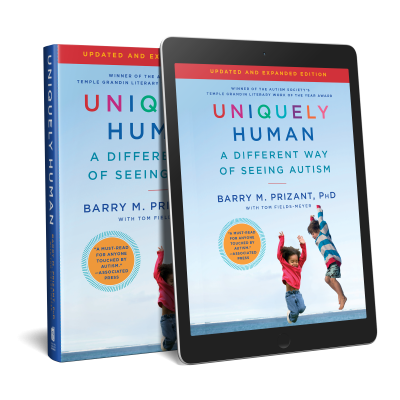
Uniquely Human, the book (Updated and Expanded edition!)
Dave Finch
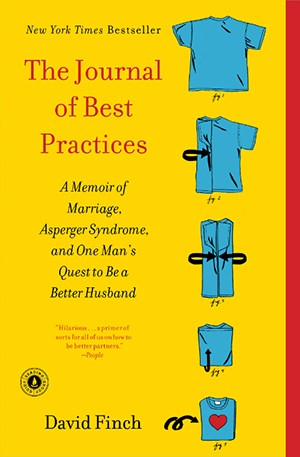
Dave Finch is the author of the New York Times bestselling memoir, The Journal of Best Practices: A Memoir of Marriage, Asperger Syndrome, and One Man’s Quest to Be a Better Husband. As a writer and creative consultant, his work has appeared on ABC, CBS, NBC, CNN, NPR, SiriusXM, The New York Times, Rolling Stone, The Howard Stern Show, and the award-winning Netflix series, Atypical. Based in Denver, Dave’s company, Elevated Studio, produces this podcast and other recognized series.
Visit Dave’s website here
“I have read a million and one books on Autism. Uniquely Human is the best book I have ever read, hands down. Thank you Barry for this incredible gift!!!!”
– Navah Paskovitz, Mother of three boys with Autism, Co-Founder, the Ed Asner Family Center
“Compassion, learning and supportive strategies–the three essentials for working with folks with ASD–are an integral part of this must-read book.”
– Michelle Garcia Winner, Speech Language Pathologist and Founder of Social Thinking
“Thanks be to Barry for the first-ever must read written for parents, educators, and clinicians.”
– Michael John Carley, Founder, GRASP; Author of Asperger’s From the Inside-Out
“What makes the book compelling is how funny Mr. Finch is about himself. He’s great company.”
– Susannah Meadows, The New York Times
“In this hilarious memoir (which also gives some of the finest explications of Asperger’s out there), Finch approaches trying to be a better husband and father with the determination of Sherman marching on Atlanta.”
– Judith Newman, People (4/4 stars)
“Talk about being on a roll. This dude wrote a book, he has Asperger’s syndrome. He cured himself by listening to me on the radio!”
– Howard Stern