EPISODE 144
Mentoring for Autistic and Neurodivergent Individuals:
A Discussion with David Rivera
A Discussion with David Rivera
Play the Episode…
Show Notes
David Rivera has experienced the need for, and benefits of mentoring in his own life, and has applied his lived experiences to setting up a non-profit for mentoring others. Barry and Dave discuss the various benefits of mentoring with David, and specifically, “Mentoring Autistic Minds”, the non-profit he has created that welcomes autistic and otherwise neurodivergent individuals to benefit from a community that provides opportunities for mentoring relationships.
Learn more about Mentoring Autistic Minds
Featuring
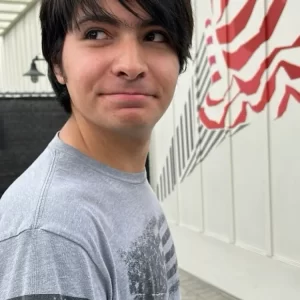
David Rivera
David Rivera is the president and founder of Mentoring Autistic Minds, a California-based nonprofit whose mission is to help support a neurodiversity-affirming society through mentoring and education. He writes on autism and disability policy, with publications in the San Diego Union-Tribune, San Francisco Chronicle, Education Week, The Hill, the Washington Post, and STAT. David also talks about the current state of special education and the return of the pathology view of autism we are currently experiencing. Additionally, he discusses how platforms are vehicles for change and why Mentoring Autistic Minds was created to provide a platform for autistic people to meet other autistic people.
Uniquely Human: The Podcast
EPISODE 144 – NOV. 7TH 2025
MENTORING FOR AUTISTIC AND NEURODIVERGENT INDIVIDUALS: A DISCUSSION WITH DAVID RIVERA
🎙️ Transcript and Audio Usage Disclaimer
© 2025 Uniquely Human: The Podcast. All Rights Reserved.
The contents of this podcast, including all audio recordings, transcripts, and related materials, are the intellectual property of Uniquely Human: The Podcast and its fiscal sponsor, Community Autism Resources, a registered 501(c)(3) nonprofit organization.
These materials are provided solely for personal, educational, and non-commercial use.
No portion of the podcast audio, transcript, or any derivative materials may be reproduced, redistributed, modified, or publicly displayed without prior written consent from Uniquely Human: The Podcast or its authorized representatives.
Transcripts are provided for accessibility and reference purposes. They may contain minor transcription or formatting errors. When quoting or referencing the podcast, please credit Uniquely Human: The Podcast and provide a link to the original episode page.
By accessing or downloading transcripts, you agree to comply with this usage policy and acknowledge that all copyrights, trademarks, and intellectual property rights remain the exclusive property of Uniquely Human: The Podcast and its creators.
For permissions or inquiries, please contact:
📧 uniquelyhumanpodcast@gmail.com
Introduction to the Podcast
[00:00:00] Dave: The primary purpose of Uniquely Human: The Podcast is to educate and inform the views expressed during all episodes are solely those of the individuals involved and do not constitute educational or medical advice. Listeners should consult with professionals familiar with each individual, or family for specific guidance.
[00:00:20] UHP: Uniquely Human: The Podcast is produced by Elevated Studio. Music is graciously provided by Matt Savage of Savage Records.
Meet the Hosts: Barry and Dave
[00:00:39] Barry: Hi, I’m Dr. Barry Prizant, clinical scholar, researcher and consultant on Autism and Neurodiversity, and a Brooklyn boy raised in the big city.
[00:00:50] Dave: And I’m Dave. I’m none of those things, and I grew up on a farm in Illinois. But being on the spectrum myself, I have plenty of personal insight to lend.
[00:00:59] Barry: And this is Uniquely Human: The Podcast, a show that illuminates and celebrates autism and neurodiversity.
Special Guest: David Rivera
[00:01:14] Barry: Today on Uniquely Human: The Podcast, we have a special guest, who is doing some very innovative work in California. And, we’ll tell you a little bit more about him in a moment. But that is David Rivera. David, welcome to Uniquely Human: The Podcast.
[00:01:30] David Rivera: Hi, I’m happy to be here.
[00:01:32] Barry: It’s great to have you. and also we both Dave Finch and I have spoken to you before. You interviewed us, right?
David’s Journey and Achievements
[00:01:42] David Rivera: Yeah. I’ve interviewed you both on our nonprofit’s podcast, but also we met I think around 10 years ago at a conference. I was just a kid. I was just entering high school and at the time I was very oblivious to all the big figures in the neurodiversity movement.
And now growing up I’m like, wow, I actually got to meet both of them. And I actually got, I’ve gotten to meet so many people on this podcast as well, back when I was younger. ’cause when I was younger, I actually attended a lot of these, much more of these conferences than now because of school. I met Steve Silverman. The late great Steve Silverman. Long time ago. His book has left a pretty big impact on me. Same with your book, but his book was really special to me, like truly special, and I’m really glad I got the chance to talk to him.
[00:02:39] Dave: Yeah, that, that was Jenny Palmiotto’s Love and Autism Conference in San Diego.
[00:02:44] David Rivera: Yeah.
[00:02:45] Dave: I remember meeting you, and by the way, you’re exactly right. It was 10 years ago. And, what I loved about that conference is that it was, it’s the way she sets it up is it’s autistic voices that are presenting.
[00:02:58] David Rivera: Exactly. Exactly. And something I, I’ve thought about a lot is that at that conference, I was only like either 14 or 15 years old, and yet she put me on the stage with Barry and you, and I think to myself, wow, that seems like a pretty big risk because I was only 15 and 14. Like I was surprised at how much trust Jenny was putting in into me. But I’m really glad you gave me that opportunity because putting me on that stage with everyone else, helped me a lot build up my confidence as a panelist and guest speaker. ’cause now I’m doing that more often and I think back to myself, if I’m able to do that, I’m able to do this. If I was able to do that at 14 and 15, I can do it now.
[00:03:46] Barry: Yes, absolutely. And by the way, I think I was eight years old when that happened.
[00:03:51] Dave: Barry’s the youngest of all of us.
Mentoring Autistic Minds: Origins and Growth
[00:03:54] Barry: But I’m sure our listeners want to know all that you’ve accomplished since then, and that’s much more remarkable that you are on the stage of 14 or 15, and you’ve done so much since that time. Let’s talk a little bit about that. You’re currently the president and founder of Mentoring Autistic Minds, which is a California based nonprofit, whose mission is to help support a neurodiversity affirming society, through both mentoring and education.
David, you write on autism, a disability policy You’ve published in San Diego Union Tribune in the San Francisco Chronicle Education Week, the Hill, Washington Post, and you also talk about the current state of special education. And in particular you really push back against the pathology view of autism, which unfortunately is coming back, and we have to keep pushing. So we really want to know so much about what you’ve done. We want to know about mentoring autistic minds. But, you already shared a little bit about your journey. Anything else you want to emphasize, about your per personal and professional journey that led you to the wonderful activities you’re doing now?
[00:05:16] David Rivera: Yeah, so the thing that made me interested. In disability advocacy, neurodiversity advocacy is my whole experience and actually in special ed. So from K through 12, I spent most of my time in special education. In fact, when I was at the conference where I was on the, on the panel, I was actually still in special ed.
So it was through that experience that I learned, like how much work we have to be done, how much work had needs to be like, accomplished. Because when I was in there, something I noticed was that there seemed to be a lot of indifference over autistic individuals. Like when I was speak, when I would say my concerns, I was largely ignored. And it wasn’t until litigation got involved that the school district targets taking my concerns more seriously. And that wasn’t it what made me interested in special education law, which is what I want to do. But it was actually when I got to meet my attorney, who’s a special education lawyer. He told me that I was gonna go to an IEP meeting, individual education plan meeting, and he said at that meeting, say, you’re gonna be invited. Say how you feel the school has been treating you. Say how you think they could make things better. And it’s really nerve wracking because you’re sitting there with people 30, 40 plus years older than you with tons of experience already doing this. Like they know how to talk to parents and how to prevent these like li litigation from getting worse. So it was quite daunting. But I went to this IEP meeting, I said what I wanted to say. I said I thought that the cookie cutter traditional accommodations that they were giving me were not very fruitful. And that the more neurodiversity, more, like tailored for me personally, accommodations would’ve been more helpful. But when I said that the meeting turned silent. Then I find out a few weeks later that the school district had actually did a settlement with my family and that because of that, was able to attend a neurodiversity affirming high school.
Through that experience, I learned how much advocacy for neurodivergent people can change the trajectory of their life.
For me, it totally and completely changed the trajectory of my life because if I would’ve stayed in the school district I was staying at, I would not be on this podcast. I don’t, I, I don’t think I would be an undergraduate at uc, Berkeley, I don’t think I would’ve been able to create my own nonprofit. I don’t know where I would’ve been at, but it was just not good.
The trajectory before attending that IEP meeting and advocating for myself was not looking great. It was looking like, according to the school district, like I wouldn’t be grad going to college.
Like in eighth grade, I had a second grade reading and writing level.
[00:08:12] Barry: The phrase that comes to mind is, and thank goodness, all of your potential was realized, and it sounded like the disability rights lawyer working with you gave you that voice, but you were the one who turned things around.
You were the one in that meeting who said, now wait a second, this is not working for me. And here’s why it’s not working for me. So kudos to you and, boy, does that ever emphasize the need for all of us to support self-advocacy for autistic and neurodivergent people. Wow. Your story is the story that emphasizes that.
Now with your focus on mentoring, what role has mentoring played for you? in your life.
The Importance of Mentoring
[00:09:01] David Rivera: So this connects back to the conference that where we met. So the person that runs that conference, Jenny Palmiotto, runs a therapy clinic called Family Guidance and Therapy Center. And at that clinic they hosted group events for autistic individuals. ‘Cause this conference or this clinic is very autism focused. And it was being there and being able to talk to other autistic individuals that health, my difficult time in K through 12 or K through sixth grade where I was in special education, be a lot less difficult. And, but that wasn’t what made me interested in autism entering just yet.
So then COVID happened and a lot of these autism related autism nonprofits who are no longer hosting groups, and I began to get very lonely. I wanted to talk to other autistic individuals. I missed the feeling of being able to go to that clinic and talking to others there. Mentoring Autistic Mind started off as an online group. It was supposed to be a platform that was just gonna be online. It was not very ambitious. It’s just gonna be in the San Diego, California area. It was not, just that. And we would do our Zoom meetings. They wouldn’t really have a theme to it. And there’d be like three or four people, like the first three months that would join.
And for a while that was all that I, that really we needed. I thought it was quite nice, but. Then after that, when lockdown started lifting up, we thought okay, what if we do in-person events? And we did it. And I was really surprised at the attendance. I was quite happy with it, so I thought what if we do this regularly?
And then we started doing it once a month. And then I thought you know what, maybe this should become an official nonprofit because if we’re gonna be doing this often, then we might need funds, we might need to be more official to get more legitimacy. So then we got our nonprofit status in, around spring of 2022.
And then we started doing this every month. We started doing Zoom meetings every month. We, when I did my undergraduate here, when I started doing my undergraduate here in the Bay Area, we started a group here in San Francisco as well, and then rapidly growing too. That’s really what got me interested, but were the education part of mentoring autistic minds. When we got interested in that was when we started seeing the potential of nonprofits to be vehicles for change. Nonprofits are platforms for change, they’re vehicles for change. And I thought look, if this is a rapidly growing nonprofit, what if we get interested in. Advocacy work as well. So then we started getting interested in that as well.
So we started pushing for more awareness and access to California Self-Determination program. Which is a program I’m a I benefit very largely from, it’s how I’m able to get around to places. If it weren’t for that, I don’t think mentoring artistic minds would’ve been able to function very well.
We do have the other board members who do host the events, but, I’m not able to travel anywhere unless I have this, self-determination program, which provides transportation funds to like through Uber.
[00:12:10] Dave: Oh wow. So this is a state sponsored, program that yes enables folks to essentially take, various modes of transportation that suit them.
[00:12:20] David Rivera: Yep. Yep. It is an amazing, program, but the problem is it remains very obscure in the entire state of California. There’s only 5,000 people on it. I know that’s the official number that I got from the department of developmental services. I can’t remember the name of the agency, but that’s the official number they gave, and the program’s been around since 2019 publicly.
Yeah, so quite sad, but that’s what we’re looking to do. We also do, what’s called Our Minds Conference. So our Minds Conference started off in 2024, so last year and when we started, we were still growing. We weren’t that big. We only had around 200 members at the time. But when that happened, we got the idea from seeing what other.
Nonprofits in the San Diego area we’re doing, and we thought we’d do the same thing, but we didn’t have a big high expectations for it, which we, I think is understandable. Given this is our first time, what really helped out though, what really made the conference blossom and what got media attention was that we had sent an inquiry to Congressman, Mike Levin’s office, and we asked him if he’d wanna do an intro, be your introductory speaker, virtually, because I know he’d probably not be able to attend in person. And here I was thinking that he would not be interested. We were at like a no names in San Diego at this time. He wouldn’t want to tie himself to a new group that he doesn’t know much of. And then I’m surprised when his secretary tells us that the congressman is interested. And he was our introductory guest speaker and that was awesome. And then this year we had, yeah, and then this year we had Congressman Scott Peters be our introductory guest speaker, virtually, which is super awesome.
So that’s given us a lot of legitimacy and the media coverage has led to our group growing by. I think 300 members since the last conference. So now we’re like four, 500 and growing. and we’re hopefully going to expand soon to the Las Vegas area. ’cause one of our board members, she’s an undergraduate at San Diego State, but when she leaves, she wants to expand our work to the Las Vegas area. ‘Cause she says. Growing autistic community there and that there’s not, there’s a void that needs to be filled by like a group like ours where they can meet and talk to and congregate with other autistic individuals.
[00:14:56] Barry: Very wise strategy. Go for the people who have the bully pulpits. And maybe some of the access to opening up some funding for you. if, we might David, let’s do a deeper dive into mentoring.
[00:15:11] David Rivera: sure.
[00:15:12] Barry: What have you seen that has happened and what are the roles that mentors might play? certainly you alluded to that earlier when you said you missed speaking to other neurodivergent and autistic people and probably sharing your experiences.
But for those people who are listening, our listeners who are not familiar with the concept of mentoring. What does that mean? What are the different forms that could take?
[00:15:44] David Rivera: So I think, yeah, mentoring does have many forms. Ours is not, we’re not like clinicians. Our mentoring is very friendly, like the type of mentoring you’d get from.
A college or a university. So the type of mentoring we provide is really just mentoring that I think the average person thinks about. So it’s just one person talks to another person and the two people happen to share some shared experiences. And I think that’s very important. ’cause you can put yourself in their shoes.
And realize to yourself, I’m not the only one going through this. So when I was younger and I was going to that one clinic and talking to other autistic individuals and made me realize I’m not the only person going through this. Like I’m having trouble getting accommodations, I’m having trouble socializing, I’m having trouble connecting with people.
And that was so helpful because at the time I was going through a lot of depression and it was very debilitating. But that helped a lot.
[00:16:49] Dave: When you feel alone in the confusion. That becomes when you start to feel like you’re underwater, so to speak.
[00:16:57] David Rivera: yes, exactly. That is exactly it.
[00:17:02] Barry: So important.
And, then that sense of developing a community, one important purpose of a community is, as you just stated, so clearly that I’m not alone. There are other people. We can share experiences. We could share strategies. and we could not have to explain ourselves, because we know the people we’re with have had very similar circumstances.
[00:17:31] David Rivera: Exactly.
[00:17:32] Barry: Yeah. I was first introduced to mentoring, more in the employment sphere of, for example, in a particular business, maybe a person with more experience who could take a neurodivergent or artistic individual under their wing and help them and move them along in that one-to-one kind of relationship, but sometimes specifically focused on certain skills or certain tasks, maybe as part of a job. But mentoring goes well beyond that, I would imagine. So it, if you could maybe speak a little bit about, some people that you know, who have benefited from mentoring and how that has happened for them.
[00:18:26] David Rivera: Yeah, so I can say I’m a beneficiary of mentoring.
Yeah. I know being able to talk to other autistic individuals growing up was incredibly helpful ’cause I then I stopped feeling alone about it. And I still know many of them, like one of them is he’s completing his master’s at UCSD right now. Incredibly smart guy. Someone else that I know, he’s an opera singer now and he’s amazing.
He actually, I think he sang at the conference we went to. I don’t know if you were, I don’t know if it was the first one or second one. Do you remember?
[00:18:58] Dave: I remember this. Vividly. And if I’m not mistaken, I think my wife was even there for that conference and he sang happy birthday to her.
[00:19:06] David Rivera: That’s super awesome.
Yeah, he’s incredibly, talented. or Ernesto’s, his name, he’s awesome and he’s a member of our group. But yeah, I’m a beneficiary. I’d say our members, many of them, especially the frequent ones, which I would say are beneficiaries of mentoring. So what has happened is, something I’ve noticed is that they’ll come to our events, they’ll relate to someone in the group in particular, and then something I notice is that they’ll talk about like the next few meetings about like how they met up with that person outside of our event and how they consider that person a friend.
Like it, it’s actually quite nice, like there’s these two members, Ed and Alex, who met, I believe through our group. And then after that I heard that they went to some Broadway show together, which I think is super awesome. So I think that’s one way mentoring helps, is that I think it makes connections that, it’s you don’t just make a mentor. You also end up eventually making a friend. And that’s something that I’ve noticed happening.
[00:20:15] Dave: Yeah. That actually makes me wonder, what do you see as somebody who’s bone, both the beneficiary and now the facilitator of mentorships? do you have some ideas about what makes someone, I don’t wanna say worthy, but like an effective mentor?
[00:20:36] David Rivera: Yeah. I think if you’re a good listener, so if you listen instead of trying to tell other people how to feel, that’s a very good start. I think it’s very concerning when you hear people trying to tell others how they should feel. I think mentors should largely listen, like not say much. I think you should listen and ask questions and you’d be surprised how much that helps when people just ask me questions.
It helps a lot when people try to self insert themselves into the conversation, that’s not so helpful unless it’s to say that you’ve gone through similar experiences and that you think things will get better. Like you have something to say. But being a good listener you’d be, being a good mentor is more about listening than it is talking, I think. Because you’re trying to make someone else feel comfortable speaking to you, and I think what better way to do that than it is to just listen.
[00:21:26] Dave: Absolutely. That’s a brilliant, answer.
[00:21:30] Barry: Yeah, and I was gonna say the same thing. A absolutely, and, just when I think about so many people that I know and you just stated that at the beginning of our discussion, when you feel you’re not being heard, then it’s very difficult to gain trust and respect with other people.
But if you feel you are being heard because people are listening carefully. To what you’re saying, that makes all the difference. And, by the way, a unique parallel a number of years ago I did a little informal study asking parents about the qualities of professionals that they trust, and consistently parents said professionals who are good listeners.
So listening I think is just a quality that develops that trust and relationship. One thing that’s come out of our discussion so far, which has struck me, which I’ve just learned from you, David, is that in a sense, mentoring can happen at a community level as well as an individual level.
I’ve always thought of mentoring at as a one-to-one kind of endeavor, but it could also be you are embraced by a community by common experiences and so forth, and that’s really important. So when do you feel mentoring should begin? This is actually not something that I pose to you ahead of time, but it would seem that benefiting from mentoring can be such an important part of a person’s journey over many years.
[00:23:09] David Rivera: Yes. Yes it can.
[00:23:10] Barry: so when should it begin and how can it begin as early as it’s needed?
[00:23:18] David Rivera: I think it should probably happen when the other person asks for it. I don’t think you can force someone into being a mentee, so it’s usually when the other person is seeking mentorship, that it’s a good time to talk to them and listen to them. That’s when I’d say it’s a good time to start if they asked for to be their mentor. I, don’t think I’ve heard of. An experience where someone was forced to be a mentee or someone, right? Like I think
[00:23:46] Dave: it’s called being a husband, you’re gonna do things the way I tell you to do.
[00:23:52] David Rivera: That’s funny.
Yeah, exactly. But the you, what you gotta do is you just gotta let the other person make themselves available. I think that’s the most important thing. Don’t try to forcefully mentor someone else. They’re gonna get really annoyed. I remember when, oh gosh. I remember when I was attending that school, that didn’t go very well, that they would try to, like a part of my IEP individual education plan included being mentored by like the school psychologist, and it was so impersonal and it felt so forced, and I thought, can I go now?
[00:24:26] Dave: Oh . They told you who your mentor was going to be.
[00:24:29] David Rivera: Yes,
[00:24:29] Dave: There’s a maybe arguably a broader noble purpose in let’s get you some mentorship, but it completely erases the positive effects when you say: and this is your mentor…
[00:24:41] David Rivera: Yeah, exactly. It was not personal. I don’t like, it was like, actually, you know what, I’m gonna go as far as say, I don’t think it was very noble.
I think it was just to check off a box. So yeah.
[00:24:54] Dave: It was as noble as litigation can get.
[00:24:57] David Rivera: yeah, it was just like, so at the next IPB, I could say we, we’ve paired up David with another student at his school, what do you want us to do next?
[00:25:07] Dave: Oh boy.
[00:25:08] David Rivera: And it was so forced. But yeah. That’s what I think it should happen.
It should be when the other person makes themselves available and they start talking. and you just have to listen.
[00:25:21] Dave: In my day job mentorship is actually part of the corporate culture where I work and they say everybody should, find a mentor and buddy up or whatever.
And, It’s, there’s a very clear process because it’s through an employer and they say, here’s our stable of mentors and if you want to work with any of these mentors that work for the company, go, go work with them. and it’s a very clear process. But, in a situation like this where outside of some formal process, how would you recommend individuals seek out a mentor, approach them? My nature would be to call somebody like Barry and say, Hey, I wanna do better in this area. Would you mentor me? And that seems very, not presumptuous, but it also seems very a not warmed up request.
[00:26:19] David Rivera: Yeah. Yeah. It doesn’t sound very personal. But how to seek a mentor? I think look for groups that have people you want to talk to. So if I’m looking for other autistic individuals to speak to, I go to like autism nonprofits. So like the Autism Society, there’s all sorts of them across the country. A lot of them do group events where other autistic individuals can go meet and talk to others.
I think that’s one place to start. I think also looking for people that you think. It also does help if it’s people, I think, I think that helps out a lot. But that’s…
[00:27:05] Dave: Trust’s
[00:27:05] David Rivera: Yeah, exactly. Exactly. Trust. Yeah.
[00:27:09] Dave: And that’s where I will say, sorry, Barry, that’s where I get myself into trouble, is I trust everybody like an idiot.
And then I don’t know if somebody’s got these, if it’s gonna work out the way that I see in my head because maybe I trust them more than I ought to. But I think that’s also maybe where having a community helps, where somebody says, Hey, I was thinking about reaching out to, Brianna to, to get some mentoring with her, because I feel like she’s on a great trajectory and has a lot to offer me in terms of kind of some lived experience wisdom.
Have you guys worked with Brianna? is she as awesome in person as she, as on paper? That sort of thing. and maybe vetting out your potential mentors.
[00:27:53] David Rivera: Yeah. That, that’d be good. I think vetting them, I think you’d wanna know a thing or two about them too. Are they gonna be someone that I can relate to just a little bit?
[00:28:02] Dave: Sure. Yep.
[00:28:03] Barry: Maybe we need a mentor filtering app to make sure that we’re connecting with the right people. I wanna interject the different dimension here because, I think, Naturally from the this discussion people are thinking about, oh, people you could sit down with and talk with and shared experiences and shared interests.
Challenges and Experiences of Non-Speaking Autistic Individuals
[00:28:32] Barry: But one thing that I’ve experienced, with a community that I’ve become more involved in, and that’s the non-speaking community. It’s amazing to see organically how this community has really developed kind of internal mentoring with non speakers getting together. So one of our previous guests, Danny Whitty, on his blog, he often talks about getting together with other non speakers who spell and type by communicating. And I would imagine that kind of mentoring has happened a little bit later. Then mentoring with people who are able to communicate by speaking with each other. So just curious, David, how important do you think it is, I think for, if you may agree or disagree, but I think the non-speaking population is almost like an extra degree of feeling marginalized, and misunderstood.
So do you have any experience in that area or even talking about the importance of that? For groups who are that much more marginalized, so maybe for example, trans, autistic and neurodivergent individuals.
[00:29:35] David Rivera: Yeah. So I can, I think a few things to say about non-speaking and even minimally speaking autistic individuals.
So I have met non-speaking autistic individuals and something I noticed is that many of them can still communicate, just not through speaking. I don’t think communicating can just happen through speaking. A lot of them might use like assistive technology or a lot of them might communicate through other ways, and I think it must be really frustrating because a lot of people misunderstand them, take certain things as forms of aggression, which is, I can’t imagine how horrible that must feel. ’cause yeah. it’s just, it just must be so frustrating too.
[00:30:21] Dave: Even when you have, whether, okay, so AAC is one thing, whether it’s a technology, but even when you have somebody who’s, your partner in communication, who is helping you, you’re pointing to the letters, you’re forming the sentences that, that express what you’re feeling or thinking. They have to deliver it in such a way that honors your communicative intent. And you’re right, it is, it’s, to use Barry’s word, that’s not my friend. I’m not smart enough to come up with communicative intent.
[00:30:50] Barry: But you use it every day?
Every, every minute, every minutes.
[00:30:56] Dave: I don’t even know how smart I am. and, I think that, you’re right, it would be immensely frustrating for somebody to be expressing something and it to be communicated with a particular tone or lack of tone that it required. It’s like telling a joke. You have to say it right in order for the intent of the joke to come across. and but only that community can really feel internally how that frustration is, I think. And, that’s why it is, I’ll let you continue, but it’s, it, I see what you’re saying where it’s like we have certain pockets of nuance within the different, sub communities within the neurodivergent community.
[00:31:47] David Rivera: Absolutely, absolutely. Yes. I, can’t say that I’ve met, a good deal of non-speaking, autistic individuals, but I’ve also met minimally speaking autistic individuals.
And for them, I think it’s also very frustrating. They have a very frustrating experience as well, because they can speak, and many of them do quite well. Like I, I know there’s this one alumni from my school named Hari. I can’t, I don’t remember his last name, but he sits on the board of the Awesome Society, like The Awesome Society of America.
Incredibly impressive guy doing his, I think he’s getting a PhD at Vanderbilt Medical School right now.
[00:32:27] Barry: Yeah, that’s Hari.
[00:32:28] David Rivera: Very awesome.
[00:32:29] Barry: Hari Srinivasan.
[00:32:32] David Rivera: Yes. He’s super awesome. I’m so proud to have him as an alumni from our school. He’s excellent. And, for him, I think if you’re able to speak. I think most people seem oh, like then you must be able to speak all the time, just as eloquently. But sometimes it’s, sometimes you don’t know what to say or it doesn’t come like very naturally to you. A lot of times for like autistic, girls and women, I think a lot of them might feel that because they’re not talking as much like my sister, that should be interpreted as I don’t want to talk or I don’t want to communicate.
it can be like a lot, it can be misread. I think for a lot of people, a lot of autistic individuals that don’t speak as much or don’t speak at all, it can be, the intentions can be misread a lot.
Outreach and Community Building
[00:33:26] Barry: Yeah. So let’s talk a little bit about mentoring autistic minds and, again, and how you reach out to bring people in or at least reach out to make people aware of what you do.
But I’m also curious about, how a full range of people, whether it’s autistic individuals or family members, parents, how they’ve reacted to the services and the community that mentoring Autistic Minds provides.
[00:34:01] David Rivera: okay. So the first question was about how families are, like the services, mentoring Autistic Minds provides?
[00:34:10] Barry: And how you reach out to let people know about that?
[00:34:12] David Rivera: Gotcha. Gotcha. We reach out to people through social media primarily, but also the website that we used to host our events. So if you go to our website and you go to events and you click on RSVP to event, it’ll redirect you to another website named Meetup, which is what a lot of nonprofits used to host our events.
And what’s nice about hosting it through Meetup is that Meetup has all sorts of purposes. You can use it to register for all sorts of events, for any type of group. Doesn’t need to be nonprofit related. So autism societies across the country use it for hosting their events locally. And it’s very nice to ho keep track of who’s RSVPing, where the event’s gonna be, how, who to knows who’s gonna be the host.
I’ve used it many times to attend other events, but that’s a platform we use Meetup to, to advertise our events. But also, yeah, social media helps out a lot. So like the Autism Society of San Diego has shared the word of our events. San Diego Regional Center has shared the word of our events and other little organizations that exist in San Diego that do office related non-pro work also share the word of our events.
So that helps out a lot. I think people really. I don’t think it could be underestimated or what is say overestimated about how much having another platform share the word of your events, how much that helps out. I think autism related nonprofits are very collaborative. So it really helps out a lot.
[00:35:47] Barry: And I would imagine also getting this information, to professionals as well. I, noticed that, you have collaborated with Dr. Josh Feder, who has been a guest on our podcast. And, he very generously shares information with so many people.
[00:36:06] David Rivera: Yes, he is so awesome. He is, you’re right.
He is awesome. I love working with the DR Floortime Coalition, the DR floor time. It is, an amazing group and I’m really glad it’s gaining new life again. we’re trying to do all sorts of work to grow our presence online, and I’m just really optimistic for the trajectory of that of the group. It’s been around for many years now, but I’m super happy with how much progress we’ve been able to make in recent times.
[00:36:35] Barry: Excellent. Yes. And that Also has expanded to a, what’s forming now, a DRBI coalition, developmental relationship based intervention, which some of the work that I’ve done with colleagues on the SCERTS model and, so we meet on a regular basis and including Josh and including group, actually people internationally who really want to let parents and professionals know about all the alternatives, especially the ones that are more respectful and relationship based. And also guided by what people like you tell us about what’s needed in the autism community. So important. Yeah.
So any, closing recommendations for family members or friends or people who are close to, or people who are on the spectrum or neurodivergent, to encourage mentoring relationships? And not in a way that Dave said, “you, here’s your mentor”. But, in a way that it’s organic, respectful, make sense, and really addresses the needs that people see for themselves.
[00:37:52] David Rivera: Yeah. So I think. If you wanna get other family members that are autistic or neuro divergent to participate in mentoring, I think you should wait for them to ask for it. I don’t think forcing them is a particularly great idea. I don’t think, because then after that it feels like work. It doesn’t feel like something you look forward to.
I know for me, I asked for it, my mother, I asked my mother, I wanted to be part of an, like me, other autistic individuals. So I was put in groups that were, I got to talk to other autistic individuals and many of them I still speak to this day. Like 10 plus years later. But yeah, I would wait for them to make themselves available.
Also look for people maybe you can also relate to. So that really helped out. I know for me it really did help.
[00:38:50] Barry: And I think awareness of the opportunities as well, because we’ve had a number of guests, and I see this even in young kids all the way up through adults that I’ve gotten to know, even the concept of asking for help. Might be something that is a little bit foreign. Oh, that’s what people can do, or a group of people could do for you. But I think the awareness level is important and then, exactly what you said.
[00:39:17] David Rivera: That’s exactly it. Yes,
Concluding Thoughts and Future Plans
[00:39:21] Barry: David, this has been terrific.
[00:39:24] David Rivera: it, it has been awesome. I’m so happy to talk to you again, and hopefully we meet again in person again.
It’d be awesome to see you at another conference because I, do plan to taking a gap year and unfortunately there’s been conferences I’ve wanted to go to that where I’ve wanted to go and talk to others in the neurodiversity movement, but I can’t because of school.
[00:39:44] Dave: It is, and, you’re right. I feel like COVID slowed down or changed the landscape of conferences that were, had their own momentum and I do miss the, the pace of gathering at least once, a couple times a year at some kind of major conference like or event like that.
[00:40:04] David Rivera: Yes, I, love the format of the conference we all went to.
It was just so friendly. I loved it. And I love the breakout sessions too. It was so cool to talk to, like some of the panelists there.
[00:40:17] Dave: Yes. And I will say, one of the things that I really liked about the conference that was, it was there was a smashburger, like within walking distance, so I could easily slip out for a really good hamburger and shake.
That’s what I got outta the conference.
[00:40:32] David Rivera: I remember when I went there, there was a Mexican restaurant that was nearby and we had you know how we had like those cards that, what is it that had the free meals? I like, yeah, I ate it, but I also wanted Mexican food, so I just, we walked over to that place.
[00:40:49] Dave: I know.
[00:40:50] Barry: See, see. So the message here is that conferences are a lot more than just going to sessions. Getting together with friends, sharing experiences, and just having a good time. And I, think. In my experience, they’re beginning to pick up again. ’cause people realize how important it is to make those personal connections.
[00:41:10] David Rivera: Yes. Conferences should not feel all professional. They should be fun, they should be things you look forward to. I think that’s what we try to do with our conference. We try to make it something people had fun with and that’s why like we brought food for people. We, brought from speakers. I didn’t bring.
People that would just purely talk about numbers and stats. I wanted people to feel like they could feel very comfortable with everyone and that they could maybe make a friend or two.
[00:41:35] Barry: And look at what we remember. We remember Smash Burger in Mexican restaurants.
[00:41:39] David Rivera: Yeah. Yeah. Good point.
[00:41:44] Dave: Yeah. It’s a very wonderful organic way for these relationships to evolve where somebody could become a mentor, very quickly, very rapidly after you just get to know them. Wonderful. Keep up the excellent work. David.
[00:41:58] David Rivera: Thank you, likewise with you guys as well. I’ve been super, super impressed with how much you’ve grown Barry, as a speaker and how much your podcast has grown. Because at the time, I think when we did that conference, I think autistic to autism related conferences was not very prominent, if I remember correctly. Love and Autism really stood out. The conference we went to, it really stood out among people. And I remember getting all sorts of coverage. USA today, I believe also did some coverage of it, which is super awesome. But I’m so glad it’s growing and I’m so glad. I see your book being mentioned, Uniquely Human being mentioned a lot in neurodiversity, circles.
[00:42:46] Barry: Thanks again, David. It’s been wonderful. We knew it would be.
[00:42:49] David Rivera: Likewise. Likewise. Take care.
…and Continue the Discussion
Do you have a book or podcast club? If so, you may use this discussion guide to facilitate a conversation about this episode.
1) How did David learn to advocate for himself in school, and what was the impact of his self-advocacy? How can we all support self-advocacy for autistic and otherwise neurodivergent individuals?
2) Why does David believe that he needed to develop the non-profit, “Mentoring Autistic Minds” to be most effective in realizing his goals focused on supporting others? What are different forms that mentoring may take?
3) According to David, what makes a person be a good mentor? When does he feel mentoring should begin? Have you experienced the benefits of mentoring directly, or observed the benefits on people you know?
HOSTED BY
Barry Prizant, Ph.D., CCC-SLP
Dr. Barry Prizant is a speech-language pathologist with more than 50 years experience as a researcher and international consultant for autistic and neurodivergent individuals and their families. He is an Adjunct Professor of Communicative Disorders at the University of Rhode Island and Director, Childhood Communication Services (a private practice). Previously, he served as Associate Professor in the Department of Psychiatry in the Brown University School of Medicine, and held a tenured professor appointment at Emerson College. Publications include 5 books, most notably Uniquely Human: A Different Way of Seeing Autism (2015; 2022) and The SCERTS Model manuals, an educational approach implemented in more than a dozen countries. He has published 150 scholarly chapters and articles and serves on numerous professional advisory boards for journals and professional organizations. Barry has presented more than 1000 seminars and keynote addresses internationally, including two invited presentations at the United Nations for World Autism Awareness Day. His career contributions have been recognized with honors from Brown and Princeton Universities, the Autism Society of America and the American Speech-Language-Hearing Association.
Visit Barry’s website here
Uniquely Human, the book (Updated and Expanded edition!)
Dave Finch
Dave Finch is the author of the New York Times bestselling memoir, The Journal of Best Practices: A Memoir of Marriage, Asperger Syndrome, and One Man’s Quest to Be a Better Husband. As a writer and creative consultant, his work has appeared on ABC, CBS, NBC, CNN, NPR, SiriusXM, The New York Times, Rolling Stone, The Howard Stern Show, and the award-winning Netflix series, Atypical. Based in Denver, Dave’s company, Elevated Studio, produces this podcast and other recognized series.
Visit Dave’s website here
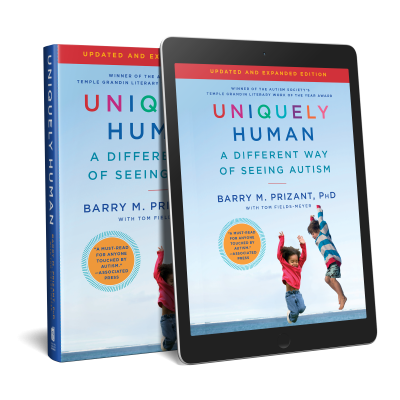
“I have read a million and one books on Autism. Uniquely Human is the best book I have ever read, hands down. Thank you Barry for this incredible gift!!!!”
– Navah Paskovitz, Mother of three boys with Autism, Co-Founder, the Ed Asner Family Center
“Compassion, learning and supportive strategies–the three essentials for working with folks with ASD–are an integral part of this must-read book.”
– Michelle Garcia Winner, Speech Language Pathologist and Founder of Social Thinking
“Thanks be to Barry for the first-ever must read written for parents, educators, and clinicians.”
– Michael John Carley, Founder, GRASP; Author of Asperger’s From the Inside-Out
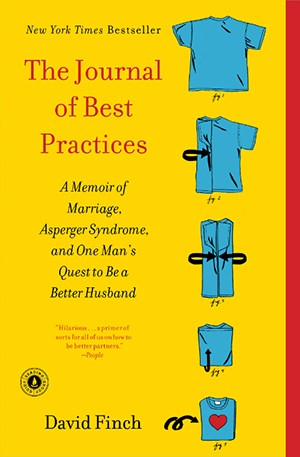
“What makes the book compelling is how funny Mr. Finch is about himself. He’s great company.”
– Susannah Meadows, The New York Times
“In this hilarious memoir (which also gives some of the finest explications of Asperger’s out there), Finch approaches trying to be a better husband and father with the determination of Sherman marching on Atlanta.”
– Judith Newman, People (4/4 stars)
“Talk about being on a roll. This dude wrote a book, he has Asperger’s syndrome. He cured himself by listening to me on the radio!”
– Howard Stern