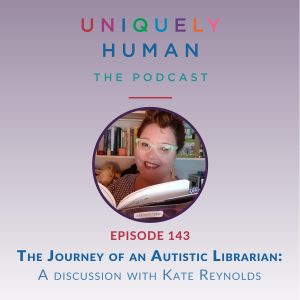
EPISODE 143
The Journey of an Autistic Librarian:
A discussion with Kate Reynolds
A discussion with Kate Reynolds
Play the Episode…
Show Notes
Kate Reynolds , also known as the Lavender Librarian, is the founder and director of Storytime Solidarity. Based in Ontario, Canada, Kate has been working in public libraries since 2010. She is also a sought after international keynote speaker, trained opera singer, patient advocate, writer, and content creator with a large social media following. Kate’s international advocacy has brought her to high-level events in Sweden, Hungary, Canada, and the United States. Kate holds masters degrees in musicology and library science at Western University as well as a bachelor of music in vocal performance at the University of Windsor. Openly disabled and autistic, Kate is working to make the world a kinder place, one storytime at a time.
Learn more about Storytime Solidarity
Featuring
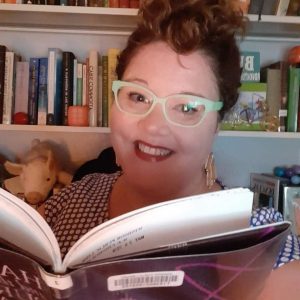
Kate Reynolds
Kate Reynolds is a late diagnosed autistic woman with exceptional talents in library science and music. As a public librarian, she sees the library as serving as a sanctuary for neurodivergent children and adults, as well as for all people. Barry and Dave discuss her unique journey, and all the ways that she is giving back and supporting children and families.
Uniquely Human: The Podcast
EPISODE 143 – OCT. 24TH 2025
THE JOURNEY OF AN AUTISTIC LIBRARIAN: A DISCUSSION WITH KATE REYNOLDS
🎙️ Transcript and Audio Usage Disclaimer
© 2025 Uniquely Human: The Podcast. All Rights Reserved.
The contents of this podcast, including all audio recordings, transcripts, and related materials, are the intellectual property of Uniquely Human: The Podcast and its fiscal sponsor, Community Autism Resources, a registered 501(c)(3) nonprofit organization.
These materials are provided solely for personal, educational, and non-commercial use.
No portion of the podcast audio, transcript, or any derivative materials may be reproduced, redistributed, modified, or publicly displayed without prior written consent from Uniquely Human: The Podcast or its authorized representatives.
Transcripts are provided for accessibility and reference purposes. They may contain minor transcription or formatting errors. When quoting or referencing the podcast, please credit Uniquely Human: The Podcast and provide a link to the original episode page.
By accessing or downloading transcripts, you agree to comply with this usage policy and acknowledge that all copyrights, trademarks, and intellectual property rights remain the exclusive property of Uniquely Human: The Podcast and its creators.
For permissions or inquiries, please contact:
📧 uniquelyhumanpodcast@gmail.com
[00:00:00] UHP: The primary purpose of uniquely human, the podcast is to educate and inform the views expressed during all episodes are solely those of the individuals involved and do not constitute educational or medical advice. Listeners should consult with professionals familiar with each individual, or family for specific guidance.
Uniquely Human, the podcast is produced by Elevated Studio. Music is graciously provided by Matt Savage of Savage Records.
[00:00:40] Barry: Hi, I’m Dr. Barry Prizant, clinical scholar, researcher and consultant on autism and neurodiversity, and a Brooklyn boy raised in the big city.
[00:00:51] Dave: And I’m Dave. I’m none of those things, and I grew up on a farm in Illinois. But being on the spectrum myself, I have plenty of personal insight to lend.
[00:01:00] Barry: And this is Uniquely Human: The podcast, a show that illuminates and celebrates autism and neurodiversity.
So today on Uniquely Human: the podcast, Dave and I are very excited about this conversation we’re going to have with Kate Reynolds. So Kate, welcome.
[00:01:27] Kate: Thank you so much for having me. I’m excited. This is my mom’s favorite podcast, and she was like, you have to apply to get on there. So she’s been bugging me for over a year to, to try to talk to you guys, because your podcast meant so much to her When my sister and I were going through the autism diagnosis process.
[00:01:44] Barry: That’s wonderful.
[00:01:44] Dave: Oh, wow. That’s amazing. We enjoy doing this. But then to hear that, hear somebody whose family was listening to this a couple years ago in the midst of, going through it themselves is really, actually very, it’s very meaningful. It’s very humbling.
[00:02:03] Barry: Silent applause for your mom.
Yes.
[00:02:07] Kate: Yeah. she’s great. She’s like the gold standard of what you want in a parent going through this. She wanted to learn as much as she could, because we were diagnosed, my sister and I back in 2020, and I think the state of autistic representation has improved more than we realized in that five years because, there was nothing.
Finding autistic adults, everything out there was about autism in children. And my sister and I were well into our thirties by the time we found out we were autistic.
[00:02:41] Barry: So Kate is, also known as the Lavender Librarian. I love it and I love your website with all the lavender and the purple.
[00:02:52] Kate: Oh, thank you.
[00:02:53] Barry: And Kate is the founder and director of Story Time Solidarity. Kate is based in Ontario, Canada, and has been working in the public schools since 2010.
[00:03:04] Kate: Public libraries, not public schools.
[00:03:06] Barry: Oh, okay. Public libraries. You are correct. and Kate is also a sought after international keynote speaker.
You’re a trained opera singer, patient advocate, writer, and content creator with a large social media following. And Kate’s international advocacy has brought her to high level events in Sweden, Hungary, Canada, and the United States. we go on and on. My goodness. You hold a master’s degree in musicology and library Science from Western University, a Bachelor of Music and vocal performance at the University of Windsor.
and Kate says that she’s openly disabled and autistic and is working to make the world a kinder place. One story time at a time. Wow. Okay. So let’s hear from Kate directly about some of the SI significant aspects of your personal journey and your professional journey.
[00:04:07] Kate: Oh yeah. I know it seems like I’ve accomplished a lot, but to me it’s actually even more jarring because before my diagnosis.
Most of those accomplishments didn’t exist. I was working in libraries, but I was very close to losing my job. I was in full burnout.
Called my mom, she describes it as under a table, but I was hiding from my balcony because I was in such mental distress. I didn’t know what was wrong. I couldn’t figure out why things weren’t working.
And, she. She got me in with a local neuropsychologist who immediately figured it out. but yeah, these accomplishments, I, just have to give a lot of credit to my diagnosis for, because since my diagnosis, I’ve been able to better figure out what things will work for me, what things that don’t work, ask for help in the right things.
And really accomplish more than I ever dreamed to the point that sometimes I think I, I feel a little bit delusional about my accomplishments. oh, those can’t be attached to me. That’s pretty cool. but that’s not me.
[00:05:13] Barry: From your diagnosis on, how did you apply just all of your gifts ’cause you, it sounds like you have so many gifts to share with the world.
[00:05:23] Kate: Before I, I knew I had gifts, but I also knew I had deficiencies and I couldn’t really predict where they were. I knew they existed. I have close friends who say, we didn’t know you were autistic, but we knew there was something, right?
There are people who are just brilliant. I’m not one of those people. I’m knocking things down. I’m showing up at the wrong time for appointments. I am struggling with kind of the stuff around the work, but then if I can actually get in and do the work. It’s, great and really fun, but most people don’t make those accommodations for people in the workplace, right?
Part of it for me is, getting to a point where, my labor is valued enough that people will make the accommodations for me. that has come since diagnosis. I can’t really, I always wanna tell my story, but I also tell people it’s not reproducible. people wanna know how I got where I got. One of the reasons is I have had access to the gold standard of healthcare. Like I started seeing a neuropsychologist. He recognized the autism pretty quickly, but then he confirmed with 12 hours of behavioral testing, I get neurofeedback therapy, so the neurofeedback is helping to heal my brain. And it also confirmed the diagnosis, taking an almost above gold standard in terms of diagnostics. Just really having that medical support. Like I’m Canadian, but here in Canada it’s not standard to be able to afford a neuropsychologist.
That was because I had an amazing family who stepped in to support me and help me pay and also find the resources. So many autistic people, even if we were to have the money, which we just seldom do because of our unemployment and underemployment rates. We can’t navigate. Systems very well. So having my mother who worked in hospital administration, having my dad who is just such a kind soul and just wants to, he thinks any failure to love his kids is on him as the father, not us as the kids.
And then my sister, who I think has had an even bigger shift with her diagnosis than I’ve had, because for her, She was diagnosed at the same time as me. we’re very similar neurologically, but we were more similar than we realized because I grew up the first 30 something years of my life thinking I had a brother.
And my sister’s diagnosis also was her finding out that her gender dysphoria was real and that she could find a way to be her authentic self. And I think that’s braver than what I’ve had to do. But I’ve had more recognition than she’s had. once we realized we were autistic, there was no hope that we were gonna pass for normal.
We weren’t gonna fit in. We were gonna have to set our own way of being. And I’ve morphed into Ms. Frizzle and I get to watch my sister looking more and more like me. By the day, we always looked alike, but now we look a lot more alike and it’s been beautiful for our relationship as siblings and.
It’s been such a gift to watch her be her true self and to find ways to advocate. She does more, she’s better with the sort of on the ground advocacy, whereas I’ve found online worked for me because maybe, I work within very specific niches, so you need to find all the, like most of the work I do as a content creator is for other librarians. And then even within that, like children’s librarians, so it’s not been as “in person”, it’s been more virtual. But my sister’s involved with our local trans wellness center. She speaks at events locally. She just, I think there’s a bravery with being an out trans person right now that I can’t overstate in this world and the diagnosis helped us come together and now our relationship as sisters is different than it was, and better. But it’s not just my sister. Every member of my family and I have a better relationship than we have pre-diagnosis, and I’ve made more friends, I’m doing better at work.
Everything is just easier.
[00:09:23] Dave: This really tracks, what you’re saying about how the, diagnosis, the, the information that you. are given. and you, read that and you interpret it back into yourself and you say, oh my gosh, this is, this makes sense. I don’t know why that’s so empowering, but it is.
it, in my case, I can’t speak for everybody. But it sounds like in your case too, and your sister saying “oh, this makes sense.”
[00:09:53] Barry: Almost comforting. It sounds like that, that you could embrace yourself
[00:09:58] Dave: validating.
[00:10:00] Kate: My, my doctor said, it was like the, old maps, it used to be a section that just said there’d be dragons and it was a section we haven’t figured out yet.
And he said, now I know where the dragons are so I can avoid them. Now I know what’s going on. Like before, I just knew I was uneven and I used to get, oh, you shouldn’t be struggling. You’re too smart for that. Because my grades were very high and the, things you look for achievement, second masters.
At 25 and I was so mad. I was 25 in one week and I wanted to get it done before 25. That is an autistic, I dunno what is. yeah, but, I just, It’s so possible to succeed enough that people don’t see your struggles. And that I think is the struggle for a lot of late diagnosed autistic people.
Where we’re only seen as our skills and then our struggles are seen as character for laws or being deliberately obtuse and it’s you think I would do this? If I knew how to not do this, absolutely not. Like I’m lost. And like for me, I get lost a lot. there’s a lot of little things.
My coordination’s a big problem. All of these things are challenging in ways that are frustrating for the, not just me, but the people around me. I wish it could be easier. It can’t. I’m doing my best. and that was also part of the affirming thing, right? Realizing that those struggles were possible with me doing my best.
[00:11:28] Dave: You know, what’s not a struggle for you is you’re working the library and that’s what the world needs you to be good at. Yeah. We have plenty of people who are good navigators, plenty of people who have spatial awareness, whatever. We need people who are good at that thing that they’re good at.
And Go ahead, Barry.
[00:11:42] Barry: Yeah, I was going to go along those same lines. I was just, I was curious about kind of the tracking of your gifts in library science and your gifts in music. And how that tracking either changed or supported your feeling of I’m a good person, I have a lot to offer that came along with the diagnosis.
So I’m thinking about pre-diagnosis, your gifts as and as a librarian and your gifts and music, and then post-diagnosis and how that kind of tracked together apart, not being that clear, but, go with it.
[00:12:20] Kate: No, it’s true. Pre-diagnosis, I figured out how things work together and libraries have always been a refuge for autistic people.
Oh. Like a lot of us who aren’t on the spectrum are spectrum adjacent. a friend of mine, Michael rets, who’s possibly the world’s most famous librarian, he just went through the autism diagnosis process. He’s shared this. Publicly and didn’t get it. And I’m like, oh, you are my neuro kin though. how did they disagree?
And there’s, some of us who are waving to each other from opposite ends of the diagnostic criteria.
[00:12:56] Barry: I just started to, I just learned a new word, neuro kin. Okay. Yes, thank you.
[00:13:00] Kate: I am not sure if I made that up. I don’t think I did. I think I got it somewhere. But I, will refer to my community as like we, the neuro flavorful, we, the neuro interest, neuro flavorful.
if we can be neuro spicy, why can’t we be all the neuro flavors? And sometimes I’m neuro a little bit too sweet or whatever. I just, I think that, accepting that we’re just different flavors and we’re all different parts of the same. But we’re all different. as they always say, if you’ve met one autistic person, you’ve met one autistic person, but also.
We can spot each other and we could spot each other before we even knew that’s what we were. I’d feel like there’s the big table and then there’s the small table of people who are actually interesting to talk to. And that’s how I split people up before my diagnosis thought, I’m not gonna that table, everybody there is so boring.
And that was, the neurotypicals.
[00:13:56] Barry: I, think that I, know we’ve heard Steven Shore say. That’s it takes one to know one as far as picking out neurodivergent people in his life and, Steve Silverman. I think talks about Audar, like radar.
[00:14:12] Kate: My friend Terra Vance, I think is the one who talks about peer review.
If you passed, there’s self-diagnosis, but then there’s another level where other autistic people claim you. And she calls that passing peer review. Oh,
[00:14:23] Dave: Peer review. I like this.
[00:14:26] Kate: Yeah. But it’s also, it’s important I think Some people have said that my belief in self-diagnosis is maybe irresponsible, but I also believe that when we have such uneven access to good diagnostics, it needs to be, and most of the people claiming it, there’s nothing malicious.
They’re not even getting anything out of it except community. I would love for everybody to be able to access a good clinical diagnosis, but I think in the meantime when they can’t. And some don’t even feel safe doing it. I, I accept myself diagnosed.
[00:15:02] Barry: And I think the, last numbers that I heard, from research is that people, who self-diagnose as autistic, than when f ollowed up with a formal clinical diagnosis, they’re 93% correct.
[00:15:18] Kate: That sounds right. And I think the ones who aren’t are the ones who are like, you’re just so close to the spectrum, but technically you’re one deviation away. It’s not that they’re not anywhere near it, but 93%, that’s even better than I thought it would be.
[00:15:32] Dave: Yes. And one thing that I always, remind people, when folks reach out to me or I’m talking to anybody, is that, Okay. There’s, do you fit, do you, fit the, so unquote, or, match, are you aligned with the parameters of, what diagnosticians have to use their rubric for? What is, and it’s very clearly spelled out in the DSM five, whatever, but do you fit these criteria?
And again, it’s not a. Petri dish, we take a cheek swab and we count the bacteria and we say, okay, that’s, that’s stomach flu or what, that’s a virus, but you get the right idea. in, in, in these sort of subjective and lived experience sort of diagnoses, it, it makes so much sense.
Sense that there is somebody who says, I’m the sum of all of these, quote unquote autistic. We’ll say, traits, even though not an autistic trait, but Yeah. I’m the sum total of these things and I didn’t get a rubber stamp diagnosis from an official, but I am still, I’m still facing, challenges in these ways that make life demonstrably, and, in some ways quantifiably difficult.
so what’s really, important I think is just knowing. Having the user manual to your mind and to your nervous system and to what is regulating dysregulating. and the diagnosis is almost like, okay, cool. So there’s a system somewhere that recognizes me as autistic. Great. But what I know about myself is this is how I’m going to enter into this situation in a way that is gonna keep me regulated.
[00:17:22] Kate: Yeah. And I got a full writeup, not just a diagnosis. Yeah. So I wish that was accessible to everyone, where you can really see, okay, here’s where I’m strong, here’s where I’m weak. And for me, that was like a process of calibration. Okay. Writing and singing are not just super easy, like I think they are.
Those are skills that I have, but also these things that I think are hard for everyone are not, and it’s okay that these are harder for me. I can just ask people for help and I know when to ask for help and I’m starting to know who. Because that’s a whole lot.
[00:17:50] Dave: Yeah. So there are some things in my, sorry, Barry, I was just gonna make a joke here.
There are some things in my own writeup, of course, there are some things in my own writeup that I actually, I was very proud of the, the doctor who did mine said. noted that I have good hygiene and a nice gait. So apparently I walk nicely and I smell good, so I’ll take it. Those are small wins.
[00:18:15] Kate: I don’t have those.
I have bad hygiene in a different way, not, I was always somebody who would accidentally burn myself trying to exfoliate or something. Like I would be too ambitious and I would harm myself, with my attempt of hygiene.
So I remember over waxing my eyebrows and that kind of thing. And then my gait is an absolute mess.
we would have writeups.
[00:18:38] Dave: That’s good because, my opera game is not on point so
[00:18:43] Kate: well, and that’s where my gate was a problem too. They were like, you’re a bit distracting on stage. So I gave up. So speaking about the career thing, I gave up opera. I thought it was over, I loved it. It was just too painful to even go back to singing for a while.
So I didn’t sing for, once in a while. I do a little bit, but it wasn’t much for almost 10 years. And that was my first 10 years in libraries where I was a reference librarian for the first 10 years. And then I got transferred to another library. There was nobody who wanted to run the children’s programming at that time.
And I thought, I’ll give it a shot. And then for me, it was when the pandemic hit that things started to come together. And that was very shortly before my diagnosis. So I was in a fragile state, but I was really wanting to find something that made me feel like I was making the world a better place and adding something and.
I missed the reference librarian job, but That was, something I found a way to be good at. But what’s really, I think, made story time work is I’m finally harnessing the power of autistic hyperfocus. And special interests. So I was like, if I can make being a librarian, my special interest all day going to work is gonna feel like I get to I saw a meme. It was like, oh, I get to go pretend I’m cosplaying as a librarian at this library where I’m employed as a librarian. So I go and I dress like Ms. Frizzle every day. I’ll show you. I’m wearing my understated glasses, but these are very popular with the little ones. So I show up.
I have a really fun time with the little ones. And yeah, I just think too, especially as an autistic person, I can relate to their idea where small children are brilliant, but they don’t know anything yet. And so everything is learning. Everything’s a learning experience. And I’ve always thought that programming for the very young can prepare them for the rest of their lives and really, Beautiful ways. And so where things started coming together for me was during COVID, they said, does anybody wanna do live streams for the library? I said yes, I think I vol. I don’t think it even took me like 10 minutes to volunteer after the email came in and by the next week I was live streaming from my living room to keep kids safe.
And I’m planning these story times and I realized there were no songs about face masks and I wanted to include them. So I started writing face masks songs, brilliant to popular children’s rhymes. They’re pretty goofy, but they worked. They were really catchy because I was picking, would you like to hear one? Is it too cheesy?
[00:21:17] Dave: I wanna hear it.
[00:21:17] Barry: Sure. Yes, absolutely.
[00:21:18] Kate: okay, this one’s my bunny lines over the ocean. Your face mask should cover your face holes, two nostrils, plus mouth, 1, 2, 3. Your face mask should cover your face holes so you don’t share your germs with me. And then there’s, a little course.
Keep back, keep back, six feet or three meters from me. From me. keep back, keep back,, and still wear your mask orally.
[00:21:48] Barry: I could just imagine the children, whether it’s through Zoom or whether it’s live. Just being riveted by that.
[00:21:56] Kate: They loved it and I loved it and it meant so much to be able to help them, to make them feel safe.
And my friends would text me, my little ones singing a, different, I wrote 20 of these things. So my little ones singing his little, my new face mask while he waits for the bus and it makes putting on his face mask exciting instead of scary. Yeah. And. That meant so much. the idea that I could help in that way and you use the tools that you have and for me, my tools were children’s story time and I’m still trying to think of ways that we can use children’s story times to prepare people, like. And to prepare little people. ’cause they’re people, even if they’re tiny, there’s all these things in life that are gonna happen and what do we do? And then I. So I’ll, I wanted to try to get the chronology out so that you have it, but, so during the time I was doing these live streams, that’s when I got diagnosed.
And that’s when things turned around and started to get better. But at the same time that I was going through my autism diagnosis, I was also, the last eight years have been a really challenging time for me. Physically, health wise? Yes. So I was born with Osteogenesis, imper, Perfecta, and I was diagnosed shortly after birth because it’s incredibly genetic.
So with my mother having it, we knew I had about a 50 50 chance. And, my sister and I both have it, several of my cousins. Much of my aunts.
[00:23:13] Barry: That’s also known as brittle bone disease, is that correct?
[00:23:16] Kate: Yes. Yeah.
And it’s, it was made, popular . Every once in a while it gets on a medical TV show and people text me, you were on call the midwife, and it’s my bone condition, a baby had it. But, And, it was complicated for people with young children too. for years they would’ve to carry paperwork. I think many still do to prove that the injuries that the child has were not caused by abuse because you could have injuries that look like you’ve thrown a child and nothing has, happened like that at all. And that was part of the reason we thought I was awkward as a child. Like we blamed a lot of things on that bone condition ’cause it wasn’t well understood. I think there are links ’cause it’s a collagen disorder. Not not on EDS, but easier to identify. ‘Cause we have our eyes, at least in my family, we all have bright blue sclera. In our eyes, they’re quite blue. And, with all of us having it, we all got diagnosed pretty quickly. So I’m, a very sick person in a lot of ways, but I think that, I. The, thing about the OI is when I’m okay. I’m, pretty okay.
I’m very careful because as I mentioned previously, I’m so clumsy and fragile is just a really, bad combination. So I have to be really careful. but now that I’m at a level where I seem fancy, I’m getting these accommodations I never could have had years ago.
In a, in about a week, my dad and I are flying to New York, for a patient advocacy job.
This organization normally only pays for the patient, but they’re paying for him to go too so that I don’t have to navigate an airport by myself so that he can help me with the walker, which I use in airports. ’cause people will knock you right down in an airport. It’s dangerous. And also he can help me navigate.
Unfortunately, something were to happen, I’d have somebody to advocate for me in the hospital because some of these injuries that I’ve had have been so severe that trying to manage on your own is almost impossible.
[00:25:12] Barry: it’s, so remarkable how you’ve taken your experiences, and now we’re talking about your medical issues and you turn it on its head and say, how can I give back and help others?
Tell us just a little bit about the patient advocacy piece.
[00:25:31] Kate: So I stumbled into that. That’s been a glorious surprise because I really feel like I get to do good there. I talk about my experience and I talk about how difficult it has been for me to navigate the system. GPP is even rarer than osteogenesis imperfecta, lucky me. And it almost killed me. So I’ve had four bouts, in four years this, or in eight years, the same eight years that I’ve been breaking. And all four times I’ve been treated with prednisone, which has taken a really big toll on my body. those high dose steroids, it saved my life, but at a huge cost.
So now I’m trying to get back into shape, but one thing that it’s helped me realize is. Whenever we’re dealing with illness as a medical system, everybody treats it as, oh, you broke your ankle. nobody considers the fact that it’s aggravating the foot that you broke a few years ago, or the fact that the prednisone makes the bones worse.
Which, and everything. It affects everything else. And yet, healthcare systems wanna treat people like a collection of organs and limbs and things that don’t interact when they do. And now, I’m fortunate that I’m knock on wood in remission from my GPP at this point, but there is a much more expensive pharmaceutical option that doesn’t have the same.
cost to the body as steroids, but it’s super expensive. So it’s very possible that an insurance would say, you don’t need this. Just take prednisone again, without realizing that prednisone is why I’m on other meds right now, trying to get my health back. And I think when we treat people in that way, we lose a lot of better patient outcomes.
It makes preventative care less likely. And then. I think one of the things that has been the most powerful about sharing my story is when I’m in a, healthcare setting or talking about it, sometimes people cut me off before the job part because they don’t wanna embarrass me because they assume I can’t work.
I get that all the time and I work almost the equivalent of two full-time jobs half the time.
Because I do advocacy work from home, when I get home from my day job. advocacy for libraries, but also for patients. And I see myself as a living case study, like I’m getting pretty good healthcare.
I’m not getting the gold standard in every area, but in some areas I am. And look at how much more I can accomplish when I’m supported. And how many people are we missing? Who, if they got amazing healthcare, could do great things to serve? Their commun. And instead they’re treated like they’re a burden to society, and it’s simply just that their gifts aren’t recognized.
It’s not that they’re not there, it’s that they’re not supported and that they can’t find a way to use them because they’re too busy trying to survive.
[00:28:27] Barry: Yeah. I, don’t know if you’re familiar with, one of our previous guests, Dr. Mel Houser, but some of your comments, she’s an autistic physician who has a practice, in Vermont, and, it.
I’m speaking in general terms here, but she talks about the fact that especially with neurodivergent, people who have co-occurring conditions, people ignore the systemic interactions. Absolutely. That, go on. It’s, look at that, look at the foot of the elephant, or look at the trunk of the elephant and go just for that.
And what you’re saying resonates so much with what Mel has said and continues to say.
[00:29:07] Kate: Absolutely. And I’m so grateful that I’m meeting people and getting to have these conversations, hearing what other people are going through in patient advocacy, really informs my work. And then my next big patient advocacy gig, I’ve got a, funny story around it if you’d like.
Sure, of course. But I just, I couldn’t believe it. so I am going to be speaking technically adjacent to, but around the United Nations in about a week and a half. I don’t look like someone who should be speaking at the United Nations at the best of times. And the other day I was taking out my recycling when I found out and I was using a walker to keep everything away and everything was crazy and I was dressed miserably, and I’m just going to the recycling in my building.
So I live in a large building and one of my. Neighbors sees me and I, just checked my phone while in there. I was like, oh, I’m going to the United Nations while I’m in my messy, and I saw her face change and I was like, oh, I shouldn’t brag. I’m just such a lucky person. And then later I’m sitting on my balcony by myself and I was like, I don’t think she thought I was bragging.
I think she thought I was delusional. And it’s just. It’s, that’s the autistic experience for me. When I’m doing something fancy, nobody can figure out how I wandered in there. And then when I am struggling, nobody sees it. ’cause they’re like, didn’t, I see you on TV last week? Aren’t you fine?
so it’s that high, low and that. Inconsistency and I just absolutely can’t read the room. That can be an issue. I thought I was getting fired possibly by the organization that is sending me to the United Nations. Oh. They said, are you sure you wanna continue in the program? And I thought they were trying to give me an out so they wouldn’t have to fire me.
Oh. And they were trying to figure out if they could send me this offer to go to.
[00:30:55] Dave: Oh man,
[00:30:56] Barry: if, it helps with any concerns about what seems to be this, oh my God, I’m going through the United Nations. I’ve been involved in a couple of events there that were autism related. People are so welcoming and so friendly, and I think it’s this notion of. Okay. We are all human beings as members of this world. and there’s this sense of people of gratitude and appreciation, and I’m sure they’re going to learn a great deal from you about your experiences.
[00:31:28] Kate: I really hope so. It just, it also feels like both like an. Honor and like a, heavy responsibility, right?
Because I spent my early parts of my life, all the pre-diagnosis time thinking, man, if people would just give me a chance and listen to me, I could do some pretty cool stuff. But now people are listening to me and I think, oh, I hope I’ve researched enough. I hope I’m advocating not only for myself, but for others. I just wanna find ways to do it well, and it’s, a heavy responsibility. It is, it’s an honor, but it’s scary sometimes.
[00:31:55] Barry: It’s so what I would like to do is to, Go back to. The lavender librarian. Okay. and, also, it’s the beginning of the school year and we do have, many of our loyal listeners are either professionals in the school or parents whose kids are going off to school.
And, you, had mentioned that the library was always a refuge for you and you could understand why Quiet. it’s a culture that wants everything to be as regulating as possible, and pe and it a chance for alone time to look at books. A chance, for a group time. But first of all, why the lavender librarian and, secondly, what can you share about the importance of reading book sharing experiences and going to a public library or a library in the school. What advice would you give now so much that so many kids and families are about to go down?
[00:33:04] Kate: Let me start with the advice to families because it’s so important that they take advantage of their library.
I think a lot of people don’t realize what a great free resource they are. In most places, they’re completely free and they’re getting freer. There’s a move away from even fines because, They tend to, for people who are doing well, they’re not a big deal. But for people who are struggling, sometimes even $8 is the difference between feeling like they can go back to the library and feeling like they can’t.
So most libraries are getting rid of fees. We’re trying to be more inclusive in that way. We’re trying to find books that we reflect a wider swath of experiences. That I think is one of the key things about Books too, is it is the closest we can usually get to getting into somebody else’s perspective is reading their words.
And with picture books, we’ve also got the illustrator adding, But books are a beautiful way to teach empathy and to teach so many skills. There is virtually nothing in this life that I wouldn’t rather read about before I experience. It just, it prepares so much, and that’s at all stages. I’ve got a member of my team at Storytime Solidarity.
Her specialty is children’s books on death and dying and grief, and if a child is. In many of these cases, it’s something we see coming, right? We know an important person to a child is in end of life.
But in some cases it’s surprising. And even little things like the death, little things, it’s a huge grief to a child, but the death of a pet, like I’ve had friends text me and say, my child is gonna wake up tomorrow and there’s no cat. We had no idea. How do I explain this to a kid who’s obsessed with the cat? There’s great books for that. and we’ve, my team, like they’ve done book lists, but I don’t. I know that libraries are my special interest, so it’s hard, but I don’t know if there’s a problem that libraries can’t help make a little bit better.
Books are the solution, but also having that staff, most libraries are staffed with some of the kindest, most knowledgeable people.
Some of us think of ourselves as matchmakers for resources. It’s not just about finding a good resource or a good book. It’s about finding the right one.
For the person in front of us. We’re not trying to push what we think a child should read. We’re trying to find the things that will engage the child, the things that will address the things that are going on in that child’s life. It’s very specific.
[00:35:29] Barry: Yeah. when I think of a librarian and I think of a person who’s there for no other reason than to enhance and enrich the lives of others, in a very gentle way.
it’s not, a coercive or convincing way. Not at all. Gentle.
[00:35:47] Dave: Books are, every book is hundreds or thousands of ideas. And then a library is hundreds or thousands of books. And the librarians are these sort of, angels that, that come in and they curate for us, based on what it is we’re needing.
Based on how we are needing to enrich ourselves, they are able to curate these thousands upon thousands of ideas and say, you know what would really help you out and, get you to the right thing. It’s incredible.
[00:36:22] Kate: And we don’t have to know the answer, we just have to know where to find the answer.
And the answer is in books. But also, often too, we’re connecting members of the community with other organizations that, sometimes people will come to the library with something a library simply doesn’t do, or maybe that library doesn’t do, but we tend to know. Who does, and we will send you there with a warm for so many of us will call ahead and make sure, help people with that.
So some of those executive functioning skills that many of us librarians have trouble doing for ourselves, we can somehow do so easily for others.
[00:36:53] Barry: Yeah, and, I think I’m, flashing back to my childhood and going, in New York City, going to the public library and sometimes just to browse and a librarian will come over and say.
What are you interested in? And it’s wow, how many people come up to you who don’t know you and say, what are you interested in? And then act as a guide to maybe say, introduce you to places, that you would never go to or never find on your own.
[00:37:23] Kate: Absolutely. And for so many kids too, I think like the first book that resonates will get them reading more books.
But for a lot of kids that first book is so challenging. So a lot of people, for years it was just asking kids what other books they liked and trying to use that. But what are you interested in is actually the right first question because I don’t, I can have a kid who’s obsessed with a sport or virtually anything an animal.
We get them a bunch of books on that and then. That gets them reading because they’re about something that child is already really, excited to learn more about, and that knowledge acquisition motivates them to read. And also the graphics in these books are great. it’s getting to the point that it engages their brain in so many different ways, and it’s really fun to get to do that.
And I think if most people you know, and with older kids like, like reading, I’m like, okay, can you tell me if there was one book that you read in your life that really got you excited where you needed to see what happened next? And most kids can come up with one. And then as a librarian I’ll say, how can I find, you know what, I can actually find you a book that’s a lot like that book.
So, taking one book as an entry point to more and just really. There’s a, sense of agency in picking library books too, that I think is new for a lot of children. Yes. They have not been able to make a lot of choices yet. We’ve got, kids who are three years old who picking out a book is like the biggest choice they have ever made, and they might be holding their own library card and it’s such a nice little confidence builder.
Also, like the cutest thing you’ve ever seen. they’re just, they really make the library sparkle.
[00:39:00] Barry: I could just picture the kids coming out after speaking with you, with the books under their arm with a big smile on their face.
[00:39:08] Kate: We have a woman who brings a multi child thing and one day they were all reading books when they left and waving to me, thanking me, and I was like, this is, my life is made.
[00:39:17] Dave: I, I remember that feeling vividly. And, being the first time I was like, my mom is letting me talk to this adult, and I, get to be the one who puts the books on the counter. That’s adult stuff. And, and, then leaving with the memory. And as we’re driving home back to the farm. Just remembering and the building is ultra quiet and organized.
what is that place? The best place on earth?
[00:39:45] Kate: Yeah, it’s pretty great. It’s pretty great. And I love the book Smell. I know like sometimes it’s, there’s just, there’s something about a library that really is, and
[00:39:54] Dave: yes.
[00:39:54] Barry: Yes.
[00:39:55] Kate: I’ve heard people call them like a secular sanctuary. I’ve heard them called all kinds of beautiful things, but I think the library is something different for every person too.
And that’s also beautiful. Yes. we have people who come because it’s not quiet. We have people who come because they wanna do community events and meet other people. For people that can be a big part of their social life or, It can be like, we have seniors who will say things to us like, the library’s just about the only thing still keeping me going.
And that’s an honor and that’s a, it’s a, responsibility, but we wanna make things as good for those people as we can and we get to, so it’s pretty exciting.
[00:40:30] Barry: Yes.
So, you, me, you mentioned earlier, story time, solidarity, and you said, my colleagues that, why don’t you explain what that is?
[00:40:40] Kate: Okay. I’m really bad at explaining what it is ’cause it’s like too cool for me to believe that it’s mine. I just love it so much. There’s all these amazing people that I work with. So story time, solidarity. We’ve been trying to decide what we are, but I think we’re calling ourselves a librarian collective.
Technically we are now, a registered corporation here in Ontario. But, I had to because we needed a bank account, so it took forever to do that. But we run a website, but we started as a Facebook group. What we started as more than that was, it was one of the times I was bedridden is when I started it.
I was stuck. I knew it was gonna be at least another six to eight weeks before I could take a step, and I was just feeling absolutely useless. And there was this Facebook group that I loved and I used for years called Story Time Underground. And story time underground was like the go-to resource and they posted that they were shutting down ’cause none of them even worked in libraries as children’s librarians anymore.
It was just too much to maintain and that they hoped somebody would take it up and start a new group. Somebody tagged me because I had just shared a post of my story time being covered by the local news. They called me the singing librarian. It was very, exciting for my live streams. It was like the coolest thing that ever happened to me ever since my niece refuses to accept that I am in fact not very, famous.
And it was just so cool. And so somebody’s Kate likes libraries or likes story time more than. Anybody I’ve ever met, which, it’s my autistic special interest and my job. So Yes. and it’s become even more of a special interest over time. And they said, you should start something.
And I said, oh, okay. What do we do? What do we do? And I said, I’ve got a few titles. What do you think? Solidarity story time? They’re like, no, that sounds political. It sounds boring. You’re like, what if you reversed it? And so within 20 minutes. I had come up with a name with some help from my amazing colleagues and started a Facebook group and within a week we had 400 members, and within two weeks we had two. Within a few months we had in the thousands. I think today we’re at around 6,300 members. We screen ’em, so they’re all people who actually work with kids. Whether they’re ECEs, we have some speech language pathologists. Anybody who’s doing story time is welcome to join. Anybody who’s not, we tell them to join one of our sister groups so they won’t be bored with recommendations for egg shakers and all the, we get into the really detailed stuff like, we’re writing our book right now.
yes.
[00:43:13] Barry: I wanted to ask about your book.
[00:43:14] Kate: So we, basically get into all the stuff that we wish people had told us because ev Okay, so it grew super fast. And then I met some amazing friends, some of whom got diagnosed with autism after me because of how well we connected, I have some news for you, but I think you already know it.
I was like, what’s the news? It’s I’m gonna get assessed for autism. I think I’m autistic. Oh. Oh no, I did already know that. Yeah. I just didn’t wanna tell you till you figured it out because I thought you were pretty close and I didn’t wanna, I’ve met this amazing group. I think there are. a few core people we’ve worked with the most closely.
we have, I have now deputy directors under me there somehow. I’m the de director still, although I don’t plan on staying in that role forever. And, it’s just this amazing team. There’s about 20 of us. We write collaborative blogs. We’ve made videos, and Pel out in New Zealand. She is so cool. ti she is what she calls it, that’s the traditional Maori name.
But she did, we’re just, we weren’t sure what to do, but we wanted to do things and we were excited. So she made all these videos and Maori of children’s songs and we’ve just been doing everything we can to welcome everyone. And so it’s just grown and I’m really bad at explaining it ’cause it, it just feels to me when I create something.
There’s no ego in it. It’s oh, I wish this existed. I would’ve loved to have been a member of story time solidarity. I think I would’ve preferred that to running it ’cause it’s been a lot of work. But, so it’s this Facebook group, I guess we’re a company we’ve been doing, we teach the teachers for almost like a trade publication at this point.
And, we’ve launched our first course and that’s sold. So I was like, oh, I didn’t realize we could do something that was monetizable. one of the first things we did was, so it was finding my singing voice and my musicology degree. It felt like when it’s. Fall and you put on a code and there’s $20 in the pocket. I was like, oh, I’m a trained musician. I’ll use this here. Ah, so one of our focuses has been on music at story time because I think children deserve quality music. Yes. Yeah. And that quality music helps them learn better. It makes them more engaged. It treats them like people who are worthy of being spoken to with respect, even if they’re tiny.
[00:45:42] Barry: Yeah. So I, love the integration of, Yeah. Not only talents, but your deep interests both in music and in books. That’s pretty amazing.
[00:45:52] Kate: I’m just thrilled of coming together in this way. I love singable picture books for story time. I think that there’s so much, especially when we consider that singing is part of a child’s early literacy learning.
It slows down the words. It helps with their funnel, like it helps on so many levels.
[00:46:10] Barry: I still want to hear maybe this is the best way to, to send everybody off after this wonderful discussion. Why the Lavender librarian?
[00:46:21] Kate: So when I was a little girl, my mom used to send everything with lavender and it was my absolute favorite scent. And purple is my favorite color. And so I was, and I love alliteration. Everything I do is literative. The book that we’re writing is Story Time Solidarity is gonna be called either the Story Time Survival Guide or Story Time Solidarity, story Time Survival Guide. Like I love alliteration. So I started it and then two weeks later, someone’s Did you pick that ’cause of the Lavender Menace or did you pick that Because Purple is an autistic couple. No, I didn’t know. I love it. I love that there’s Intertextuality. I love that. It could be an incredibly nuanced, cool thing, but that is. I found out after and it’s delightful. But, so there’s all these connotations that I didn’t realize and they work, but I didn’t know about them.
[00:47:08] Dave: It was meant to be.
[00:47:09] Barry: Right. And a beautiful website to go along with it.
[00:47:12] Kate: Thank you so much. We really, we just wanna try and help and, when things are hard. Finding community, finding ways to build community, support others, it really makes things easier.
I know a lot of people are having a hard time right now, and I know especially autistic people who are sometimes hyper empathetic and scared. Worried, but. I guess if I could finish by saying, the thing that helped me and I think could help so many others is finding a way to help other people. Finding a way to look outward and find that kindness and it really can even help with like nervous system regulation. ’cause you feel so good when you can do good for others.
[00:47:53] Barry: It’s so clear you’ve devoted your life in so many ways, but in ways that tap into. Things that you love, things that you know about, things you wanna learn more about.
and I, just say kudos to you. My goodness. thank you.
[00:48:09] Kate: I’m very grateful for the life I get to lead. And I just, if I had one wish, it would be that more and more people could lead lives like this. I want the nice things I have to be for everyone.
[00:48:20] Dave: Yeah, you’re building an amazing legacy, of, transforming people’s lives, and you won’t, even know the full impact of it.
That’s, the beauty of it.
[00:48:31] Barry: Yes. Absolutely. Yeah.
[00:48:32] Kate: It’s, I’m grateful. Yeah.
[00:48:33] Barry: Kate, it’s been such a pleasure to get to meet you and learn about your incredible giving back to the world. it’s, I learned a lot, so thank you so much.
[00:48:45] Kate: Oh, thank you. Thank you so much for that and for all you do, truly.
[00:48:49] Dave: Thanks, Kate. It was great meeting you. Thank.
[00:48:52] Kate: Great meeting You too. Thanks.
00:00:00
00:02:15
00:06:49
00:11:01
00:19:32
00:24:19
00:30:59
00:33:57
00:42:26
00:48:06
00:50:52
…and Continue the Discussion
Do you have a book or podcast club? If so, you may use this discussion guide to facilitate a conversation about this episode.
1. Kate speaks of the benefits of being diagnosed, and states “My diagnosis saved my life”. What was most striking to you about how she shares the impact of her autism diagnosis not only personally, but within the context of her family?
3. Kate also shares that “I’m a mass of contradictions and a twice exceptional autistic”, and that her “uneven nature” results in a profile of skills: singing, writing, audio memory. How has she integrated her strengths and interests in her life’s journey? Do you, or do you know of others who have worked hard to do the same?
3. How has Kate’s expertise as a librarian and in music fit well with supporting children, both neurotypical and neurodivergent? How does her role as a librarian provide a special path to “giving back” in supporting parents and educators in having a positive impact on children’s development?
HOSTED BY
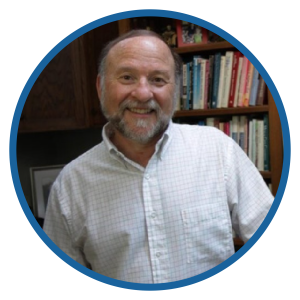
Barry Prizant, Ph.D., CCC-SLP
Dr. Barry Prizant is a speech-language pathologist with more than 50 years experience as a researcher and international consultant for autistic and neurodivergent individuals and their families. He is an Adjunct Professor of Communicative Disorders at the University of Rhode Island and Director, Childhood Communication Services (a private practice). Previously, he served as Associate Professor in the Department of Psychiatry in the Brown University School of Medicine, and held a tenured professor appointment at Emerson College. Publications include 5 books, most notably Uniquely Human: A Different Way of Seeing Autism (2015; 2022) and The SCERTS Model manuals, an educational approach implemented in more than a dozen countries. He has published 150 scholarly chapters and articles and serves on numerous professional advisory boards for journals and professional organizations. Barry has presented more than 1000 seminars and keynote addresses internationally, including two invited presentations at the United Nations for World Autism Awareness Day. His career contributions have been recognized with honors from Brown and Princeton Universities, the Autism Society of America and the American Speech-Language-Hearing Association.
Visit Barry’s website here
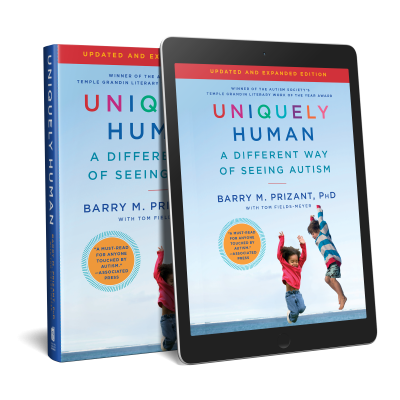
Uniquely Human, the book (Updated and Expanded edition!)
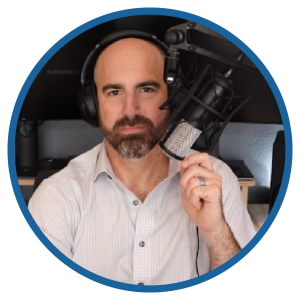
Dave Finch
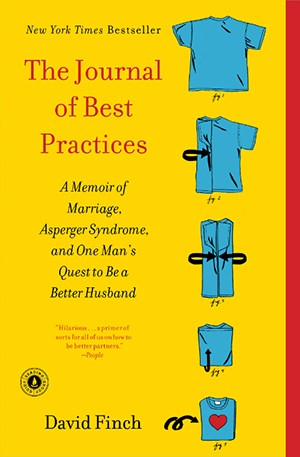
Dave Finch is the author of the New York Times bestselling memoir, The Journal of Best Practices: A Memoir of Marriage, Asperger Syndrome, and One Man’s Quest to Be a Better Husband. As a writer and creative consultant, his work has appeared on ABC, CBS, NBC, CNN, NPR, SiriusXM, The New York Times, Rolling Stone, The Howard Stern Show, and the award-winning Netflix series, Atypical. Based in Denver, Dave’s company, Elevated Studio, produces this podcast and other recognized series.
Visit Dave’s website here
“I have read a million and one books on Autism. Uniquely Human is the best book I have ever read, hands down. Thank you Barry for this incredible gift!!!!”
– Navah Paskovitz, Mother of three boys with Autism, Co-Founder, the Ed Asner Family Center
“Compassion, learning and supportive strategies–the three essentials for working with folks with ASD–are an integral part of this must-read book.”
– Michelle Garcia Winner, Speech Language Pathologist and Founder of Social Thinking
“Thanks be to Barry for the first-ever must read written for parents, educators, and clinicians.”
– Michael John Carley, Founder, GRASP; Author of Asperger’s From the Inside-Out
“What makes the book compelling is how funny Mr. Finch is about himself. He’s great company.”
– Susannah Meadows, The New York Times
“In this hilarious memoir (which also gives some of the finest explications of Asperger’s out there), Finch approaches trying to be a better husband and father with the determination of Sherman marching on Atlanta.”
– Judith Newman, People (4/4 stars)
“Talk about being on a roll. This dude wrote a book, he has Asperger’s syndrome. He cured himself by listening to me on the radio!”
– Howard Stern