EPISODE 142
An Autistic Mother Reflects on Mothering
and Writing:
A discussion with Julie Green
and Writing:
A discussion with Julie Green
Play the Episode…
Show Notes
Julie Green is a professional writer, a mother, and is a late diagnosed autistic women. She, Dave, and Barry discuss what led to her late diagnosis, and the insights she has as an autistic person in raising her now teenage autistic son. Julie has also published professionally on parenting issues and discusses the process of writing a memoir that focuses on motherhood and autism, while simultaneously deepening her understanding of her own autism.
Her Memoir, Motherness
Learn more about Julie on her website
Join her Substack, The Autistic Mom
Featuring
Julie Green
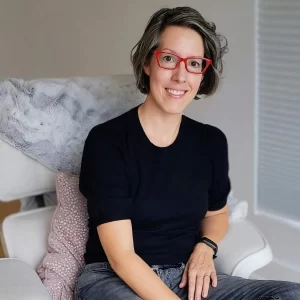
Julie Green is a writer based in Kingston, Ontario. Her son, Carson, was diagnosed with autism when he was three. But like so many women, it took her a long time to realize she might also be on the spectrum. She was finally identified at 44. Her work on autism and on parenting has been published in the Washington Post, Globe and Mail, Parents, Today’s Parent, and Huffington Post. She has appeared on various shows and podcasts, including CTV, BBC Radio, Global News, and Sirius XM. She writes about her experience as an autistic mother raising an autistic child on the Substack newsletter, The Autistic Mom. She is the author of Motherness, a memoir of generational autism, parenthood and radical acceptance.
Follow on Instagram
Connect on LinkedIn
Uniquely Human: The Podcast
EPISODE 142 – OCT. 10TH 2025
AN AUTISTIC MOTHER REFLECTS ON MOTHERING AND WRITING: A DISCUSSION WITH JULIE GREEN.
🎙️ Transcript and Audio Usage Disclaimer
© 2025 Uniquely Human: The Podcast. All Rights Reserved.
The contents of this podcast, including all audio recordings, transcripts, and related materials, are the intellectual property of Uniquely Human: The Podcast and its fiscal sponsor, Community Autism Resources, a registered 501(c)(3) nonprofit organization.
These materials are provided solely for personal, educational, and non-commercial use.
No portion of the podcast audio, transcript, or any derivative materials may be reproduced, redistributed, modified, or publicly displayed without prior written consent from Uniquely Human: The Podcast or its authorized representatives.
Transcripts are provided for accessibility and reference purposes. They may contain minor transcription or formatting errors. When quoting or referencing the podcast, please credit Uniquely Human: The Podcast and provide a link to the original episode page.
By accessing or downloading transcripts, you agree to comply with this usage policy and acknowledge that all copyrights, trademarks, and intellectual property rights remain the exclusive property of Uniquely Human: The Podcast and its creators.
For permissions or inquiries, please contact:
📧 uniquelyhumanpodcast@gmail.com
[00:00:00] UHP: The primary purpose of uniquely human, the podcast is to educate and inform the views expressed during all episodes are solely those of the individuals involved and do not constitute educational or medical advice. Listeners should consult with professionals familiar with each individual, or family for specific guidance.
Uniquely Human, the podcast is produced by Elevated Studio. Music is graciously provided by Matt Savage of Savage Records.
[00:00:40] Barry: Hi, I’m Dr. Barry Pand, clinical scholar, researcher and consultant on Autism and Neurodiversity, and a Brooklyn boy raised in the big city.
[00:00:51] Dave: And I’m Dave. I’m none of those things, and I grew up on a farm in Illinois. But being on the spectrum myself, I have plenty of personal insight to lend.
[00:01:00] Barry: And this is Uniquely Human: the podcast, a show that illuminates and celebrates autism and neurodiversity.
Today on Uniquely Human, the podcast. Dave and I are thrilled to have an author who has a new book coming out, and that is Julie Green. Julie, welcome. Thank you. Pleasure to have you on. and a little bit about you. Julie is a writer based in Kingston, Ontario. Her son Carson, was diagnosed with autism when he was three, but like so many women, it took her a long time to realize that she might also be on the spectrum.
She was finally identified at 44. Her work has been published in The Washington Post, globe and Mail Parents, today’s Parent and the Huffington Post. Julie has appeared on various shows and podcasts including C-T-V-B-B-C, radio Global News, and Sirius xm. She writes about her experience as an autistic mother raising an autistic child on the Substack letter, the autistic mom.
She also is the author of Mother. A memoir of generational autism parenthood, and radical acceptance. So as a late diagnosed. Person. what led you to consider that you might be autistic?
[00:02:36] Julie: Oh, as I said, it was a such a long haul, like 10 years. It really took me a very long time for the penny to drop. In part because going back not so long ago, little to nothing was known about autism generally, let alone how it presents differently in girls.
And females. So first, the learning curve was incredibly steep. When my son was diagnosed, he was three. And this was around, oh, was it 2011, 2012. So you know we had Rain Man, of course. And yeah. there was even, there was no, there, there was, not really a lot of information out there.
And I read what I could and we tried to digest and learn really quickly, to try to help him. But as I said, there was nothing really known about girls and women. eventually, temple Grandin was on the scene and I was like, no, not like Temple Grandin. Every now and then, I’d have these moments with my son and I’d think there was this sort of synergy where oh, there was a siren, or I don’t know, the hand dryer.
And we’d both, or I’d think, oh, he can’t wear that. Like that, top is horrible. I would just intuit certain things. But then I would think, all the usual stereotypes. No, I have friends and I can, I’ve had jobs and you name it, all the list of stereotypes. I think it can’t possibly true, but there were these uncanny similarities and I liken it to a Venn diagram basically, that we kept meeting somewhere in the middle, but we were also, I was not a, little.
I was obviously not a little boy lining up trains, so it just did not, it did not cross my mind until very gradually. I got to know, I think it was in the blogging, blogging world in days, and I was, writing about starting to learn about autism, writing about parenting pieces, about my son, and, I got acquainted with, an autistic woman.
And then it was like, oh, okay, yes, I see this now. So it was really quite glaring. And even then, even then, a few more years went by and I did the questionnaires online and I thought, no, this is not really gonna leave me alone until I have the definitive, I’m that sort of person. some people are not.
But no, I need that. I need the rubber stamp and I, really need to know definitively. but having met her, that was the first autistic woman I’d met. And then that sort of cemented things for me.
[00:05:44] Dave: Did, when, how did that come to be? Because I remember when I, very similar trajectory, with you and it was I, want that licensed clinical psychologist to, to tell me what’s going on here, not just an armchair diagnosis and everything.
My first two sort of adult interactions on the spectrum. were, men. So it was a after my diagnosis, So it was, Alex Plank who started this website called Wrong Planet for, folks on the Spectrum.
And, and now is a filmmaker in Hollywood and doing his Alex Plank thing. And then, John Elder Robeson.
Who, was the most gracious, and endearing person I had ever met at that point. and I fell into those just by accident. How did you happen to, get connected with somebody who was on the spectrum in that way?
[00:06:44] Julie: I was writing for a parenting magazine and this woman was a, mom who had an autistic child, and.
I think also an adopted child and she later was diagnosed and as would happen just online, we ended up connecting and messaging each other and, even somewhat became friends. We met in person once and yeah, so it was basically through that more of just a generic parenting community.
Although at that time, actually my son had been diagnosed, her son was diagnosed, so it wasn’t, I think even for her, I think it was a couple years into that, that she was diagnosed and then we started to chat about it and I said to her like, Hey, how did you really know? And what was the process like for you?
And I would like to get tested, but. I don’t, really know if I should, and I don’t feel like it’s in my realm to pay $3,000 or whatever for a private assessment. And, that’s how the discussion got started and how I became acquainted with her just from that parenting community.
[00:08:01] Dave: That’s great. Just a chance, collaboration.
[00:08:03] Julie: That’s great. Chance encounter. Yeah. Yeah.
[00:08:06] Barry: Julia, the example that you gave, obvious, in, the words of our friend Stephen Shore, a sensory violation, sensory intrusion. But, in one of the articles I read of yours, your substack, Column, you indicated, I believe it was going to see a film with your husband. and getting overwhelmed by, the barrage of, sensory input that so many films impose upon us these days. and how long it took you to recover from that. That you try, to hang in there.
’cause your husband wanted to see the film. and, of, course, how much was that something that was on your mind? Because that comes up so much now with, so many autistic and neurodivergent people, talking about how much time it takes to recover from intensive social encounters or intensive sensory environments.
was that something that you reflected on as being maybe different for you?
[00:09:14] Julie: It was always the case. I guess just growing up, give myself away, but like growing up in the late seventies, early eighties, it was just called something else. It was called a whole, realm of things that were, just me.
That were, for instance I was like. Extremely shy. And I had, now what I now know is episodes of mutism. but that was just called shyness. and I also had really debilitating migraine attacks.
that were triggered. Again, no one really understood why. They knew my mother knew I was sick frequently, but they would be triggered by social.
Social engagements or sensory overwhelm. and we knew the pattern, like even to this day. And my son, it’s interesting, my son’s a little bit the same way, the kind of, Part of it is the buildup with, just the nervous activation and Anxiety, even when it’s positive. Things like birthdays and Christmas and, when we used to take my son to Toronto or something, for instance, if we told him we were going.
All bets were off. There’d be meltdowns at school. and I think this is common too, ahead of birthdays. Tons of behavior and difficulties. even this is something they’re really, looking forward to. And I was the same way, but I always fell sick. I would always, every Christmas I would be, the whole family would be getting together in the other room, I’d be in the guest bedroom, locked up.
In bed with a migraine vomiting, I’d always later be photographed in my pajamas, big purple circle under my eyes, and it was like, yeah, it was, really disappointing because it was, these were events as a kid that I was really, excited about. And so we couldn’t really understand.
We didn’t know the reasons for it, but this just happened all the time. Bless my mother. It was, she was disappointed. So I got like medical treatment for these attacks, but we didn’t really understand the connection and I’ve since learned that. I can’t give you the stats ’cause I’m a little rusty, but I think it’s in the book that.
Migraines are more common in women, but they’re also more common in autistic women. I think it’s maybe a form of internalizing and, the overwhelm and shutting down, but it manifests in, these migraine attacks. So in many cases anyway,
[00:12:05] Dave: I’ve shared with Barry many times. I, know third hand, but very closely third hand what you’re describing.
We have a, very dear family member in, our family who has the same situation. It’s internalized, anxiety, and the nervous system just goes. Hey, you wanna push me into social conventions and, the, rhythm of, a neurotypical life that’s just paced a certain way, then we’re gonna have these, hemiplegic migraines and half your body’s gonna shut off.
It’s crazy. Yeah. So I, and, I don’t wanna get ahead of the conversation and, but neither do I wanna put words in your mouth, but I’m assuming that, did you have a similar experience to so many other women in sort of America’s healthcare system where you go and you say, I’m having these migraines.
I get sick on holidays, I this, that, and the other, and they go, okay, that’s in your head. That’ll be $400 for the office visit, and, just don’t do that anymore. that seems to be the pattern.
[00:13:13] Julie: Yeah. like so many women, I. it’s not that you’re blatantly ignored or gaslit, but I think it’s auto, the kneejerk response is, oh, you have anxiety and depression, will pop and pop you on an SSRI and I was treated from, for, from a very young age, for the migraines, given These barbiturates, because it was, it predated the age of migraine specific medication. And I remember initially as well, I was, I had the, what’s the one where they scan you EKGs and just to see if there were, if there was anything, More going on. But I think I was even too young for that sort of medication. But all through the teenage years and everything, I was taking these barbiturates. So I was treated, but it was like, give her this, and this. It’s not, no one could really see what the connecting the, the unifying theme line, what was going on, because no one knew, they, everyone was well-meaning I think, medical.
The medical establishment was, meeting my family was well intentioned as well, but they didn’t know what they didn’t know because it wasn’t, knowable then.
the different picture today,
[00:14:34] Barry: this brings me back to a former guest that we had, Dr. Michael Lenz, who was a pain specialist, a physician, and he spoke about how many people present primarily in his office for pain and are undiagnosed autistic or neurodivergent.
and so that, that’s a very important point that you raise and people were just looking at one part of the elephant rather than asking the bigger, okay, what else could be going on here at this time? obviously, I can’t say obviously, but you do indicate that things have changed quite a bit since you received the diagnosis.
and I’m just curious about. Since you’ve received it, your feelings about disclosing your diagnosis as well as how your life has changed since your diagnosis.
[00:15:27] Julie: I don’t want to act like rah, cheerleader, like I’m, celebrating. But I, what I think, there’s no oh, welcome to the club.
People have this impression that it’s some Wonderful trendy thing these days. it’s just, I think, which is very galling. But anyway, but I think there is a real considerable measure of relief in knowing, okay. That’s what it was. All along. It explains all these separate, threads that didn’t make sense.
and it’s, a little bit like the, once you know you can do better. So I am trying to do better with the information I now have. I am trying to break old patterns of pushing through discomfort and getting sick as much as I can. overwhelm still happens, but I have to try to make these accommodations in my life now where I.
I know it’s, it still sucks. I can’t do what everybody else does. Even my mother who’s, closer to 70 now, but she runs around in a day and I think I can’t, I couldn’t do a fraction of what you do in the day. I would be in bed out of it for days. so it’s just having that recognition, but also just having the grace and kind of self.
Forgiveness really. And, trying to move out of a place of shame and thinking this is just a personality flaw as opposed to a neurological or neurodevelopmental difference.
So change, trying to flip that. those core beliefs are, it’s difficult ’cause they’re very ingrained, but just trying to start shifting that, is huge.
And I think has enormous value at any stage in life. A lot of people would think, why would you bother getting a label? you’re, an old, you’re in your, you’re in your forties. what is the point? But I don’t think there’s any expiry date on self understanding and self-awareness.
[00:17:45] Dave: I had the exact same, again, a very similar, not exact same situation on my end. Book was published in my case. It was, I started getting all these letters saying, Hey, help me diagnose my husband. And my response in the beginning was, ha That’s hilarious. Leave your husband alone, blah, blah, blah.
And then I started to take these inquiries more seriously because I would get them just dozens of these things. And, I started taking it more seriously and responding. I really want you to understand who is the diagnosis for and for what purpose. If your husband feels that it would be something that answers a lot of questions and you feel it would be a net.
Meaningful, important realization for him putting yourself in his shoes, then yeah, pur pursue a diagnostic, whatever, evaluation, blah, blah, blah. However, if you’re wanting to pin a label on his chest and say, ha, see, told you, you are demonstrably. This way. And, I’ve got the data to prove it now. So let’s fix you.
That is not, a meaningful endeavor and something that you need to avoid the temptation, you, can’t indulge that, that urge. it really comes down to, for some people it’s very helpful information, you, me, plenty of others for. Other people, they, just because of the information that’s out there, call it misinformation, because of some of the stigmas that we still are dealing with in 2025.
There are, those who feel burdened by it and, that’s not helpful for them.
[00:19:24] Julie: Yeah. Yeah. Which, as you say, it’s a, completely, personal decision. Some people think I have got this far in life. I may be autistic, but I don’t care to find out or I have my ways of, of dealing with things and that’s, totally a fair
A fair argument as well.
[00:19:48] Barry: Julie, you, raised, an important word and concept and that is shame. and what it brings back to me again, I always think about all the wonderful guests we’ve had, and we had, Dr. Destiny Huff, who is an educational consultant, and she’s autistic, and she spoke about how educational systems inadvertently shame parents.
so you are both a parent And an autistic adult. so where did that shame? I feel silly asking this question ’cause it’s a very superficial question, but where does the shame come from? Is that internally imposed? Is that externally imposed or both?
[00:20:30] Julie: I’m just realizing now that you’ve said that, Barry, I never answered your question about disclosure, because once you’re talking about, and that’s still a really tricky piece for me.
Yeah. maybe less so now that the book is out, I know that one of my son’s teachers started following my substack and I thought. Cat’s outta the bag there. I didn’t have to do that, but it automatically outs you. But that’s been somewhere where I’ve been really reluctant to disclose because I think moms in particular, even when they’re not neurodivergent, are blamed, or gaslit, like just in medical situations and educational systems.
So you would think, Disclosing that you’re autistic, that you would have some kind of oh, that person really must understand and maybe we should really listen to what she has to say because she has personal experience, but who also who, nobody knows their child better than their parent.
But in fact, the opposite I think happens and you’re treated as incompetent and all these sort of. Subconscious bias, biases, would come through. So that’s one area where I’ve been really nervous to, I think, I wait until a bit of a rapport is established and it until I feel like someone knows I’m credible and.
I don’t know, I don’t have three eyes or whatever. Then maybe I can, disclose that. But I think initially, I do really worry about being judged and not for my own sake, but I worry about how, that will reflect on how people, professionals, and, educators deal with my child. So that’s one area where I’ve been, and the shame piece, I’d like to think it’s changing for people these days. And it’s a different place than where we were in the seventies and eighties and probably even. Early nineties, but as I said, we called it different things and that’s why so many people are like, why do you need a label and why does your child don’t label your child well?
I’ve got news for you. If I don’t, my child was already coming home saying I’m bad. I, did this and I’m not like that kid and I’m. I’m this and that and those la you get other labels, you get lazy, you get defiant, you get, yes, oiled brat. In my case, I was an only child, s Shy Shai was a real veiled.
Word. it was not really endearing. back in the day if you were very shy. It was like a lot of, I found a lot of pressure to come out of your shell and you have to try harder socially to make friends and, be better at this. And, so I think I did internalize a lot of these other, these other core beliefs, that I just, you end up.
really just taking as personality flaws.
I would like to think some of that is changing with the, newer generation and the whole neurodiversity movement. I would like to think so, but maybe that’s optimistic.
I don’t know.
[00:24:06] Dave: we’re we, I believe Julie, we are of the same generation.
obviously same generation, but same. Kind of age bracket. So I was born in 77 and had that late seventies, eighties childhood as well. Shy was, endearing if you were a boy. And there’s something a little off about that girl if she’s shy, right? Like we need to get her out of her shell. She needs to be like the other girls who are getting into everyone’s business and talking and being the social leaders of the classroom.
And the shy boys were the ones who were like, oh, he’s at least not rowdy and throwing erasers and stuff. Yeah. You’re exactly right. it’s interesting how there’s this double standard.
[00:24:46] Julie: You’re right. And it, I guess for the boys, the, shame, would’ve been for the A DHD boys, right?
Or, some of the autistic, depending on the profile. The ones getting into, you’re the trouble, you’re the boys, you’re the troublemakers, your hyperactive, whatever. So it’s the same thing. If you don’t know what the, cause, what’s causing that, then you’re internalizing, My son was, and that’s, what prompted, years ago I wrote about that, the decision to tell him, I think he was around seven or eight
At the time, and piecemeal. I didn’t overwhelm him and go into the whole meal, this is the DSM 5 and, But just to say, no, look, this is how you are. You’re a bit like dad, who’s a DHD, you’re a bit like mom, and these are the great things about it, and these are the harder things that we have to work with.
but you are not bad. You are not. I even have a bit of lingering ableism. I’ll sometimes think, oh, he’s just being lazy, and I have to catch myself and go, whoa. What are you doing? I know better, but it still, it still happens. And so much of that still happens in schools.
[00:25:58] Barry: So let’s, have you share a little bit about, some of your strengths. And you just referred to the great things in discussing this with your, yeah. With your son. So what are the great things for you?
[00:26:15] Julie: This is debatable. So I, personally love the hyperfocus, element. I, feel like we do generally, I’m really generalizing here, but what do you call it, the cliche of outta the box thinking and, I love being able to tap, I’m tap into the flow state or whatever it’s called.
I do all the creative stuff. I write, I paint. so I’ve always loved all that. And getting into music, really getting into music, like my son and I both will loop. We’ll have, I’m not quite as bad as him. I won’t listen to the same song like six times in a row, but I will have weeks on end where I listen to nothing but.
The same artist or the same song, and it’s, a bit much. But, I enjoy that element. And one thing I would say, again, it’s up for debate, but I think honesty is, I think it’s a quality. It’s a little bit much. For Neurotypicals because it’s very, that directness, it can, it can be a double-edged sword.
It sometimes veers on too blunt, obviously, but, you know where you stand. There’s no guesswork, there’s no faking. how you feel about a situation or a person, and I think the world needs more of that, but that’s arguable. I think a lot of people would say maybe, not so much because it skirts, skirts around the niceties.
[00:27:48] Barry: So is that a conscious decision for you? if you’re in a circumstance where, you could be direct and honest to a person, but you also may know or may not know. That might be offputting to that person. that shows a great deal of self-awareness to be able to say, yeah, my immediate response is just to go for the jugular and be clear, as opposed to, whoops. Put on the brakes.
[00:28:15] Julie: No, I think, I don’t, really awareness. That’s probably where things fall down. I, probably do a little, I’m a little too forthright about it. But, I don’t know. I think, it’s an admirable quality, but Maybe I need, I, could use a little more, self-centered, but I think we don’t, really realize that until maybe after the fact.
And there are reasons people tell White lies. And I have a, section about this actually in the book where it’s my son will always come to me and go. I shouldn’t tell you this, but this happened and it’s I love it.
And then the principal will call and I’ll think I know why you’re calling.
’cause my son already told me he will never keep. I know, no matter how much trouble he will get in, he will always tell me what’s happened first. So it’s great. I never have to worry about him sneaking around and doing the bad things. He’ll do the bad things, but he’ll absolutely tell me whether or not, in spite of himself.
[00:29:26] Barry: I, think sometimes keeping a secret gets you more into trouble than being honest.
[00:29:31] Julie: Oh, we’re just, yeah, we’re just not capable of it. I think generally, and it’s, TMIA lot around here, so sometimes I prefer, I’d be like, keep a little bit more of that to yourself.
[00:29:45] Barry: So tell us about motherless. Your book that is just about Yeah. To be released or maybe would’ve been released by the time we have this out.
[00:29:54] Julie: Yeah. Depending when this is out. and ooh, I can actually hold it up.
[00:29:58] Barry: There it is.
[00:29:59] Julie: Have it here
because it, I just got the box today, so I got to do the fun moment that you guys can relate to where you’re, you hack open the box and it’s quite nice to see a tangible.
Thing in your hands after what is a very long slog. Yes. I joke about, it takes longer to give birth to a book than a baby. So it’s a crazy process. Like what?
[00:30:25] Dave: and it’s a different kind of pain, but also very painful.
[00:30:28] Julie: Still painful goes a lot of people involved. It’s crazy. yeah. Yeah. So this book, I just.
As I said, I’ve been writing for many years and writing about parenting for many years. And then, it hadn’t really occurred to me. I’d dabbled in writing fiction and that’s where I thought things would be, for me on a creative side. And it wasn’t until, and I’d, published a lot of pieces about parenting.
and about autism, but it wasn’t until I got my own diagnosis. And I think what happens, there’s a lot of this looking in the rear view mirror and thinking, oh, that makes sense now. Oh, for, sort of weeks, little moments will spark and you’ll have these epiphanies. that makes sense now and. I just naturally started writing through that lens and thinking about different things that had happened in my past before I became a mom, and how things aligned with my son’s experience or didn’t.
And that’s how the structure of the book came to be. So each chapter is about basically a different autism related topic. So there’s, for instance, one about meltdowns and shutdowns one about, Sensory issues and it’s goes back and forth between past and present. So from the time I’m pregnant through to when my son is 13 and with, mixed in with research and mixed in with flashbacks on how those things affected me in different, situations and moments in my life.
Before my son was born. So it was, as I said, it’s that Venn diagram again. It was interesting to compare and contrast and like you said with the Stephen Shore thing, it’s you’ve met one person with autism, you’ve met the mother, you’ve met the child. They always overlap in some ways, but they’re also extremely different.
so initially I was writing for my own benefit really to unpack. All those situations and make sense of things, that had happened in the past. And then I thought, as you do, maybe this is a bit bigger than me and maybe it will help other, parents and other women, feel seen and start to get out of that mire of quagmire of shame.
And so that’s the hope.
[00:33:14] Dave: Yeah. I mean there’s, I can’t speak from a woman’s perspective, but what I have learned in life is that there’s also this, my wife calls it the invisible workload or whatever you wanna call it, but, the expectations of what it means to be a mother are different
Than what it means to be a father. You’re both a parent, but for some reason. It’s there’s this very heavy expectation on mothers.
[00:33:42] Julie: Definitely. And I think especially definitely in terms of. Moms raising autistic kids as well. Unless, there are single dads out there, but I think when there are two parents, naturally, I think there are stats on this too.
naturally, often a lot of the caretaking and the handling of say the therapies and the paperwork somehow, often automatically falls. The lion’s share of it at least falls to moms. And therefore, with that comes the blame as well, because you’re the one in the IEP meetings or IPRC meetings, whatever.
And, yeah, a lot of judgment, a lot of blame. and that’s not withstanding, that’s why I think a lot of. Moms with autistic kids, even if there aren’t autistic themselves, will probably relate a lot to some of the stuff I unpack. There’s a lot of funny stuff I’ve made sure to try to balance it because there’s so people don’t realize there’s, I have the funniest kid.
There are just situations that crop up all every day. Like I had to cherry pick is there are way too many, things that I could have put as, you have to pick what you put in, what you leave out.
so there’s definitely a lot of. Heavier. Real, moments in there, but definitely some.
You are laughing and crying in the, same day, honestly, in the same hour sometimes.
[00:35:16] Barry: Striking that balance is so important and I, and Dave and I try to consciously do that, not only with topics, but with guests or within a podcast. It’s, just so important because you could learn a lot through humor and you could de-stress on some issues through that as well.
But one thing came to mind though, As a professional writer, you, and you alluded to this a few minutes ago. you write maybe with different reasons or maybe a different mission comes out of your writing, for example, to have other people get some help from your writing. I’m just curious, for you personally, when you were writing and you were going back to the past, were there some.
Negative triggers as well as, wow, we’ve come a long way since that time. What was the balance for you in the actual process of doing the writing?
[00:36:24] Julie: it was, very, tough. It’s like kind of postmortem, doing a postmortem of the past is not always great and I think it’s. Fair to say that I didn’t give myself an easy time of it either.
I hold myself to account for a lot of things, but a lot of it, I was figuring out as I’m writing as well and trying to make, I, that’s how I process things and I’ve always used books and characters as a way to try to understand. People, which is, I know, super common. but I do that in my own writing as well, trying to figure things out and yeah, a lot of situations were, painful to look back on, but being, I don’t know, I could’ve, shied away.
I could have tried to make myself, I look nicer in some lights than, but I don’t see the point. Again, it’s this honesty at all costs. I just, I don’t see the point. Why do that? Why write that kind of book? nobody needs that. So I write about some, yeah, some really, heavy stuff that I feel even within autism communities, people are not talking very much about aggression, for instance, and, Just, difficult situations, deciding to put your kid on medication. A lot of like taboo things that I feel are quite taboo.
[00:38:05] Dave: and it’s so interesting taboo, right? Because, first of all, what you’re describing is the process of healing. and I was always. Coached by my writing, coaches and cohorts that like, writing should be your first draft is essentially free therapy.
Just get it all out right then, you’d go back and you determine what is for public consumption, right? and. if you’re Nancy Beckett who, ran the Lakeside writing, studio in Chicago, put it this way, she always said, you, it doesn’t matter if you’re paid to write, if you enjoy writing, whatever, you are a writer.
If. What you’ve written transforms you. and, if there’s transformation in the writing, then you’re doing the real work of it. it’s not easy to do, to open up old wounds with the express, intention of understanding them and actually truly healing. yeah. And there’s scar tissue and then there’s healing.
And I think the healing is where the writing comes from. But, the taboo is another thing that you just said that it’s so funny. Like it’s, these are personal decisions for families and if the parents decide that this is what’s right for the family, like maybe they’ll learn in five years that they were right or maybe they were not right.
But, this judgment around oh, you’re medicating, yeah. What’s it to you? Yeah. back off. We’re, doing what we’re doing. It’s so strange.
[00:39:40] Julie: But again, it’s, and memoir that could be a whole other podcast. memoir is very complicated because at some point you, you have to decide, what?
I was gonna say Trumps which one trumps the other poor, choice of language. We won’t use that word, it’s like the value in sharing your story and the people that it might help versus a. Keep it all private. Don’t tell anybody what you’ve gone through. But I say in the book, when we were in a very low point, lot of aggression and ending up in ER and all kinds of things.
If no one talks about that, then it’s as though it doesn’t exist and other people are going through it and you need, Somebody needs to talk about it and somebody needs to write about it. In order for people to talk about it. I don’t know why that’s me, but it came out. But again, I, some things you leave on the cutting room floor.
I don’t, share everything, that I could. I’ve kept a lot of things Private. People assume that everything’s fair game if you’ve written memoir. ask me in a year, will I, how will I feel about having. Everything that I’ve written just out there in the world. it’s really, tricky and I’ve changed names, ultimately, and my son has not read everything.
And that kind of weighed on me, but when I was writing it, he was a lot younger and I think, I hope some of it, he’ll be able to understand. he’s read a large part of it and he’s, I had his blessing, but it’s tough. I remember telling my mother initially and it was like, why are you doing, why are you doing this?
Basically, why would you not share these personal things? She’s very, private.
[00:41:36] Barry: and what are you saying about me?
[00:41:37] Julie: She’s the only person? Yeah, she’s the only
person actually, other than my partner who read the whole manuscript. And I was very nervous ’cause she is intensely private and I was expecting a lot of pushback and she was just, she loved it.
So I was very lucky and she’d asked me to change the most strange thing. Like no, it wasn’t, that month, it happened in, or, the person wasn’t, wearing blue, they were wearing red. Okay, whatever. I, really expected her to take issue with more major things and I was like, okay,
[00:42:12] Barry: She still wanted to contribute and you gave her an avenue to be able to do that, so that’s great. Yeah. the title of your book, motherless, and just prior to us starting our recording, you said something about the title that was very interesting. so why the title and what are some of the, I don’t wanna say dual meanings, but the meanings beyond just being a mother.
[00:42:37] Julie: Yeah, I guess it just encapsulates, the idea of being othered and growing up and feeling like you don’t belong. You’re, an outsider and you don’t really know why. so yeah, it was just that idea of being othered. That was it really.
[00:42:57] Barry: Mother and otherness.
[00:42:59] Julie: Mother and otherness,
[00:43:00] Barry: yeah. Yeah. And so let’s bring that together.
how does being autistic impact the way you have raised your child and how you parent your child now?
[00:43:15] Julie: Yeah. It’s some, it’s not all sunshine and roses. I think in some ways it definitely helps because I feel like there’s a layer of understanding That I have with my son that. I’m not saying other parents couldn’t get, but they would have to, they wouldn’t understand as intimately because it’s not, they don’t live and breathe in that same way.
obviously my son and I are different in a lot of ways, but generally speaking, if he is having a meltdown or going through something or having a lot of anxiety or sensory issues, I might may not have exactly the same issue. We do. We are slightly different in that regard, but I will understand.
he’s not faking it. It is a big deal. It’s not. so I will have, I do feel like, I have that intimate knowledge. so it allows for ironically, a degree of empathy, that, other people, other parents may not, get, they might think, it’s all in your head or snap out of it, or why are you being so dramatic?
Or, why do you have to get your own way? Or Why are you so rigid? But on that point, sometimes it does make life a lot more difficult because my son and I are both very set in our ways, let’s say. And exactly when we clash. We really clash and we both fall apart when things, routines, change and plans.
We are both, and we both have ex, extremely strong, anxiety, but we’re triggered by different things. But it’s difficult because as the parent, I’m supposed to be the one who bends,
and it’s been really hard. I’ve learned a lot of patience and I’ve tried to bend, but. Sometimes it also helps having a partner that, we, trade off very well, so there are times when I just, I can’t, I’m locking myself in the room, take over and vice versa.
but there are just situations. I just, a very recent one, came up, last weekend. My son is very attached to. Going to get ice cream, but he doesn’t get it anywhere near the radius of our town. He goes to another town and it has to be this one particular store. Yes, we all, know how this goes.
One particular flavor, one particular store, and we’ve had meltdowns when the store wasn’t open and I, forgot to check the hours and, so I did take him last week. Drove there to his playlist of some kind of house music, which was fun. But I got home and then had to lock myself in the room under the weighted blanket for a few hours.
Was fine, no complaints. I was happy to do it, but he said to me yesterday, oh, can we go and get to this place and get ice cream? And I said, honestly, I really would like your father to do it because it’s not a big deal for him. I said, but you have to remember, you don’t always see it because mom hides a lot of this from you.
I am autistic too. And I said, that really exhausts me. I had to, and then I shared with my son that, yeah, the last time we went, I had to recover for hours. And, but a lot of the time, yeah, I have to try to suck it up as the parent, which is not easy to do.
So when it aligns, it’s beautiful.
[00:46:56] Dave: That’s because your whole life, when you were a kid, we were in the generation that you had to suck it up if you were the kid.
The promised land was adulthood, where it was like, ah, I don’t have to be flexible. My way goes. And then the whole. Thing that we know about raising kids shifts and it’s oh, I gotta be flexible son of a gun.
[00:47:13] Julie: Yeah, because you compromise a bit for your partner, but not really in the same way that your needs are shoved aside for your kid. And that is, that’s what you know, this is how it must be. and as it should be. A lot of the times, but it does, it is a problem sometimes. So it’s either really serendipitous and we get each other and we have inside jokes and it’s, we can riff on the same things or we lock horns. I’m locked in the room.
[00:47:46] Barry: But what’s really striking me is the, The kind of transactional nature of what you’re describing, that you said, you recognized autism in yourself by seeing it in your diagnosed son, and now when you explain to your son, Hey listen, last time we did the ice cream store thing, I, it was really difficult for me and I shut down.
Maybe he’s learning something about his own reactions to situations. Yeah. By you putting on the table as an autistic person, what happens to me under those circumstances?
[00:48:20] Julie: Yeah. we’re trying to, we’re still his parents, so we’re not exactly cool. it’s not, like having, there’s, such a shortage really of.
I don’t know, other than, maybe you guys, of people like autistic role models out in the world that aren’t whatever Sheldon people on tv, it’s not even, anyway, that’s a whole other thing. Yeah. But we’re trying to, and in so far as we can model, and, my son’s been starting, he’s 16 now, and he has.
Started to advocate. He had a meeting with his principal one day. Nice. And he asked for it. I wasn’t even involved, which was like, yes. so it’s really, it’s nice to see. And, I am trying to, we do really, belabor like the great things that he can do. and also just how to manage. the other day he did have a hard time and we’re seeing the evolution of him learning to regulate and it’s amazing.
And he ended up. Going in his room and reciting alphabets in different languages. I said, did you hear what I was doing? I said, yeah, you were doing that to regulate, right? He said, yeah. And I said, yes. for years. So do the deep breathing and tell him to deep breathe. And that is a massive trigger.
he will explode. But he’s finding his own way. And, yeah, it’s, really awesome. Actually. It gives me. A lot of, hope because like your kid at six is not your kid at 10 or your kid at 16. Yeah. even though we’ve had incredibly hard times, it’s, it really, it really feels good to see him starting to advocate and starting to try to manage stuff for himself.
[00:50:15] Barry: you are seeing the fruits of your mother ness. Yeah. and I think you just raised that important. Point. And that is, it gives you a lot of hope. so what is your hope for your son’s future and, for other autistic, why don’t we say teens in that age range of your son right now?
[00:50:39] Julie: Yeah, I guess I, I guess really, and maybe it’s already starting to turn and I hope this generation won’t have this sort of shame that we had and the blame.
Shame and blame that we grew up with in thinking that there’s something inherently bad or wrong with us in that, they’re finding kindred spirits and there’s community out there and realizing it’s, it’s a different operating system, that is good. It, isn’t good or bad, it just is.
So it’s not, It’s not a superpower and it’s not a tragedy, it just is. It’s, we’re just nuanced like everybody else. And, yeah, I think that’s really my hope for him and that, he gets a fair crack at it in the world. ’cause the world is still, it’s one thing, whatever you do in your house, but, there’s still so much stigma, in the world and.
You forget about it for a little while and then you’re reminded and it sucks.
[00:51:52] Barry: once again, congratulations on your book and we’ll have a link on the page connected to this episode. Dave, any. Any final thoughts, comments, thank yous.
[00:52:05] Dave: certainly a lot of thank yous and, for, sharing your time with us. Congratulations. It’s not easy to publish a memoir and, it’s not easy to write one.
And, I will say that, as far as you’re, doing everything you can to make sure that your son will have a fair shot, shake at it. And, I will say that, as a parent of a 19 and 18 year olds, the difference even between 16 and 18 is massive. and so what you, find is, the things that right now are just like the fist pump, like yes. Moments where he self-advocates at school, requests a principal meeting, just one-on-one. Those are the sorts of things that you will see more and more of as he gets older. And that’s what. I, don’t know if, the world is a fair place giving fair shakes, but what I will say is he’s setting himself up for success.
because what we consider to be fair shakes tend to be those things that are extended to the people who know how to show up. And, so you’re raising him on that trajectory. So I think you have a lot to be optimistic about, for sure.
[00:53:23] Barry: Absolutely. Yeah.
00:00:00
00:04:00
00:09:39
00:16:40
00:27:41
00:31:31
00:38:09
00:44:51
00:52:20
00:55:30
…and Continue the Discussion
Do you have a book or podcast club? If so, you may use this discussion guide to facilitate a conversation about this episode.
- What led Julie to consider that she might be autistic? What role did Julie’s son’s diagnosis play in her diagnosis?
- When and why does Julie disclose her diagnosis, and how has life changed since her diagnosis?
- As an autistic mother, how do Julie’s experiences impact raising her autistic son? Do you know other autistic parents raising an autistic child, and if so, how does their experience compare with Julie’s?
HOSTED BY

Barry Prizant, Ph.D., CCC-SLP
Dr. Barry Prizant is a speech-language pathologist with more than 50 years experience as a researcher and international consultant for autistic and neurodivergent individuals and their families. He is an Adjunct Professor of Communicative Disorders at the University of Rhode Island and Director, Childhood Communication Services (a private practice). Previously, he served as Associate Professor in the Department of Psychiatry in the Brown University School of Medicine, and held a tenured professor appointment at Emerson College. Publications include 5 books, most notably Uniquely Human: A Different Way of Seeing Autism (2015; 2022) and The SCERTS Model manuals, an educational approach implemented in more than a dozen countries. He has published 150 scholarly chapters and articles and serves on numerous professional advisory boards for journals and professional organizations. Barry has presented more than 1000 seminars and keynote addresses internationally, including two invited presentations at the United Nations for World Autism Awareness Day. His career contributions have been recognized with honors from Brown and Princeton Universities, the Autism Society of America and the American Speech-Language-Hearing Association.
Visit Barry’s website here
Uniquely Human, the book (Updated and Expanded edition!)
Dave Finch
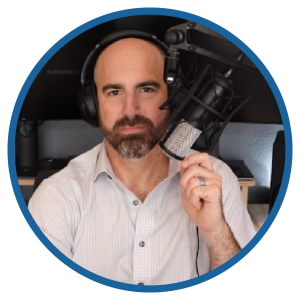
Dave Finch is the author of the New York Times bestselling memoir, The Journal of Best Practices: A Memoir of Marriage, Asperger Syndrome, and One Man’s Quest to Be a Better Husband. As a writer and creative consultant, his work has appeared on ABC, CBS, NBC, CNN, NPR, SiriusXM, The New York Times, Rolling Stone, The Howard Stern Show, and the award-winning Netflix series, Atypical. Based in Denver, Dave’s company, Elevated Studio, produces this podcast and other recognized series.
Visit Dave’s website here
“I have read a million and one books on Autism. Uniquely Human is the best book I have ever read, hands down. Thank you Barry for this incredible gift!!!!”
– Navah Paskovitz, Mother of three boys with Autism, Co-Founder, the Ed Asner Family Center
“Compassion, learning and supportive strategies–the three essentials for working with folks with ASD–are an integral part of this must-read book.”
– Michelle Garcia Winner, Speech Language Pathologist and Founder of Social Thinking
“Thanks be to Barry for the first-ever must read written for parents, educators, and clinicians.”
– Michael John Carley, Founder, GRASP; Author of Asperger’s From the Inside-Out
“What makes the book compelling is how funny Mr. Finch is about himself. He’s great company.”
– Susannah Meadows, The New York Times
“In this hilarious memoir (which also gives some of the finest explications of Asperger’s out there), Finch approaches trying to be a better husband and father with the determination of Sherman marching on Atlanta.”
– Judith Newman, People (4/4 stars)
“Talk about being on a roll. This dude wrote a book, he has Asperger’s syndrome. He cured himself by listening to me on the radio!”
– Howard Stern