EPISODE 141
Choosing a Developmental and Relationship
Play-based Approach over ABA:
A Discussion with Daria Brown
Choosing a Developmental and Relationship
Play-based Approach over ABA:
A Discussion with Daria Brown
Play the Episode…
Show Notes
As a parent, Daria Brown had some difficult decisions to make about choosing the right path for her young autistic child and her family. She chose a developmental relationship- based approach as it resonated with her as the best fit for her child. That choice led to a professional career in supporting parents, and also to her own late diagnosis as an autistic person. Barry and Dave discussed this choice with Daria, and how her journey has evolved.
Get the Book – “We Chose Play: Raising an Autistic Child to Thrive and Feel Understood”
Learn more on her website
Follow Affect Autism


Featuring
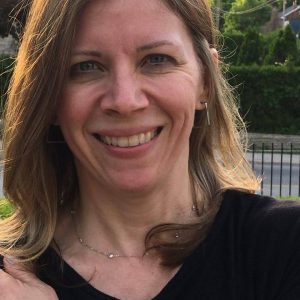
Daria Brown
Daria C. Brown holds a master’s degree in Personality and Social Psychology from the University of British Columbia in Vancouver, Canada. She has worked in the fields of research, evaluation, and education for over 30 years at universities, not-for-profits, and in government. After her only child experienced severe brain inflammation at the age of two and received an autism diagnosis at age 3, Daria began searching for ways to support his development. She chose play over intense behavioral therapy. His brain damage resulted in him also having dyspraxia (Developmental Coordination Disorder) and intellectual developmental disability (IDD). Daria also was diagnosed on the autism spectrum in May, 2024. Daria has been dedicated to supporting parents by providing resources through her blog and podcasts at affectautism.com, and as the Parent Advocate for the International Council on Development and Learning. Her recent book is “We Chose Play: Raising an Autistic Child to Thrive and Feel Understood”. She currently resides in the suburbs of Toronto, Canada.
Uniquely Human: The Podcast
EPISODE 141 - SEPT. 26th 2025 Choosing a Developmental and Relationship Play-based Approach over ABA: A Discussion with Daria Brown
🎙️ Transcript and Audio Usage Disclaimer
© 2025 Uniquely Human: The Podcast. All Rights Reserved.
The contents of this podcast, including all audio recordings, transcripts, and related materials, are the intellectual property of Uniquely Human: The Podcast and its fiscal sponsor, Community Autism Resources, a registered 501(c)(3) nonprofit organization.
These materials are provided solely for personal, educational, and non-commercial use.
No portion of the podcast audio, transcript, or any derivative materials may be reproduced, redistributed, modified, or publicly displayed without prior written consent from Uniquely Human: The Podcast or its authorized representatives.
Transcripts are provided for accessibility and reference purposes. They may contain minor transcription or formatting errors. When quoting or referencing the podcast, please credit Uniquely Human: The Podcast and provide a link to the original episode page.
By accessing or downloading transcripts, you agree to comply with this usage policy and acknowledge that all copyrights, trademarks, and intellectual property rights remain the exclusive property of Uniquely Human: The Podcast and its creators.
For permissions or inquiries, please contact:
📧 uniquelyhumanpodcast@gmail.com
[00:00:00] Dave: The primary purpose of uniquely human, the podcast is to educate and inform the views expressed during all episodes are solely those of the individuals involved and do not constitute educational or medical advice. Listeners should consult with professionals familiar with each individual, or family for specific guidance.
[00:00:20] UHP: Uniquely Human, the podcast is produced by Elevated Studio. Music is graciously provided by Matt Savage of Savage Records.
[00:00:39] Barry: Hi, I'm Dr. Barry Pand, clinical scholar, researcher and consultant on Autism and Neurodiversity, and a Brooklyn boy raised in the big city.
[00:00:50] Dave: And I'm Dave. I'm none of those things, and I grew up on a farm in Illinois. But being on the spectrum myself, I have plenty of personal insight to lend.
[00:01:00] Barry: And this is Uniquely Human: The podcast, a show that illuminates and celebrates autism and neurodiversity.
Today on Uniquely Human, the podcast, we are very excited to have a conversation about the journey of Daria Brown.
Daria, welcome.
[00:01:25] Daria: Thank you so much for having me. I'm so excited to be here.
[00:01:29] Barry: Yeah. And I'm excited to have you because in a way, we are connected through the whole path of developmental and relationship based interventions.
You with your history, which we'll be talking about with floor time and, certainly Dr. Greenspan's work in Ictal and me with a certs model and having worked with Dr. Greenspan in the past. So let's share a little bit about you before we move ahead. Okay. Sure. Saria has a master's degree in Personality and Social Psychology from the University of British Columbia in Vancouver, one of my favorite cities on earth.
She has worked in the fields of research, evaluation and education for over 30 years at universities, not-for-profits and in government. After her only child experienced severe brain inflammation at age two and received an autism diagnosis at age three. Daria began searching for ways to support his development.
She chose play over intensive behavioral therapy, and we'll talk about that a little bit more and why you did that. his brain injury resulted in him also having dyspraxia, the developmental coordination disorder and intellectual developmental disability, and Daria also was diagnosed on the autism spectrum herself in May of 2024.
Daria has been dedicated to supporting parents by providing resources through her blog and her many podcasts at affectautism.com. And we will have a link, on the page for this episode as well as the parent advocate for idel the International Council on Development and Learning. A recent book, which we'll also talk about is we chose play raising an autistic child to thrive and feel understood.
and Daria, is part of, our friends up north, currently residing in the suburbs of Toronto. Wow. Lots going on. So much we could talk about. Yeah. Okay. So why don't we start with something that you actually shared with us prior to the podcast, and you said, having my son diagnosed as autistic.
Completely rewired your life's path. and despite being terrified at first, it brought so many opportunities and joy into your life. and those close to you, please share some more about that.
[00:04:05] Daria: I think like most people, you don't plan to have a child with a disability. It's something that happens.
And it was very scary when my son was in the hospital because I, literally didn't know if we were going home the next day and everything was fine, or if he was gonna die, like he was hooked up to every tube. He was unconscious. And I think it was very black and white. I didn't see any gray area in there, and I've now been living the gray area.
[00:04:34] Dave: Okay. Yeah. and especially like you said, you again, the conflation of factors. You've got the or the compounding of factors. You've got the fact that, you're a mom, you're a new mom, you don't know, you're not a medical expert and you're. You're wired for being on the spectrum. Most of us are wired for catastrophizing, but I wouldn't call it necessarily catastrophizing.
When you said, your, 2-year-old son is hooked up to every machine and monitor in the hospital that's. That's as bad as it gets.
[00:05:13] Daria: That's funny you bring that up because one of the things, and the first chapter of my book pretty much describes that experience of what's going on. Like I'm in shock.
I went into emergency with his dad and him, and. I just completely dumbfounded with what was going on. And I just broke down and went on the floor and cried. And it was an emergency room where there was a medical team around him and they had, a mask on his face and, it was like crushing his nose.
And I'm like, panicking. what are you doing to my baby? And he's marching around giving orders. My son is having seizures nonstop. And I just started crying. And this one nurse runs over and she's oh, are you okay? Do you need help? as if it was strange. Yes, what I was doing, and I just, it, just blew my mind the way they reacted.
do you need help? And I'm like, I'm crying because my son look at him. So yeah, it was a terrifying experience. But what came out of that over the many years, because I would say I was in post-traumatic stress for a good four years. I was gonna ask at least, yeah, at least, really accepting. That I am now on a different path.
My family's now on a different path. My son is not the child that I thought he was going to be. He's going to need a lot of extra support. For how long? I don't know. at the time he was two. So just like many parents that I support in the weekly parent support meeting at ICDL. They come in and they think in the beginning, oh, I'm going to catch my child up before they start school, right?
And I remember even asking one of the teachers early on, and he was at a private school because he would've been a quote unquote, behavior child at a public school. And I, didn't, wanna go that route and put him through that stress. I remember saying. Oh, when do you think he'll be back in regular stream school?
And just the look on her face said it all. And I just went home and I cried. And I just, that's something that happens early on is that it takes time and I don't know that I could have given myself any advice to change that. You have to get into that place where you accept the child that you have.
And Dr. Robert Naif, one of your first guests said, really love and accept the child that you have. They need those energetic parents and the grief that you experience is your own. And so I really had to face that. But out of this whole experience has come so many opportunities and joyful moments because I was, I had the privilege of not having to go back to my job.
And being able to start this blog to share what I was learning with others. And I felt a duty to do that because I had that privilege. Because we had help from both of our parents to financially support us through this. And at the time, my husband was still a graduate student, We, really were relying on my income originally.
And so having that opportunity to deep dive and just read Engaging Autism by Dr. Greenspan and Dr. Weeder and just jumping in what is floor time? It floor time truly became my passionate interest. And the way I fell into that was when we came out of the hospital, I just happened to turn on the news one night, and on CB.
C, which is. I guess similar to your NPR, they had a spotlight on the study at York University led by Dr. Stewart Shanker. And it was about floor time and it just resonated so much with me because I had become a parent later in life. I still felt very young, but. My doctor said, you, you better think about having a kid soon if you're planning on having a kid.
I was 38 when I was pregnant, and so I jumped in and I was absorbing all of this content from Dr. Gordon Neufeld, who's a Vancouver developmental psychologist, and it was on an attachment model of parenting. But it was so sim, it's basically a developmental approach, and so that resonated so much with me that when I heard about floor time, I'm like, oh, this is Dr. Neufeld stuff applied to autism. And so it's brought in such a rich interaction and connection with my son, being able to appreciate who he is and his unbridled enthusiasm and joy, and just the opportunities that I have professionally now. To really be doing something that I love that can support other parents.
[00:09:36] Barry: I wonder if the fact that in a sense, your son is a survivor, especially of the medical issues early on, if you wanted to take an approach that was more nurturing rather than correcting, and, just seeing him as not a youngster to be fixed, but it's like. My goodness. Thank God little guy.
You made it this far and I, really wanna connect and be with you here.
[00:10:07] Daria: You know what? Ugh, Barry, that is a really interesting insight. In all of the years, my son is now 16. I've never heard that mentioned. And I'm gonna have to reflect on that because that really does resonate with me. when I think about all of the different types of services that were available and what resonated with me. I absolutely did not want to see my son suffer any more than he had. And I remember thinking in the hospital, if my son lives, if this all goes well, like every day with him is gonna be the best day of my life 'cause he's the light of my life.
Yeah.
[00:10:44] Barry: Wonderful.
[00:10:44] Daria: Such a good point.
[00:10:45] Barry: Yeah. So let's follow you in your journey a little bit. you eventually were diagnosed as being on the spectrum yourself. was that a surprise? did you have some questions about that prior to that time? And what about the connection to your son and, we've had a number of parents on who are neurodivergent or specifically have autism diagnoses. And they look at their kids and they say, oh my goodness, I see some patterns here that are similar, and Dave is one of these people. so I'm just curious about that.
[00:11:27] Daria: I guess it was first in a podcast I did with a UK self-advocate who Dr. Virginia Spielman introduced me to. And she's the director of the Star Center and used to teach for ICDL.
And she had suggested I do a podcast with her and Kieran Rose and he was the first one after I did some follow up podcasts with him to say, you might be one of us kind of thing. And I remember thinking. I definitely have lots of quote unquote autistic traits, and my son's personality is just like mine, and that's interesting.
But I didn't have the disabilities that my son had. I still had that understanding of autism that existed before, which is, severely disabled, not able to function in everyday activities and that kind of thing in my head. And I didn't have any of those issues growing up that I was aware of, and that certainly I didn't.
And then, Over the period of COVID, I noticed this huge explosion in neurodiversity affirming podcasts. And I started listening to a lot of them. And I couldn't believe all of the middle-aged women and adult women that were being interviewed that they had an autism diagnosis that described what they were like.
And I was like, that's totally me. What I do that, what? Are you kidding me? Could I be autistic? And. Now my ex-husband, but at the time he said, sure would make a lot of sense. It sure would explain a lot. That's what he said. He said it sure would explain a lot. And so I put myself, I, asked my doctor to put me on a wait list for a diagnosis through the public health system.
And I didn't have health insurance, so I couldn't afford to pay for that. And. It was a long wait list. They said 18 months. It was over two years, and I was really worried that they were gonna look at me and say, you're a perfectly functioning human being, what are you doing? Wasting our tax dollars?
But I had the opposite experience. The psychiatrist who diagnosed me and did quite a thorough diagnosis. Interviewed my younger brother, et cetera, said, there is no doubt in my mind you are a late diagnosed autistic woman. And you never ever would've been picked up because I was a goodie. Two shoes, I was the teacher's pet every year in school.
I loved school. I did super well at everything I did, whether it was tennis or track and field or cross country or whatever, piano lessons like I always did really well and I loved everything and I wa I was this keener kid.
[00:14:03] Barry: Ah, my goodness.
[00:14:05] Dave: That's just it. the, it's so easy for people to slip. I, don't wanna say slip through the cracks, but to go unnoticed we'll say.
[00:14:13] Daria: And, I certainly didn't have any understanding of what used to be called Asperger's syndrome. And we understand now the reasons why it's not named after someone who did horrible experi experiments, in Nazi camps. But being part of the autism spectrum now, I think it still is very confusing to so many parents.
How can this person who's has a full-time job and is a mother and doing this and that be autistic when my child is banging their head against the wall and not speaking and having so many behavioral issues. So I, believe me, I understand that completely.
[00:14:50] Barry: I would imagine that, many parents, address that issue with you on your podcasts, or at least your support groups that you run.
Because there is that feeling, and I don't wanna do a deep dive into this, but, I, I was exposed to this years ago. I was actually in Australia and met with a very prominent dad there who had a son with very significant disabilities as part of his autism, and he expressed anger at people who can get up there and be articulate and describe their life experience and call themselves.
But we know that's an ongoing issue.
[00:15:32] Daria: It gets down to the definition of autism, which we talk about meaning making in floor time and if you have a different understanding of what autism is, and, I, I think pretty much un well accepted now in among autistic researchers and among self advocates, is the understanding that autism is just a different neuro type, the way your brain is wired.
And there are many, co-occurrences. That can come with that, that are disabling.
[00:15:58] Barry: And I think that's consistent with, what Dave and I feel, I don't wanna speak for you Dave, but let's talk about co-occurring conditions which really impact the lives of children and adults in some cases causing incredible disabilities.
But it may not be the autism per se, it's the co-occurring condition.
[00:16:19] Daria: That's what's not well understood yet.
[00:16:21] Barry: So you chose, let's go back to your son. Okay. You, chose floor time. I'm just curious if you were exposed to. Some of the pressure that parents feel to do a, b, A. Now you're in Canada of course, a BA is all over Canada.
Now maybe it wasn't so prominent and politicized as it was back then, in the, as it is in the US or was in the us So you, you had a choice. So talk about going through that choice and reflecting on the two.
[00:17:01] Daria: In the rehabilitation hospital, my son was in at Sick Kids Hospital in Toronto for three weeks and Intensive care for the first week.
And then, we went to the Hall and Blue Review Kids Rehabilitation Hospital. And at the time, I can't speak for what it has now, but at the time the services that were there were very behavioral based, although they also had play-based, they had a play therapy and things like that, but.
Basically our son was sat at a table and he's two and a half sat with a seatbelt and, showing cue cards and things like that. the old school kind of speech therapy that of course you would be familiar with. Yes. And I just remember, and then, even carrying on to some of the occupational therapy there, while some of it was body-based, some of it was, can you put this.
Piece into this shape sorter. Can you do? And beforehand, at, 18 months old, I have a video of him doing a shape sorter with no effort whatsoever. But he could no longer do that kind of thing. And so when I then was put in public services, luckily in Ontario we had Hannon as the first sort of, Mode of intervention, so to speak. And it was lovely. The more Than Words course was very much like early floor time capacities that we, we learned and it was, playing connection and that was good. But everything in Ontario is a b, a, and. Think about the history, there were no services for autistic kids.
And parents banded together and they demanded autistic services for kids. And what was at the time, A BA. And that's how it got funded in Ontario. And there is a strong a b, a presence. And so all of the public funding was for a, b, a. And I remember the a BA person came to the. And they were doing the same kind of thing.
Sit, sit your kid down, put a seatbelt on him and show flashcards. And I, every time I asked whether it was at the rehab hospital, whether it was this a, b, a person, whether it was wherever we were at different services, what is the purpose of this? I'm not kidding. Every single answer without exception was to make him school ready.
And I thought to make him school ready. So what does that mean? We're talking about the understanding, meaning making. To me, that meant sitting still and listening and being engaged like I was as a student. right after that floor time video, I had a, the opportunity to go to York University and meet with the staff, and they told me, your son is a kinesthetic learner.
He needs to move. And I, could tell you all about his sensory issues from birth, but especially after the brain inflammation. He needed to move. He needed to be held. And to have him sit. And to me that was not a justification for putting him through what seemed pointless to me.
Because you're not gonna force someone who can't sit still to sit still by training them. So right away, as I mentioned, I was familiar with the Gordon Neufeld model of development, and then Floortime was so much more aligned with that.
[00:20:12] Barry: And, let me give a shout out to the Hanen Center. I'm a Hanen, certified speech language pathologist and I, actually knew the founder of Hanen Ayala Manolson really well.
And when I was in the early days when I was hospital based at, brown University, I brought the Hannon people in to train all my staff. And, for some reason, for many years, I just associated Toronto with Hannon and then became increasingly surprised at the dominance of applied behavior analytic approaches there.
So, you found the right path for you and you found the right path. For your son. and you also recently published a book. I did. And that, kind of captures the notion of the direction you wish to take. you've taken and it's called, we chose play, raising an autistic child to thrive and feel understood.
Talk about the book, who it's for, how you've integrated developmental and relationship based approaches to help other people understand. Going in this direction.
[00:21:22] Daria: I'm glad you said developmental approaches because I really don't like that word intervention. To me. There's something dehumanizing about it, but I understand that things like occupational therapy to help with sensory integration or certain things are essentially an intervention.
But I also see. Floor time as more of an intervention, even though I, don't like the word intervention for parents rather than the kid. So how do you shift your focus away from this is what my, I want my child to be doing, to who do I see right in front of. And how do I build from those strengths? DIR, developmental individual differences, relationship based model.
Look at where they are developmentally and how can I meet them where they're at? How can I respect their individual unique profile? Everybody has a different sensory profile and different individual differences. If you have different, medical conditions, disabilities, et cetera, that's all part of your individual differences.
And using that relationship to connect and make them feel understood. And if we think about when we were children. When did we feel the most alive with another person? It's when we had that connection with them. When did we, what did we learn best in school? Our favorite teacher, because we had that connection, we learned through relationships, and this is the beauty of the model that Dr. Stanley Greenspan had, in his mind for so many years and developed with all of his colleagues so well, and so it, it just, I just really wanted to write a book about. Our journey, but I never had the idea of what I could offer that was unique. I thought, oh, I, could just tell another story about another person's life, which is very valuable.
Lived experiences are valuable, but once this whole neurodiversity movement, became more popular after Steve Stillman's book than COVID and all these podcasts I was listening to. I started realizing, okay, floor time is still seen by a lot of people as trying to make a child neurotypical because it outlines these developmental capacities that children go through.
Maybe in the beginning that was part of it when autism wasn't totally understood. But where Stanley Greenspan was ahead of his time is seeing the strengths in everybody and acknowledging those individual differences. And he always, I've listened to so many of his radio shows and read his stuff where, he never met a child he couldn't engage with.
Might just be that they don't like the tone of your voice. So try speaking a little bit differently and see if the child, you get that gleam in the eye. So there's always a way to connect with somebody. And so how could I convey that, in a book where I also include, which isn't included in the floor time literature, how it looks different for autistics.
So why, Is it not a model for neurotypical development? Autistics are human beings just like everybody else. And this is a model of human development. And I have watched my autistic son with very challenging disabilities. Although I would say, if you have the parents of children who have very severe disabilities.
They might be at one end, maybe someone like me or Dave might be at the other end. My son would be in the middle. He has a lot of challenges, but he's very verbal. He's, he developmentally, cognitively, his interests and everything are much younger academically. He's, at grade one or two level, even though he is 16.
So how can we look at. The floor time developmental capacities where it's taking into account how it looks different in every child. 'cause I've watched him go through those capacities exactly as every training leader of floor time has described to me that would happen.
[00:25:20] Barry: it's interesting because, I'm thinking of course, the similarities with the SCERTS model where we understand that.
We have to always look through the lens of development and various aspects of development, but where is it that neurodivergent kids, autistic kids, need extra support and guidance? And I think that's the difference. It's not intervention. If you're working from a developmental perspective, and you're right, it's developmental guidance where we're being highly responsive in that reciprocal opening and closing circles of communication notion. But being high, so highly observant that we know when to lay back, when to step in, when to provide, when to join, when to say this youngster, just had put up with a lot and needs some breathing space to regulate. and it's that responsivity, I think that really is so different from, other approaches that underlies any good developmental approach.
[00:26:22] Daria: Absolutely, and that's a real learning curve for some parents. I think a lot of people and practitioners. I've seen people who have no floor time training or no developmental approach, education, and they're just so naturally attuned to a child and understand. I brought my son, my son loved model trains, that was for sure his passionate interest.
Growing up, we would go to all the model train shows and we went to one in Kingston where I have a good friend from high school and she wouldn't know anything about the world of autism or anything about this. and. She came and she was just watching my son and he was a little bit bigger now he was probably 10 or 11, but he's flapping his arms away watching the model trains, just like being, he's very loud.
He gets that from me. Very loud, booming voice. So lots of people turning their heads in looking and my friend is just going. Look how happy he is. It's so good that you bring him to these shows. This is awesome. And she just saw that. She saw that naturally other people might take all the courses in the world, yet they still have a hard time really getting themselves in that moment and forgetting about agendas and just really connecting with the person and really making them feel.
Understood. And that, that's, isn't that a famous Greenspan quote? There's nothing better than feeling understood.
[00:27:43] Barry: Yes. And, it's just so interesting when we think about the notion of happiness as a goal, in the, sense of, okay, you are you collecting data to see how happy this child is.
I, I remember way back when, a, very prominent applied behavior, analytic researcher and autism person. said something to the effect of, if the choice is to have a child happy or to learn skills, I would choose learning skills all the time. and totally missing the point that everybody is more engaged, learns better, trusts people more when there is that affective connection, which Stanley really, emphasized first in, in autism.
[00:28:36] Dave: I was just gonna point out that it's funny, the, the observation of, look how happy he is. Anybody who's on social media or reads self-help books or, anything, in that vein knows that most, at least in America, most people are willing to devote their entire, life to. Meditation or different practices, or some people go out and take drugs or they just to feel that level of, completeness, joy, zen, whatever you want to call it, autistic people get there very quickly, very naturally when we're, afforded these opportunities.
This is the holy grail that so many people are chasing and it's like we have it. Yes. and so to sit there and suggest that, oh, no, actually we need to sharpen those edges on these individuals. I asked "what?"
[00:29:34] Daria: There's, a line in one of Nirvana's songs, and of course I was of the time Gen X that was in love with Kurt Cobain and Kurt and Nirvana.
I wish I was like, you easily amused. And I remember I am so easily amused. I'm very easily amused, but I'm also not amused at all if it's not something that I have a passionate connection to. And yeah, that autistic joy, that enthusiasm, My son is the embodiment of that. He's just so filled with joy.
But I wanted to circle back to what you said, Barry, because it's really, important that people understand that through DIR floor time through developmental approaches. You can still teach skills and you don't have to be happy all the time. We, call it, stretching, like giving. That was part of what, the DIR model outlined that Dr.
Greenspan outlined is really stretching a child's flexibility. When they're in a good mood, when the parents have enough patience through floor time, having these opportunities to just stretch a little bit. Like maybe they really don't wanna do something that they really need to do and it's going to benefit them going forward to towards autonomy and agency and, you're just going to, and, he called it playful obstruction.
We like to think of maybe making that more naturally occurring as opposed to. Contriving it because I think autistic kids are smarter than that. They know when we're pretending.
[00:31:02] Barry: By the way, in speech and language, it's called sabotaging.
[00:31:06] Daria: Oh, okay. I did not know that.
You know what? I know you really want to go and get that, whatever. But the store's closed now.
Oh No. And can you tolerate that discomfort? That's right. Can the child sit in that dis discomfort and just stretching? I think, Greenspan called it frustration tolerance. Where again, it's done through attunement and through in comfort.
It's not stressing out the child on purpose by any means. That's another thing that's misunderstood.
[00:31:34] Barry: So much of this has to do with the issues of co-regulation and, what we refer to inserts as mutual regulation, which actually came from Brazelton, who worked with Dr. Greenspan very, early on.
And the, but the whole notion and the attention both in our work and floor time given to regulation as one of the bottom lines here. Which, in applied behavior analysis totally off the radar screen for many years until recently you hear some a, BA folks actually using the term regulation and emotional regulation.
But, sorry if this is off putting to some of our listeners, but a lot of the good stuff that people are saying that's good about the new a BA comes from developmental and relationship based approaches. and were actually had nothing to do with the first two or three decades of applied behavior analytic approaches.
[00:32:36] Daria: And, I mentioned that in the book too. and that was really inspired by Dr. Robert Nasif and Dr. Karen Levine, who I'm sure you know as well.
They gave me really good feedback on the first draft of my book. To make sure we don't alienate parents who maybe don't have any options and they really Need support. And maybe the only person they have is an a, b, A person. So I say. Don't worry about the labels. Absolutely worry about the person and the relationship because if that person cares about your child and loves them and you know in their heart, yes, they, went into this field to help children and maybe that's what they learned and they don't know about other things yet, but they're really good at what they do.
That's the most important thing, is having someone who understands that, whether they know it or not. Developmental aspect of working with somebody.
[00:33:28] Dave: I was just gonna say, it's so funny I'm reflecting as we're reflecting as we're talking. 'cause everything you're describing is a, is very similar to my wife, who, as Barry was a speech and language pathologist who studied your work, like everything.
This is all exactly what she, her ap I would say her approach. And I'm saying that in finger quotes, her quote unquote approach. to helping me and, us build a better relationship is that sort of, we're gonna stretch this, we're gonna push the level of tolerance. We're going to not make things spec intentionally stressful, this rigidity, it's not working for our family.
So I would say, okay, make me less rigid. She's it doesn't work that way, but, and, so it's so funny to hear what you two are talking about in terms of these very. Important approaches to child development and my wife actually working me through that process as an adult. So that's just where my mind is going with all of this.
[00:34:31] Barry: It's important for all relationships that we, understand when somebody, we're wi with somebody who's a friend or one of our kids, and okay, we want them to reach that next bar, and it may result. In some dysregulation, it may result in some anxiety, but that navigating through life is about dealing with those moments and dealing with the more extreme moments.
That actually leads to a question Daria, that I was thinking about, especially in your parents support meetings. I'm just wondering, given what your son has gone through and given what your family has gone through, especially with the early medical history. do you ever get the sense that some parents you meet have the attitude that, if Daria and her family could navigate through this, then we should be able to, when maybe there aren't that many complicating factors?
[00:35:30] Daria: Oh, I. I don't, want to speak for anybody except my own experience, so I just hope that my experience and my journey resonates with people enough to give them that hope that I needed when we were going through what happened to our son. And I really got that hope from the different floor time coaches that I worked with.
And would say have you seen kids like my son? Have you seen them develop? Have, where do you see them go? And of course, nobody can predict the future, but just having that glimmer of hope and building on the strengths that are there. When I look back at some of those old videos of my son.
Those strengths were there. He was regulated. He was engaged in relating with me. He was having circles of communication with me, and all I could see at the time was he's not talking. He lost his speech. He can't do this, he can't do that. And so just by helping reframe the. Outlook that you have, and just seeing the strengths in your child Sometimes is really hard, to do. And, you talked about rigidity, Dave. I will say that it, that's a very interesting thing that I've realized. You can think that my son is super rigid about something, but if you just frame it a different way And in floor time we call that following his lead, all of a sudden he's not rigid at all.
He's like asking to do this activity because it's just, I, think it, I can't remember which of your guests has brought it up. It's about the predictability and when something is new and I don't know what you're talking about, I'm scared. That's it. The wall goes up. And that's it. I'm not doing it, but all of a sudden it's just about the way you approach it.
And for my son, if it's anything having to do with Super Mario or dog Man. All of a sudden he's interested. So now we can learn math and we can learn, all of these other things or about something that might be hard for him.
[00:37:27] Dave: Yeah. When you're being challenged in a, in a way that the status is clear that somebody is in the challenger role and I'm being challenged, you're far more willing, I would imagine, to.
Plant your feet or, dig your heels in and not budge. But if it's a playful endeavor and the spirit of what you're working on is playful, then yeah, you're more receptive to taking a different, mindset on something.
[00:37:53] Barry: And, seeking control is a human tendency that supports regulation. It could be maladaptive if it's so off putting to other people.
And, but if we look through, and this is the phrase that we use, similar to what you were talking about, Daria. You have to look through a different lens, and it colors what you're seeing in a totally different way because, I think somebody once said, attitude is the mind's paintbrush and what attitude and lens you look through results in different colors.
So that, that's really important.
[00:38:27] Daria: It is. And Dr. Ira Glovinsy said something to me recently, and he's probably a name that, that, Barry, I don't know if other people know him well, but he worked with Dr. Greenspan too, and he is, a psychologist in Michigan. And he was saying, be careful about saying mindset, because that's very cognitive and we've gotta think about the whole body that you're nodding like, that sounds like Ira, the, whole body and the whole.
emotional aspect and affective aspect. It's not just a mindset, it's just the whole experience. And so I'm still reflecting on that comment he made.
[00:39:06] Dave: it makes sense because your body reinforces your, emotionally what's going on in your brain, right? So if your mindset, quote unquote, is this is gonna be scary, your stomach reinforces that by saying scary.
We better feel butterflies and, terrible. Our heart better start to race, but. If you can get your body to cooperate with your brain. I, totally see the logic in that.
[00:39:30] Barry: And then there's the, probably one of the most famous books on trauma, the Mo The Body Keeps the Score by, Bessel Van Der Kolk who had a chance to meet last summer, who has done more work in PTSD than practically everybody from a clinical and a research perspective.
What was really interesting was just a quick note here. Is that if you read his book, so many of his quote unquote case studies after decades of practice as a psychiatrist, sound like the reactions of people who are neurodivergent or autistic and are extremely dysregulated. Yet when I met him, we were both teaching courses at the same time at this institute.
So I didn't see him present. He didn't see me present. He asked me, or he actually acknowledged, he goes, so your area is autism? I said, yes. He goes, I know nothing about autism. And after having read his book, I said, everything about, or at least much about autism, maybe not everything. because you see it in a person's body.
Are they related to you? Do you dysregulate them? Do you regulate them? Are they available for learning and engaging? Are they experiencing joy? Are they experiencing extreme stress? That's how it is, and that's one thing I think developmental approaches really are partially designed on, and that is helping people read, children well, and read other parents if you're a professional, dealing with parents as well.
[00:41:04] Daria: While I'm not familiar at all with his work, I know that. Trauma has been a big buzzword in the last few years. And a lot of the floor time. Coaches and trainers and the OT that we've worked with for years. LaRue does a lot of training and trauma and Teaching and trauma and how much that intertwines with the autistic experience.
And, it's so valuable for parents to understand what can be a traumatic experience for a child. For my son, he cannot and will not, no matter what, wear a bandaid. And I think that comes from having numerous IV changes while he was in the hospital. Hospital. And even though we think, oh, he didn't remember that, his body remembered that, and he is terrified of band-aids.
[00:41:50] Barry: And even though it's become a, some people feel a cliche now saying, oh, we're trauma informed. If you do a deep dive into it, the, basic notion, and it's not easy to do, and when you support people as an educator or therapist or a parent, but a lot of what you're seeing in front of you may have nothing to do with what's going on in the environment.
May have nothing to do with what you're saying or doing at that point, but it has a lot to do with those deeply embedded memories that we all have in our lives and that we sometimes go back to and sometimes involuntarily come upon us in those instances. So, important.
[00:42:29] Daria: And it, there's one thing about a developmental disability that's invisible.
I, I will tell you, all of my autism is in my head. The rumination, the going over things that happened, remembering everything that ever happened every time I was, made fun of or whatever, or times that I've done stuff that I felt terrible for doing and never forgiving myself and going over it and over it.
Or at the time I got a speeding ticket 25 years ago that I'm still angry that I could have said this instead to the cop, just that. Debilitating rumination nonstop. So autistics do have that going on in their head. and if something happens that one time, I think you mentioned this on, I can't remember which episode, Barry, like that is going to stain that experience for life, for that child unless something really different happens because they remember that.
And if it's negative, that's it.
[00:43:22] Dave: Exactly. My daughter, just a couple of years ago. Finally, for the first time, I, to my knowledge, stopped associating Christmas morning with me getting the flu because the stomach flu, because happened when she was whatever age she was, maybe around three or two or three or something where she was just coming online cognitively and was able to like forming things that would actually be real memories.
That first Christmas where she was like really aware of what was going on. I got the stomach flu, and then every year she was just always looking at the side of her eye like, is this going to be another flu year? And I do the same thing. I, the first impression if it's a bad impression is the lasting one.
If it's a good impression, it could be easily replaced by a bad impression. I don't know what it is.
[00:44:12] Daria: And something as simple as birthday parties, my kid is terrified of birthday parties. Parties. That's such a common experience for parents. But it might be. That your child's meaning of birthday party was this delicious cake and then the next birthday party, it's a totally different cake and they're confused.
I was expecting that cake because that's what birthday party was encoded in their mind.
[00:44:35] Dave: That's right. Nobody wakes.
[00:44:37] Daria: And that's trauma for that child. That's trauma.
[00:44:40] Dave: It is. And then additional trauma when everybody else around you is whatever, it's yellow cake. get over it. You suck, whatever.
And, now it's I'm not the one who messed up the cake and I'm getting yelled at by my friends. Yes. I, you can tell this is very triggering for me.
[00:44:56] Barry: Yeah. Yeah. And I've known many kids who, were horrified by the coming of Halloween because Halloween was always this very bizarre time where people did bizarre things.
And that for that child or those kids have to be, has to be defined somewhat as traumatic. And when you think about the difference with, I, I hate to generalize, but most neurotypical kids, Halloween is like the coolest time of year. Wow. we could see as this discussion goes on, there are so many, and I may say this in a positive way, so many rabbit holes we could go into here, but I, guess Daria and summing up, what advice would you give to parents who've navigated what you've navigated through?
And you do this probably all the time. In your meetings with parents, but what would you say to our listeners who are parents of young kids?
[00:45:54] Daria: I would say that it's really important to understand that there's no set rules on what you have to do. You are on your own path, your own journey. Get to know the child that you have.
And it, it's hard in the beginning when you're just planning, ex all these expectations of how life's gonna be and things look different. But really, just see what that child loves and enjoys and really just try and connect with that because. Through that relationship, they will feel understood and that's how they're gonna thrive.
And in, if you're specifically thinking about floor time, that what is regulation can look very different across children. There can be someone in school that looks perfectly calm and inside their totally dysregulated.
Or someone who's running around the room. But that's the only way they can pay attention and listen.
'cause their body needs to move. And similarly with engagement, you think, oh, I need eye contact to prove that you're listening to me. No, you could be across the room busy with something and listening very intently and engaging in a way that doesn't look like typical engagement. So just keeping in mind that your child is a unique person, they're on a unique path, and you've been blessed with this opportunity to raise them and help them thrive.
[00:47:14] Barry: Which is a learning journey for all of us. And I think, absolutely. We, should definitely embrace that. any parting words, Dave?
[00:47:24] Dave: I just related so much to all of this except for the part where you two are clearly experts in the various miles, but the lived experience piece, I'm just, it's hitting all the notes for me and, again, this, discussion is It is so well informed because it's, this isn't like a pedantic, oh, I read this book and now I'm discussing the book. you, are living this every day, in multiple roles. Yes. So thank you so much for sharing this wisdom with us.
[00:47:57] Barry: Yes. And congratulations on your book. We will have a link. On, the episode page.
the book again is We chose play raising an autistic child to thrive and feel understood and that feeling understood. That should be in bold capital letters right there, So true. Daria, it's been a pleasure. Thank you so much.
[00:48:19] Daria: Thank you so much for having me. I really appreciate the opportunity.
00:00:00
00:01:30
00:06:53
00:12:25
00:19:15
00:24:17
00:32:30
00:37:37
00:48:45
…and Continue the Discussion
Do you have a book or podcast club? If so, you may use this discussion guide to facilitate a conversation about this episode.
1. Daria states that “Having a son diagnosed as autistic completely re-wired my life path and has brought so many opportunities and joy into my life”. What did Daria share about about her journey that created these opportunities.
2. Why did Daria decide to choose a developmental, relationship-based approach for son rather than an ABA approach? How does this relate to choices that you have made or, that you have observed others make for their child?
3. Given her experiences, what advice does Daria give to parents of young children? What resonates with you about Daria’s journey and the choices she has made?
HOSTED BY

Barry Prizant, Ph.D., CCC-SLP
Dr. Barry Prizant is a speech-language pathologist with more than 50 years experience as a researcher and international consultant for autistic and neurodivergent individuals and their families. He is an Adjunct Professor of Communicative Disorders at the University of Rhode Island and Director, Childhood Communication Services (a private practice). Previously, he served as Associate Professor in the Department of Psychiatry in the Brown University School of Medicine, and held a tenured professor appointment at Emerson College. Publications include 5 books, most notably Uniquely Human: A Different Way of Seeing Autism (2015; 2022) and The SCERTS Model manuals, an educational approach implemented in more than a dozen countries. He has published 150 scholarly chapters and articles and serves on numerous professional advisory boards for journals and professional organizations. Barry has presented more than 1000 seminars and keynote addresses internationally, including two invited presentations at the United Nations for World Autism Awareness Day. His career contributions have been recognized with honors from Brown and Princeton Universities, the Autism Society of America and the American Speech-Language-Hearing Association.
Visit Barry’s website here
Uniquely Human, the book (Updated and Expanded edition!)
Dave Finch
Dave Finch is the author of the New York Times bestselling memoir, The Journal of Best Practices: A Memoir of Marriage, Asperger Syndrome, and One Man’s Quest to Be a Better Husband. As a writer and creative consultant, his work has appeared on ABC, CBS, NBC, CNN, NPR, SiriusXM, The New York Times, Rolling Stone, The Howard Stern Show, and the award-winning Netflix series, Atypical. Based in Denver, Dave’s company, Elevated Studio, produces this podcast and other recognized series.
Visit Dave’s website here
“I have read a million and one books on Autism. Uniquely Human is the best book I have ever read, hands down. Thank you Barry for this incredible gift!!!!”
– Navah Paskovitz, Mother of three boys with Autism, Co-Founder, the Ed Asner Family Center
“Compassion, learning and supportive strategies–the three essentials for working with folks with ASD–are an integral part of this must-read book.”
– Michelle Garcia Winner, Speech Language Pathologist and Founder of Social Thinking
“Thanks be to Barry for the first-ever must read written for parents, educators, and clinicians.”
– Michael John Carley, Founder, GRASP; Author of Asperger’s From the Inside-Out
“What makes the book compelling is how funny Mr. Finch is about himself. He’s great company.”
– Susannah Meadows, The New York Times
“In this hilarious memoir (which also gives some of the finest explications of Asperger’s out there), Finch approaches trying to be a better husband and father with the determination of Sherman marching on Atlanta.”
– Judith Newman, People (4/4 stars)
“Talk about being on a roll. This dude wrote a book, he has Asperger’s syndrome. He cured himself by listening to me on the radio!”
– Howard Stern