EPISODE 140
Educational Practices for Neurodivergent Students:
We Can Do So Much Better.
A Discussion with Dr. Shelley Moore
Educational Practices for Neurodivergent Students:
We Can Do So Much Better.
A Discussion with Dr. Shelley Moore
Play the Episode…
Show Notes
Barry and Dave engage in a lively and wide-ranging discussion with educational specialist, Dr. Shelley Moore, internationally known for her progressive and value-based approach for educating neurodivergent students, and indeed, all students. The focus of the discussion is on changes that are needed to help educational systems to be neuro-affirming, inclusive, strength-based, and respectful of different learning styles.
Learn more on her website
Follow Shelley


Featuring
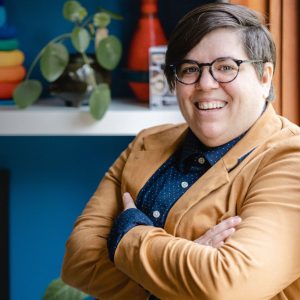
Dr. Shelley Moore
Dr. Shelley Moore is a teacher, researcher, speaker, and storyteller with a background in inclusive and special education, curriculum, and teacher professional development. She works with school districts and community organizations locally, nationally, and internationally to support practical, evidence-based approaches to increase access for all learners. She offers a variety of opportunities for classroom, school, district, and systems-level learning through her live and on-line trainings.
Uniquely Human: The Podcast
EPISODE 140 – Sept. 12th 2025
Educational Practices for Neurodivergent Students: We Can Do So Much Better. A Discussion with Dr. Shelley Moore
🎙️ Transcript and Audio Usage Disclaimer
© 2025 Uniquely Human: The Podcast. All Rights Reserved.
The contents of this podcast, including all audio recordings, transcripts, and related materials, are the intellectual property of Uniquely Human: The Podcast and its fiscal sponsor, Community Autism Resources, a registered 501(c)(3) nonprofit organization.
These materials are provided solely for personal, educational, and non-commercial use.
No portion of the podcast audio, transcript, or any derivative materials may be reproduced, redistributed, modified, or publicly displayed without prior written consent from Uniquely Human: The Podcast or its authorized representatives.
Transcripts are provided for accessibility and reference purposes. They may contain minor transcription or formatting errors. When quoting or referencing the podcast, please credit Uniquely Human: The Podcast and provide a link to the original episode page.
By accessing or downloading transcripts, you agree to comply with this usage policy and acknowledge that all copyrights, trademarks, and intellectual property rights remain the exclusive property of Uniquely Human: The Podcast and its creators.
For permissions or inquiries, please contact:
📧 uniquelyhumanpodcast@gmail.com
[00:00:00] UHP: The primary purpose of uniquely human, the podcast is to educate and inform the views expressed during all episodes are solely those of the individuals involved and do not constitute educational or medical advice. Listeners should consult with professionals familiar with each individual, or family for specific guidance.
Uniquely Human, the podcast is produced by Elevated Studio Music is graciously provided by Matt Savage of Savage Records.
[00:00:39] Barry: Hi, I’m Dr. Barry Prizant, clinical scholar, researcher and consultant on autism and neurodiversity, and a Brooklyn boy raised in the big city.
[00:00:50] Dave: And I’m Dave. I’m none of those things and I grew up on a farm in Illinois. But being on the spectrum myself, I have plenty of personal insight to lend.
[00:00:59] Barry: And this is Uniquely human: the podcast, a show that illuminates and celebrates autism and neurodiversity.
Today on Uniquely Human, the podcast, we are thrilled and excited and we’ll probably get more excited as we go on to have Dr. Shelley Moore with us today. hi Shelley.
[00:01:27] Shelley: Oh, hello everyone. It’s so nice to be here.
[00:01:30] Barry: Yes, and it’s, great to have you. For many reasons, but one reason in particular is as you do, I also do a lot of in school and classroom consulting and many of our guests are on different topics or that’s not their area of focus, so I’m really looking forward to what we’re gonna talk about.
[00:01:48] Shelley: Let’s do it. Let’s do it.
[00:01:50] Barry: But first, a little bit about you. Okay. Dr. Shelley Moore is based in British Columbia, one of my favorite places in the world, and she is a highly sought after inclusive education researcher, teacher speak, or consultant.
And something near to my heart, storyteller,
[00:02:08] Shelley: my favorite part.
[00:02:10] Barry: She has worked with school districts and community organizations around the world, and her research explorers how to support teachers to, to design for all learners in grade level academic classrooms that include students with intellectual disabilities.
And your focus, which of course is why we’re having you, is on strength based and responsive approaches. Yes. Shelly completed her undergraduate degree in special education at the University of Albert. Your master’s at Simon Fraser University and PhD at the University of British Columbia. And when our listeners listen to this podcast, you need to know that Shelly offers a variety of opportunities for classroom, school, district and systems level learning through live and online trainings.
[00:02:59] Shelley: Oh, thanks. Thanks guys. Thanks for the shout out.
[00:03:01] Barry: Oh, sure. and actually, we had the pleasure together to be on raw screens, lives in the Balance summit recently. And boy did you energize the audience, and I was, oh man, I was in the audience.
[00:03:15] Shelley: If you felt energized, then I’m happy. I’m happy.
[00:03:17] Barry: So we want to know what makes Dr. Shelley Moore. So if you could tell us a little bit about your journey, your career. Yeah. And, especially what led you to focusing on inclusion and, supporting schools.
[00:03:32] Shelley: Yeah, that’s a good question. So I, oh man. Where should we even start?
You know what I’m gonna start with? I’m gonna start with one of my favorite people, Dan Habib. Do you know Dan Habib?
[00:03:45] Barry: We love, I do not know Dan.
[00:03:46] Shelley: Dan Habib is a parent, first of all, parent advocate. He’s also a filmmaker. His son is Samuel Habib, who just won an Emmy for his, for his video. And, so he’s a self-advocate.
And so he was, Dan Habib was an early kind of guiding light for me as an educator trying to do this work. And so I sought out to see him at a conference he was speaking in Vancouver, and I was so excited to talk to him. And at the time, I was working in a high school, secondary school, grades eight to 12, supporting students with intellectual disabilities and really trying to figure out what inclusion meant for them.
Because I had this like feeling in my gut that being in the corner of the school was not inclusion. But a lot of people thought it was right, and that joining phys ed class was enough. And I’m like, this just doesn’t feel right. And so he was a guiding light because he seemed to have this, he has a TED talk called disabling segregation, and it just was just like, yes, like this is possible.
So I talked to Dan and I’m all excited, and Dan says to me, Shelly, why are you so excited about this? I’m like, what do you mean? He is like, why is inclusion your mountain? I’m like, because it’s important, Dan. He’s yeah, it’s important, but why is it important to you? Like, why is this your mountain?
and in that moment I couldn’t, answer him. And I was like, in my, first five, six years of teaching, so this is the early two thousands. And I didn’t know the answer to that Nu And he’s if you want people to follow you, you need to know why you’re climbing this mountain, because it’s not easy to climb a mountain.
And so you really need to like, know why. And he’s ’cause it’s easier to come back down a mountain than it is to go up. And I, I always held onto that. So I really spent some time thinking about like, why there’s a lot of mountains to climb. Why is this my mountain?
And I was brought back to these key moments in my own educational journey. And I think what I came round to was just like, I hated school. I absolutely hated it when I was in grade three. That was the, year that I was diagnosed with having a learning disability and a DHD, which really just manifested with a lot of challenging behavior and just disengagement profile that we often see.
And then when I got to teach
[00:06:12] Barry: you had challenging behavior, I can’t imagine that.
[00:06:15] Shelley: My poor mother, Because I have this, like this like button, this like rage of injustice that has swallowed me my whole life that like I will just blow my top if something is unfair. And maybe when I was young that was about, the size of cake was not the same. But as I’m an adult, this is Hu like fundamental human rights. And so this will make me flip my lid more than anything else. And looking back on this, so I, already know that I’m struggling in school and that school’s not a place where I feel successful. And then I get to grade seven, which is junior high in Alberta where I grew up.
And so I already know that I’m a little disabled. This is also the year that I get a little chubby and realize I might be a little gay. And so these are not, this is not a great combination in a super conservative province.
[00:07:13] Dave: What, this would’ve been the 1990s you’re saying?
[00:07:16] Shelley: Oh, the 1990s. Like just. Yeah, throw me off a cliff.
[00:07:21] Dave: Holy smokes.
[00:07:24] Shelley: and so we talk about an inclusion, it’s like we want kids to feel belonging and safety and community. I felt none of those things.
Throughout my, I barely survived and I always make the joke, like there’s no, anti-bullying campaigns in the early nineties.
There’s no pink shirt day. So I made my own campaign, which was beat up my bully campaign, but then I get expelled. So it’s just this
just this one thing after the next. And so like when I slowly claw my way through the public education system, I’m like, I’m gonna do one of two things. Never go back to school, or I’m gonna become a teacher and infiltrate this.
Nonsense from the inside. And so I wanted to go into education and work with kids like me, kids with kind of my similar profile. And that’s not what happened. it started that way, but then I got like enveloped into the world of intellectual disability. And then I realized in five seconds that the secret of education lives with students with intellectual disabilities because I’m like, what they need are what, just really obvious examples of what everybody needs.
And I’m like, if we can get to our kids who are the hardest to reach, we’re gonna get the little shellies out there and we’re gonna get a whole lot of kids, a whole lot more kids than just the little Shelly’s by aiming for the edges, which is where the whole bowling metaphor came from, right?
[00:08:54] Dave: Yeah. that’s, change. the, what will I say, the new ideas. That we need to affect change are coming from the borders, from the edges, from the far regions.
[00:09:07] Shelley: that’s it.
Yeah. But we’ve been taught in education to eliminate the edges. To restrict the range.
And what we’re seeing as our classrooms get more and more diverse every day is we’re running out of places to send the edges. And I don’t know if anyone else has noticed this, but if you take away the edges, you’re just left with new edges. And so part of this is, part of this is like the day we realize this and actually lean into let’s design for the edges.
This work is gonna get a whole lot easier.
[00:09:41] Dave: I love this. Were you, let me ask you this. you had a, learning or intellectual disability, and, Do you think that’s true? Or do you think that you weren’t learning in a way that was compatible with the system that was set up to, to hit the see students, the center of the road students?
[00:10:05] Shelley: Probably a little bit of both. Like even today, you know how my learning is affected, I can see it in myself, right? linear, anything that’s linear is very difficult for me. Writing is very, difficult for me. executive functioning is very, like I have a whole team. Or I will be wandering around, right?
so there are definitely elements of. Of, of my neurodivergence that I definitely need more support for. However, what I did learn, and this wasn’t until I got to grad my graduate studies, was that there is another way to learn. Like my graduate program was very, inquiry oriented and very anchored in universal design for learning, where I could show my learning in any way.
And I was like, the relevance of inquiry and the flexibility Of that universal design for learning of expression. I absolutely flourished. Like I was top of the class scholarships to PhD, and I was like, I’m the same person.
I’m the same person. Nothing was fixed or changed. Just the, conditions for my learning changed.
And that’s when I realized it was through that, program that I realized that I learned through story.
And that others learn through story. And I’m like, if I had learned this at 12, maybe I would’ve done a little bit better, but that it wasn’t even an option around what, what counts as learning when I was growing up.
And now that I’m in my mid forties, I can finally say, I know what my strengths are. I know what my stretches are. I know what my needs are. And so being able to like harness those areas of strengths to support me in other areas, I’m able to navigate quite successfully in the world.
And, I just was like, I’m like, why can’t this be part of that structure from day one? Like, why did I have to wait till I was 40?
[00:11:59] Barry: So it almost sounds as if what began as a kind of intuitive, internalized social justice motivation that then really moved ahead and had you really dig in to self-reflecting, but also reflecting on schools and different learning styles.
So I’m gonna come back. You just did address this. Okay. But I’m gonna pull a quote from you. And, just to make sure our listeners are, embracing this and taking it home. And the quote from Dr. Shelley Moore is, “all students can learn, even if it looks different or sounds different than we expect”.
So if you could not only expand upon that, but why there tends to be pushback against that or why educational systems continue to develop, maybe paying lip service to this, but not doing the deep dive.
[00:12:52] Shelley: I love this because I just had a conversation yesterday with a team and I feel, I really feel for, school-based staff right now. Because in this session that I was given, we were talking about like a curricular frameworks and assessment and how One of the key, ideas of universal design is firm goals. Flexible means. Okay. And that means that you need to know what the learning standards are. And so that is connected to a backwards design process, so that makes sense. But what’s happening is jurisdictions are telling teachers you have to use universal design for learning, but they’re still within a forwards design process. And so this particular. This particular group was like, they want us to do Universal Design for learning, but they also have to take a standardized test at the end of the term that’s worth 60% of their grade.
And I’m like, you cannot UDL in a forwards design process, which is firm task flexible goals. It’s the opposite of backwards design. And so it’s so obvious, but it’s so frustrating ’cause they’re actually contradictory learning models that teachers are being forced to navigate because there’s such misunderstanding between what are the actual conditions for learning.
And like a great example of this is, when I was in high school, the only evidence of learning that was valid was timed essays, multiple choice tests, and like the occasional worksheet. Now that doesn’t align with any of my learning. And and so I never did, I never did well, but like recently I was in New Zealand. And, my daughter and I, she’s four. Okay. We’re walking on the beach in New Zealand now, I didn’t know this at the time, but apparently what surfers do, is they put giant logs. Vertical in the sand so they have a reference point in the water. But I didn’t know this. I just thought it looked like a giant threw a log, like a spear and it landed in the sand standing up.
So this is like a giant probably 20, 25 foot log standing up. And I think this is so cool, but we’re really far away from it. And so Metta, my daughter, she’s mama, look at that small twig in the sand. And I’m like. That’s not small Metta let’s go see. So she picks up another stick and she’s look, see this one’s bigger.
And I’m like, you know what? Let’s go test this out. So we walk closer to the log and as we get closer because of perspective, the log gets bigger. So we have this whole incredible learning experience where she’s realizing that the closer you are, the bigger something is, and the further away you are, the smaller something is.
And I’m like, this is such an incredible learning experience that we have evidence for. Like I took a video of it, we have a conversation about it, and I’m like, in a universal design for learning context, that counts as evidence of learning.
In a backwards design learning context that counts as evidence in a forwards design, in a standardized context, it doesn’t count.
And so it’s thinking about this, if we can actually take a step back and say that learning can be captured in more than just on paper. Yeah. And in a classroom between the hours of nine and three.
We’re gonna start to realize that there are so many kids who are learning all the time.
And what I love about this the most is that this idea that learning happens through experiences and story is such an inclusive concept that’s so deeply rooted in indigenous pedagogy. That you’re starting to start to realize that this isn’t new.
This isn’t new. This is, this is, this has been part of learning for Time Memorial.
And so it’s not an innovative, this is not innovative. This is actually realizing that we’re trying to decolonize our learning here. And once we see it as that, you realize how huge the impact of just reframing learning like that can have on so many students.
[00:16:56] Dave: Yeah. And it’s, I’m saying this shooting from the hip, I’m not a Yeah.
A pedagogical anything, right? Basically a moron with a microphone. I am the United States.
[00:17:09] Barry: Oh, Dave.
[00:17:11] Shelley: I have more hope, I have more hope in you than that my friend.
[00:17:14] Barry: Whoops. I think they might have to be an edit on this one,
[00:17:20] Dave: but, anyway, I will say that, it feels like what, so the post colonization model versus indigenous model, I never thought of it that way, and One thing that, I know about the post-colonial model is make people really good factory workers and taxpayers.
[00:17:44] Shelley: Yeah. At being the same. At being the same.
Yeah. it’s, driven by the economy. It’s driven by, like manufacturing and industry. It’s not. the root motivation there is not learning. And so if we really wanna talk about this, if we really wanna dig in, there’s some, unlearning that has to happen and some sometimes hard conversations around what are we trying to do here.
But the irony, is that if you actually look at what the skills are in demand in society today, they no longer align with the industry and factory model of when public education was created. Like from every angle we’re seeing that this historical school model is not working for more and more kids, but people Just hold onto it. like it’s the only thing. And I’m like, guys, we gotta evolve, we gotta move forward, or, we’re just lose, we’re just losing kids. Losing kids and families,
[00:18:46] Barry: How has learning become decontextualize? I’m, lucky enough that I was from very early on in my career. I, had wonderful mentors who were deeply, involved in, in, in developmental processes and And I always like to say I’m a speech language pathologist, but my training really is in child and human development, emotional development, social development. And it was always about learning happens in every activity, in every interaction. And I know, I think I know your feelings about this, and you may know mine, but when it came specifically to teaching students who had a diagnosis of autism, all of a sudden the best, quote, unquote, the best, not accurate.
Learning became just almost an extreme example of decontextualized learning.
Oh yeah. We’re gonna teach you, we’re gonna teach you every little skill and Yeah. Yeah. And jump. When we say jump and you know the whole story, but it’s not gonna have to do with. Any, anything flow of activity you experience in your life, and it’s not first you have to do it here. Yeah. And then maybe we’ll allow there, and then we’ll measure progress over there.
[00:19:59] Shelley: And this reflects another, we could, let’s just talk about all the problems you guys all day, but like what, speaking specifically about this and that these de decontextualized learning specifically for autism and for intellectual disability is that there’s this, outdated ableist assumption that learning can only be captured by someone else.
And so that decontextualized learning, which has become very observable and behavioral based is why IEPs are filled with these smart goals that have no. That have no connection or relevance to shared curriculum with peers at all. And so this is my other mountain, is to blow up smart goals because they’re just, they’re so ableist in this idea of, wait a second, like maybe you don’t do it 96% of the time, but you can do it within a context, right?
And you could do it in multiple contexts, and you can apply it in, different ways. And maybe it’s not something like, maybe it’s not something you master, maybe it’s something you work on forever, And so I think there’s this idea that, this group of kids can’t, learn or can’t think, and therefore can only be behave.
Or can only exist in a behaviorally based or functional way. And it’s such an outdated ableist way of thinking. And so a lot of the work that we’re trying to do now is to really update our IEPs to reflect a more kind of like contextualize and authentic learning, learning context for students with autism and intellectual disabilities ’cause it’s, how can you possibly include students who are learning these micro skills that are decontextualized in a classroom with curriculum that is actually counteractive to that.
[00:21:45] Dave: So what I’m hearing here is context. Context. So basically the thing that I always say is, public school insists that everybody be a top student in every subject.
And then you get into the real world and they’re like, no, we need you to be good at accounting. So I don’t care if you’re a biology Yeah. Wizard, whatever. Oh yeah.
[00:22:04] Shelley: But we all have, nobody looks at my grades.
[00:22:06] Dave: Oh. And it’s like we, but if you don’t get those grades, you don’t go to college and y back.
Yeah. So when we’re, when you’re talking, I don’t what is meant by contextualized versus decontextualized, do you mean Somebody frames it for you, like, why we’re learning this or what,
[00:22:24] Shelley: you know what’s a really good example of this? And I got this example from Norman Kouts, who is a disability self-advocate in British Columbia, who I followed a long time.
And, so what often happens in special education is we’ll have these students that have whatever intervention or lagging skills that have been identified, and they get pulled out, or they receive this kind of like really intense intervention often in another place. And Norman Kunt says, that kind of model is like pulling a kid out of a swimming pool, teaching them how to swim in a parking lot and then dropping them in the water, right?
And so it’s, like, we’re teaching all these micro skills, but there’s no place to actually, Apply them. And then what happened is we’re like, okay, so let’s make this more inclusive. So now what’s happening is they have these interventions that might be in a classroom with peers, but now it’s let’s teach these kids how to swim in a pool.
But they never get to jump in the lake with their friends.
They never get to actually go to free public swim and go down the water slide. And yes, everyone needs to learn how to swim, but without that kind of universal, joyful, playful context, whether we are talking about social skills, communication or literacy, we lose the element of application and we lose the impact of the skill teaching.
[00:23:50] Barry: And, it also flies in the face of what we know about cognitive development in human beings. Exactly. we, we, develop our, and to toss out a little bit of jargon here Yeah. Our cognitive schema of life.
Through activities, through relationships. In those activities,
[00:24:10] Shelley: Shared experiences.
When, you’re, teaching these like skills of how to swim or skills of how to read or skills of whatever, fill in the blank. when you actually get to the unpredictable and authentic birthday party swim experience, Not everyone’s doing the same thing. That’s right.
Not everyone is jumping off the high board. Not everyone is doing laps, not everyone. And some, some kids have earplugs, some kids have nose plugs. there’s so many variations to what it means to swim in a pool. But I feel like we have zoned into like swimming means this, swimming looks like this, and if you don’t do it, you’re not growing and you’re not successful.
That’s right. Whereas what I’m trying to say is isn’t the ultimate in success, like being able to go to a swimming pool and having a shared experience with peers, whether that or not that looks the same or not. It does. And so maybe we don’t have to read the same book. Maybe we don’t have to communicate in the same way to have that shared experience.
[00:25:12] Barry: And, not, only that, but what neurodiversity teaches us is maybe one child swims one way as opposed to another way, because swimming that way is a better match for their brain.
[00:25:23] Shelley: Totally. Totally. like there’s just, there’s unlimited ways to have a successful experience in a free swim.
[00:25:33] Dave: Yes, exactly.
Now, if you’re competing in the Olympics, there are parameters Yes. On what freestyle swimming means. What Backstroke Swimming.
Completely separate. But not everybody’s training to be an Olympic swimmer. That’s right. No, not everybody’s training to be a professor.
[00:25:48] Shelley: But even, Olympic swimmers still have free pool time.
It’s not a reduction of Olympic swimming. It’s actually foundational. Like you talk to any Olympic swimmer, I guarantee you they will say they have a love of water somewhere in their childhood.
Because they felt success and they felt joy. And if we don’t have that, whether you’re a top elite athlete or someone who just likes to take a hot bath on Friday nights, like there’s something about water that people are connected to.
And we could, and that’s the same thing we could do structured reading every day for 25 hours a day, but if you don’t get to read before bed with your mom, what’s the point?
[00:26:27] Dave: It becomes a chore. these, adults are forcing my hand to read this. I don’t wanna read.
[00:26:33] Shelley: and I think that’s, the part I think that often we miss in those inclusive contexts is yes, there’s a time and a place for skill development, but we cannot lose the joy.
We cannot use the play. Because those two are the ultimate in context, the ultimate in universality. the ultimate in authenticity of shared experiences.
[00:26:52] Barry: Yes. and we actually say that in our search model. We say, wait a second. Yeah. We call an activity based model. And then what we say is, that is the dog that wags the tail.
it’s the cohesive Yes. Everyday experiences and activities within which you learn skills to feel competent and successful in doing that.
[00:27:15] Shelley: And I think sometimes we forget that one of the biggest supports for kids is other kids. Like even just the, co-regulation and the co referencing that happens when you’re with other kids in a pool or other kids in an activity.
just like just having a diverse group together is in itself a teacher.
[00:27:35] Barry: Yes. So what do you see when you see inclusion working as opposed to, leap service? Such as just physical inclusion, not real inclusion. What, do you see going on? What are some of the elements that Yeah.
We have so many parents who listen to our podcast. Oh yeah.
[00:27:53] Shelley: Okay.
[00:27:54] Barry: So what lights your fire when you say, yeah. Hey, here,
[00:27:56] Shelley: this is it. Okay. So I’m gonna walk you through it ’cause this was one of my research questions.
[00:28:00] Barry: Okay.
[00:28:01] Shelley: Okay. What does this look like? And for parents who are listening, what can we advocate for?
Okay. Ready?
Number one, it’s the most important. Are all students in a community? Are all of them presumed competent? Are all of them seen as having a contribution to that community? And it’s that connected to that positive attitudes? And it’s the easiest and the hardest one. It’s the easiest ’cause it’s free.
It costs zero resources to have a positive attitude and to presume competence and potential in all students. But it’s the hardest because you can’t force it on anyone and educators mean but we have all been conditioned to look for what’s wrong. Because education, especially special education evolved under the medical model.
And so this is really, taking that step back to say, let’s stop norm referencing and look for the strengths and look for the contributions of every single child in your classroom. It’s essential. We cannot go further unless we can do that. Number two. Number two, students have to actually be enrolled in inclusive classrooms.
I know that sounds so obvious, but it is so hard to do that when kids are in different schools. And so this is why I am such a huge advocate for neighborhood schools because I can appreciate that it might take some students longer to increase shared experience with peers. I totally get that. But if they are not in the same building with their peers, it’s gonna be, the barriers are 10 times higher if they’re in a school down the road.
And so actually creating neighborhood schools where you go to the school that’s in your neighborhood, and you can have different spaces within that school for kids to regulate, but the goal is always to increase the opportunities for students to have shared experiences with their peers. And you cannot do that if we’re in a site down the road.
So presuming competence placement, now I say place purposely inclusive. Place is purposely, because when I say place, I don’t mean location. So place-based planning is again, rooted in indigenous pedagogy, where our criteria for inclusion is not just enrollment in a location, but we’re like, we have a sense of where we are, who we are, when we’re there, and who we’re with when we’re there.
And so it’s a sense of kind of responsibility as an individual to ourselves, to each other, and to the place that we’re in. And so none of that is breathing the same air.
That’s looking at roles and responsibilities and really, like thinking about and talking about what are the different purposes to my, my, my placement here.
And so that really starts to look at IEPs and how IEPs are connected to that place. My next project, so we have presuming competence. Yep. We have placement, we have the purposes and how they’re connected to that place. And then we have, I call them the five Ps, presuming compete. Inclusive placement, purposeful goals.
Number four is the role of peers.
Shared participation with peers, which this also then talks about the role of the adults because, I’m sure you both know that the number one advocated resource for inclusive education is a one-to-one paraprofessional, but, we know that research tells us that it actually, like it inhibits the goals of inclusion.
On well-meaning unknowing people are becoming the barrier. And so that’s not to say we don’t need paraprofessionals, but it’s thinking about how do we use the adults to facilitate shared experiences with peers. As opposed to using adults to help one student finish a task. Which is often how they’re used.
And the fifth P is my favorite P and this one is my specific research area, which is planning. For everyone from the start.
Now this is harder than it sounds because as a special educator, I was taught to plan for most and then adapt and modify. And that’s not what this is. This is how do we plan for the edges from the start so that you don’t have to adapt and modify.
And so that’s really looking at that question of how do we design for accessibility and for challenge at the same time without sacrificing one over the other? So I call those the five P’s. And when I’m looking for an inclusive classroom, that’s what I’m looking for. Attitudes towards inclusion. Are kids placed purposely in classrooms?
How are they interacting in shared experience with peers? And how are we supporting teachers to plan for all kids from the start?
Five Ps.
Oh, it is. And you know what? It’s a doozy because It’s an actual shift in practice and thinking we have to unlearn, retrofitting.
Which is the most inefficient model of planning, but it’s how all of us were taught. And so it’s, you have to be a little vulnerable and as an educator to say, I maybe was taught this wrong.
Maybe I have to unlearn a bit.
Have to be a bit humble. I gotta work with people like it’s, uncomfortable, but let me tell you, when you see it, you can’t unsee it.
It’s arts. It is arts. And my research was working with secondary academic classrooms that had a student with an intellectual disability enrolled in the class. And then we worked with the teachers on how to take grade level curriculum and make it accessible without sacrificing challenge, like really designing for those edges. And let me tell you, two of those students who had no of the, none of the prerequisites for those courses actually showed evidence of grade level and got credit for the courses.
One of the teachers cried and she was like, “we’ve been told that this isn’t possible”.
“We’ve been told that the reason why these kids are in life skills classes is because they can’t do this”.
[00:34:15] Barry: That’s Right.
[00:34:16] Shelley: And look at this, they can
[00:34:18] Barry: Yep. The kids come in.
[00:34:20] Shelley: what does that mean?
[00:34:21] Barry: The kids are given a reputation that sticks. And everybody looks through that lens.
[00:34:26] Shelley: Yeah. Yeah. And and well-meaning people. Yes. What, lovely, well-meaning people really think that kids need life skills because that’s what’s best for them. Until they see that it’s not, and then all of a sudden you have another advocate that’s we have to change everything ’cause this is not equitable.
So Katie Novak has a quote that I love. It is “when the conditions are right, everyone can be successful”.
And what I love about that is it puts the emphasis on changing the conditions, not changing the student.
[00:34:57] Barry: Yes.
[00:34:58] Shelley: And so that is the work is how do we support the conditions because kids can do it.
[00:35:05] Barry: And that’s similar to, to, similar to Ross Green’s famous quote. Yes,
[00:35:10] Shelley: they do. if they can, kids do
[00:35:12] Barry: well if they can.
[00:35:13] Shelley: Ah, Ross. Good old Ross.
[00:35:16] Barry: But it’s just, wow. so let me bring up an issue that I know is of such heightened concern, especially for parents and, that’s the issue of bullying.
Okay. Yeah. So some you will hear some people say, and I’m sure you’ve heard it. Yeah. we don’t, we want our child in a special class or a special school ’cause we don’t want them to be in the mainstream and get bullied.
so speak to that conception or misconception.
[00:35:43] Shelley: I’ll tell you one thing right now is that when kids grow up together, they don’t bully each other.
In British Columbia, we went through, intentional, closing down of segregated schools 40 years ago. Okay. So kids go to their neighborhood school, it’s not perfect. We have a long ways to go, but kids from day one, kindergarten, they go to school together. And let me tell you, there is bullying, but it’s not towards kids with disabilities.
And an interesting quote, I, ’cause I interviewed students in the high schools for my research and I asked them like. What is it like having a student with a intellectual disability in your class? what’s it like? And one of the students non-disabled looks at me, he’s I don’t understand the question.
And I’m like, what’s it like? He’s I feel like you’re asking me. what’s it like that water’s wet? He’s I don’t, know any difference. Like Dylan’s been in our class since kindergarten. I can’t even imagine him not being there. And so I think a really big part of this is when kids grow up together as part of a cohort, kids don’t bully each other, they become a family.
Now, if bullying happens for any student, regardless. If it’s for disability or not, that’s a community issue that needs to be addressed. Regardless. And that’s not about the student, that’s about the community. And often the person who’s doing the bullying is the one that needs the most support.
And when you look at actual support around bullying, bullying is a symptom, like so many other behavioral concerns. And so you’ll start to see in a lot of curricular reform, there’s something called competencies that are becoming a part of a, part of curriculum. Here in British Columbia, we have something called core competencies.
And part of that is looking at like, how do we develop skills and social responsibility? How do we develop skills in valuing diversity and being personally aware? and so if we have a class where bullying is an issue for anybody, we, regardless of who’s getting bullied and who’s dueling and bullying, that’s actually an indicator that the community needs support.
And that’s when we’re gonna zoom in. And say, how do we teach some skills to the whole class around how to respect and value each other as humans in this way? So I don’t even see bullying as a disability issue. I see bullying in general as a community issue that should be addressed regardless of who is and isn’t doing the bullying and receiving or giving the bullying.
[00:38:33] Dave: And, I don’t wanna be the semantics guy, but I think there is a clear distinction too between. When you say, when children are in a peer cohort. You’re not, you’re protected from bullying because you’re not doing that together.
[00:38:49] Shelley: You have bodyguards.
[00:38:50] Dave: You have bodyguards.
[00:38:51] Shelley: You have bodyguards. Yeah.
[00:38:52] Dave: Yeah, But there are cohorts where they enjoy busting chops.
And teasing. And the problem is, I had friends who were a teasing friend group.
And I don’t tease, it infuriates me. ’cause I actually take it personally and I don’t understand it.
I was always the one who was like, Ugh. Freaking out when they would tease me. Now I understand it and I can take the jokes and I can teach back. Yeah. But I wanna make sure parents too are understanding that you’re gonna get your chops busted no matter what.
Bullying is like a truly unsafe.
[00:39:30] Shelley: Yeah. Because that’s it. Yeah. We don’t want anyone to feel unsafe.
But I think the response often when someone is bullied is to remove them. And I get that, especially as a parent. Now that I’m a parent, I absolutely get that. But the actual response to bullying is to lean in.
And to actually say to the community, what is going on here? ’cause there’s something bigger that’s going on here than just bullying towards this one student. And and that often is not about the removal of the, kid being bullied, but actually like instructional skills for the people doing the bullying.
because they’re often the ones that need the support more than anyone else.
[00:40:18] Barry: And also top, top down support from the administrators making this.
[00:40:21] Shelley: Oh, a hundred percent.
[00:40:23] Barry: Open communication about this. This is not something we hide in, the no little side rooms, yeah.
[00:40:29] Shelley: If I was a leader and anyone came to me, that one kid in my school was getting bullied, we would have a whole school reflection and instructional plan on how to build community in that building.
Because you cannot learn if there’s bullying happening in a school.
That’s a systemic issue, and that means that kids need support, more support than they’re getting.
[00:40:53] Barry: And it, really is, I’m gonna just tell a quick story here. I was involved a few months ago with, Lisa Morgan, who was, an autistic suicidologist.
She’s a specialist. and we were asked to give a little seminar following a very unfortunate, tragic episode Yeah. Where a college student, died by suicide. Because without going into specifics, essentially, One of his teachers actually bullied him as a teacher can Yeah.
Bully the way he responded. It was a bullying response.
And they decided no, that this is a whole community issue.
[00:41:30] Shelley: It’s a community issue.
[00:41:31] Barry: We, need to have all the faculty learn a little bit more. What are the risk factors, et cetera. and they felt good about it. It’s the, for only one step of many steps that need to be taken.
But to embrace it that way and as what you’re saying, it’s so important. Community level.
[00:41:46] Shelley: Bullying is very serious. Yeah. And I think sometimes it gets brushed off as, oh, they’re bullying ’cause they’re disabled. And you’re like, no, that’s, it has nothing to do with disability. It has to do with power dynamics and it has to do with, privilege.
And it has to do with, there, there’s so many things that it has to do with, and I think that. if you’re listening to this and you’re a leader, like you nip that in the butt because if you don’t have that sense of community, it’s not just bullying that’s gonna happen and there’s a whole lot more other things down the line.
And it’s, a, real and important issue that needs to be addressed as soon as possible.
[00:42:26] Dave: Yeah. Not every victim is going to take the upper cut to the bully’s jaw like you did, and, solve it on their own.
[00:42:33] Shelley: it felt so good though.
[00:42:35] Dave: I wanna ask you, how good did that feel? I’ve never taken a swing on somebody and I just would love it.
[00:42:42] Shelley: I would love to tell you that I did it well, but I’d never gotten to a fight before, so I think I probably missed her and then I grabbed her hair or something. Like it wasn’t. It wasn’t heroic. It probably looked quite, it probably looked quite…
[00:42:57] Dave: it doesn’t need to be, it doesn’t need to be heroic, it just needs to set the tone.
[00:43:02] Shelley: But what was really interesting is I held like deep, resentment to this person.
Who was my bully for decades. And, as an adult, ’cause this happened when I was 12, and as an adult, she reached out to me and I was like, and I don’t know if you remember back in the day, and I’m like 30 years old when this happens.
Okay. So do you remember back in the day Facebook would say like, when you became friends with someone, it said, how do you know them?
So that happened and I wrote back nemesis and her response was, I don’t get it. you’re my best friend. Oh, wow. And I was like, absolutely not. We’re not best friends.
I got expelled because of you. She had no recollection of this. Wow. And so we actually met about it because I was so weirded out. I’m like, how do you not remember this? This was a defining moment in my life. Like I was expelled because of this. And she’s Shelly, You were my best friends.
Like we went through elementary together. Like you came to my house all the time and I’m like, yeah. Which is why it was so awful when you turned on me in grade seven.
And then she’s you know what? I’m not doubting that your experience is real, but what I can say is that when I was in grade seven, that’s when my parents were getting divorced.
That’s when I was negotiating my own kind of like mental health and abuse, navigating my own family. And she’s so I am not, discrediting your story. But what I’m realizing is that what I think I pulled from my experience of elementary and junior high is I held onto what I knew was positive, which was my friendship with you.
I didn’t, I did not hold onto our fight because there was so many other things going on. And so she’s I am sorry if that’s what happened. Ah. That is not my memory of our relationship. And I hope that you can get to a place where you can also remember our good times as well.
So that was a huge lesson for me.
Yeah. In knowing that often it’s our bullies that have more of a story than we think.
[00:45:14] Barry: Yes. Yeah. You own, you only hurt the one you love.
[00:45:19] Shelley: And that’s exactly what she said. She’s just it breaks my heart to hear this. ’cause this is so not my memory of you.
[00:45:27] Barry: Yes.
[00:45:28] Shelley: I’m getting emotions in my eyes talking about it, but it was, and I, wrote, about this in my book and I said, for 25 years, I called her my bully. And it was from that moment that I changed that and I, now I call her my first best friend. ’cause she was like, she moved to Edmonton when she was eight and we were inseparable. For years, so it was, hearing both sides of that story and realizing, you know what? We gotta dig in. We gotta dig in as adults, we have to find out the story.
[00:46:00] Barry: Yeah. So we just learned something from that story. talk about the importance of storytelling. Education in so many ways.
[00:46:12] Shelley: okay, so storytelling is my lifeline. it’s how I learn. It’s become my whole job. And I never thought this was a thing, but what happened was in grad school, so I’m doing my, master’s, I don’t wanna be doing my master’s.
The only reason why I’m doing it is so that I get paid more than $4 an hour. So I am like trying to get my master’s to move myself up on the pay scale. that’s the only reason. And so I’m doing this kind of inquiry based cohort and at the beginning of every one of our cl and I’m the youngest kid, like I’m in there wearing a tok.
All of these teachers are experienced and they’re like, who’s this kid over here who’s hiding? And I was absolutely hiding ’cause I hated school. So every, the beginning of every class we sit in a circle and we had to tell a story of our week. And I was, at the time, I’m working in this high school with these incredible kids and the Olympics are happening.
Like I would always have some crazy and hilarious story to tell everybody. And so I would tell a story of the week and then what ended up happening was everyone’s can Shelly start our stories? ’cause we love her stories. And so I started to get this identity of the storyteller within this cohort over two years.
And then these stories started to connect to our reading. And these stories started to connect to what we were learning about. And everyone’s do you know that this is how you learn? And I’m like, what do you mean? Because as if I read anything, I hate reading. They’re like, you are learning through story.
And I’m like, is that allowed? Is that a thing? And so that
[00:47:50] Dave: it was a thing for thousands and thousands of years.
[00:47:53] Shelley: Yeah. Know. I know, in my brain learning is I have nothing in my brain. It’s filled by someone else. And then I do a time to multiple choice test at the end. That’s what learning means to me.
And so now all of a sudden I’m in this what do you mean I can, what do you mean I can tell a story? Yeah. And so then people were like, oh, why don’t you come and do a professional development day and tell this story? And I’m like, ’cause that’s not a thing. I’m not a speaker. And they’re like, no, you should try.
And it people just because I realized that not only do I learn through story, but everybody learns through story. yes. And then once I actually figured that out about myself, I’m like, okay, how do I connect this to a story? ’cause that’s with how it’s gonna make meaning for me. And then that just becomes like the content now of my whole job.
So I feel very fortunate that I was able to realize this soon enough that it could actually influence my career, but Wow. The power of a story. I’m so thankful. I’m so thankful for that cohort group because I, didn’t know that counted.
[00:48:59] Barry: Yes. And isn’t that what podcasts are about?
[00:49:02] Shelley: Isn’t that what podcasts are?
[00:49:06] Barry: If, they’re done well, it’s good storytelling. That’s, but one, one of the things that, that I often say, and I say this and I, I will put on my academic credentials, And, yeah. And say. The greatest changes in, supporting people from a respectful and progressive manner, come from self-advocate stories.
That, you could look at the tens of millions, if not hundreds of millions of dollars into large sample research over the years. but what has changed our knowledge of the best way to respectfully support if needed, people who have support needs. Yeah. It’s stories.
[00:49:49] Shelley: You talk, you, talk to the person.
[00:49:52] Barry: Yeah.
[00:49:52] Shelley: My, one of my favorite realizations recently is I have these, because often people will say they don’t have a voice. They don’t talk, they don’t have a story to tell. this is, When we’re working with kids with autism or different communication needs. Yeah. And so I always try and I’m like, what can I say back to people to say everyone has a voice.
Sometimes we just have to be a little bit more creative, right? Like, how do we dig in to find someone’s story when they don’t use words? So I go into my office the other day and because I’ve been traveling, I have three plants in there, and they’re looking a little, they’re looking a little like woozy.
they’re a little, they’re a little droopy. And I chuckled to myself and I’m like, are you guys telling me a story? So I like, in that moment, I’m like this plant. Is telling me what it needs. A plant.
A plant is telling me what it needs. If a plant could tell me what it needs, every human being on this planet can tell us what it needs.
We just might have to decode that a little bit different. And how do you do that? By getting to know the plant. By getting to know the students. Yes. And and you learn their gestures and their movements and their sounds. ’cause there’s a story in there. And if you can decode that story, which we can ’cause plants can.
You’re gonna hear some incredible self-advocate stories that, that you will treasure forever.
[00:51:17] Barry: You just gave me some insight. I am what I refer to as a plant rescuer. so I have about 80, 90 houseplant and, very, but I like to go to places. I’ll look to see , the section, not only are the plants less expensive, but the distressed plant section.
Yes. And which ones are saying Barry, take me home. Barry home.
[00:51:41] Shelley: Barry Noah’s listening to me, Barry, I have a story to tell.
[00:51:50] Barry: Wow. That’s what I love about po these podcasts I learned so much. It’s,
[00:51:55] Shelley: I know there’s a metaphor everywhere at my friends. Yes.
[00:52:00] Dave: It’s, because, exceptional people, like I said, if the podcast were up to my guest list, none of us would learn anything. We would just float ridiculous theories about mountain biking.
And that’s it .
[00:52:13] Barry: I think we need a little opera conditioning. I’m gonna hook you up to a little shock device and every time you put yourself down, I’m gonna,
[00:52:22] Shelley: yeah, no, stop it. Stop it.
[00:52:25] Barry: This podcast, would it be the podcast if it was not for Dave?
[00:52:30] Shelley: oh, you two are fun.
I wish we were together.
[00:52:33] Dave: Me too. But in Canada
[00:52:37] Barry: There’s one more thing I need to ask you ’cause it near and dear to my heart and I’m getting really down in the classroom now, but co-teaching.
[00:52:46] Shelley: Yeah.
[00:52:47] Barry: And the importance of co-teaching for the children and the staff.
[00:52:51] Shelley: Oh, man.
Co-teaching is so beautiful because it is, it’s a magical relationship. And so like when it, when you find a co-teaching partner that is this intuitive, responsive, back and forth, there is nothing better. Your workload feels manageable, your emotions are regulated, like you’re going through really hard real life things with another person.
There’s nothing better.
The question for me always comes, and I’m learning about this a lot too, is how do you facilitate those relationships when it’s not intuitive, right? Like, how do we create conditions for two adults to work together who maybe it’s not a match made in heaven, right? Like, how do you create conditions to support those educators to work together in ways that, that are, that become a relationship that’s beneficial to them and the students?
’cause I think we, bring together people for co-teaching, but we don’t often teach them how to be co-teachers.
It doesn’t, we don’t teach them how to actually work together. And it, can’t just be two people sharing a room because we know that’s not inclusion and it becomes divide and conquer as opposed to what it could be, which is this magical, like, sharing.
It’s like a family, right? Like we are working together to support this community. And so that’s always my question ’cause I’ve been in both of those scenarios and one was amazing and one was awful.
But when I think about the awful one, it’s because we didn’t know each other at all. We didn’t understand what our roles are.
We didn’t understand what our responsibilities were, our contributions are. And it is co-teaching is such incredible framework and process for inclusion that I think is, necessary To do this work. and I think that when we think about the layers of support that are needed to make that happen we have to put resources into developing.
Supports for teachers to make that happen. ’cause I can’t, we can’t rely on intuition.
It’s not enough
[00:55:08] Barry: For newer professionals coming in, I literally can go back to 1972 and 1973 when I worked in the quote unquote autism program in, Buffalo Children’s Hospital at the time.
I was a green speech language pathologist with a very experienced teacher. And we had the parents coming in and I learned how to be partners in creating a classroom community.
I’ll never forget that.
[00:55:35] Shelley: It is. My first, my very first job was in New York City and I co-taught for two years, and they are to this day, the, like two of the best years I ever taught because these people become your family and you realize that the, different expertise of a classroom teacher versus a special educator and how you need both of them to do this work.
It’s, so, valuable and and once, once you do it, you’re like, inclusion makes sense.
Inclusion Makes sense. And, the, fear, and this comes with just general like enrollments, understanding inclusion as enrollment. It also happens is that if we just focus on people sharing space, it contaminates the efforts.
So whether that’s just students sharing space or teachers sharing space, people have a contaminated understanding of what co-teaching is and what inclusion is, which gets in the way. And so just like meaningful inclusion, meaningful co-teaching, it is so powerful when, those supports are put into place for people to do it in ways that are authentic and meaningful and not just reading the same air.
[00:56:46] Barry: And planful and intentional as you stated earlier,
[00:56:49] Shelley: Planful and intentional.
Because no, if you’ve been in that situation, you know how powerful it is and how much learning can happen.
And how manageable it is. It’s so manageable
[00:57:00] Barry: and the kids know it.
[00:57:02] Shelley: Oh, the kids know it. Like those two years, like I felt like those classes were family to me.
Family. And now that I have my own family, that’s it. Like you go through life with these people, like, somehow the power dynamics change between adults and kids, and you learn together and it’s this collaborative community that is unlike any other, when you get it right, it’s gold .
it’s golden. oh, what a day. What a day.
[00:57:37] Barry: I think this this podcast has been gold. Thank you. Thank you.
[00:57:41] Shelley: Until, next time.
[00:57:42] Dave: Yes, until next time. You will be one of our repeat guests. I can already. Oh, no doubt about it. I feel it. Yes.
[00:57:49] Barry: Thank you, Shelley.
00:00:00
00:03:33
00:08:56
00:12:21
00:18:49
00:27:47
00:35:11
00:46:36
00:51:56
00:58:41
…and Continue the Discussion
Do you have a book or podcast club? If so, you may use this discussion guide to facilitate a conversation about this episode.
1) Shelley posits that learning happens more effectively through experiences and stories for neurodivergent students. What are the implications of this statement given predominant “decontextualized” instruction and learning approaches, especially prevalent in public school systems? How might changes be made to better support neurodivergent individuals who have problems learning through “traditional” teaching practices?
2) What are the elements and features that Shelley looks for that let her know inclusion is truly working for students? Do you agree, and would you add any other features based on your experiences?
3) Shelley also contends that having an inclusive diverse group in a classroom “is in itself a teacher”. What does this statement mean to you, and what is the implication of this statement for supporting inclusion. Have you experienced this directly in your experience as a professional, parents, or neurodivergent person?
HOSTED BY
Barry Prizant, Ph.D., CCC-SLP
Dr. Barry Prizant is a speech-language pathologist with more than 50 years experience as a researcher and international consultant for autistic and neurodivergent individuals and their families. He is an Adjunct Professor of Communicative Disorders at the University of Rhode Island and Director, Childhood Communication Services (a private practice). Previously, he served as Associate Professor in the Department of Psychiatry in the Brown University School of Medicine, and held a tenured professor appointment at Emerson College. Publications include 5 books, most notably Uniquely Human: A Different Way of Seeing Autism (2015; 2022) and The SCERTS Model manuals, an educational approach implemented in more than a dozen countries. He has published 150 scholarly chapters and articles and serves on numerous professional advisory boards for journals and professional organizations. Barry has presented more than 1000 seminars and keynote addresses internationally, including two invited presentations at the United Nations for World Autism Awareness Day. His career contributions have been recognized with honors from Brown and Princeton Universities, the Autism Society of America and the American Speech-Language-Hearing Association.
Visit Barry’s website here
Uniquely Human, the book (Updated and Expanded edition!)
Dave Finch
Dave Finch is the author of the New York Times bestselling memoir, The Journal of Best Practices: A Memoir of Marriage, Asperger Syndrome, and One Man’s Quest to Be a Better Husband. As a writer and creative consultant, his work has appeared on ABC, CBS, NBC, CNN, NPR, SiriusXM, The New York Times, Rolling Stone, The Howard Stern Show, and the award-winning Netflix series, Atypical. Based in Denver, Dave’s company, Elevated Studio, produces this podcast and other recognized series.
Visit Dave’s website here
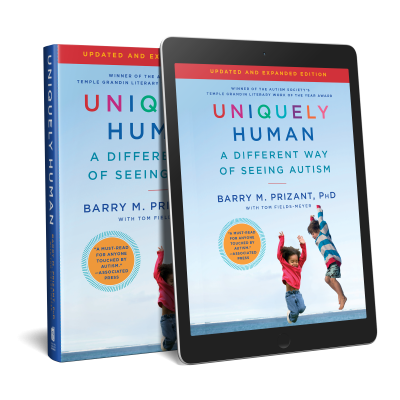
“I have read a million and one books on Autism. Uniquely Human is the best book I have ever read, hands down. Thank you Barry for this incredible gift!!!!”
– Navah Paskovitz, Mother of three boys with Autism, Co-Founder, the Ed Asner Family Center
“Compassion, learning and supportive strategies–the three essentials for working with folks with ASD–are an integral part of this must-read book.”
– Michelle Garcia Winner, Speech Language Pathologist and Founder of Social Thinking
“Thanks be to Barry for the first-ever must read written for parents, educators, and clinicians.”
– Michael John Carley, Founder, GRASP; Author of Asperger’s From the Inside-Out
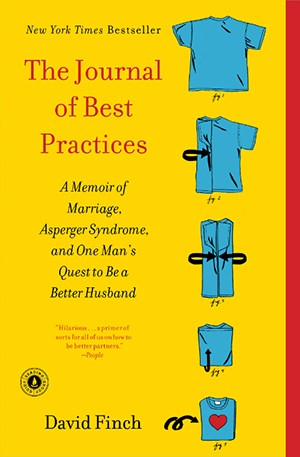
“What makes the book compelling is how funny Mr. Finch is about himself. He’s great company.”
– Susannah Meadows, The New York Times
“In this hilarious memoir (which also gives some of the finest explications of Asperger’s out there), Finch approaches trying to be a better husband and father with the determination of Sherman marching on Atlanta.”
– Judith Newman, People (4/4 stars)
“Talk about being on a roll. This dude wrote a book, he has Asperger’s syndrome. He cured himself by listening to me on the radio!”
– Howard Stern