EPISODE 139
What It Means to Be 2E
and Nurturing Potential for 2E Individuals
with Sam Young, M.Ed.
What It Means to Be 2E
and Nurturing Potential for 2E Individuals
with Sam Young, M.Ed.
Play the Episode…
Show Notes
Sam Young is a neurodivergent professional educator who has established Young Scholars Academy, an online community for 2E students and individuals who are exceptionally gifted and exceptionally challenged. Sam, Dave and Barry have a lively discussion on topics ranging from different learning styles, to limitations of public education for 2E students, to the highest priorities and strategies to support 2E students and individuals.
Learn more on his website
Featuring

Sam Young, M.Ed.
Sam Young, M.Ed., is the Head of School at Young Scholars Academy, a strength-based, virtual village that empowers gifted, twice-exceptional, and neurodivergent students to thrive! Sam is a two-time Fulbright Scholar, TEDx presenter, Keynote speaker, and a neurodivergent person himself who has committed his life to supporting clever, quirky, 2E students to overcome the harmful deficit-based system and discover, develop, and lead strength-based, talent-focused lives!
Connect on Facebook
Follow on Instagram
On LinkedIn
On TikTok
Uniquely Human: The Podcast
EPISODE 139 – August 8th 2025
What It Means to Be 2E and Nurturing Potential for 2E Individuals. With Sam Young, M.Ed.
🎙️ Transcript and Audio Usage Disclaimer
© 2025 Uniquely Human: The Podcast. All Rights Reserved.
The contents of this podcast, including all audio recordings, transcripts, and related materials, are the intellectual property of Uniquely Human: The Podcast and its fiscal sponsor, Community Autism Resources, a registered 501(c)(3) nonprofit organization.
These materials are provided solely for personal, educational, and non-commercial use.
No portion of the podcast audio, transcript, or any derivative materials may be reproduced, redistributed, modified, or publicly displayed without prior written consent from Uniquely Human: The Podcast or its authorized representatives.
Transcripts are provided for accessibility and reference purposes. They may contain minor transcription or formatting errors. When quoting or referencing the podcast, please credit Uniquely Human: The Podcast and provide a link to the original episode page.
By accessing or downloading transcripts, you agree to comply with this usage policy and acknowledge that all copyrights, trademarks, and intellectual property rights remain the exclusive property of Uniquely Human: The Podcast and its creators.
For permissions or inquiries, please contact:
📧 uniquelyhumanpodcast@gmail.com
Introduction and Welcome
[00:00:00] UHP: The primary purpose of uniquely human, the podcast is to educate and inform the views expressed during all episodes are solely those of the individuals involved and do not constitute educational or medical advice. Listeners should consult with professionals familiar with each individual, or family for specific guidance.
Uniquely Human: The Podcast is produced by Elevated Studio. Music is graciously provided by Matt Savage of Savage Records.
[00:00:39] Barry: Hi, I’m Dr. Barry Prizant, clinical scholar, researcher and consultant on Autism and Neurodiversity, and a Brooklyn boy raised in the big city.
[00:00:50] Dave: And I’m dave. I’m none of those things, and I grew up on a farm in Illinois. But being on the spectrum myself, I have plenty of personal insight to lend
[00:01:00] Barry: and this is Uniquely Human: The Podcast, a show that illuminates and celebrates autism and neurodiversity.
Today on Uniquely Human: The Podcast, Dave and I are very excited to welcome Sam Young to talk a little bit about his experiences, and a service that he has developed called Young Scholars Academy. So welcome Sam.
[00:01:30] Sam: Thank you so much, Barry. It’s great to be here and thank you Dave.
[00:01:34] Barry: Pleasure to have you on.
Sam’s Personal Journey with ADHD and Dyslexia
[00:01:36] Barry: Little bit about Sam first. Sam is the head of school at Young Scholars Academy, a strength-based virtual village that empowers gifted twice exceptional and neurodivergent students to thrive. Sam is a two-time Fulbright scholar, a TEDx presenter, a keynote speaker, and a neurodivergent person himself who has committed his life to supporting clever quirky 2 E students to overcome the harmful deficit-based system and discover, develop, and lead strength-based, talented, focused lives.
So you have quite kind of the journey that you’ve been on, Sam, so why don’t you just share a little bit. About your, personal and professional journeys, if you will.
[00:02:25] Sam: Yeah. Thank you. So I was like, most people in this field, you don’t accidentally trip and fall into it. it’s usually pretty personal.
I was at a young age diagnosed with ADHD. Around second grade and, very much made sense, apples and trees. My dad was like a really creative, quirky artist, and always struggled to get it together. He’d have these moments of these fits of creativity. He, this is a super Jewish thing I’m gonna share with you.
He actually invented the bagel slicer. so before the, he had a Lucite company and before I actually have one of them, not the bagel slicer, but before the, I just happened to have this little planter, before the bagel slicer with the guillotine, the kind that most people use.
[00:03:14] Barry: I use it all the time.
[00:03:15] Sam: So he didn’t do the guillotine. This is most, the, good inventions are usually the second iteration. His was the first, but it was just like a little loose sight u and it had two studs, one side for each of the bagel, and then it had cutouts. And then you could saw it.
So my dad was like this really quirky guy that, would be, have these like fits of genius and then struggle for, executive function, managing his personal life. And I was, Raised in this house and quirky brain. And long story short school was always really tough for me. And I, I loved connecting with people.
I loved the social part. I didn’t realize I was dyslexic as well. So I was always like, the things I was good at didn’t seem to matter as much. And then the things that I had to be good at. I wasn’t. And but most people that’s, enough of a journey for, you run into the person who changes your life.
The Teacher Who Changed Everything
[00:04:07] Sam: There’s always one teacher, if you’re lucky. I had a teacher, Mr. Dunphy, my ninth grade teacher, and he just, he’s he pulled me aside, he’s young, stay after class, first day of English. And I was like, oh goodness. he’s onto me, And he’s said, what are you doing here? And I said, Mr. Dunphy, sir, I’m taking your English class. And he said, you’re wasting your time and mine. And I was like, oh, he’s gonna tell me, I was in the second to bottom English class. I’m like, oh, he’s gonna tell me to go to the bottom, And he said, you should be in honors. And I was blown away. And it was the fir.
He’s you’re a smart kid, you’re wasting your time being here. And I was like, they put me here. And he said, who are they? Just went into the whole thing. And it was like the first time someone really believed in me, in, in class. And I actually stayed ’cause the, he was such a good teacher.
but then the rest of my journey, he’s you’ve taken aps the rest of your time here and if you don’t, he’d whacked me on the head with a clipboard because it was different days then. and, that was just the turning point for me. At the first month of ninth grade, I was, I’m gonna be a teacher.
This is what I’m gonna do the rest of my life. And then so I went into education, and just all along the journey, I’d run into, I almost dropped out because I couldn’t keep up with the reading and I wanted to be a history teacher. And I had this amazing other mentor, Mr. Buxton, I’m giving you the long story here, but I’ll, cut to it real quick.
He said, We should meet and what’s the future look like for you? And I said, I think I’m gonna drop out. I can’t keep up. It’s 200 pages a night reading. I just can’t do it. And he said, lemme tell you something. There’s history teacher, you have to be a teacher first. And then the history second. And he said, you can’t teach the teaching.
He’s you’ve got that kid. Stick with it. And he’s lemme tell you a story. And told me some story about his first day as a history teacher. Some kid asked about Saka Joa. And he is you’re mixing up your history. Like he was wrong. And he’s the point is you get there, right? But you can’t learn in teaching.
And so all along the way, I was gonna give up on my journey and people would believe in me and challenge me and ask more outta me. And I just thought, I want that for people. I wanna give that to people because what better gift is there than to be a mentor and to help people.
Being That One Person for Students
[00:06:07] Barry: Very powerful message for so many of our listeners, to be that one person, or one of a few people in the lives of the young people that we, mentor and we support and to change a life, right? Yeah.
[00:06:21] Sam: And it takes one, a lot of the times, there’s so many people out there with so much beautiful potential and so much of the world’s focused on the struggles and, it just takes one person to help them. So, that’s the, sort of personal and professional combo there.
[00:06:38] Barry: Yeah. And I might say you, shared, a little bit of the journey with your dad and an incredible, article, which I guess was a blog post, I believe.
How Being Twice Exceptional Killed My Dad
[00:06:48] Sam: yeah. I wrote this blog on Father’s Day, and it was titled, being Twice Exceptional Killed My Dad. Basically it was this realization of my father passed away two years ago and again, this guy, when I was born, wildly successful, big house, the cars, the trappings, and then he, lost it all. And then he’d have another creative genius fit and he’d do something new. And my whole life was very much like that, where it was opulence and then scarcity.
I grew up in this really cool, house of creativity every night, painting together, listening to a like very old soul. I’d listen to like gun smoke and Johnny Dollar, a lot of the old, and everybody would come around my house and we’d always have interesting people.
My dad collected. There’s, so and so’s out in his lucky staying with us for a month. really interesting life. And when my parents separated it was going into college, my dad’s life completely fell apart. It couldn’t, bills and everything. And I realized that he wasn’t as independent as I thought, and really my mom had run the show.
And then when he instantly got into another relationship and someone straightened him out, then when they broke up, then. He died within two years like it was, health went down, he wasn’t going to the doctor. He was avoiding things, not taking meds. And I realized, having his decline in my kind of rise in the space of studying.
I was getting a doctor at the time, I dropped out. Not like you, Barry. Congratulations. He went the distance I dropped out. I, I. I saw my dad’s decline and I realized this is executive function. This is, my dad has some, probably different personality struggles and definitely this big brain, he, they sent him to military school.
So he was born in 1947, and what do you do with a kid who’s quirky and he was getting kicked outta school almost every day, every picture of him. It’s really funny, every picture of him as a child, he either has a paintbrush in his hand or someone’s holding his hands by his side for a photo and pointing to the camera because he’s got like such bad ADHD.
And I realized like I just had this kind of major AHA, like my dad didn’t have the executive function skills to take care of himself. And he was codependent on a partner. And what if he had lived a life where people helped him develop those skills?
And I realized all the down periods of his life, he wasn’t in a strength area.
And all the up periods he was, and that’s the only thing he never changed. And I’m gonna share, I’m going like way in with these long stories. I’m not usually this long-winded, but I’m sorry. And when he was, he, my dad was like on his death bed. And I remember visiting him and we’re talking about what it was gonna be like when he got outta the hospital because we thought he was gonna round the bend.
And I said, dad, you have enough art, we can sell your art and you’ll never have to work again. And he looked at me and it was almost like, you know how every World War II movie has some part where there’s some soldier grabs the other guy and he’s Damnit man. it’s like that moment of listen to me, tell my wife I, and it was like that.
He looked at me and he said, Sam, you’ll never understand. And it just pierced me. He said, I have to make art. And he like laid back in his bed and I was just like, it just my, stomach right now is up in my throat just telling you. It was just this moment and I realized this man is driven by a motor.
He came out of a coma they thought he was never gonna come out of. And the first thing he did was ask for paper to write down the thoughts he had about art he could make when he got out. And it was just like this obsessive single focus. And I just, and his life ended. I thought about all the young lives that I’m working with and that are in our community, and I was like, God, what if these kids had the support and the intervention at a young age.
What if they had that and I could see almost like a graph, I could see what would it look like? What would that chart, what would that plot look like on a different trajectory?
[00:11:02] Barry: Amazing. And with your permission, we’ll put a link to the story that you wrote about your dad. it was powerful reading it and hearing you say it makes it even that much more.
Powerful.
[00:11:14] Sam: Please. Thank you. Unlike you, Barry, I’m not an author. My writing’s always been tough for me. having, and I mentioned this to you when we first met actually, that I wrote that over the course of two years actually. because it just, it was hard.
[00:11:29] Dave: Yeah. That’s, any kind of deeply personal undertaking like that is, best not to rush it.
[00:11:37] Sam: Right? There’s a lot of processing that comes with it, too. Big realizations. Yeah. And it’s complex, right?
Generational Patterns and Family Legacy
[00:11:42] Sam: I think a lot of boys grew up worshiping their dads. And having met my wife, I realized how brilliant and also how flawed my dad was and how much my mom raised me. Not real, My mom was the executive function of our, she was the prefrontal cortex of her house, if I wanted to do something, it was, because she did it and the cool memories I had. My wife pointed out this concept is really interesting, totally unrelated, but, it’s called like invisible mom syndrome. And it’s the idea that like a lot of, moms are, they’re doing things behind the scenes in the kitchen prepping, right? And so they’re not in the pictures and they’re, and ’cause they’re taking them and a lot of the memories with dad, painting every night listening to Johnny Daher.
That’s possible because mom was cooking and cleaning right? Exactly, so my wife just, boom, man, I just, wow. I was writing this piece like major realizations and interestingly, generationally my, I come from like a long line of quirky people. My great-grandfather. Was a Jewish immigrant to the United States and was part of this crew that invented, like the original cinder block.
Actually we have a lineage of making stuff that’s cool, but not the final version. So my great-grandfather, you know how the cinder block looks like in figure eight? My great-grandfather made half that. So it was just like a square, but it was like a hollow brick that was like a big, it was a let’s make a hollow brick out of cement.
It was a big deal. And then someone else made the other one, and that was the one that did it really well. But my, my, my dad wrote a piece when his dad passed and it was called The Day Superman died. Huh. And when my dad died, that was, I had that thought he would always talk about that piece. But going on the journey of writing it, I realized a lot about also like the flaws that Superman has and, the challenges, of being a Superman. So really complex journey.
[00:13:38] Barry: Yes. And, so that. Led you, as you just said, to think about all the potential in young people that is not recognized, that is not supported. and we know the downside that when it’s not supported, and a person understands my brain works differently than a lot of people and people don’t recognize what I’m really good at and focused on, that could lead to a lot of mental health issues.
Education is 180 Degrees from Society
[00:14:05] Barry: So talk about. The Young Scholars Academy as your effort to say, we’re not going to allow these incredible young minds to be not only wasted, but on the other hand not realize to contribute.
[00:14:21] Sam: Yeah, it’s exactly, I couldn’t have said it better, Barry. The issue is this is education is 180 degrees out from society. In and in society, if you’re really good at something, no one cares what you’re bad at. But education is about figuring out what you’re bad at and getting you better at it. And that makes no sense, right? it’s, my dad example’s extreme, but imagine if he didn’t go to military school, and I think we do a version of this to kids all the time, right?
We’re not sending them off, shipping ’em off to military school, but what are we doing? We’re bringing in, tutors and coaches and all the things, and it’s well intended . When Dr. Joseph Renzulli, said this quote, which changed my life and it made me start Young Scholars Academy actually.
He said, “no one cares about Picasso’s ability to do math or Einstein’s ability to paint”. And I just thought, that’s so obvious. And he went on to say, no one cares about Picasso’s ability to do math or Einstein’s ability to paint. So why are we obsessed with kids getting good at what they’re bad at?
And it just hit me like a ton of bricks.
[00:15:26] Barry: I was gonna say, I think we had said this in our previous discussion, you’re not gonna put a lot of energy in trying to teach a fish how to climb a tree.
[00:15:32] Sam: Exactly. Exactly. And it’s if, it makes so much sense for these extreme examples.
And then I, building on the my dad thing, I had this thought one day and I was, I said, what, if Superman spent his whole life trying to get over his kryptonite allergy? It’s absurd. It is yeah. It’s like you have 99% of things right with you. There’s 1% challenge and you’re like, let me just et educate my whole existence to getting microdosing kryptonite until I get over this out.
Strength-Based Learning and Social Connection
[00:15:59] Sam: It’s it doesn’t make any sense, but we do it to ourselves all the time. So when we have these kids, especially, and, you said it Barry, like these outsized strengths and interest areas and talents at a young age, we have an obligation. To help them explore, develop, grow, not with requirements to produce, but with, the desire to just learn for the sake of learning and love learning.
So I think that intervention is everything, and my belief is that if you can give a kid just an hour a day. Of strength-based talent development opportunities with no expectation to, to make we live in a production-based system. I feel like there’s like an obligation. You’re good at this, make spreadsheets, right?
But this is just, Hey, I want to just learn. I’m curious and I’m not satisfied with because, I wanna know why. the thing that I found is that not only do these kids grow intellectually, but emotionally, right? How does one gain status for quirky people? It’s being really good at something.
I think a lot of the world is oh, you struggle. This kid struggles socially. Let’s put him in ABA therapy. So he learned how to lick people in the eyes. It’s when he’s the top most expert on the Spanish flu, people are gonna come to him with questions and they’ll look past quirkiness.
We were talking about this before the show. I live in Hollywood, People in Los Angeles are my uncle jokes when I moved here, he said he lives in San Diego and he’s you know how it works, right? If you shook this shook the country loose and you tilted it on its axis, everybody without roots slides into LA and that’s really funny.
But there, there is something about, the people here are really talented at certain things and they’re here because they’re pursuing that, that talent area, that passion area. And guess what? That’s where your people hang out. If you want to know everything there is to know about World War I trains, guess what?
Go to the train meetup or the course about trains. That’s where you’re gonna meet your people.
[00:17:55] Barry: Yes.
[00:17:56] Sam: And so not only is there the intellectual benefit, but there’s the social and I, that’s everything because aren’t these kids struggle socially?
[00:18:03] Dave: Yes, no, you’re exactly right. And, along with struggling socially, nevermind if they do have academic str struggles, and their parents have this nervous energy around it, now there’s self-esteem issues and the self-esteem issues feed into the poor performance. It’s it becomes really, you get wrapped around your axle, very quickly. And, and which I know from experience.
The 10-15-5 Rule for Twice Exceptional Kids
[00:18:30] Barry: So let’s have our listeners who I’m sure right now are very curious about specifics, about the Young Scholars Academy. how many young people do you serve? How does it actually work?
[00:18:46] Sam: Yeah, that’s a great question and I wanna just speak to what, Dave said a second ago there, ’cause Sure. I think it is a sec. Both directions are exponential. If we focus on deficits, then the kids internalize it. There’s something wrong with me. I’m Stu. I spent my whole life thinking I’m stupid and still struggle with that.
I, I’m not a reader. And to be good at school, you have to read and write. And so you start to believe that stuff and then it shrinks You it really shrinks you. It’s like the goldfish and the bull thing. you’re not getting as big as you could. and we know those, neuroplastic early years are especially important.
And I love that quote. I don’t remember who first said it. I heard it from one of my colleagues, Dr. Lin Lim, go. She said, humans are, emotional creatures who happen to think. I not thinking creatures who emote. Ah-huh. And I, think, you know how quickly we can, like Dave was saying, like when you start to think these things and then you kinda shut it down, it’s so important that we have kids.
I think of it, there’s a, saying I like, I don’t remember who said this first. It’s, have you heard of the 10 15 5 rule with kids?
[00:19:51] Barry: No.
[00:19:52] Sam: A term for, so going back I guess to zero, when we talk about twice exceptional, we should be on the same page. We’re talking about someone who is exceptionally strong and exceptionally struggling, right?
So they have these dual, this kind of spiky profile, high highs and low. So they might have, really high verbal reasoning. Maybe there’s the kind of kid you could drive someplace and they could drive you back ’cause they just have a perfect memory for, maps or data or whatever it might be.
Really artistic reasoning or big picture questioning. And at the same time, that student might have ADHD or some kind of language processing struggle or dyslexia or whatever it might be. So it’s the co-occurrence of the two exceptionalities. The 10 15 5 rule is it’s anecdotal, but it’s a way to describe someone who’s chronologically 10 intellectually, 15. And maybe emotionally five.
And so these kids, it’s a spiky profile because you have this 10-year-old vessel, right? This body, and then you have this brain that could be 15 or maybe even in graduate school. that wants to know everything there is to know about, pre, Greek, Greco philosophical constructs from, whatever it might be.
And then at the same time, five years old emotionally, because you know that brain is developing so asynchronously, right? And we have all that, activity and in, in the amygdala and everything. So we. We end up with these kids that they can’t hang out with older kids, even though intellectually they’re on the same plane because of the emotional immaturity.
College Classes for Five Year Olds
[00:21:23] Sam: They can’t hang out with the younger kids ’cause they don’t wanna just play hide and go seek. They’re thinking about global warming or whatever big idea that they have that’s driving them. And so the whole goal behind YSA was, I thought, I was teaching at a school called Bridges Academy, which is the first school in the world to teach 2- E kids. They’ve been around for 30 years this year, I think. And I realized the one thing that was going extraordinarily well at Bridges was electives I saw when kids were not doing the core classes, but doing the enrichment stuff. That’s when they came alive. It was you, couldn’t find it anywhere else.
[00:21:58] Barry: So, give some examples of electives like that.
[00:22:01] Sam: When I first started, the first thing I wanted to do was speech and debate. A lot of these kids really struggle with writing, organizing their thoughts, and I realized they have big opinions. So what if I trick them into writing? and you do it by, Dr. Renzulli says the big one is authenticity. It’s all about authenticity. Bright gifted kids are not gonna do a worksheet. They know it’s a trap, right? It’s too small. It’s rote memorization, and they can’t express themselves. And then they know what’s gonna happen after you’re gonna give ’em another one. But if you’re like, Hey, guess what? Debate on Friday. Get ready. Here’s how you debate, by the way, and here’s how you research by the way, and here’s how you set your sources. That’s authentic. Or hey, podcast, you’re gonna make one. How’s it work? This is real authentic applied learning.
I was looking at what are the kids interested in? The hundreds of kids I worked with for 15 years or so, thousands of kids, and then what’s not being taught, and I had this kind of Aha Barry, I realized. Gifted toy kids do well in college. Not, because of the production. They struggle with that, but because.
The ability to go deep in certain interest areas.
What are you taking in high school? US history, what do you take in college? It could be like women’s experience in Vietnam war. It’s like super niche areas. Yes. It’s What are you taking, what English class are you in right now?
I’m in, English 10. It’s like in college. What are you doing? Gilgamesh and the Sumerians, right? there’s a huge difference and so I just thought. I had this one kind of aha, what if we did college classes for five year olds? That was how it started. Huh? What? And then I thought, let’s just see.
So I started and we were doing, at first it was, I couldn’t get five year olds. I started with 10 year olds. We were doing, speech and debate, and then wow. Parents, the pandemic hit and then the parents were like, Hey, we have, cousins in, in, in Texas. Could they take your debate? And I was like, sure. Are they too e yeah.
Oh, they can keep up. And then all of a sudden people were asking for certain things. And then was it one, environmental advocacy and climate change? Okay. Wow. Let’s get some eight year olds in there.
The Anglerfish Expert and Context-Dependent Strengths
[00:24:10] Barry: Sam, this reminds me and Dave will remember this, We had segments for a while, which we were gonna continue to have called enthusiasms. And I think we had a five or 6-year-old from, British Columbia, but I believe if it was Vancouver or Vancouver Island. And he, was like five or six years and he was an expert in fish that lived below 5,000 feet in the ocean. And when, he came on with his mom, he was dressed up as an angler fish.
And then, the mom said that they go to. I guess the Vancouver or Vancouver Island Aquarium, and they love having him there because of his riveted fascination in this very niche area. Yes.
[00:24:51] Sam: Yeah. And when you think about it, I give this example all the time, strengths are context dependent and sup and superpowers too, right?
if you have the ability to produce water, it’s not impressive on a boat. But if there’s a fire and your magic superpower is that you can make water, you’re an absolute hero, you’re a lifesaver. And I thought, I gave the Spanish flu example, but I don’t know if you remember this in the beginning of COVID, not that everybody’s eager to flash back to that, but there was this guy that kept bringing on, ’cause we had nothing else to reference.
And there was one guy that wrote a New York Times book, New York Times bestselling book about the Spanish flu. And you have to think for this guy’s whole life, people are like, I don’t know his name. They’re gonna be like, I’m gonna make it up like Dave, give it up already. what’s with the, Spanish flu?
and then all of a sudden, bam, COVID happens. And we have no other expert in the world who can give us a better prediction of how this thing might play out. What we, mistakes we shouldn’t make. I just got goosebumps thinking about it. it’s context dependent. Yeah. That kid, the, Anglerfish kid, right?
guess what? He’s basically a professor. Or a marine biologist. think about what you do with in academia. I just think that’s so magical, And, thank goodness that kid can do that at five. ’cause what if he discovered it at 15 and someone was like, stop with that. We have to do our multiplication tables.
[00:26:11] Dave: Exactly. Exactly. And, that he’s supported by his parents. you should dress like an anglerfish when we go to the aquarium. Absolutely. Yeah. that’s wonderful.
[00:26:20] Sam: Yeah. Yes. That’s the goal.
[00:26:24] Barry: What does it say to the youngster? Or what does it say to a teenager? Not only do I respect your knowledge base, but I’m gonna help you celebrate it.
Which, you alluded to at the beginning of our discussion, has everything to do with self-esteem. Has everything to do with your sense of who you are as a human being. And therefore what you should extend yourself out to contribute if you wish to do that. Yep.
[00:26:46] Sam: Yeah. Yeah. And I think that there’s this great kind of baton passing that happens when young people, it’s unique, right?
Where Square Pegs Sharpen Their Edges
[00:26:53] Sam: Like my dad was obsessed with 1920s. Tube radios, he would, take apart, Grundigs, I could tell you all the brands, art deco German radios, he loved and he would take ’em apart. He was fascinated with the tubes. And our house looked like a, like steam punk, it looked like Frankenstein, right?
We had these things. and that was just his thing and it lit him up and, I think for these kids. It’s so important because that is expertise. We want depth, we want complexity. Like society celebrates people with zero balance. We, Simone Biles, the best in the world at one thing.
Bill Gates, we’ve always loved celebrating, entrepreneurs who dropped out and made it big or whatever it might be. these are those kids. Yes. And the system is hell bent on. Rounding them out. They’re square pegs. We have a, our slogan is, where square pegs come to sharpen their edges because it’s, what’s the point of rounding people that we don’t need?
We’re not going to factories anymore. We don’t need well-rounded people. Yeah. We need like hyper typified experts.
[00:28:06] Dave: I love the, where square pegs go to have their edges sharpened. ’cause that really is, if I had. Really been encouraged. So when I was in elementary school, all I ever knew was what was apparent like in front of me.
Like I wasn’t thinking beyond my own nose often. And when the, When they started this Illinois State Young Authors program and every year the, they would have a contest. You write a story or a book, everybody in the class has to write one, and then they all get sent down. The governor’s office reviews it and they say these are the top stories, whatever.
And I won all the time as a delegate from my elementary school. And all I knew is I was just doing a homework assignment. I wasn’t thinking, young author, I’m gonna be a writer. It was just like, here’s a story about an amoeba. That, gets exposed to gamma rays and takes over the school. I was like, ah, this is nice.
and, but if, because I was in a public school. The center of the country, Midwestern public school, like 1980s education. It was, oh, no, You’ve gotta be good at every subject. So you’re already good at writing. Why don’t we tone that down a little bit and we’ll focus on your math. We’ll focus on your, this, that, and the other.
and would you know, I graduate from college, go into an engineering profession, not a writing profession where I like had this natural talent. I don’t, no regrets, all that sort of thing. but it is interesting what, when, somebody’s innate interests and talents are nurtured, and then maybe what school should be doing, better than I would, but maybe what school should be doing is let’s really nurture that thing and then we’ll teach executive functioning.
We’ll teach emotional regulation, and you don’t have to be good at history.
The French Education System and Fulbright Experience
[00:30:06] Sam: That’s it. Dave, you. Quit engineering. Go into education. You get, we need more of you.
So Barry mentioned the Fulbright scholarships. I never bring those up because it sounds highfalutin, hoity-toity.
But, I had a Fulbright scholarship where 14 American teachers were chosen to go to France and study the French education system and 14 French educators. I, always say they got ripped off and we got hooked up, right? they were these poor. you gotta imagine, you gotta imagine someone was sent from Provence to Ohio and I just, when I found out their placement, I said, listen, before you go, I just want you to travel when you’re there, okay?
I want you to get out and see that country. ’cause there’s a lot more than Ohio. No offense if anyone’s from Ohio. Ohio’s a great place. but the, system flawed in many ways, outdated in many ways. The French education system fundamentally gets self-actualization in many ways. They understand early talent development, identification.
Granted, it’s done through big testing, and again, there are problems with that. It’s a, very centralized and socialized system, which has pros and cons, but they have unapologetic, energetic, high pride education pathways. If you want to go into. HVAC or the custodial arts or be a beautician, there are like phenomenal state funded schools, public schools.
And this is why, in America it’s like you go for this and then if you can’t, you do that. And in France, like you go to high school to be a server. to work at a restaurant. And that’s why you have a tremendous amount of pride because you studied for this art. This is a real art form, and I just saw how that manifested.
When people talk about, oh, the French, they work less. And it’s this starts in the education system.
This great sense of pride and. I was reading this text at the time, I’ll never forget this, and it gave, I use this all the time. it talked about assimilation versus like identity maintaining, and I had this kind of aha in France.
I was like, this is a country of a, it’s a mosaic.
in the United States, we like, we swirl paint. Or just do, a little bit of everything. And in France, like people at age 10 and 11, they’re doing some testing that’s directing them into certain study trajectories and then into certain universities.
And so they, maintain, the reason I say Mosaic, they maintain that individual identity.
This is who I am. I’m, a server, I’m an artist. I’m, an aesthetician and I’m proud of it. And I’m going to contribute this square in the mosaic in society and work 35 hours a week and have a good retirement plan.
[00:32:45] Dave: Amazing. So you’re telling me they’re not saying this is what the corporate world will need from you, so you don’t matter. Learn these skills and then Yeah. The Marine Corps ate everybody for depression. It’s quite a system. Yeah. Yeah. who would’ve think.
[00:32:59] Barry: Yeah. So I’m gonna take an a little bit of an academic leap here.
Howard Gardner and Multiple Intelligences
[00:33:03] Barry: Okay. And I might be wrong on this and listeners can let me know I’m wrong on this. so much of what goes on in Europe in, terms of understanding the mind and understanding learning is based upon very different models of cognitive development than here. and especially in the US when United States, Western behaviorism took over. It’s with the right system and the right reinforcement schedule, you could teach any person those skills that you need. Okay. and, I’m thinking right now I was exposed early on to Howard Gardner’s theory of multiple intelligences, which is based upon European psychology.
And I was lucky ’cause I was at Emerson College in Boston. I actually invited him to speak a few times to our students. ’cause he was based at Harvard and the theory of multiple intelligences, as you well know, has to do with let’s recognize and celebrate the fact that a mind can have eight different areas of strength, and let’s recognize that and let’s build those areas of strength and not push areas.
That due to a person’s neurological endowment plus experience is not a particular area of motivation or strength for that person. So I, think it’s a much more balanced view of how people develop and it isn’t this kind of objective sense of any person can be taught anything and to do it well if you have the right teaching strategies.
It recognizes the interplay between a person’s neurological endowment, emotional, if you will, kind of gifts, and then looking for those connections.
[00:34:45] Sam: One of the most interesting things about Gardner’s work to it. So for me, this was huge. And I still struggle with, I’m not formally diagnosed. I informally identify as twice exceptional. But I struggle with that because I think, people who are, tested, gifted, or, have really high, IQs, let’s say because I have this internalized. Oh, I’m stupid, I’m bad at school. All these things I’ve never allowed myself to publicly say I’m, 2 E. But, it was actually Gardner’s work that started to be the beginning of the change, the linchpin for me where I could say, intelligence is more than school. And that was, there were two big ahas for me, Barry, in my own journey. One was Howard Gardner’s work, realizing there’s eight or nine intelligences.
And then the second was understanding executive function.
And this is why I’m really passionate about this for kids, is that we think that you have to do to be good. Like you have to produce the education system is, yeah. how’s he gifted? Dave, how are you gifted if you’re not turning in your essays?
Hold on. When I first understood that there was a difference between knowing and doing
[00:35:55] Barry: yes,
[00:35:56] Sam: it gave me permission to think I’m actually not stupid.
[00:35:58] Barry: Yeah.
The Difference Between Knowing and Doing
[00:35:59] Sam: And that’s why I think it’s really important for early interventions with the kids to see. This is how your brain works, develops.
This way you can be profoundly talented, exceptionally minded in this area, and not turn work in. And it doesn’t mean you’re stupid. It’s actually probably a sign that you’re really bright and here’s why. And let’s look at it intellectually. And boy, is that a different pathway. Because I’ll tell You my wife and I both, were both neurodivergent. We struggle in this house to adult and the reality is that there’s a lot of negative self-talk in both of us. Yes. And we’re doing the work and we’re trying, but boy is, it hard to undo that damage? And I just think if we can tell kids like, you’re not stupid, you just struggle at this, and here’s the system and one, one gardener thing.
And then Dave, I know you wanna say something. Boy, this is the most long winded I’ve ever been on a podcast. I love it. I’m sorry, but I feel like this is, if there was a monologue counter right now, they’d be like, or pulling me off the stage and playing the music with the king.
[00:36:52] Dave: No. this is great.
[00:36:54] Sam: let me just say something, Barry, I just did a talk on this actually three weeks ago. people don’t talk about the most interesting part of Gardner’s work, actually, which is he actually said that intelligence wasn’t fixed, which was profound. He, it is not that you are not, only is it not just this format of intelligence, which is academic. But, it’s actually not fixed. And Gardner said that intelligence develops over a lifetime.
Which is wild. And then Joe Renzulli took that work and said, by the way, gifted doesn’t exist. They’re called gifted behaviors, and they exist at the intersection of focus interests and above average talents. And then, creativity.
Yes. And so he’s had this three ring models. So first, Gardner saying intelligence isn’t fixed. Totally upset the whole world. And, as you said, more aligned with Europe. And then I think Renzulli came in and said, by the way, gifted isn’t gifted. It’s, a set of behaviors. And they appear, and this was his quote at certain times in certain people under certain circumstances
[00:37:58] Barry: with the right opportunities.
[00:38:00] Sam: Correct. Absolutely. Yes, absolutely. and I’ll just say to that end, my education journey. At first I was, I was teaching at a project based school for students who were on probation. Actually, one of my first jobs, when I came back from France. And when you talk about gifted kids who were in the system because they’re black or brown, actually in Rhode Island, what’s his name? I can’t think right now. Big Picture School. It started in Rhode Island. Let Dennis Littky, I think is his name. that was his whole vision. He’s a lot of students because they don’t have opportunity, because they don’t have privilege, these bright minds, what are they doing?
I could sit here and be talked down to in this big class by this teacher, or I could do something that’s way more. En engaging, like deal drugs or, whatever else, because that’s using my brain. It’s feeding me dopamine right now. It’s making money. and that’s why I think these kinds of interventions are so important for everyone.
You’re Too Smart – You Should Know Better
[00:38:57] Barry: I just wanna ask a question. It’s just, there’s this statement looming in my mind, and that is how many times do 2E kids or kids who have patterns of 2E behaviors, hear something like, you are too smart. You should know better. Oh, yeah. especially around issues related to regulating
Dave raising his hand.
Yeah. Dave raises his hand.
Especially around issues of social judgment, regulation, reaction in situations that are overwhelming or confusing. You’re too smart to act like that. You should know better. And yes, that person can be extremely smart in one way, or as opposed to another. But the problem is that people don’t understand what we’re talking about.
Now, you could be super smart in some ways and not so much in others, if you wanna call it smart. The other thing I just wanted to throw in there is, why is it, and I think, I don’t think Gardner said this, but many people have said this. That when it comes to being an artist, we talk about it as a talent, not an intelligence.
And it’s almost as if it is God gifted talent. God gave you this gift. Okay. As opposed to, it’s bestowed upon you as opposed to, it’s something that, yes, it’s part of who you are, but it’s also part of opportunities and nurturance.
[00:40:20] Sam: I think all of these ideas, the, first one, especially understanding the brain, right?
We have an outdated idea of what gifted it even is, right? Or what intelligent even is. academic system is not. That was created for fact, we know this is a tired argument, but we know the system was created. Scientific management, Frederick Taylor Taylorism, it was made to get people ready for factories, right?
You’re bad. You wear the dunt cap. There’s a schedule, it could, the bell schedule could be the same as the coal mine schedule, right? You bring your lunch pail. It all made sense and it did a great job getting kids ready for both World War I and factories. Right? Reality is that’s not where we live anymore.
Outdated Education Systems and Gifted Brains
[00:41:08] Sam: So when you have a kid who has high verbal reasoning or artistic reasoning or creative thoughts, and they’re making connections, the endoplasmic reticulum is like a highway and then boom, their brain’s gone for an hour, right? And they’re like, you didn’t do the worksheet. If you don’t know what the, parts of the cell, it’s like, no.
This kid actually just made one in their mind. That’s right. And you didn’t ask. They’re 3D modeling in their brain right now. That’s right. open your eyes, right? so these. These brains. We know actually the neuroscience tells us that these gifted brains have that. That’s where the 10 15 5 rule comes in.
You’re looking at a kid who’s intellectually this age, but emotionally this age. And it’s like the be it’s not, you’re too smart. It’s because you’re bright. You feel big feelings.
[00:41:51] Barry: Yes.
[00:41:52] Sam: Because you are, you are an empath. You cannot get over the fact that kid’s having a bad day and you can’t pay attention to the math class because you feel the feelings of the kid who just had a big upset in their lives.
Yes. And I think that’s why we need to help people understand what it is to be gifted, what it is to be twice exceptional and teach again, humans are emotional creatures first, thinking creatures second.
How Young Scholars Academy Actually Works
[00:42:15] Barry: Yes. So with all of this awareness, okay. What do you actually do when you have students who come to Young Scholars Academy?
What’s the secret sauce of, as in your own words, you help students discover, develop, and lead strength-based and talent focused. Lives.
[00:42:37] Sam: I, Barry, bless you. This is 45 minutes later and you’re asking me the same question I haven’t answered, oh, man. All right. Let me answer it. I blame Dave. I blame Dave.
[00:42:46] Dave: Honestly, that’s, normally my role.
[00:42:49] Sam: Yeah. I blame you, Dave. I know your
[00:42:50] Dave: record. I’ll take my lumps on this.
[00:42:52] Sam: Yeah. No, in short. What I realized is, and we had a mom come up with this quote when we first started, it was hour a week enrichment courses. That was the goal. So college level courses for five to 25 year olds even, be a lot of kids who take a gap year model and so forth.
So a college level accelerated enrichment courses meet one hour a week through, the whole year. So the idea is that these kids are together all the time in radically accelerated classes. world War I, weaponry, AI coding, video game design. Gilgamesh. We have, a class on Satan and the outcasts, different depictions of Satan, Western philosophy, eastern philosophy.
We have 180 different classes and we just had an open house on Wednesday and, these parents get, my favorite part of the open house is, this is always. Parents come in and they’re like, I didn’t know this class is this exist. because my, I just think, if I hear enough kids talk about it and I can find an adult who’s good at it, let’s pair them up.
So it’s hour a week enrichment courses they run all year. and the key to the model is it’s kids doing what they love at an accelerated level. And then naturally, who else is in these classes? Kids like them. So they’re making friends. Yes. They’re all small virtual classes.
We cap our classes at eight kids max, usually six. And so it’s a small group. All of our teachers are grownup versions of the kids and or parents of these kids, right? So our teachers are, we call them mentors. They’re, our teachers are gifted, twice exceptional adults. Many of them homeschooling.
Gifted and 2 E kids. And so they’ve been on the journey and we have a teacher, Amy, she just, she starts her classes and she’s I’m Amy, I’m autistic. Twice exceptional. I have ADHD. And you get six year olds and they’re like, I have autism, And now the thing that they’ve been embarrassed about or hiding about, this literally just happened in Amy’s class. Five of the six kids were autistic, and the sixth kid was like, mom, can we get tested? you have kids bragging about their neurodiversity, right? And, wearing it proudly. So the model is that these kids are taking these accelerated courses, like college level enrichment courses. They’re traveling around class to class.
Social Clubs and Finding Your Tribe
[00:45:13] Sam: The coolest thing that we do that I don’t think anyone else is doing is, we have social clubs that are like the backbone of our program. So just like at a brick and mortar school, you’d have, like a homeroom. We have that, but it’s really fun and it’s for kids to showcase their passion. So each day they start with a check-in, how you doing?
Play an icebreaker game. And then each week, there’s a. Barry’s this week, Dave’s next week. And you can get 10 minutes on the stage. What are you working on right now? What are you passionate about? What are you learning? Whether it’s your terrarium and your angler fish or your, engineering project, and then it’s just total time for the kids to connect.
And the coolest thing. Is we’ve just created a metaverse campus, a virtual campus. So this is all a la carte. So we have kids with us for 40 hours a week. We’re accredited, so we have kids with us. We’re an accredited enrichment program, so you can take our classes for credit. some people are taking just an hour a week with us, and some people are with us 40 hours a week, full-time homeschooling.
And the cool thing is we have a virtual campus.
[00:46:13] Barry: It, it’s. Allowing the students to, find their tribes.
[00:46:18] Sam: Exactly. Yeah. I’m gonna tell you my favorite email ever I got, we got from one of the social clubs, this mom, i, background on my laptop. A mom emailed and she said, I’m gonna change everyone’s names.
She’s all capitals. Oh my God, Sam. Dave met Barry today and he said, for the first time in my life I found a friend. They bonded over the blackest black paint, which is featured in some obscure YouTube video that they’ve both seen and apparently and he’s screaming, mom, I made two friends at YSA and I just, that’s it.
Like this kid what changed? Nothing. He did not change. He just got in a different environment. With people who are really quirky and interested in the blackest black paint and watch the same obscure YouTube videos. The kid didn’t need to fix himself, he didn’t need to do anything. He just kept talking at people until someone talked back, And that’s the idea. And then helping these kids get, really accelerated academics too. So we offer AP courses. a lot of executive function support and really cool stuff like confidence building. Like I’ve think, keep thinking of young Dave. I’m talking to you young Dave right now. Like we have a, Rubik’s cubing chess, how to start a YouTube channel podcasting.
Really cool stuff that like actually matters to the kids. Make a website about your advocacy project leadership and community creation. Adulting. And so these kids are taking these really cool things. They might have gone to four schools in four years and now they’re unschooling or homeschooling.
They might have horrible transcripts with terrible GPAs, and they’re getting a five on an AP class.
[00:47:58] Barry: Yeah. it takes the lip service out of individualized education and puts Exactly, puts it into action. . . That’s, incredible.
[00:48:06] Sam: Yeah. And the classes you put, you, people are like, how does it work?
The YSA Glow Effect
[00:48:09] Sam: We have six kids in the class, I always joke that two week kids are worth 10. So your classes are only six. I’m like, it’s 60 actually. these are big, there’s big feelings and a lot of excitement in these classes. That’s great. but it’s really special. And again, just a 30,000 foot view.
We, we, it’s the three C’s. It’s that the kid every day has community accelerated content and care from adults who get them. Yes. And I started saying this and I, I got distracted, but, a mom said this quote, and this is the one that like, made me actually quit bridges and start YSA, she said, we have a term, a term in our house called the YSA glow.
And she said when Simon takes a class, he glows for 24 hours and he can get through the difficult public school system. Wow. And she said, if we just take one class a day, he’s euphoric and can get through the week. Wow. And I just thought, what if we did that for a thousand kids?
[00:49:06] Barry: Yeah.
And these kids grow up to be adults who then will enter adulthood feeling pretty damn good about themselves.
And, self-determined in many ways. Yes.
[00:49:17] Sam: And so I think with 2 E kids and gifted kids, help them realize their vision and teach them everything that you want on the way.
Final Thoughts: Focus on Strengths
[00:49:29] Barry: Thank you so much for incredible energizing discussion and very thoughtful discussion. and I know, everybody who listens to us, neurodivergent people, parents, teachers, educators, therapists.
We’ll come away with a lot of things to continue to think about.
[00:49:47] Sam: Thank you, Barry. Thank you, Dave. I hope this is productive and provides value for everyone. I know I took us on a bunch of tangents, but at the end of the day, I just, if, we can help people focus on their strengths and live strength based lives, the whole world’s a better place.
That’s where we get the mosaic effect. Nobody cares what you’re bad at when you’re really good at something. And parents, if you’re listening, I’m giving you permission. Stop focusing on what your kids are about. Stop telling them, the things people are telling you to, tutor this and develop that.
Help them focus on their strengths. Raise the roof and the floor will come. But don’t try to focus on pulling the floor up all the time because Wow, that’s not a good life.
[00:50:24] Barry: Very well said. Thank you, Sam.
[00:50:27] Sam: This has been a treat. Thank you.
…and Continue the Discussion
Do you have a book or podcast club? If so, you may use this discussion guide to facilitate a conversation about this episode.
1) Sam discussed the intergenerational influences of neurodivergence in his family. What did you take away from this discussion, and does this impact you or people that you know?
2) Sam advocates for “authentic, applied learning” for 2E individuals. What is your understanding of this concept, and how does it contrast with traditional education, educational approaches?
3) An underlying theme of the YSA program, and Sam’s priority in working with 2E students, is on social and emotional development. What are specific points were you struck by in this discussion that focused specifically on supporting social and emotional development for 2E individuals?
HOSTED BY

Barry Prizant, Ph.D., CCC-SLP
Dr. Barry Prizant is a speech-language pathologist with more than 50 years experience as a researcher and international consultant for autistic and neurodivergent individuals and their families. He is an Adjunct Professor of Communicative Disorders at the University of Rhode Island and Director, Childhood Communication Services (a private practice). Previously, he served as Associate Professor in the Department of Psychiatry in the Brown University School of Medicine, and held a tenured professor appointment at Emerson College. Publications include 5 books, most notably Uniquely Human: A Different Way of Seeing Autism (2015; 2022) and The SCERTS Model manuals, an educational approach implemented in more than a dozen countries. He has published 150 scholarly chapters and articles and serves on numerous professional advisory boards for journals and professional organizations. Barry has presented more than 1000 seminars and keynote addresses internationally, including two invited presentations at the United Nations for World Autism Awareness Day. His career contributions have been recognized with honors from Brown and Princeton Universities, the Autism Society of America and the American Speech-Language-Hearing Association.
Visit Barry’s website here
Uniquely Human, the book (Updated and Expanded edition!)
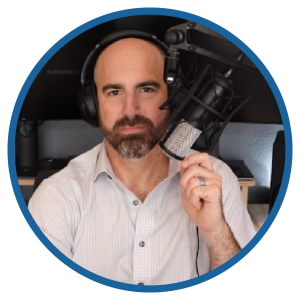
Dave Finch
Dave Finch is the author of the New York Times bestselling memoir, The Journal of Best Practices: A Memoir of Marriage, Asperger Syndrome, and One Man’s Quest to Be a Better Husband. As a writer and creative consultant, his work has appeared on ABC, CBS, NBC, CNN, NPR, SiriusXM, The New York Times, Rolling Stone, The Howard Stern Show, and the award-winning Netflix series, Atypical. Based in Denver, Dave’s company, Elevated Studio, produces this podcast and other recognized series.
Visit Dave’s website here
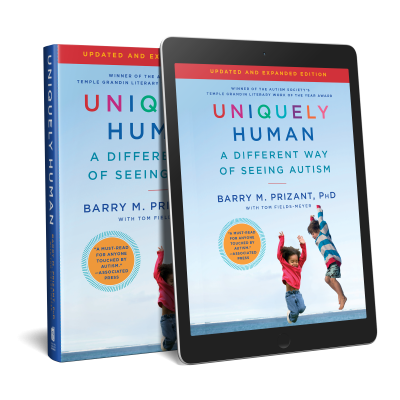
“I have read a million and one books on Autism. Uniquely Human is the best book I have ever read, hands down. Thank you Barry for this incredible gift!!!!”
– Navah Paskovitz, Mother of three boys with Autism, Co-Founder, the Ed Asner Family Center
“Compassion, learning and supportive strategies–the three essentials for working with folks with ASD–are an integral part of this must-read book.”
– Michelle Garcia Winner, Speech Language Pathologist and Founder of Social Thinking
“Thanks be to Barry for the first-ever must read written for parents, educators, and clinicians.”
– Michael John Carley, Founder, GRASP; Author of Asperger’s From the Inside-Out
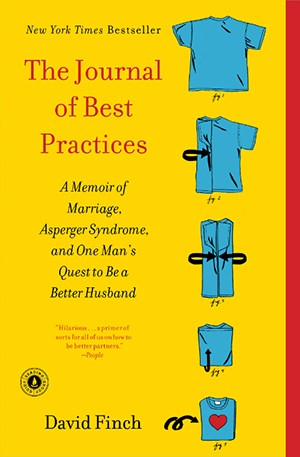
“What makes the book compelling is how funny Mr. Finch is about himself. He’s great company.”
– Susannah Meadows, The New York Times
“In this hilarious memoir (which also gives some of the finest explications of Asperger’s out there), Finch approaches trying to be a better husband and father with the determination of Sherman marching on Atlanta.”
– Judith Newman, People (4/4 stars)
“Talk about being on a roll. This dude wrote a book, he has Asperger’s syndrome. He cured himself by listening to me on the radio!”
– Howard Stern