EPISODE 81
Autism and Language-Based Learning Disabilities:
A Discussion with Dr. Daniel Franklin
Autism and Language-Based Learning Disabilities:
A Discussion with Dr. Daniel Franklin
Play the Episode…
Show Notes
Autistic individuals often experience, a complex array of co-occurring conditions that impact academic achievement, including language-based learning disabilities, dyslexia and ADHD. Dr. Daniel Franklin, a specialist in language-based learning disabilities and other neurodivergent conditions shares his expertise clinical and research expertise, and provides practical suggestions to support students and older individuals.
Featuring
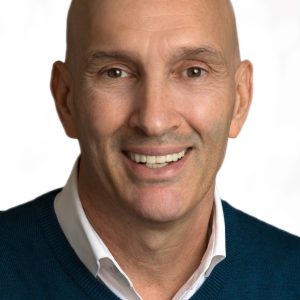
DR. DANIEL FRANKLIN
Dr. Daniel Franklin is the founder, president, and clinical director of Los Angeles-based, Franklin Educational Services which provides a wide range of educational services to students of all ages and needs. He is the author of the Amazon best-selling book, Helping Your Child with Language-Based Learning Disabilities. Daniel holds a master’s degrees from the Harvard Graduate School of Education and a PhD from UCLA. Daniel has over 30 years of experience as a teacher, educational therapist, school administrator, and educational consultant.
Daniel Franklin’s Websites
www.FranklinEd.com
www.DanielFranklinPhD.com
Follow him:
on LinkedIn
on Facebook
on Instagram
on Twitter
Uniquely Human: The Podcast
EPISODE 81 – June 9th, 2023.
Autism and Language-Based Learning Disabilities:
A Discussion with Dr. Daniel Franklin
🎙️ Transcript and Audio Usage Disclaimer
© 2025 Uniquely Human: The Podcast. All Rights Reserved.
The contents of this podcast, including all audio recordings, transcripts, and related materials, are the intellectual property of Uniquely Human: The Podcast and its fiscal sponsor, Community Autism Resources, a registered 501(c)(3) nonprofit organization.
These materials are provided solely for personal, educational, and non-commercial use.
No portion of the podcast audio, transcript, or any derivative materials may be reproduced, redistributed, modified, or publicly displayed without prior written consent from Uniquely Human: The Podcast or its authorized representatives.
Transcripts are provided for accessibility and reference purposes. They may contain minor transcription or formatting errors. When quoting or referencing the podcast, please credit Uniquely Human: The Podcast and provide a link to the original episode page.
By accessing or downloading transcripts, you agree to comply with this usage policy and acknowledge that all copyrights, trademarks, and intellectual property rights remain the exclusive property of Uniquely Human: The Podcast and its creators.
For permissions or inquiries, please contact:
📧 uniquelyhumanpodcast@gmail.com
Introduction to the Podcast
[00:00:00] UHP: The primary purpose of Uniquely Human: The Podcast is to educate and inform the views expressed during all episodes are solely those of the individuals involved and do not constitute educational or medical advice. Listeners should consult with professionals familiar with each individual, or family for specific guidance.
Uniquely Human: The Podcast is produced by Elevated Studio. Music is graciously provided by Matt Savage of Savage Records.
[00:00:39] Barry: Hi, I’m Dr. Barry Prizant, clinical scholar, researcher and consultant on Autism and Neurodiversity, and a Brooklyn boy raised in the big city.
[00:00:50] Dave: And I’m Dave. I’m none of those things, and I grew up on a farm in Illinois. But being on the spectrum myself, I have plenty of personal insight to lend
[00:00:59] Barry: And this is Uniquely Human: The Podcast, a show that illuminates and celebrates autism and neurodiversity.
Guest Introduction: Dr. Daniel Franklin
[00:01:13] Barry: Today we are so pleased to have Dr. Daniel Franklin with us on the show. We’re gonna be discussing some issues that impact so many neurodivergent people, autistic individuals, as well as those with other labeled categories, if you will. Daniel, welcome to our podcast.
[00:01:35] Daniel: Thank you. Great to be here.
[00:01:36] Barry: It’s great to have you. So let me just mention a little bit about you and your background. Dr. Daniel Franklin is the founder, president, and clinical director of Los Angeles based Franklin Educational Services, which provides a wide range of educational services to students of all ages and needs.
He’s the author of the Amazon bestselling book, helping Your Child with Language-Based Learning Disabilities. And Daniel Holts, master’s degrees from Harvard Graduate School of Education and PhD from UCLA. He has over 30 years of experience as a teacher, educational therapist, school administrator, and educational consultant.
So let’s dig right in because I know so many of our listeners are really anxious to hear not only from your experience, but what research is beginning to tell us about. Co-occurring issues that are too rarely discussed, especially when it comes to autistic individuals.
Dr. Franklin’s Personal Journey
[00:02:38] Barry: Daniel, tell us a little bit about your background and your personal journey and how this has become an area of specialty for you.
[00:02:46] Daniel: As a child, I was probably the most unlikely person to, not only become a teacher, but to, earn a PhD from UCLA. I struggled tremendously as a child. I had very significant. Dyslexia. I certainly had undiagnosed ADHD. and the more we learn about autism and some shared genes between people, with autism and dyslexia, the more curious I become about this very large group of neurodivergent individual. Children, teens, young adults, all of us are neurodivergent, frankly. Either everyone is, or nobody is in my view, right? And I, started, I struggled tremendously in school. Eventually finished high school. Did get into Boston University, got a teaching job. Went on to earn my master’s degree in the Department of Reading Language and learning disabilities at the Harvard Graduate School of Education and then my PhD at UCLA in education, and it was when I was out here in Los Angeles at UCLA, I began to develop my private practice as an educational consultant, as an educational therapist and, as a teacher trainer. I provide parents with workshops and I do presentations.
We were clinicians as well, and eventually became the author of my book, helping Your Child with Language-Based Learning Disabilities.
[00:04:18] Barry: Yeah.
Understanding Language-Based Learning Disabilities
[00:04:19] Barry: So for our listeners, for whom even the term language-based learning disabilities might be, either new or maybe they haven’t taken a deep dive into that area, what is, what does that mean?
Of course, the DSM. Defines categories, in terms of language-based learning disabilities. But you really have the on the ground experience, the personal experience, as well as seeing God knows hundreds if not thousands of kids over the years. So what are your thoughts about that categorization?
[00:04:55] Daniel: From the standpoint of science, certainly from the standpoint of the DSM 5, which for some of our listeners it may be a new term, it’s the manual by which we make formal diagnosis of a wide range of neurological issues and psychiatric issues. From the standpoint of science and the DSM 5, we need categories.
Otherwise, it’s hard to do research. It’s hard to know how we’re going to classify an issue that needs to be addressed, or more importantly, supported by insurance or treated some other way. But those of us who work with children, teens and young adults and people in general, we know there are not any hard classifications.
We know that there’s enormous overlap, and the more we do look at the research as we, we see, especially among individuals with autism, for example, who, to the tune of about 70% get a secondary diagnosis of ADHD, we know that children with dyslexia also have a much higher secondary diagnosis of A DHD than neurotypical kids.
And I use the term neurotypical a little loosely here. But we know that all of these individuals who exhibit neurodivergent characteristics seem to share a lot of the same characteristics. So you see kids with autism with ADHD, kids with ADHD with dyslexia, kids with dyslexia with ADHD.
We even see some of the other psychiatric issues, obsessive compulsive disorder and other related issues. Co-occurring at a much higher rate, among this group of kids than the general population. So if we’re really gonna help kids who have one diagnosis, we need to take into account all the other co-occurring issues.
Otherwise we might be short changing those kids, those young adults, in terms of how we’re supporting them.
[00:07:00] Dave: Man, lemme tell you something, I always thought that I had more labels attached to me than a cheap mattress because everything that you, everything you just rattled off dyslexia is the only thing.
So I’ve been diagnosed, quote unquote, with a DD, obsessive compulsive Disorder. Both of those were correct. Major depressive disorder, which is correct, probably, I don’t know. and then Asperger’s. So I had these four labels. And I don’t think any of them were contributing factors to me not being able to necessarily grasp a concept for me.
What was, if I couldn’t wrap my head around something, which happens all the time. I’m a husband, so I can’t wrap my head around 90% of what goes on around my own house. But, for me it was more like the context. So it’s interesting that with all these things going on. I still don’t know that I would even say that I have some kind of language based, learning disability or deficit.
It was more just could I understand the bigger picture around the concept enough to understand at the atomic level what they were, saying to me. So it’s interesting what you say about categories. It seems to defy, like in the real world, it does defy to some extent these delineations.
The Importance of Emotional Regulation
[00:08:24] Daniel: David, some of those global comprehension issues are very common among individuals with autism, dyslexia, and ADHD. And it’s interesting to me because, although these issues of comprehension or capacities for comprehension do improve with time, it is an area that impacts all group of kids that were describing kids with autism and dyslexia and ADHD and a wide range of other learning behavioral differences that are all co-occurring and comprehension, which requires a highest degree of brain integration, different regions of the brain speaking to other regions of the brain efficiently and and accurately. That those capacities emerge more slowly, but they do emerge.
But they do, they emerge more slowly. But because they emerge more slowly, we don’t make accommodations for these students who are on a different developmental curve. And then they begin to appear to struggle or struggle, and then they develop an internal script that, oh, I’m not a good learner. I don’t belong here. I’m different. I’m not as good. And that internal script of who you are and what you are tragically follows a lot of people through their entire lives, even though with the right amount of support and long enough.
I always say this too, if you ever wanna make someone dependent on you for the rest of their lives, the move support too early.
And we see a lot of that. We hear a lot about, oh, I don’t wanna make my child dependent on me, so I’m gonna, they need to learn to lift themselves up by their bootstraps, and I’m gonna stop helping them. It’s a sink or swim mentality. Unfortunately that makes a bad situation worse and it can develop an internal script that, oh, I can’t do it. I’ll never be able to do it. And even worse when the chips are down and I need help, the person I love most, whether it’s your teacher or your parent or somebody else, they abandoned me. They walked away and made me do something that I wasn’t ready to do. And we can change all that. These are things we can change in schools, in homes and clinical settings too.
[00:10:49] Barry: Isn’t part of the issue that, when we talk about this lack of understanding that some people, who have neurodevelopmental conditions such as autism, also have co-occurring learning challenges. When I go into schools and if a child is having difficulty, and let’s say it’s a reading activity, it, so often it goes back to the autism or people just pin it on the autism.
So it’s not only withdrawing, as you said, withdrawing supports prematurely or not providing supports. Isn’t part of the issue providing the right supports to understand specifically what the challenges are for a student?
[00:11:30] Daniel: Yeah, that’s a really great point, Barry.
Relational Approaches in Education
[00:11:32] Daniel: And, what we’re seeing a lot of now, and frankly an increasing amount to my astonishment, where 30 years ago when I entered the field of education, I was really delighted to see this movement towards a more relational approach to understanding the interpersonal neurobiology. How a parent or teacher brain interacts and understanding the brain as a social organ and learning as the outcome of social interaction. And I was really excited, 30 years ago as I started as a teacher and felt, this whole new way of understanding learning and development in the social context, and mediated by social interaction and things like promoting the idea of reflective responding to kids as opposed to reactive responding. A lot using nonverbal communication when working with students to take into account what’s going on at a relationship level, that will need some more explanation and nonverbal communication. I’ll get to that in a moment.
What I have found over the past 30 years is actually a movement away from this really exciting new development. And back to ideas that go back to the twenties and thirties and forties, which is a much more behaviorally oriented, understanding children in isolation, treating children as opposed to working with them.
This, utilizing a medical model. I’m not against medical model. I had come from a family of medical doctors. And I know a medical model is crucial for treating illnesses. We’re talking about child development.
And we’re talking about emotional needs, and we’re talking about a whole different set of characteristics that can’t be treated medically.
They need to be treated from the standpoint of human relationship in the context of healthy, positive relationships, collaborative, problem solving, interacting in positive ways. These approaches work. They work great, and they’re supported by the leading science in the area of interpersonal neurobiology.
We know that from authors who write on this subject that there’s enormous, scientific support or this approach, this interpersonal, approach based on empathic responding emotional regulation, careful modeling of means, of communicating. These approaches work. They’re consistent with how a child’s brain functions and develops.
Yet we seem to be moving away from that and it’s astonish, it’s astonishing to me.
Challenges and Solutions in Education
[00:14:19] Barry: So you’ve alluded to the fact, more than alluded, you’ve actually identified, the necessity of having kind of a relational approach. Even though, when we talk about something like quote on in quotes here, language-based learning disabilities that sounds like that’s an academic issue, or that that’s a school issue. So would you like to dig in a little bit more, especially based upon your work. You’ve, correct me if I’m wrong, but you have a few clinics and and you and your colleagues see kids who need extra support. So how does this impact the child or student’s self-esteem and mental health?
If it’s misunderstood that we need to look at the whole picture and the integrated child, not just teaching behaviors in categories on an IEP.
[00:15:16] Daniel: Sure. When I wrote my book proposal, and as you write a proposal and you write some chapters and so forth. And I submitted it to a number of publishers, but eventually the one that published it, the current title of my book is Helping Your Child with Language Based Learning Disabilities.
The working title was a Kinder Way.
And my book was about my lessons. My original manuscript was a very different book than the one that was published. I’m delighted it was published and it, that’s a very good book. My original manuscript was about my experiences as a child struggling enormously, with dyslexia, having some family members with autism. I had several family members with autism. I grew up around autism. And it was about my experience transitioning from a kid who struggled with language, with dyslexia and about the lessons I learned and what I learned was. If we focus on compassion, if we focus on empathy and understanding and reflective responding to kids, we are in a much better position to support them at all levels.
And when we understand learning and development as the outcome of healthy social interaction, we are in a much better position to help all learners. So as I worked with my publisher, they needed language and terminology that was going to be searchable. So they asked me for some ideas, I eventually proposed that, let’s call it language-based learning disabilities or helping your child with language-based learning disabilities, dyslexia, dyscalculia, dysgraphia, ADHD, I’m not sure what else is.
In the title of my book, there’s so many searchable terms. That’s how publishing works these days. But my book is really about fostering healthy, positive relationships. Whether you’re a parent or a teacher or a clinician. It’s very interesting what we see going on frequently that we’re trying to get kids to learn something. You name the skill, whether it’s a social skill or an academic skill, or anything in between. But if we’re not focusing on emotional regulation first, we can never get to learning. And if we’re not focusing on emotional regulation first, kids can’t access what they’ve already learned.
So when we focus on the quality of the environment and the relationship, we are then putting not only students in a better position to learn, we’re putting parents and teachers in a better position to teach. And so the more we can move towards strategies that focus on fostering healthy, positive relationships, the better students and kids can learn, and the better parents and teachers can teach and be effective in supporting all kids.
Today we’re talking about kids with autism and dyslexia, who, you, Barry, you’ve probably heard me say this, what’s the difference between a helicopter parent and a helpful parent? And my answer is, a helicopter parent provides help that is not needed. A helpful parent provides help that is needed, and kids with autism and dyslexia need a lot of help.
So let’s not pathologize a child’s need for help and let’s not pathologize parents and teachers for providing, very high levels of help. Help is what’s needed. And this is how we actually develop essential capacities, the most quickly.
[00:19:13] Dave: Yes. And I would like to add some color commentary to this and that is that I still need help, a lot of help understanding concepts now at 45. And if somebody walks me through them kindly and slowly with an educator’s mindset and says Dave, here’s why we need to schmooze. This particular person is because we need them to do this for us, blah, blah, blah. Okay, now I can go do it. But if you just say I need you to go have drinks with this person and get them to like us. It’s like, why? I don’t, so I need that painted for me very clearly. But the, commentary I also wanted to provide was that if you’re a parent educator, support person in any way to somebody who needs help, don’t ever be surprised by the type of help that they need.
Or if you are surprised, don’t let it show. Keep that to yourself like my son had a summer job last year, he’s 15 and he got paid really well for it, and so he had to file a tax return this year for the first time. And so I sat him down and obviously I need to show him how to file a tax return because you’re not born knowing how to do that. But I would’ve thought that after we went through the whole complicated process of vitalized, seductions and blah, blah, blah, that the easiest part of the process would be, all right, now you print this out, you sign it, you put it in the envelope, and I’ll put it in the mail for you. So he printed it out, he signed it, and when it came time to filling out the back of the envelope, his generation has never had to mail anything in their lives at the post office. So he’s and I asked him, I was like, Parker are, do you know how to fill out an envelope? He’s I remember doing this once. And so that was a teachable moment. Instead of saying oh my God, you, TikTok generation, you guys are worthless.
It just slowed down and said yeah, of course you have, and you’ve never had to do this before. So here we go. So I explained where the return address goes and blah, blah, blah. And, it was, it struck me that out of that whole process, he totally grasped the tax return. He totally grasped what the government calls taxable income and why they don’t call other things when it came time to filling out that envelope.
Man. So you have to know what you’re dealing with and don’t act surprised or scolding if what somebody needs help with is so far off your radar that it astonishes you.
[00:21:39] Daniel: David, you raise a really important point and as I often say when I’m doing presentations, kids are consistently inconsistent and the they simply don’t have enough prefrontal cortex development, which is not exclusively but largely responsible for, volitional behavior, doing what it is you need to be doing.
What it means is that on some occasions they can do certain things, but the very next day they can’t. And it’s, they simply don’t have enough prefrontal cortex development. And again, there’s other regions in the brain involved here, but we don’t wanna draw attention to the fact that kids are inconsistent.
And if a child is enormously successful doing something one day and the very next day, they’re really struggling with it. The last thing we wanna do is say, what happened? You could do this yesterday, because there’s probably a good reason they can’t do it today. And that there’s something may have happened or they didn’t process it adequately, or they can’t retrieve the information.
So instead of drawing attention to inconsistencies, let’s take it for granted and let’s just deliver the support that’s needed when it’s supported so they become more comfortable with asking for help when they need it, instead of feeling ashamed or embarrassed as unfortunately frequently happens to a lot of kids when they can’t do something well.
[00:23:13] Barry: This is coming back to two issues, which have been recurring themes in our podcasts. And one is trust. How could you trust somebody who beats you up over something that you know you’re not good at, or you’ve never had the experience enough to be good at it. And then the other concept that’s come up so often is the issue of interdependence. That, you know, it’s so important to know that it is okay to ask for help. Because you can trust that person that they’re not gonna hit you over there with a sledgehammer if you don’t know how to fill out an envelope or do some math examples, or whatever it might be. so this is begging the question ’cause I think in, a sense you’re giving advice to parents here.
So how, in your experience, does having a child with these very complex learning challenges, possibly co-occurring with an autism diagnosis or, other neurodivergent diagnoses, how does that impact a family’s journey? Because very often, the great majority of parents are not trained educators. They might be wonderful parents intuitively, but then others might not know, or might be a victim of their own upbringing of, you don’t discipline him off. He needs to sit down and do his homework for four hours every day and then he’ll get it. What’s the family’s journey or the range of family’s journeys that you’ve run into, and what advice would you give?
[00:24:41] Daniel: I’m delighted to know the theme of interdependence is one that’s emerging, in your series because it’s a critical concept that, we are all dependent on one another. Getting comfortable with that and embracing it and celebrating it is really important and for us to let kids know that, humans by nature are dependent on one another.
Very few of us are. Independent and principles of healthy dependence, which is getting the kind of help you need when you need it, and embracing the need for help and asking for help. I look at mental illness in this country. Much of it’s rooted in the fact that people who need help, for whatever tragic reason they may need help, are afraid to ask for it. But if we can begin to change our culture to one that’s comfortable in understanding we have needs and we have a need for help, and we can ask for it and deliver it. I think Barry, to answer your question is it’s a very solitary journey, not only for kids with autism and dyslexia and many other, learning and behavioral differences, but also for their parents too, because we’re simply not doing enough, not only at school, but in other areas outside in our environment in general, whether it’s in clubs and sports and other realms, to understand that no two kids are the same. No two kids are gonna learn the same thing at the same rate and the same way, and that there’s enormous variation from one child to another, and that we need to be willing to change our expectations.
We know that children who are learning differently need a lot of individual help, and we don’t provide enough of that. The research on one-on learning outcomes for one-on-one learning is robust. We know that one-on-one instruction is significantly better than even small group instruction. So when we can find ways to provide all of these kids, or any kid who needs it.
With high levels of, one-on-one instruction and support, not only are they better able to manage the demands of the situation, they’re gonna learn more. They’re gonna learn more skills, they’re gonna feel more confident, and they are going to be more likely to take on more and more challenges as opposed to what we see when kids are in large group settings, which kids are not biologically designed to be in large group settings.
Look at any mammals. Certainly the higher order mammals when you look at. Elephants. You don’t see a whole bunch of juvenile elephants in one adult. When you look at a troop of chimpanzee, you don’t see a whole bunch of juvenile chimpanzees in one adult. Even among sea mammals, you don’t see a whole bunch of juvenile whales and then one or two adults. You don’t. You see the opposite in the natural environment. Among mammals, juveniles never outnumber adults. And we know just some simple observation. When kids are thrown into environments where juveniles outnumber adults, many of those kids or certainly some, will exhibit maladaptive behavior. It’s interesting that if you put those same kids in environments where there’s more adults than juveniles, the maladaptive behavior goes away. The juvenile brain, it appears to me, is not designed to be in environments where there’s more juveniles than adults. They’re designed to be an environment where there’s more adults than juveniles. And so I often say that the maladaptive behavior we see on the part of kids at school is a natural response to an unnatural ratio. An unnatural ratio, more kids than adults.
Unfortunately, once kids have begun to struggle and not do well at school because of this unnatural ratio, they begin to internalize the difficulties and failures are having as something wrong with them. Not as something wrong with the environment, which clearly is because if you change the environment, the maladaptive behavior goes away.
But, tragically, it doesn’t take too long or too many negative experiences for kids to begin to internalize these failures as something wrong with them. And that is an internal script that’s very difficult to turn around. So we really need to look, identify early on who’s struggling and we know, generally speaking, these are kids, students who need a high level of one-on-one support.
I work with a number of students in college. These are students with autism and they’re doing really well. I watched for many years my kids, my students. Do really great through high school, then go to college and struggle and drop out within the first few weeks or first semester.
Working with the families and the colleges too, I began to develop college companions who can meet with, my students with autism on college campuses to help them navigate the demands of college.
And these kids are doing really well.
But they really do need a much higher level of individualized support. This kind of support is expensive and it’s not well funded, but these are things we can change. We need to look at what the needs are and organize funding around the needs so that these kids aren’t dropping out.
It’s a financial disaster for a college to accept a student as a freshman and then lose them. Some point in the first semester. So the more we can get colleges to recognize they can retain, not only retain these students longer, but help them thrive by providing with them with much higher levels of the right type of individualized support, the right type, because it has to be relational, it has to be collaborative, it has to be interactive, and it has to be, something that resonates with the social nature of a individual’s brain.
[00:31:13] Barry: It’s brilliant. One thing that you’re sharing, Daniel, and I agree it’s so important what you’re saying, I just had a wonderful experience with my new affiliation at University of Rhode Island, and they have a program that was started by a couple of faculty, one faculty outside of the Department of Communicative Disorders and one faculty within is called the START Program. It involves 10 autistic first year freshmen at the University of Rhode Island. And they meet regularly with students who are speech language pathology, communication disorder students. And it isn’t for therapy. It is just to get together, to have buddies, friends do things together socially, but they meet on a regular basis. So I was asked to meet with the group just two weeks ago, and you can just see now that we’re into the spring semester, the benefits of everybody feeling you’re part of a group together.
That’s a neuro inclusive group. But understanding, as you said, it’s that first year of going into college at such a high risk situation and such a vulnerable time for all students, but especially a all vulnerable time for autistic students. So it’s a big issue.
Homeschooling and One-on-One Schooling
[00:32:35] Barry: But I wanna steer the conversation this one other direction here, when parents who have resources realize that social setting in school is not working out, some parents choose to homeschool their kids. And not all parents are teachers. And one of the things that I’m interested in is sometimes the conflicting roles that parents find themselves in: am I a teacher? Am I a parent? Am I a friend? What am I. So so what’s your experience, with parents who do homeschooling? Are there definable pros and cons to that? And I know there are networks nationally where you’re not really just alone with your student child, that you can connect with other people, especially online. But what’s your experience?
[00:33:23] Daniel: It can be a really terrific option for a lot of students, not just students with autism and dyslexia, but a lot of students for a lot of different reasons.
And it can work really well. It’s true. Not all parents are suited for a variety of reasons to be the teacher. There are lots of different ways of doing homeschooling, or sometimes now we just call it one-on-one schooling because it’s not necessarily always at home. There are an increasing number of resources available to, parents to get support with one-on-one schooling.
Homeschooling or one-on-one schooling used to be for a very narrow band of our population. 30 years ago it was for people who, for one reason or another, objected or had no access to traditional schools or objected to them for one reason or another. But now the benefits of one-on-one schooling or homeschooling are well established. These are students who are doing really well, and there are many, benefits in terms of learning outcomes. In terms of flexibility, in terms of adjusting the type and pace of instruction, which is often a problem when you go to a traditional school. If you’re, if the pace is not suited to you, then you’re in trouble and…
[00:34:48] Dave: tough
[00:34:50] Daniel: and tough. So there are many benefits. It is challenging. There’s lots of different ways for parents to look around for, teachers and tutors and other appropriately qualified people to implement the curriculum. There are now an incredible number of fully accredited, approved curriculum providers out there. A simple search of the internet will turn up many. Encourage all parents and practitioners to carefully vet the curriculum provider and to make sure that the curriculum provider is legitimate and that they are appropriately, accredited. Now different states have different policies are changing all the time. They certainly are here in California. Some curriculum providers actually become the school of record in other instances, the curriculum provider is no longer allowed to be the school of record. So parents have to file a private school affidavit. They actually become a school of one child. that’s the case here in California, for example.
So it’s a rapidly changing landscape. There are many benefits. there are many choices of curriculum. Kids can specialize in certain areas that are of interest to them, as we know a lot of. Individuals with both autism and dyslexia tend to like to specialize in a particular area that interests them and suits them and their learning characteristics.
So those are some of the advantages and the opportunities and strengths. Kids, like to be around other kids, but it’s a little bit of a incorrect assumption that kids only learn social skills by being around other kids. If you are a child who exhibits behavioral differences, it might be that if you’re in a normal social setting, you may experience interactions that aren’t so pleasant. And aren’t nice.
It’s not reasonable to assume that kids only learn social skills by being around other kids. Kids learn social skills by being around socially adjusted people. I often use this example, for example, there’s a well-known Nobel Laureate for Peace, who was raised in the absence of any children, and that’s the Dalai Lama.
The Dalai Lama was only raised by adult monks throughout his childhood. Although I do believe his brother who was a similar age was there too for much of his learning. So you kids can learn and be social skills and become extremely socially and emotionally well developed. In the absence of other children, as long as they’re around well adjusted, communicative, healthy, adult brains particular. But kids do like to be around other kids.
We want to look carefully at when, where, and how we do that. And we wanna make sure that those environments are carefully structured, are carefully supported, so that those experiences are positive ones.
A lot of kids, especially kids with autism, benefit from having a companion or a coach nearby to help mediate some of those interactions so that they are constructive and positive.
Barry, this is fascinating topic and conversation. Have I addressed your question?
[00:38:40] Barry: Yes. Yeah, that’s absolutely for sure.
Franklin Educational Services
[00:39:07] Barry: I think our listeners might be thinking one thing though, and just curious about, Franklin Educational Services in terms of students who come to you and, and you and your colleagues. The kinds of supports, my guess would be that you support families who do home or one-to-one schooling, but you also support. Individuals in public schools. And as you mentioned, you work specifically with college students. So I know that’s a very big question, but our listeners very often are curious about the day-to-day work, and also the structures that have been created by our guests.
[00:39:23] Daniel: Sure. I do work with college-aged students, but. The vast majority of my students are first grade through 12th grade, high school, grade school kids. And we provide a very broad range of education related support services. Everything from one hour of tutoring or specialized academic tutoring to educational therapy, through very comprehensive daily support that some kids need. And we offer a fully accredited one-on-one schooling as well, both at our learning centers, one here in West Los Angeles and another south of here in Newport Beach. We also provide our one-on-one schooling at students’ homes.
Increasingly some schools, especially private schools, have a student who needs to learn one-on-one at their school, and so they will retain us to send one of our teachers to their school to provide one-on-one schooling. It can be a student who belongs at that school, likes to be at that school, but is really struggling in an area, say, math or science or some other area. And so we provide one-on-one schooling there as well. I do have school companions, not only for college students, but for school-aged students as well.
We call our approach trauma informed, and I know it’s a concept that might be getting a little overused these days. And in a sense, I think it’s good that we’re talking about trauma informed approaches. Because if anything, kids who have pronounced learning and behavioral differences have experienced trauma.
And we need an understanding of what it means to have been traumatized and the impact of trauma on the brain and social and emotional development, and that to have a real sensitivity and understanding of an approach that is trauma informed is critical, if we’re gonna be effective in supporting all kids, but especially kids with autism and dyslexia.
[00:41:31] Dave: Yeah. I’m fascinated too by the college age students because the transition from, for most kids in the K through 12 setting, you see essentially the same peers all the time and everything is structured for you. College is a whole new sea of faces and there is no structure for you other than your class schedule. And that is just, you don’t have your parents there saying eat your breakfast bar before you go to school. Whatever, you’ve got kids oversleeping. And this only reinforces any of these internal scripts, these narratives these kids have been carrying since high school of oh man, I am no good. I’m no cut, not cut out for this at all. Which was very much my experience for the first couple of weeks where I was like, I have to wake myself up. This sucks. I love that this is a continuation from K through 12 into whatever advanced, college and beyond.
[00:42:35] Daniel: We had a really interesting experience a few years ago.
I worked with a student all through high school, did great, got into a very competitive college on the east coast. And our college companion on the first day of classes called him up and said, you have a class coming up at eight? And he said, I’m not gonna go. And she said, I’m staying on the phone. I need you to pull your backpack together. And this particular college companion had actually gone to college on the same campus and said, stay on the phone. We’re gonna walk across the quad together. And, she knew where he was and said, you see the building? It’s this building. You need to go in the front. I’m gonna walk. And she walked him on the phone all the way in to his first class on the first day college and he wasn’t gonna go, but he did. And he’s doing extremely well there now. But that’s what the power of relationships. And the power of providing the help that’s needed, when it’s need, when it’s needed, when it’s called for that we cannot stand by and let these young adults not be successful because we’re scared to provide them with the help that they need.
[00:43:48] Dave: Total game changer.
[00:43:50] Barry: Absolutely. Interdependence in the most positive way.
Conclusion and Contact Information
[00:43:54] Barry: All right, Daniel. thank you so much. This has been so informative, and it’s certainly expanded my horizons a great deal and we really appreciate your willingness to join us.
[00:44:07] Daniel: It’s been a joy to be here with you. I love this conversation.
I love this topic. I encourage our listeners to reach out to me anytime. I’m very easy to reach. I can be found at danielfranklinphd.com and you can get access to me that way. I reply to all emails, all inquiries, and I know some of your listeners may be listening to this. In weeks or months, or perhaps even years from now, I still wanna hear from them amazingly important topics. ‘Cause I, love this subject and I love hearing from parents and teachers and educators, and clinicians. And welcome the opportunity to connect with some with your listeners.
[00:44:50] Dave: Great. Oh man. I don’t know if you’ve noticed, but as you’ve been talking, I’ve just been furiously taking whatever notes I can. With my horrible typing abilities through the whole conversation. This is just, it’s fascinating to me that, we always hear about the challenges, but here you are offering solutions and actually like really applicable, actionable solutions too. It’s fantastic.
[00:45:15] Daniel: Sure. And I know we didn’t really get into a lot of the more applied and detailed strategies and things that we do. We really didn’t discuss the transition from learning to read, to reading to learn, and how we understand that transition and navigate that. And analogous learning to write and writing to learn and how we understand that. Maybe you guys will have me back sometimes so I can describe some of these things and think how we can help parents understand some of this phenomena, and how we can help parents and practitioners implement strategies to accommodate that. And, other things too. Comprehension, which, I often say dyslexia is not a reading disability. Dyslexia is a comprehension issue that has its roots in written language, but language in general.
And that’s one of the similarities with autism, that it has its roots in language and areas of comprehension. And there’s tremendous overlap and co-occurrence of a lot of the learn, the observed learning and behavioral differences, and a lot of similarities in the most effective means of supporting these students. So I hope I’ll have an opportunity to come back and speak about some of these things.
[00:46:44] Barry: Absolutely. It’s a deal.
And it’s also, let me just conclude by saying it’s so obvious how much you care for the people you support and the families that you support. It’s your life’s work and you’re providing just terrific resources, and of course we are going to include any links to resources you wish us to list on the webpage for this episode, so people don’t have to write down furiously everything that you said, because we’ll have all the contact information for you right there in writing.
[00:47:18] Daniel: Thanks so much. It’s been a pleasure to be with you this morning.
[00:47:20] Barry: Alright, take care. Bye.
…and Continue the Discussion
Do you have a book or podcast club? If so, you may use this discussion guide to facilitate a conversation about this episode.
1) What does Daniel believe about the concept of language-based learning disabilities, both from a diagnostic perspective and how they are actually observed in neurodivergent students and individuals? Are his observations consistent with your experiences?
2) Although he clearly believes that specific educational supports and interventions are helpful, Daniel emphasizes the primacy of relationships and connection in supporting students. Why does he believe this to be the case? Share some of your experiences that provide real-life examples supporting this belief.
3) Daniel shares his opinions about home and 1:1 schooling as models of service delivery. What are his opinions, and do you agree with him based on your personal experiences or your observations of these models of service delivery?
HOSTED BY

Barry Prizant, Ph.D., CCC-SLP
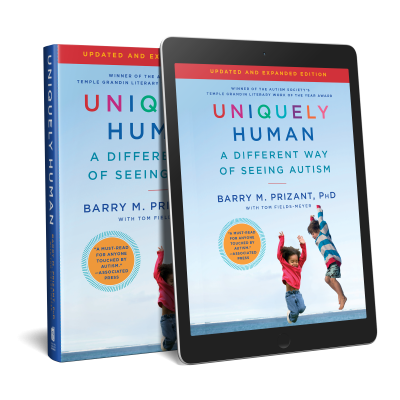
Dr. Barry Prizant is a speech-language pathologist with more than 50 years experience as a researcher and international consultant for autistic and neurodivergent individuals and their families. He is an Adjunct Professor of Communicative Disorders at the University of Rhode Island and Director, Childhood Communication Services (a private practice). Previously, he served as Associate Professor in the Department of Psychiatry in the Brown University School of Medicine, and held a tenured professor appointment at Emerson College. Publications include 5 books, most notably Uniquely Human: A Different Way of Seeing Autism (2015; 2022) and The SCERTS Model manuals, an educational approach implemented in more than a dozen countries. He has published 150 scholarly chapters and articles and serves on numerous professional advisory boards for journals and professional organizations. Barry has presented more than 1000 seminars and keynote addresses internationally, including two invited presentations at the United Nations for World Autism Awareness Day. His career contributions have been recognized with honors from Brown and Princeton Universities, the Autism Society of America and the American Speech-Language-Hearing Association.
Visit Barry’s website here
Uniquely Human, the book (Updated and Expanded edition!)
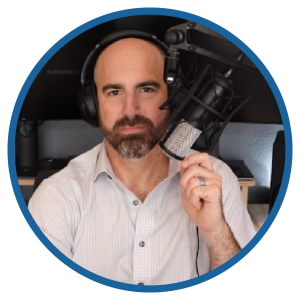
Dave Finch
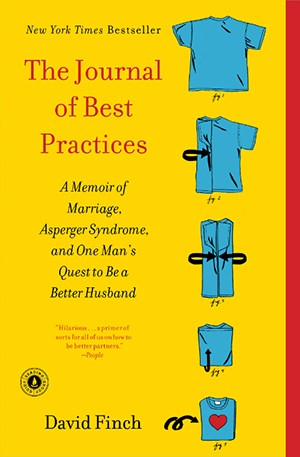
Dave Finch is the author of the New York Times bestselling memoir, The Journal of Best Practices: A Memoir of Marriage, Asperger Syndrome, and One Man’s Quest to Be a Better Husband. As a writer and creative consultant, his work has appeared on ABC, CBS, NBC, CNN, NPR, SiriusXM, The New York Times, Rolling Stone, The Howard Stern Show, and the award-winning Netflix series, Atypical. Based in Denver, Dave’s company, Elevated Studio, produces this podcast and other recognized series.
Visit Dave’s website here
“I have read a million and one books on Autism. Uniquely Human is the best book I have ever read, hands down. Thank you Barry for this incredible gift!!!!”
– Navah Paskovitz, Mother of three boys with Autism, Co-Founder, the Ed Asner Family Center
“Compassion, learning and supportive strategies–the three essentials for working with folks with ASD–are an integral part of this must-read book.”
– Michelle Garcia Winner, Speech Language Pathologist and Founder of Social Thinking
“Thanks be to Barry for the first-ever must read written for parents, educators, and clinicians.”
– Michael John Carley, Founder, GRASP; Author of Asperger’s From the Inside-Out
“What makes the book compelling is how funny Mr. Finch is about himself. He’s great company.”
– Susannah Meadows, The New York Times
“In this hilarious memoir (which also gives some of the finest explications of Asperger’s out there), Finch approaches trying to be a better husband and father with the determination of Sherman marching on Atlanta.”
– Judith Newman, People (4/4 stars)
“Talk about being on a roll. This dude wrote a book, he has Asperger’s syndrome. He cured himself by listening to me on the radio!”
– Howard Stern
ACKNOWLEDGMENTS
Music
Matt Savage, courtesy of Savage Records
Matt Savage is an autistic jazz musician, composer, and bandleader. Matt has collaborated with jazz greats like Chick Corea, the Ellington All Stars, Chaka Khan, Wynton Marsalis, Bobby Watson, Clark Terry, Jimmy Heath, Jason Moran, Arturo O’Farrill, John Pizzarelli, Joshua Redman, Terri Lyne Carrington, Jon Faddis, Jerry Bergonzi. Donny McCaslin, and more. He has recorded more than a dozen records and graciously contributes the music for Uniquely Human.
Production and Sound Design
ELEVATEDSTUDIO
Uniquely Human: The Podcast is produced, engineered, and edited by Elevated Studio in Denver, Colorado. Owned and operated by co-host Dave Finch, Elevated Studio produces digital media assets and content strategies for the electronics, entertainment, and lifestyle industries.
“I have read a million and one books on Autism. Uniquely Human is the best book I have ever read, hands down. Thank you Barry for this incredible gift!!!!”
– Navah Paskovitz, Mother of three boys with Autism, Co-Founder, the Ed Asner Family Center
“Compassion, learning and supportive strategies–the three essentials for working with folks with ASD–are an integral part of this must-read book.”
– Michelle Garcia Winner, Speech Language Pathologist and Founder of Social Thinking
“Thanks be to Barry for the first-ever must read written for parents, educators, and clinicians.”
– Michael John Carley, Founder, GRASP; Author of Asperger’s From the Inside-Out
“What makes the book compelling is how funny Mr. Finch is about himself. He’s great company.”
– Susannah Meadows, The New York Times
“In this hilarious memoir (which also gives some of the finest explications of Asperger’s out there), Finch approaches trying to be a better husband and father with the determination of Sherman marching on Atlanta.”
– Judith Newman, People (4/4 stars)
“Talk about being on a roll. This dude wrote a book, he has Asperger’s syndrome. He cured himself by listening to me on the radio!”
– Howard Stern